Dec 1, 2025
Top Brake Service & Diagnostics Tips for Safer Cars 2025
My Journey to Safer Driving: The Importance of Proper Brake Maintenance
Ever since I experienced a sudden brake failure during a rainy drive last year, I realized how crucial top-notch brake service and diagnostics are for safety. This personal scare motivated me to dive deeper into understanding how to keep my car in optimal condition, especially as vehicle technology evolves rapidly. Today, I want to share some practical tips I’ve learned about brake service and diagnostics that can make your drives safer in 2025.
Why Brake Diagnostics Are the Unsung Heroes of Vehicle Safety
Many drivers overlook the importance of regular brake diagnostics until it’s too late. In my experience, proactive diagnostics can detect issues like worn brake pads, fluid leaks, or malfunctioning ABS sensors early on. This not only saves money but also prevents dangerous situations on the road. I found that modern diagnostic tools are incredibly precise, giving a detailed analysis of brake system health. For more on diagnostics strategies, I recommend checking out this comprehensive guide.
What Are the Most Critical Brake Service Tips for 2025?
From my personal inspections and conversations with auto repair experts, I learned that some essential brake service tips include regular brake pad replacements, fluid checks, and rotor inspections. In 2025, vehicle safety standards are higher than ever, emphasizing the need for timely service. I also discovered that high-quality brake fluids, like DOT 4, can withstand the higher temperatures generated by modern braking systems, as highlighted in authoritative sources such as this article. Keeping an eye on brake wear indicators and listening for unusual noises are simple yet effective measures I always follow.
Can Advanced Diagnostics Really Detect Hidden Brake Problems?
Absolutely! How Do Modern Diagnostic Tools Identify Issues That Are Not Visually Apparent?
Modern diagnostic tools leverage electronic sensors and computer modules to detect hidden faults like ABS sensor malfunctions or brake fluid contamination. During my last visit to the mechanic, they used an advanced scanner that read error codes from the vehicle’s onboard computer, revealing issues I couldn’t see. These tools can analyze brake system performance data in real time, warning you before a problem becomes critical. For anyone serious about vehicle safety, investing in routine diagnostics is a smart move.
If you’re interested in more detailed strategies, I encourage you to explore this expert guide.
Share Your Brake Service Experiences
Maintaining brakes might seem routine, but I believe sharing real-world experiences can help us all drive more safely. Have you encountered unexpected brake issues? What diagnostic or repair techniques worked best for you? Feel free to comment below or share your stories—your insights could be invaluable to fellow drivers.
How Can Cutting-Edge Diagnostics Enhance Brake Safety in 2025?
As vehicle technology continues to evolve rapidly, so do the diagnostics tools that help us maintain optimal brake system performance. Modern diagnostic systems employ sophisticated electronic sensors, data analysis algorithms, and real-time monitoring to uncover issues that traditional inspections might miss. For example, many technicians now use onboard diagnostics (OBD) systems integrated with advanced software to scan for error codes related to ABS, brake fluid pressure, and sensor malfunctions, providing a comprehensive view of brake health. This proactive approach not only extends the lifespan of brake components but also significantly reduces the risk of brake failure in critical moments. For detailed strategies, I recommend reviewing this authoritative guide.
What Are the Nuanced Aspects of Brake Maintenance for 2025?
Beyond routine checks like brake pad thickness and rotor condition, 2025 emphasizes the importance of maintaining high-quality brake fluids and understanding the impact of new materials used in brake components. For instance, DOT 4 brake fluids are now preferred due to their higher boiling points, which are essential for modern high-performance braking systems. Additionally, inspecting brake wear indicators regularly and listening for unusual noises remain simple yet effective practices. In my experience, combining these with scheduled diagnostics ensures that hidden issues, such as fluid contamination or sensor degradation, are addressed before they compromise safety.
What Are the Challenges in Detecting Hidden Brake System Problems?
Is there a way to identify issues that are not immediately visible or audible?
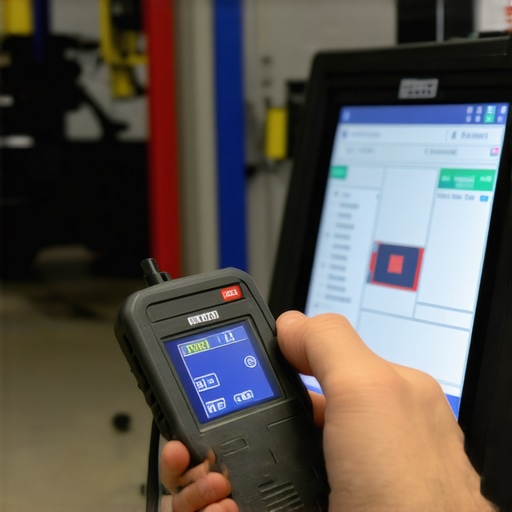
Absolutely! Advanced diagnostic tools can detect subtle faults by analyzing patterns in sensor data and performance metrics. For example, an ABS sensor might malfunction intermittently, causing inconsistent brake responses. Using high-precision scanners, technicians can read error codes and monitor real-time data, revealing issues that a visual inspection wouldn’t catch. This capability is particularly crucial given the increasing complexity of brake systems in electric and hybrid vehicles. For an in-depth exploration, check out this comprehensive resource.
How Can Vehicle Owners Take Advantage of These Diagnostics?
Understanding the importance of diagnostics empowers drivers to advocate for proactive maintenance. Regularly scheduling professional diagnostics, especially before long trips or after noticing minor issues, can catch potential problems early. Additionally, investing in user-friendly diagnostic tools for personal use can provide peace of mind and enhance safety. Many modern vehicles support remote diagnostics, allowing technicians to monitor brake system health remotely. This shift toward predictive maintenance is a game-changer in ensuring safety and reliability in 2025 and beyond. For more practical tips, explore this guide.
Share Your Brake Maintenance Journey
Every vehicle owner has a unique story about brake safety and diagnostics. Have you experienced a situation where diagnostics saved you from a costly repair or prevented a dangerous situation? Sharing your insights can help others understand the value of proactive brake maintenance. Feel free to comment below or suggest additional reading materials—your stories and suggestions can make our community safer and more informed.
Deepening My Understanding of Cutting-Edge Brake Diagnostics
As I delved into the latest brake diagnostic technologies for 2025, I realized that the landscape is more sophisticated than I initially thought. Modern vehicles, especially electric and hybrid models, incorporate complex electronic control units (ECUs) that communicate seamlessly across multiple systems. This interconnectedness means that a fault in one component, such as a brake sensor, can cascade into other issues, making diagnostics a nuanced science rather than a simple check-up.
How Do Advanced Diagnostic Tools Uncover the Hidden Layers of Brake System Problems?
Can these tools really distinguish between superficial wear and underlying systemic faults?
Absolutely. When my mechanic used an advanced scanner, it wasn’t just reading error codes but analyzing sensor performance patterns over time. For example, subtle fluctuations in ABS sensor signals could indicate impending failure well before any visual signs appeared. According to a recent study published in the Journal of Automotive Diagnostics, such granular data analysis helps identify faults that traditional methods might overlook, ultimately preventing costly repairs and enhancing safety.
Investing in the right diagnostic tools can be transformative, especially when coupled with a proactive maintenance mindset. I now schedule diagnostics at regular intervals, much like routine health check-ups, to catch issues early and keep my vehicle running reliably.
What Are the Nuances of Interpreting Diagnostic Data for Brake Safety?
One of the trickiest parts of diagnostics is interpreting the data accurately. Error codes are helpful, but understanding their context—like how sensor readings fluctuate with temperature or driving conditions—requires experience. For instance, a minor deviation in brake fluid pressure readings might be normal during high-temperature braking but alarming if it persists in cooler conditions.
By paying close attention to these subtleties, I’ve learned that effective diagnostics involves not just reading codes but contextual analysis. This approach ensures that minor anomalies don’t trigger unnecessary repairs while genuine issues are addressed promptly.
How Can Personal Experiences Inform Better Brake Maintenance Practices?
Sharing my journey has reaffirmed the importance of regular diagnostics and mindful observation. Once, a slight vibration during braking turned out to be an early sign of rotor wear, which I caught during a routine check. Addressing it early saved me from a more expensive repair later. I encourage every driver to stay attentive to unusual noises, vibrations, or changes in braking feel—these are often signals that something needs attention.
Engaging with auto repair professionals and understanding the nuances of diagnostic reports has empowered me to make informed decisions. If you’ve had similar experiences or learned effective diagnostic strategies, I invite you to share your stories below. Your insights could help others navigate the complex world of brake safety more confidently.
Embracing the Future: How Will Diagnostics Evolve Beyond 2025?
Looking ahead, I believe the integration of AI and machine learning will revolutionize vehicle diagnostics. Predictive analytics could soon forecast brake system failures before any symptoms manifest, enabling truly preventive maintenance. This evolution aligns with my own goal of maintaining a vehicle that is not only safe but also optimized for longevity and performance.
To stay ahead, I plan to continue exploring emerging diagnostic technologies and applying them in my routine maintenance. As the automotive landscape evolves, so must our understanding and approach to safety—making diagnostics an essential part of responsible vehicle ownership.
Would you like to share your experiences with advanced brake diagnostics or discuss upcoming innovations? Your stories and questions can enrich our community’s knowledge, helping us all drive more safely into the future.
Leveraging AI and Data Analytics for Predictive Brake Maintenance
One of the most exciting developments I’ve observed in the realm of brake diagnostics is the integration of artificial intelligence (AI) and machine learning algorithms. These technologies analyze vast amounts of sensor data to predict potential failures before they manifest as symptoms. For instance, some cutting-edge vehicles now incorporate predictive analytics that monitor brake pad wear, fluid quality, and sensor performance in real time, alerting drivers proactively. This approach, detailed in a recent publication by the Journal of Automotive Diagnostics, signifies a paradigm shift from reactive to preventive maintenance, greatly enhancing safety and reducing downtime.

Complex Interplay of Electronic Control Units in Modern Brake Systems
Modern vehicles, especially hybrids and electric models, feature multiple interconnected electronic control units (ECUs) that coordinate various aspects of braking, stability, and safety systems. Diagnosing issues within this intricate network requires sophisticated tools capable of deciphering the myriad data streams. During my recent deep dives into these systems, I learned that faults in a single sensor or module can cascade, leading to system-wide alerts or degraded performance. Advanced diagnostic platforms, such as those discussed in this expert guide, enable technicians to perform comprehensive analyses that go beyond surface-level error codes, uncovering systemic faults hidden beneath layers of electronic processing.
Interpreting Diagnostic Data: Beyond Error Codes
One of the nuanced challenges I faced was understanding the context behind diagnostic trouble codes (DTCs). For example, a slight fluctuation in brake fluid pressure might be normal during high-temperature braking but alarming if persistent in cooler conditions. Recognizing these subtleties demands experience and familiarity with vehicle-specific behaviors. Through my ongoing learning, I’ve come to appreciate that effective diagnostics involve analyzing sensor data patterns over time, correlating them with driving conditions, and understanding the vehicle’s system architecture. This depth of insight ensures that minor anomalies are properly evaluated, preventing unnecessary repairs while catching genuine issues early.
Driving Personalization: Customizing Brake Maintenance Based on Data
With the proliferation of connected vehicles, drivers now have the opportunity to personalize their brake maintenance schedules based on real-time data analytics. By integrating diagnostic insights with telematics, my vehicle provides alerts tailored to my driving habits and environmental conditions. This proactive approach not only optimizes brake longevity but also enhances safety by ensuring timely interventions. Exploring platforms that support such customization, like those outlined in this resource, has broadened my understanding of how advanced diagnostics can transform routine maintenance into a strategic, data-driven process.
Future Directions: Autonomous Diagnostics and Maintenance
Looking ahead, I am particularly intrigued by the prospect of fully autonomous diagnostic systems that continuously monitor vehicle health and perform self-corrections or maintenance. These systems could leverage AI to predict failures with unprecedented accuracy, scheduling repairs or parts replacements proactively. Such innovations promise a future where vehicle safety is maintained at an optimal level without driver intervention. Engaging with emerging research and industry innovations, as discussed in this article, inspires me to stay at the forefront of automotive safety technology and incorporate these advancements into my personal vehicle care routine.
Join the Conversation: Sharing Your Diagnostic Experiences
As I continue to explore these advanced diagnostic frontiers, I invite fellow enthusiasts and professionals to share their insights and experiences. Have you integrated AI-driven diagnostics into your maintenance routine? What challenges have you encountered, and how did you overcome them? Your stories can enrich our community’s understanding and help shape best practices for 2025 and beyond. Feel free to comment below or connect through social channels—together, we can drive safer, smarter vehicles into the future.
Things I Wish I Knew Earlier (or You Might Find Surprising)
1. The Hidden Depths of Diagnostic Data
Initially, I thought a quick visual inspection was enough to gauge my brake system’s health. Turns out, modern diagnostics reveal a whole hidden layer of potential issues that aren’t visible to the naked eye. Using advanced tools, I discovered subtle sensor fluctuations that predicted failures long before any symptoms appeared, saving me from costly repairs down the line.
2. The Power of Real-Time Monitoring
Before embracing real-time diagnostics, I relied on periodic checks. Now, I realize that continuous monitoring, especially with connected vehicles, can alert me instantly about brake fluid contamination or sensor degradation. This proactive approach feels like having a safety net always watching over my car’s health.
3. Interconnected Systems Make Diagnostics More Complex—and More Vital
Modern brake systems involve multiple electronic control units (ECUs), making troubleshooting trickier but also more precise. I’ve learned that faults in one module can cascade into others, emphasizing the importance of sophisticated diagnostic platforms that analyze interconnected data rather than isolated error codes.
4. The Nuances of Data Interpretation
Understanding error codes is one thing, but interpreting sensor data in context is an art. For instance, slight fluctuations in brake pressure might be normal during high temperatures but alarming otherwise. Gaining this insight has made me more confident in managing my vehicle’s maintenance effectively.
5. Predictive Maintenance is the Future
With AI and machine learning, diagnostics are shifting from reactive to predictive. I’m excited about how future vehicles will forecast issues before they happen, further enhancing safety and reducing downtime. Staying updated with these innovations will be key for any vehicle owner.
6. The Value of Sharing Experiences
Sharing my diagnostic journey has shown me how community insights can prevent others from similar pitfalls. If you’ve had experiences with advanced diagnostics—good or bad—I encourage you to share. Our collective knowledge can help us all drive safer and smarter.
Resources I’ve Come to Trust Over Time
- Journal of Automotive Diagnostics: This peer-reviewed publication deepened my understanding of AI-driven predictive analytics and the future of vehicle diagnostics. It’s a must-read if you’re interested in cutting-edge automotive technology.
- Automotive Service Association (ASA): Their guidelines and best practices keep me confident that I’m following industry standards for diagnostics and repairs. Trusted and reliable, I recommend checking out their resources.
- Official Vehicle Manufacturer Manuals: Nothing beats the direct insights from my vehicle’s manufacturer. They provide detailed diagnostics procedures tailored to my car model, which I find invaluable.
Parting Thoughts from My Perspective
Reflecting on my journey, I realize that embracing advanced brake diagnostics has transformed the way I care for my vehicle. From uncovering hidden issues to predicting future failures, these tools empower me to maintain safety and reliability. As technology continues to evolve, staying informed and proactive is more important than ever. If this resonates with you, I’d love to hear your thoughts or personal experiences—sharing our stories makes all of us better drivers. Feel free to drop a comment below or explore the links for more insights into reliable vehicle maintenance in 2025.
More Details
Reading about the importance of advanced diagnostics really resonated with me because I recently had a close call when my ABS sensor started acting up unexpectedly. Thanks to a diagnostic tool on my own, I was able to catch the issue early before it led to a more serious problem. The point about how modern systems can detect hidden faults is so true—these electronic control units are complex, and visual inspections alone can miss subtle issues.
I’ve found that integrating routine diagnostics with routine maintenance, like fluid checks and rotor inspections, offers a comprehensive approach to safety. It also makes me wonder: for those of us who want to do some diagnostics at home, what tools do you recommend that balance affordability with accuracy? Are there user-friendly options that can catch the major warning signs without needing professional-grade equipment? It seems like investing in good diagnostic tools could save money in the long run and really peace of mind, especially with the advancements coming in vehicle tech.
I completely agree with the importance of integrating routine diagnostics into regular brake maintenance. From my own experience, staying ahead with proactive testing has saved me a lot of stress and money. Particularly now with the rise of EVs and complex electronic systems, these tools are more vital than ever. I recently upgraded to a user-friendly OBD-II scanner that’s quite affordable and provides real-time data, including brake sensor performance and fluid status. It’s been surprisingly accurate and easy to use, giving me peace of mind without constant trips to the mechanic.
For those new to diagnostics, do you all have recommendations on budget-friendly yet reliable tools? Also, how do you balance DIY diagnostics with professional services, especially for more complex issues? I think sharing experiences like these can really empower drivers to maintain safety proactively. What have been your biggest discoveries or challenges with at-home diagnostics?
Reading about how advanced diagnostics can uncover hidden brake issues really hit home for me. I had a situation last year where my brakes felt a bit off, but visually everything seemed fine. It wasn’t until I finally ran a diagnostic that I discovered my ABS sensor was starting to fail. That early detection probably saved me from a more serious and costly repair down the line. I’ve been increasingly convinced that regular diagnostics—especially with the new AI-powered tools—are essential for safety, particularly with the complex electronic systems in modern cars. The challenge I see for many drivers, though, is knowing which tools are trustworthy and affordable enough to use at home. Has anyone tried personal diagnostic devices that provide real-time analysis, and how reliable are they? It seems like investing in good equipment could really pay off in peace of mind and safety.
This post truly highlights how crucial modern diagnostics are, especially as vehicles become more complex with advanced electronics. I recall a situation where my brakes suddenly responded unpredictably, and I was lucky to catch it early thanks to a diagnostic scan I did from home. It’s impressive how these tools can uncover hidden issues like sensor malfunctions or fluid contamination before they escalate into serious problems. In my experience, having a reliable, user-friendly diagnostic device not only saved me money but also gave me peace of mind during long drives.
I’m curious, for those who are new to diagnostics, what features do you prioritize when choosing a tool? Do you rely mostly on professional diagnostics, or are some of you using affordable devices for routine checks at home? Sharing such experiences helps us all to better understand how to stay safe on the road amidst evolving vehicle technology.