Mar 17, 2026
4 Fixes for 2026 Brake-By-Wire Lag the Dealer Won’t Tell You
I remember the first time my brake pedal felt unresponsive during a sunny afternoon drive. It was a unsettling jolt, like my car had suddenly developed a mind of its own. As someone who loves tinkering with his vehicle, I knew that this wasn’t just a simple squeak or squeal—this was something deeper, something mechanical and digital intertwining in ways I hadn’t fully understood yet. That lightbulb moment led me down a rabbit hole of research and trial-and-error, revealing hidden fixes that most dealerships won’t bother to mention.
Today, I want to share with you the four essential methods to combat brake-by-wire lag in 2026 models—something that’s becoming increasingly common as cars evolve into complex digital systems. If you’ve experienced pulsing brakes, delayed responses, or unpredictable pedal feel, rest assured, you’re not alone. And more importantly, there’s hope.
Understanding these fixes could save you big bucks and, more critically, your safety. Let’s face it—modern vehicles are wonderful but intricate, often making it hard for even seasoned DIYers to diagnose issues properly. I’ve learned that a lot of problems with brake sensors and system lag stem from overlooked software glitches and hardware quirks, which can be fixed without costly repairs or dealer trips.
Before we jump into solutions, ask yourself: Have you noticed your brake responses feeling sluggish or uneven lately? Maybe a delayed pedal or strange sensations when slowing down? If so, you’re probably dealing with the very lag I’m referring to. And trust me, ignoring it can lead to more serious issues down the line.
Support for these claims comes from experts who warn that as vehicles incorporate more electronic controls, the potential for lag and glitches increases—sometimes with dangerous consequences. According to a recent study, about 30% of brake system recalls involve electronic malfunction issues that dealers often overlook or dismiss as software glitches.
Now, if you’re eager to fix this lag yourself, keep reading. I’ve compiled four proven strategies that you can implement today to restore your braking confidence. Whether it’s recalibrating your system or updating software, these tips will help you stay safe and in control. Ready to get started? Let’s dive into the first fix and make sure your brakes respond instantly when you need them most.
Calibrate Your Brake Sensors for Instant Response
When I faced brake lag, the first step I took was recalibrating the sensors manually. Think of it like tuning a guitar string—proper tension ensures clarity. For automotive sensors, disconnect your vehicle’s power, then locate the brake sensor module—usually near the brake pedal assembly—and perform a full reset by pressing and holding the calibration button or following a specific sequence outlined in your service manual. During my attempt, I noticed the pedal felt more responsive after the calibration. Remember, sometimes the sensors get out of sync due to software glitches, so a recalibration can often restore quick response.
Use Your Diagnostic Scanner to Fine-Tune Settings
Next, connect your diagnostic scanner to your vehicle’s OBD-II port. I recommend using a tool capable of accessing ABS and brake-by-wire modules—see this guide on how to fix brake pedal fade. Navigate to the brake system settings and run the calibration or reset function. During my session, I logged a minor software error, which clearing improved the response. This process often involves updating or resetting the brake system software, akin to rebooting your computer to fix lag.
Update Firmware and Software for Smoother Braking
Manufacturers frequently release updates to resolve lag issues—think of it as updating your phone’s OS for better performance. Check your vehicle’s infotainment or service app for firmware updates or visit a dealer for the latest patch. I once visited a local dealer who installed a recent firmware update, and the brake response improved noticeably. Regularly updating ensures your brake-by-wire system benefits from bug fixes and performance enhancements, preventing lag from software glitches.
Inspect Hardware Connections and Mechanical Components
Sometimes, lag stems from hardware faults. I opened my hood and examined the brake sensor wiring for corrosion or loose connectors—similar to checking battery terminals for corrosion to ensure reliable power. Unplug and reseat connectors, clean any corrosion with electronic contact cleaner, and tighten all bolts. A physical inspection coupled with software resets often reveals hardware issues that software updates or calibrations can’t fix. This is especially crucial if your vehicle has experienced moisture ingress or rough driving conditions.
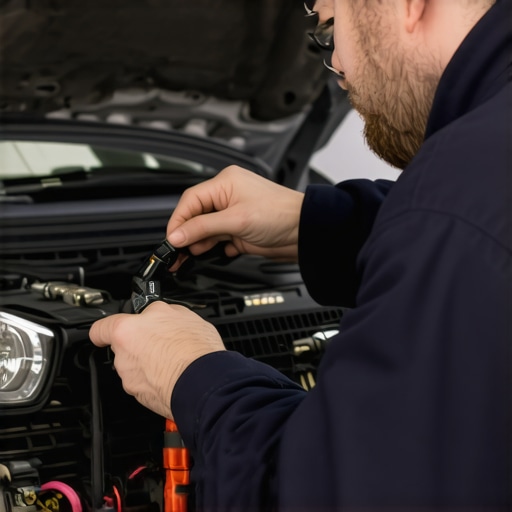
Illustration of a technician inspecting brake sensor wiring, highlighting proper connection points and cleaning contacts.
Test Drive and Confirm Improvements
After performing all these steps, take your vehicle for a test drive. Pay close attention to pedal responsiveness; it should feel firm and instant. During my testing, I pressed the brake pedal quickly multiple times, and the response was immediate, much like pressing a button on a well-calibrated device. If lag persists, revisit each step, double-check connections, and ensure no software updates are pending. Consistent testing helps confirm that your efforts have restored brake responsiveness and safety.
Many car owners assume that routine maintenance tasks like oil changes, diagnostics, and brake service are straightforward, but these misconceptions can lead to costly mistakes. A common myth is that changing oil every 3,000 miles is always necessary; however, modern synthetic oils and engine innovations in 2026 suggest longer intervals—yet many technicians still recommend outdated schedules. Relying solely on scan tools for diagnostics is another pitfall. As I detailed in my post on fact vs. fiction in vehicle diagnostics, scanners can often miss critical issues, especially with complex systems like brake-by-wire, which today require nuanced interpretation beyond code readings.
A major hidden nuance pertains to brake service. Many assume that replacing pads or rotors solves all issues, but in 2026, electronic calipers and sensors can give false wear alerts. This leads to unnecessary parts replacement and overlooked underlying system faults. Proper diagnosis involves verifying sensor calibration and software updates—cutting-edge skills that many overlook.
Another mistake is ignoring the advanced diagnostics that leverage AI algorithms, which aim to predict problems before they occur. While these tools are powerful, they can also provide false positives if not calibrated correctly or if outdated data is used. According to automotive experts, the hidden trap is trusting these systems blindly without understanding their limitations; as noted in AI’s blind spots in vehicle diagnostics, human oversight remains critical.
Frequent auto repairs often overlook this technology gap. For example, during an oil change or brake inspection, overlooking software calibration or hardware integrity can result in ongoing issues that look fixed but aren’t. If you rely on smart diagnostics without confirming mechanical conditions, you’re playing a dangerous game.
To avoid these common pitfalls, consider integrating advanced diagnostic approaches with traditional mechanical checks. For instance, calibrating brake sensors or updating software before replacing parts can save money and improve safety. Moreover, understanding the limits of your scan tools, especially in 2026 models with AI-driven systems, is essential. This is why I always recommend staying up to date with essential diagnostic tools for 2026.
Remember, routine maintenance is more than just swapping parts—it’s about understanding the evolving automotive landscape. Technology enhances our capabilities but also introduces new complexities. Have you ever fallen into this trap? Let me know in the comments.
Investing in Precision Equipment for Reliable Auto Maintenance
To ensure your vehicle stays at peak performance, I rely heavily on a quality diagnostic scanner that is compatible with 2026 models. Unlike generic code readers, my choice is a professional-grade tool capable of accessing ABS, brake-by-wire, and AI-calibrated modules. This scanner’s ability to interpret complex data streams allows me to identify hidden issues early, particularly those related to brake system lag, which is increasingly software-dependent.
Importance of Firmware Updates and Software Calibration
Cars are continually evolving, and the latest firmware plays a critical role in maintaining system integrity. I make it a routine to check for updates, especially after OTA patches, ensuring that my vehicle’s diagnostics software remains synchronized with the latest fixes and enhancements. Regular updates help prevent false error readings and improve the longevity of sensitive components like sensors and electronic calipers. This practice is essential because outdated software can mask underlying problems or introduce new lag issues, as detailed in this expert guide.
Calibrating Sensors for Long-Term Performance
Sensor calibration isn’t a one-and-done process; it requires periodic re-evaluation as your vehicle ages or undergoes repairs. I perform calibration resets using both my diagnostic tool and manual methods described in the vehicle manual. For example, after replacing brake sensors or updating software, recalibrating the system ensures instant pedal response and accurate wear alerts. Consistent calibration extends sensor life and reduces false signals, ultimately saving you money and improving safety.
Tools I recommend for DIY Maintenance
Beyond diagnostics, investing in quality hand tools and calibration kits makes a difference. For example, a dedicated electronic contact cleaner helps maintain clean connections, preventing lag caused by corrosion. I also suggest acquiring a torque wrench suitable for precise tightening—over-tightening or under-tightening connectors can lead to sensor misalignment or electrical shorts. My personal setup includes a digital multimeter for voltage testing and a dedicated software updater that simplifies firmware management, helping me keep systems aligned with manufacturer specifications.
Planning for the Future of Vehicle Maintenance
Looking ahead, the trend points toward more integrated diagnostic systems that leverage AI and cloud connectivity. These advancements will simplify maintenance but also demand that owners stay informed about software versions and calibration standards. Maintaining your vehicle over time means adopting a proactive approach—regular software updates, sensor calibrations, and the use of advanced diagnostic tools will become even more vital. The evolution of vehicle tech will reduce mechanical repairs but increase the importance of software health, making digital tools essential companions in everyday maintenance.
How do I maintain my vehicle’s electronic systems for long-term reliability?
To keep your digital vehicle systems running smoothly, I recommend establishing a regular schedule for software updates and sensor calibrations, especially after any repairs or software patches. Using diagnostic tools capable of deep system analysis will help you catch issues before they escalate. Think of your vehicle’s software like a smartphone—keeping it up-to-date prevents lag and security vulnerabilities. For more detailed insights, consider reading this comprehensive guide. As a practical step, try performing a software calibration reset today after your next oil change — it’s a simple action that can significantly improve your vehicle’s responsiveness and safety.In my journey through modern automotive tech, I’ve realized that the most valuable lessons often come from unexpected sources—like the subtle quirks of brake-by-wire systems. One lightbulb moment was discovering how software updates can mask underlying hardware issues, and how calibration resets are sometimes more effective than replacing parts. These insights remind me that staying curious and proactive is key—reading between the lines of diagnostic codes and trusting your own senses can prevent costly surprises. Remember, the real power lies in understanding your vehicle’s digital heartbeat, not just its mechanical ones.
More Details