
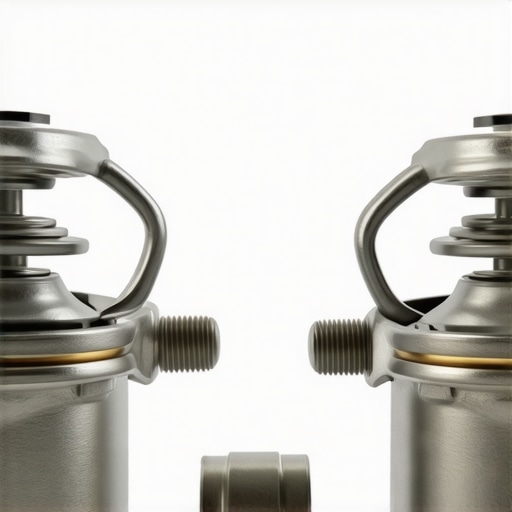
I’ll never forget the winter morning I drove forty miles to work wearing a parka and thick gloves inside my own cabin. The condensation on the windshield was thick enough to write my name in, but my fingertips were too numb to even try. I kept tapping the heater vents, waiting for that sweet blast of warmth that never came. I was convinced my heater core had died, a nightmare job that involves ripping out the entire dashboard. After three days of freezing, a neighbor watched me shivering in the driveway and told me to check a tiny, fifteen-dollar metal valve. Sure enough, my thermostat was stuck wide open, letting coolant flow through the radiator constantly and never letting the engine reach operating temperature. It was a humbling lesson in starting with the simplest fix first. Today, I’m going to show you exactly how to diagnose this sneaky little part before you spend a fortune on repairs you don’t need. We are going to look at the visceral signs of a failing thermostat and the quick tests you can do in your driveway without fancy tools.
Stop Guessing and Start Feeling the Radiator Hoses
If you are wondering why your cars heater takes forever to warm up in the cold, the answer is usually sitting right at the engine outlet. When a thermostat is stuck open, the engine acts like it’s being dunked in an ice bath constantly. On the flip side, a thermostat stuck closed is a ticking time bomb. It traps the heat inside the engine block, leading to catastrophic failure. You might even see the radiator cap mistake that causes overheating in Las Cruces traffic if you aren’t careful with how you handle the pressure. One trick I always use is the radiator hose trick to check for a thermostat thats stuck closed. It involves feeling the temperature difference between the upper and lower hoses as the car warms up. If one stays ice cold while the other is scorching, you’ve found your culprit.
Is a bad thermostat really a death sentence for my engine?
You might be thinking that a little temperature fluctuation isn’t a big deal, but the stakes are higher than a chilly commute. According to the Car Care Council, cooling system failure is the leading cause of engine-related breakdowns on the highway, often caused by neglected components like a five-dollar gasket or a stuck valve. Early in my DIY days, I ignored a creeping temperature needle for a week because I was ‘too busy.’ That mistake cost me a head gasket and a month of bus rides. Have you ever noticed your temperature gauge acting like it’s possessed, swinging from cold to hot for no reason? If so, you’re likely dealing with the exact problem we’re tackling today. This is the moment where you decide if you’re going to be the driver stranded on the shoulder or the one who caught the problem in the garage.
Let the Engine Talk to You Without a Scanner
To understand why your car is acting up, you need to treat the thermostat like a high-stakes gatekeeper. In a healthy system, this spring-loaded valve stays tightly shut until the engine reaches roughly 190 to 210 degrees Fahrenheit. It is like a nightclub bouncer keeping the cool coolant out of the engine until the party inside gets warm enough to handle the flow. If that bouncer falls asleep and stays open, your engine never reaches its efficient operating range, killing your fuel economy. If the bouncer locks the door and refuses to open, your engine will cook itself in minutes. This is why vehicle diagnostics explained easy checks before your road trip are so vital; you do not want to find out the bouncer is on strike while you are climbing a steep mountain pass with a full load.
Feel the Temperature Difference Between Hoses
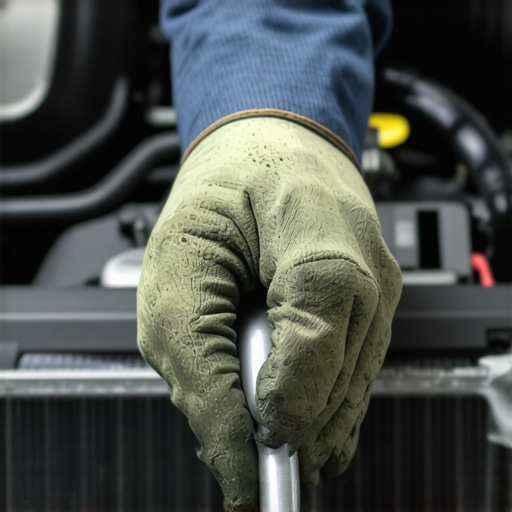
The most effective way to diagnose this without a single tool is the two-hose touch test. Start your car when the engine is completely cold. Locate the upper and lower radiator hoses—they are the thick black tubes connecting the radiator to the engine block. After about five to ten minutes of idling, the upper hose should suddenly start getting hot to the touch. If you feel it getting warm almost immediately after startup, your thermostat is likely stuck open because coolant is flowing through the radiator before it is supposed to. However, if the dashboard gauge says the engine is getting hot but the upper hose stays cold while the lower hose stays cool, the thermostat is stuck shut. It is refusing to let that heat escape to the radiator. This simple physical check is one of those decoding vehicle diagnostics what your car is trying to tell you moments that can save you a three-thousand-dollar engine rebuild.
The Kitchen Stove Method for 100% Certainty
If the hose test is inconclusive, you have to pull the part for a physical inspection. I learned this the hard way on an old project truck years ago. I bought a cheap replacement part, threw it in, and the truck still overheated. I was convinced I had a blown head gasket and was ready to scrap the vehicle. Before I tore the top of the engine off, an old neighbor told me to cook the thermostat. I put the brand-new part in a pot of water on the stove with a thermometer. The water hit a rolling boil, and the valve did not move an inch. The brand-new part was defective right out of the box. Using auto repair hacks save money without sacrificing quality means verifying parts before you spend hours installing them. To do this, suspend the thermostat in a pot of water—do not let it touch the bottom—and heat it up. Watch for the valve to begin opening at its rated temperature. If it stays closed at 212 degrees, it is a paperweight.
Watch Out for Sludge and Poor Additives
Sometimes the thermostat is not mechanically broken; it is just filthy. Over time, old coolant breaks down and turns into a gelatinous mess that physically prevents the valve from moving. I have seen many DIYers try to fix a small leak by pouring stop-leak gunk into their system, but the truth about those stop leak additives in your radiator is that they often clog the small passages of the thermostat itself. This buildup acts like glue, turning a minor leak into a major overheating event. If you pull your thermostat and see a thick, brown coating, it is a sign that your entire cooling system needs a deep chemical flush to protect your new parts and follow top auto repair tips to extend your vehicles lifespan. If the coolant looks like mud, the thermostat was just the first casualty of a neglected system.
Why Running Too Cool is a Silent Engine Killer
The most common misconception in the garage is that as long as the needle isn’t in the red, everything is fine. In fact, many drivers think a car that runs slightly ‘cold’ is actually safer. I used to believe this until I tore down a motor that had been running with a stuck-open thermostat for two years. The interior of that engine looked like it had been filled with tar. When your engine fails to reach its designated operating temperature, the oil never gets hot enough to evaporate the moisture and unburnt fuel that naturally blow past the piston rings. This leads to the hidden sludge building up behind your clean dipstick, which eventually chokes your oil pump. Most people worry about a meltdown, but the slow decay caused by a cold engine is just as lethal over time. This is one of those top auto repair tips to extend your vehicles lifespan that most people ignore until it is too late.
Why Does a Cold Engine Mess With My Shifting?
It sounds like a stretch, but your cooling system and your transmission are deeply interconnected. Modern Engine Control Units (ECUs) monitor the coolant temperature to decide when to allow the transmission to enter ‘overdrive’ or lock the torque converter. If your thermostat is stuck open and the engine stays at 160 degrees instead of 195, the computer assumes the car is still in ‘warm-up mode.’ This can lead to the sensor that ruins your shifting but doesnt trigger a light, leaving you wondering why your fuel economy has tanked and your shifts feel sluggish. This nuance is why how advanced vehicle diagnostics prevent costly breakdowns is a topic every high-mileage driver should study. The problem isn’t the transmission; it is a five-dollar valve telling the computer the wrong story.
Your Dashboard Gauge is Likely Lying to You
Here is the ‘oops’ factor most DIYers miss: the temperature gauge on your dash is not a precision instrument. Manufacturers design those needles to stay perfectly in the middle as long as the temperature is within a broad ‘safe’ range—usually anywhere from 185 to 225 degrees. By the time that needle actually starts moving toward the red, the engine is already dangerously hot. To truly see what is happening, you need to look at the raw data. Research from SAE International indicates that engines running just 20 degrees below optimal temperature experience significantly higher rates of friction-related wear because the oil viscosity remains too thick to flow into the tightest tolerances. Using the 20 tool every driver needs for basic electrical troubleshooting—specifically an OBD-II dongle paired with a smartphone app—allows you to see the exact degree-by-degree climb. If you see the temperature fluctuating wildly, you might even be dealing with why your engine temperature climbs only when the AC is on, a classic sign of a failing fan or a partially clogged radiator. 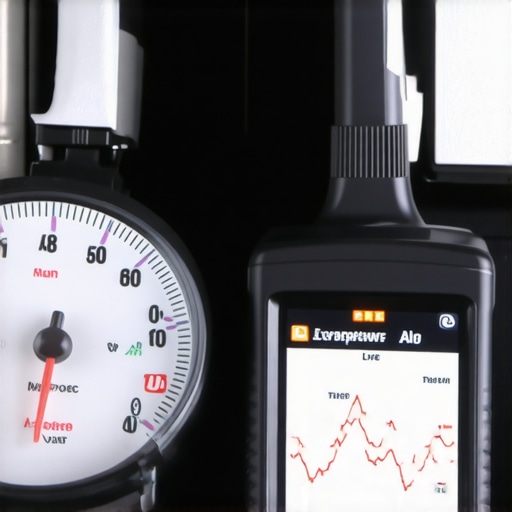
Don’t Fall for the ‘Cooler is Better’ Myth
I have seen guys in the desert swap in a 160-degree thermostat thinking it will give them more ‘headroom’ against the heat. This is a massive mistake. Engines are engineered to expand at a specific rate; running them too cool means the metal components never reach their intended size, leading to increased ‘blow-by’ and accelerated cylinder wall wear. You aren’t just losing efficiency; you are physically grinding down your engine. If you want to protect your motor, focus on oil change innovations technologies that save your engine rather than trying to outsmart the engineers who designed the cooling system. Have you ever fallen into the trap of thinking a ‘cool’ engine was a healthy one? Let me know in the comments. This is exactly the kind of nuance we cover in decoding vehicle diagnostics what your car is trying to tell you, helping you spot the difference between a minor quirk and a looming disaster.
While the ‘touch test’ on the radiator hoses is a great starting point, if you want to get serious about your garage setup, you need to invest in an infrared thermometer. I personally use a Fluke 62 Max because it lets me pinpoint exactly where a clog might be in the radiator core. If you see a 30-degree drop in one specific corner of the radiator fins, you’ve found a cold spot where sediment has settled and restricted flow. This level of precision is why how advanced vehicle diagnostics prevent costly breakdowns is a total game-changer for the home mechanic. Instead of throwing parts at a problem and crossing your fingers, you are using real-time data to find the exact failure point before the engine overheats. 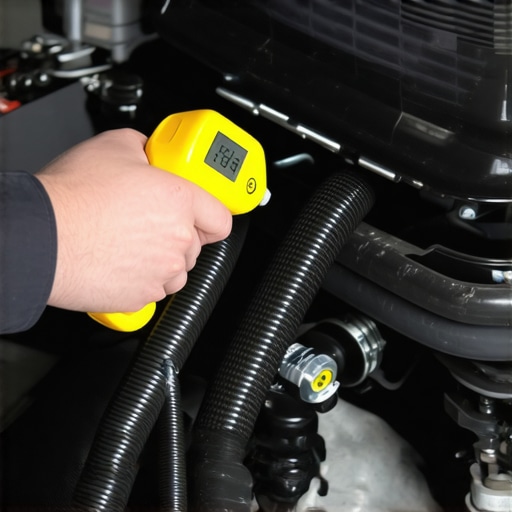 One of the biggest mistakes I see during a thermostat swap is air entrapment. Modern engines often have cooling passages that sit higher than the radiator cap, creating stubborn air pockets that lead to localized boiling. To fix this, I stopped using a standard funnel and started using a vacuum coolant refiller. This tool uses shop air to pull a vacuum on the entire system—actually collapsing the hoses flat—and then sucks the fresh coolant in, ensuring zero air bubbles remain. This is the gold standard method described in Gates Corporation Technical Bulletin #002, which emphasizes that even a small air pocket can cause a ‘hot spot’ that warps cylinder heads. If you are looking for auto repair hacks save money without sacrificing quality, this tool is the one that pays for itself after the very first job.
How do I maintain my car’s cooling system for the long haul?
The secret isn’t just changing the coolant; it is about monitoring the chemistry of the fluid. I recommend testing your coolant’s pH levels every year with simple test strips. Over time, coolant becomes acidic and starts eating your water pump’s impeller from the inside out. By staying on top of this, you are following the best top auto repair tips to extend your vehicles lifespan. Don’t forget to inspect your radiator cap regularly. It is incredibly easy to overlook, but as we discussed in the radiator cap mistake that causes overheating in Las Cruces traffic, a weak spring in that cap will lower the boiling point of your entire system, leading to phantom overheating issues on hot days. Looking forward, the simple mechanical thermostat is becoming a relic. We are already seeing a shift toward electronically controlled ‘mapped’ thermostats that the ECU can adjust on the fly based on engine load and ambient air temperature. In the EV world, thermal management is even more complex, involving heat pumps and multi-way valves to keep battery packs within a tiny five-degree window. Whether you are maintaining an old diesel or a new hybrid, the fundamentals of heat transfer remain the same. If you haven’t done it yet, I challenge you to go out and use the 20 tool every driver needs for basic electrical troubleshooting to check your actual live coolant temperature sensor readings tonight. Seeing the live data climb in real-time will change how you look at your dashboard forever.
The Hardest Lessons I Learned Smelling Antifreeze
If I could go back to that shivering version of myself in the driveway, I would offer a few pieces of advice that aren’t in the factory service manual. First, never assume a new part is a good part. I have seen countless ‘new’ thermostats fail right out of the box, which is why I now swear by the stove-top test before I ever pick up a wrench. Second, pay attention to the ‘jiggle pin’ or bleed valve. Many people install thermostats with that little pin facing down, trapping air and causing an immediate overheat. Always point it toward the 12 o’clock position to ensure air can escape.
Another lightbulb moment came when I realized that the hidden sludge building up behind your clean dipstick is often the direct result of a thermostat that won’t let the engine reach its peak temperature. You think you’re saving the car by keeping it cool, but you’re actually poisoning the oil with moisture and unburnt fuel. These are the kinds of top auto repair tips to extend your vehicles lifespan that shift you from a ‘parts changer’ to a true mechanic. It is about seeing the whole system, not just the single component.
Gear That Saves My Knuckles and My Sanity
I do not believe in buying every gadget on the shelf, but there are three things I won’t do a cooling job without. I rely heavily on an infrared thermometer to spot radiator clogs—it is like having X-ray vision for your cooling fins. For refilling, I exclusively use a vacuum coolant refiller; it is one of those auto repair hacks save money without sacrificing quality because it guarantees you won’t have a head-warping air pocket in the system. #IMAGE_PLACEHOLDER_E# Finally, I always keep the 20 tool every driver needs for basic electrical troubleshooting—a simple OBD-II scanner—plugged in during the test drive. Watching the digital temperature readouts in real-time is the only way to verify the dashboard gauge isn’t lying to you while you bleed the air out.
Confidence Behind the Wheel Starts Under the Hood
Taking control of your car’s cooling system is one of the most empowering DIY tasks you can tackle. It requires patience, a bit of tactile feeling of the hoses, and a willingness to look beyond the surface level of the dashboard. By decoding vehicle diagnostics what your car is trying to tell you, you are moving beyond guesswork and into the realm of precision. This knowledge doesn’t just save you thousands in labor costs; it gives you the peace of mind to drive through a summer desert or climb a mountain pass without glancing at the temp gauge every thirty seconds. You have got this, and your engine will thank you for the next hundred thousand miles.
Have you ever spent hours chasing a mysterious overheating issue only to find out it was a simple five-dollar gasket or a stuck valve? Let me know your biggest cooling system headaches in the comments below!