
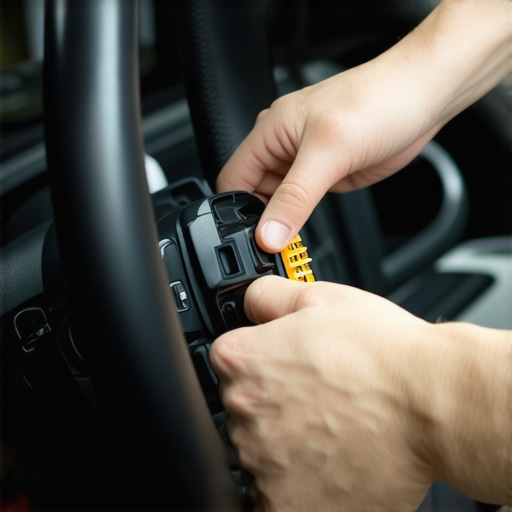
Picture this: it’s 2:15 AM on a Tuesday. The neighborhood is dead silent until, suddenly, your driveway sounds like a wedding procession for a couple you’ve never met. That was me three years ago. I stood there in my bathrobe, frantically punching the steering wheel of my old truck, hoping to unstick whatever ghost was holding the horn down. It didn’t work. In my panic, I actually tried to pry the horn cover off with a flathead screwdriver and ended up scarring the plastic for life. It was a classic case of acting before thinking, and it’s exactly why I’m writing this today. You don’t need to destroy your interior to get some peace and quiet. We’re going to walk through how to kill that noise in seconds and then figure out why your car decided to start screaming at the moon. Once you’ve silenced the beast, you can take a breath and understand what your car is yelling at you without the pressure of an angry HOA.
Shut That Thing Up Before the Neighbors Call the Cops
The immediate priority is stopping the noise. A car horn isn’t just annoying; it’s loud enough to cause physical distress. According to the Hearing Health Foundation, a car horn can reach 110 decibels, which is similar to a live rock concert. My biggest early mistake was thinking I had to find a specific wire to snip. Please, put the wire cutters down. The fastest way to silence a runaway horn is to find the fuse box and pull the horn fuse. If you can’t find the fuse map quickly, you can always disconnect the negative terminal on the battery. It’s effective, it’s safe, and it buys you the silence you need to actually think. Before you dive into the deep end of essential auto repair strategies, just focus on that fuse. Have you ever been caught in a situation where your car made a scene at the worst possible moment? It’s a rite of passage for every DIYer, I promise.
Is This Fix Actually Going to Cost Me a Fortune?
This is where most people start to sweat, thinking they need a whole new steering column or a complex computer replacement. The truth is, most “infinite honking” issues are caused by a cheap, stuck relay or a worn-out horn switch—problems you can usually solve for the price of a decent lunch. You don’t always need a master mechanic to grab a simple electrical tool and find the culprit yourself. Usually, it’s just a mechanical part that’s lived past its prime or a bit of moisture that’s shorted a circuit. We aren’t looking at a total engine overhaul here; we’re looking for a simple electrical gremlin that just needs to be evicted. Setting the stage for the actual fix requires a little patience, but I’ll show you how to narrow it down without losing your mind.
Pop the Hood and Pull the Fuse Immediately
Once you’ve accepted that the noise isn’t going to stop on its own, your first move is locating the fuse box. Most cars have two: one under the dashboard and one under the hood. You are looking for the one under the hood because it usually houses the high-amperage components like the horn. I remember my first time dealing with this on a 2005 Chevy; I was so flustered I pulled the fuel pump fuse by mistake and the car died while the horn kept screaming. Don’t be me. Look at the diagram on the underside of the fuse box cover. Find the slot labeled ‘HORN’ or with a small trumpet icon. Use the plastic tweezers—the fuse puller—located inside the box to yank that little guy out. The silence will be instantaneous. If you can’t find the fuse, your backup plan is a 10mm wrench on the negative battery terminal. It’s the ultimate ‘off’ switch for every electrical ghost in the machine.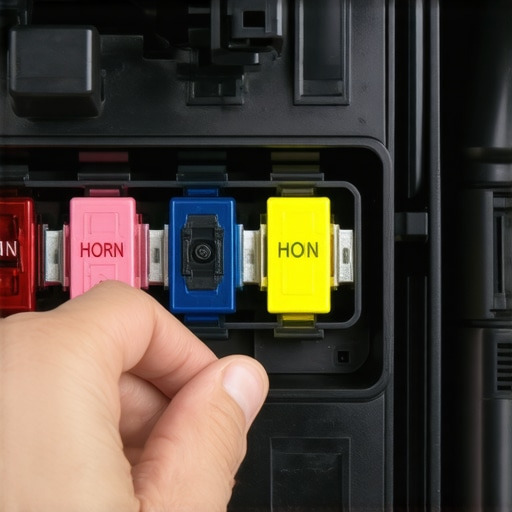
Swap the Relay to See if it’s Just a Stuck Switch
Think of a relay as a heavy-duty light switch that allows a tiny signal from your steering wheel to move a lot of power to the actual horn. Sometimes, the internal contacts inside that relay literally weld themselves together from heat or age, keeping the circuit closed forever. To test this, find another relay in the box with the same part number—usually the one for the fog lights or the rear defroster—and swap them. If the honking stops when you put the ‘bad’ relay into a different slot, you’ve found your culprit for less than ten dollars. This is a classic example of why grabbing a simple electrical tool like a test light can save you a $150 diagnostic fee at the dealer. If the relay swap doesn’t work, you might be dealing with a deeper issue that standard OBD-II scanners usually can’t find.
The Clock Spring and Steering Wheel Nightmare
If pulling the relay doesn’t stop the power flow when you put it back in, the problem is likely mechanical, buried deep inside your steering column. There is a component called a clock spring—a coiled ribbon of wire that allows the steering wheel to turn while keeping a constant electrical connection to the airbag and the horn. Over years of thousands of turns, these wires can fray and short out. When this happens, the horn thinks you’re leaning on it with all your weight. I once worked on a truck where a spilled soda had seeped into the steering wheel buttons, creating a sticky bridge that kept the horn contact closed. We had to use some clever diagnostics with a test light to prove the signal was coming from the wheel and not a short in the bumper. If you’ve reached this stage, you are moving from basic maintenance into serious essential auto repair strategies because you have to be extremely careful with the airbag assembly tucked right behind that horn pad.Everyone tells you to just swap the part and hope for the best, but that is how you end up spending $400 on a steering wheel you did not need. In my experience, the ‘parts cannon’ is the most expensive way to fix a car. The hidden nuance most DIYers miss is that a horn circuit is not just a switch and a buzzer; it is a networked system. While you are frantically decoding vehicle diagnostics, remember that the computer often will not flag a stuck relay because, from its perspective, you are just a very enthusiastic driver who loves the sound of their own horn. According to the Car Care Council, electrical system failures are frequently misdiagnosed by amateurs who rely solely on error codes rather than manual circuit testing. 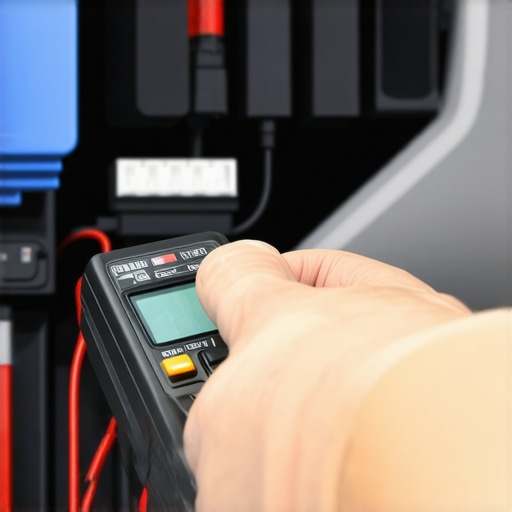
Why Do Most Scanners Ignore the Real Electrical Ghost?
The trap is simple: standard scanners look for open circuits or hard failures, not ‘soft’ shorts caused by moisture or carbon tracking. If your horn starts blaring after a car wash or a heavy rain, it is likely not a mechanical break; it is a conductive path formed where it should not be. This is why your OBD-II scanner cannot find the real electrical ghost haunting your wires. You need to look for high resistance at the ground points. I have seen people spend days troubleshooting only to find a rusted bolt on the frame was the true culprit. You can usually find these by using a simple test light to see if power is leaking where it should not be. Have you ever replaced a part only to find the problem was still there ten minutes later? Let me know in the comments—I have definitely been there! Before you give up, make sure you have the essential electrical tools to actually see the voltage, not just guess at it.Once you move past the initial panic of a screaming horn, you realize that successful DIY work isn’t just about stopping the noise; it is about having the right gear so you never find yourself in a bathrobe at 2 AM ever again.
Stop Guessing with a Power Probe
If I could go back in time, I would tell my younger self to stop using a paperclip to jump circuits. I personally swear by the Power Probe because it allows me to apply battery power or ground directly to the horn assembly with the press of a thumb. This is how you differentiate between a dead horn unit and a broken wire in the dash. While I previously mentioned that a simple $20 electrical tool is enough to get started, graduating to a tool that can actively inject power changes the game. It’s part of the essential auto repair strategies that separate the weekend warriors from the pros. If you apply 12 volts directly to the horn and it honks, you know the horn is fine and the ghost is living somewhere in your steering column or relay. 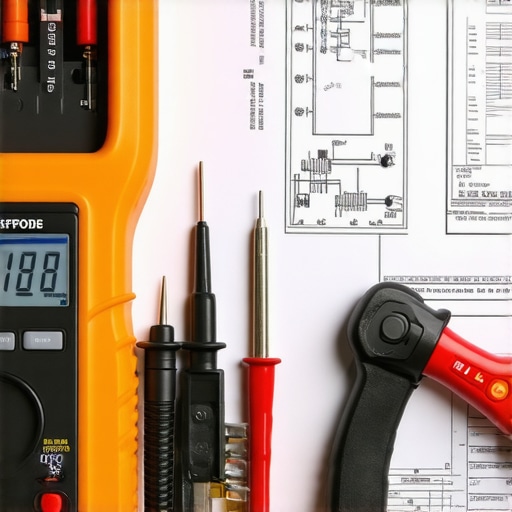
How do I maintain my car’s electrical system over time?
The secret to long-term reliability is preventing corrosion before it starts. Every time you perform an oil change, take five minutes to inspect your battery terminals and main ground points. According to technical standards from SAE International (Standard J1939), maintaining clean, low-resistance connections is critical for the high-speed data networks (CAN-bus) that modern cars use to communicate. I always apply a thin layer of dielectric grease to my connector pins after any repair; it keeps moisture out and prevents the ‘green crust’ that eventually shorts out your horn or lights. This is one of those top auto repair tips that costs pennies but saves you from a $1,000 wiring harness replacement down the road.
Why Modern Wiring is Becoming a Data Highway
We are entering an era where cars are less like machines and more like rolling computers. In the past, your horn was a simple loop of copper. Today, pushing that horn button sends a digital request to a Body Control Module (BCM), which then decides whether or not to trigger the relay. This is why advanced vehicle diagnostics prevent costly breakdowns; they allow you to see if the computer is even ‘seeing’ your button press. I predict that within the next decade, we won’t even have dedicated fuses for things like horns; we will be using ‘smart’ solid-state drivers that shut off automatically when they detect a short. Before that future arrives, you need to master the basics of vehicle diagnostics explained for today’s hardware. I challenge you to grab a test light this weekend and map out your fuse box—knowing where your power flows is the ultimate automotive superpower.
Hard-Earned Lessons from My 2 AM Parking Lot Battles
After three years of chasing electrical gremlins, I’ve realized that the horn isn’t just a noisemaker; it’s the canary in the coal mine for your car’s wiring. One ‘lightbulb moment’ for me was discovering that a slightly loose ground wire can cause more chaos than a completely snapped one. It creates an intermittent connection that makes the horn sound like it’s possessed. I also learned that you should never ignore a ‘soft’ click in the steering wheel; that’s often the sound of a clock spring starting to fray. These auto repair hacks save money without sacrificing quality because they teach you to listen to the car before the components actually fail. Remember, if the horn stays on after you pull the fuse and put it back, the relay is almost certainly the villain—don’t overcomplicate it.
The Setup That Saved My Sanity and My Wallet
If you want to avoid a repeat performance of the midnight honking symphony, there are a few things I keep in my tool bag at all times. First, a dedicated fuse puller and a spare 15-amp fuse; you’d be surprised how often the original puller goes missing when you need it most. I also swear by a small tube of dielectric grease. Applying this to your horn’s exterior connectors is one of the top auto repair tips to extend your vehicle’s lifespan because it blocks the moisture that leads to those embarrassing shorts. For those who want to get serious, having the $20 tool every driver needs for basic electrical troubleshooting will turn a two-hour headache into a five-minute fix. I personally trust factory service manuals over random forum posts—accuracy is everything when you’re probing live circuits.
#IMAGE_PLACEHOLDER_E#
Mastering the Silence and Your Next DIY Victory
Fixing a stuck horn is more than just a repair; it’s a masterclass in how your car’s invisible systems work. When you finally track down that short or swap that sticky relay, you gain a level of confidence that no trip to the dealership can provide. You’re no longer at the mercy of the machine. These vehicle diagnostics explained are your first steps toward total automotive independence. Don’t be afraid to poke around and learn your fuse box before an emergency happens. Have you ever had your car make a scene in a public place, or were you lucky enough to have it happen in your own driveway? Let me know your most embarrassing car noise story below!