
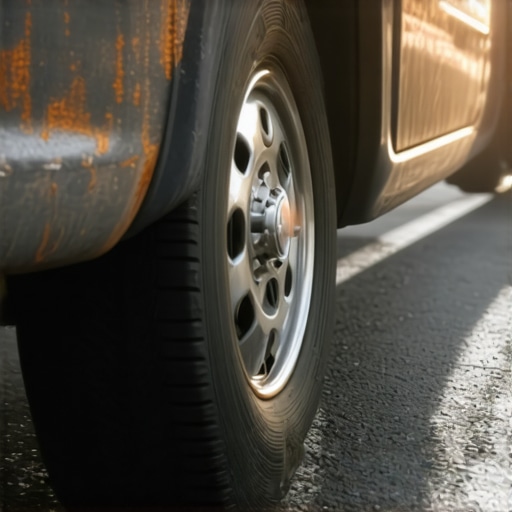
I still remember the sinking feeling in my stomach when I parked my old truck on a 15-degree incline, pulled the parking brake handle until my knuckles turned white, and felt the vehicle groan as it started to roll backward anyway. It’s one of those visceral moments where your heart skips a beat and you realize that ‘Park’ on your transmission isn’t a magical force field. If you’ve ever had to hunt for a heavy rock to shove under your tire just to keep your car in the driveway, you are in the right place. Today, I am going to walk you through exactly why that lever is failing you and how we can get that grip back without spending a fortune at a shop. Have you ever felt that terrifying moment where the car starts to creep after you’ve already set the brake? I’d love to hear your story in the comments.
When the Handbrake Just Gives Up
Early in my DIY days, I made a classic rookie mistake: I thought a loose handle just needed more muscle. I kept yanking it harder and harder every time I parked on a slope, thinking I was ‘tightening’ the system. In reality, I was just stretching the steel cable until it finally snapped, leaving me with a useless lever and a much bigger repair bill. Most people don’t realize that a parking brake is a mechanical system that requires fine-tuning, not brute force. It is all part of the ultimate guide to brake service for anyone who wants to stay safe on the road. If your car is drifting, it’s usually because the shoes or pads have worn down, the cable has lost its tension, or the self-adjusters are seized up from lack of use.
Is This Actually Worth the Worry?
You might be thinking that as long as your automatic transmission is in ‘Park,’ you are totally fine. That is a dangerous gamble. Relying solely on that tiny metal pin in your transmission, known as the parking pawl, puts immense stress on your drivetrain. I learned this the hard way years ago when I ignored a weak handbrake and ended up with a transmission that made a sickening clunk when you shift into gear. According to the National Highway Traffic Safety Administration (NHTSA), mechanical failures in parking systems contribute to thousands of roll-away accidents every year, proving that this isn’t just about convenience—it is about keeping your car from rolling into your neighbor’s living room.
The Panic of the Slow Roll
When you are dealing with hills, the physics are working against you every second. If you have noticed a burning smell coming from your rear wheels after a normal drive, your parking brake might actually be stuck in a partially engaged position, which wears down the friction material until it can no longer hold the weight of the car on a slope. This is one of the biggest brake service myths busted—people think the parking brake is ‘set and forget,’ but it is actually one of the most neglected parts of vehicle maintenance. We are going to look at how to inspect these components yourself so you can park with confidence again.
Finding the Slack Before You Start Turning Wrenches
Before you start tearing your interior apart to find the adjustment nut, you need to determine if the cable is actually the problem. Think of your parking brake cable like a guitar string; if it is too loose, you won’t get any tension, and if it is too tight, you are going to snap it. I usually start by decoding vehicle diagnostics through a simple tactile test: pull the lever and count the clicks. If you are hitting ten or twelve clicks before the car stays put, your cable is either stretched or the rear shoes have too much clearance.
The Art of Clicking the Star Wheel
Most cars with rear drum brakes (or ‘drum-in-hat’ rotors) use a star wheel adjuster. This is a small, geared wheel that pushes the brake shoes closer to the drum. One time, I spent two hours trying to fix a ‘rolling’ truck only to realize the star wheel was installed backward by the previous owner. It is a messy, greasy job, but using a flathead screwdriver to flick that wheel through the backing plate hole until you feel a slight drag on the tire is the gold standard for a firm handle. This is one of those auto repair hacks that costs zero dollars but restores total confidence in your parking.
Why Your Caliper Pins Might Be the Real Culprit
If you have a newer vehicle with disc brakes all around, the parking brake often uses the main brake calipers. If your car is not holding, you need to check how to tell if your caliper slide pins are bone dry. When those pins seize up, the caliper cannot squeeze the pads against the rotor evenly. I have seen pins so rusted they required a torch to remove, which is why it is vital to use high-temp silicone grease every time you are performing a brake service. If the pins move freely but the brake still won’t hold, the internal screw mechanism inside the caliper might be failing, which usually requires a specialized tool to reset.
Tightening the Cable at the Source
Sometimes the stretch is in the cable itself, especially on older high-mileage vehicles. You will usually find an adjustment nut under the center console or underneath the car where the two rear cables meet the single front cable. I remember cranking down on one of these nuts in a rainy parking lot once, just trying to get the car to stay still on a slope. It is a quick fix, but be careful—over-tightening here is a recipe for a burning smell coming from your rear wheels as you drive down the highway. You want just enough tension so that the brakes fully disengage when the handle is down. Proper tensioning is among the top auto repair tips for keeping your drivetrain healthy, as it prevents the car from ‘resting’ on the transmission gears.The biggest myth I see in the DIY community is that a ‘loose’ parking brake is always a cable issue. Everyone says just crank down the adjuster nut under the console, but in my experience, that is often the worst thing you can do. When you tighten the cable to compensate for worn-out shoes or seized hardware, you aren’t fixing the grip—you are just eliminating the safety slack. This leads to the shoes ‘dragging’ against the drum while you drive, creating heat that crystallizes the friction material. This is one of the most common brake service myths busted by professionals who actually see the damage it causes to the hub and bearings. If you have ever felt your car struggle to maintain speed on the highway, you might be fighting your own over-tightened brake.
Why You Should Stop Cranking That Adjustment Nut
I have seen so many weekend mechanics snap their front cables because they ignored the ‘Oops’ factor: the rear pivot arm. In many systems, the lever on the back of the brake assembly gets stuck due to road salt and grime. If that arm doesn’t return to its home position, your cable will feel loose even if the brakes are partially engaged. Tightening the cable at the handle in this scenario is like putting a Band-Aid on a broken leg. Instead of a firm stop, you get a burning smell coming from your rear wheels as the system overheats. According to a study by the National Institute for Automotive Service Excellence (ASE), over 40% of brake-related failures stem from mechanical seizures rather than actual friction wear, highlighting the need for physical lubrication over simple tensioning.
Could Your Electronic Parking Brake Be Tricking Your Scanner?
For those of you with modern Electronic Parking Brakes (EPB), the trap is even more sophisticated. You might plug in a tool and see no codes, yet the car still rolls. This happens because the computer only monitors the motor’s electrical draw, not the physical clamp force. This is why why your obd-ii scanner cant find the real electrical ghost in your braking system. The motor might be spinning perfectly, but the plastic gears inside the actuator could be stripped. I’ve seen people replace perfectly good modules when the issue was just a five-dollar plastic gear. It’s similar to how people panic over a clean oil dipstick while ignoring the hidden sludge building up behind your clean dipstick; sometimes the most important data isn’t visible on a screen.
The Advanced Way to Test Your Work
Once you think you have adjusted everything perfectly, don’t just pull the handle and call it a day. The ‘pro’ move is to jack up the rear of the vehicle and spin the wheels by hand with the brake off. If you hear a light ‘shhh-shhh’ sound, that’s normal. If the wheel stops immediately, you’ve over-tightened the cable and are headed for a meltdown. This level of attention to detail is what separates a long-lasting repair from a temporary fix. It’s the same logic applied to oil change innovations—it’s not just about the fluid, it’s about the precision of the entire system’s health. Have you ever fallen into this trap of tightening the cable only to smell burning brakes five miles later? Let me know in the comments.
The Specialized Gear That Saves Your Back
When I first started, I thought a rusty screwdriver and a pair of pliers were enough for any brake job. I was wrong. If you want to stop guessing and start fixing, you need a dedicated brake spring tool and a set of flare nut wrenches. These aren’t just for show; they prevent you from rounding off the soft metal of your brake lines. Especially when you are diving into essential auto repair strategies for frequent drivers, the right tools are non-negotiable. I personally recommend using a high-quality digital micrometer to measure drum wear; if the drum is even slightly out of spec, no amount of adjusting will fix your rolling problem. According to the Society of Automotive Engineers (SAE) J2910 Standard, the static holding capability of a parking brake system depends heavily on the surface finish of the drum or rotor and the specific coefficient of friction of the replacement lining. This means if you aren’t measuring your components with precision, you’re just guessing at your safety.
How do I keep my brake system from seizing every winter?
Maintenance isn’t a one-time event. The most effective way to ensure your parking brake works five years from now is to use it every single day. One of the most important top auto repair tips to extend your vehicles lifespan is to engage the brake even on flat ground. This prevents the cables from corroding in one position and keeps the self-adjuster mechanism moving. If you live in the salt belt, I highly suggest applying a thin layer of ceramic-based brake lubricant to the pivot points of the rear backing plate. Unlike traditional grease, ceramic lube won’t melt away under the high heat generated during heavy braking. It’s a small step that prevents the dreaded ‘stuck brake’ scenario that often leads to a burning smell coming from your rear wheels.
The Digital Shift in Handbrake Tech
Looking ahead, the traditional ‘pull handle’ is rapidly becoming a relic of the past. We are seeing a massive shift toward software-defined braking where the parking brake is integrated into the vehicle’s stability control system. Future systems will likely use predictive algorithms to apply varying levels of clamp force based on the angle of the incline detected by the car’s gyroscopes. This makes understanding how advanced vehicle diagnostics prevent costly breakdowns even more critical, as a software glitch could literally cause your car to roll away. If you’re working on a newer model, you might need the 20 tool every driver needs for basic electrical troubleshooting just to verify the signal from the electronic switch before you ever touch a wrench. My advice? Get comfortable with your OBD-II scanner now, because the mechanical lever is going the way of the cassette deck. Try this today: Next time you park, engage the brake before you shift into ‘Park’ to see if your transmission clunk disappears—it’s the best way to feel the difference a healthy system makes.
The Hardest Lesson I Learned About Brake Service
I used to believe that if the parking brake lever felt tight, the vehicle was safe. That was a lie. I learned the hard way that a tight handle often hides a seized pivot arm or a rusted cable, which is why a hands-on brake service is so much more effective than just guessing. If you ignore the mechanical side, even the most expensive vehicle diagnostics won’t show you the hidden rust eating your tension. My biggest lightbulb moment was realizing that ‘Park’ on your transmission is just a suggestion—your mechanical brake is the only thing truly standing between your car and gravity. This realization is why I always prioritize physical inspections over assumptions, helping me debunk many brake service myths busted by professionals in the field.
My Essential Kit for Every Brake Job
To stop being a ‘parts changer’ and start being a true mechanic, you need the right gear in your corner. I never start a job without a dedicated brake spring tool; it is the difference between a five-minute task and a painful trip to the emergency room. I also swear by high-temp ceramic lubricant to prevent the pivot points from seizing up during the winter. For those looking for essential auto repair strategies for frequent drivers, investing in a quality flare nut wrench set is non-negotiable to prevent rounding off brake lines. These tools, when combined with the ultimate guide to brake service, turn a stressful repair into a satisfying Saturday afternoon project that saves you hundreds in labor costs.
#IMAGE_PLACEHOLDER_E#
Reclaim Your Confidence on the Steepest Hills
There is a specific kind of peace that comes from pulling that lever and knowing, with absolute certainty, that your vehicle isn’t going to budge an inch. By mastering these top auto repair tips to extend your vehicles lifespan, you aren’t just fixing a loose cable; you are protecting your investment, your drivetrain, and your neighborhood. Don’t let a rolling car be the reason you have to call your insurance agent. By applying a few auto repair hacks like regular lubrication and star-wheel adjustment, you can park on any incline with total confidence. Grab your tools, follow the steps, and get back that rock-solid grip today. Have you ever had a parking brake fail at the worst possible moment? Let me know your story in the comments below!