
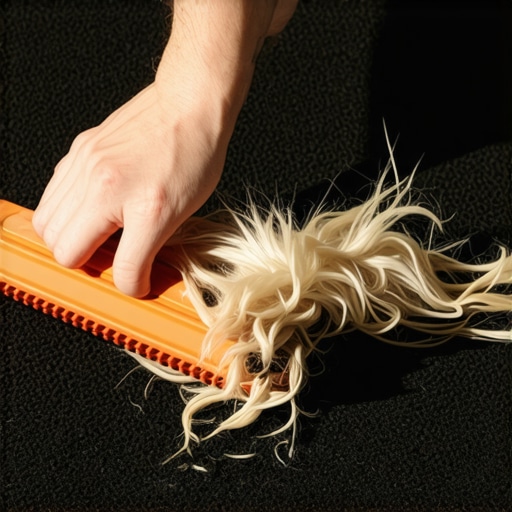
It was a humid Tuesday afternoon, and I was staring down the passenger footwell of my old SUV with something bordering on despair. My Labrador, Duke, is a “shedder” in the same way the sun is “bright”—it is just his fundamental state of being. I had spent forty-five minutes with the highest-powered vacuum at the local car wash, sweating and pulling at the carpet, and yet it still looked like a gray, fuzzy mess from the 1970s. I felt defeated. If I couldn’t even manage a little pet hair, how was I supposed to handle more serious tasks like auto repair hacks that actually save money? I realized right then that brute force isn’t the answer when it comes to detailing.
The Day I Almost Gave Up on My Interior
Earlier in my car-owning journey, I made a classic mistake that I still cringe about today: I assumed that a bigger, louder machine would fix everything. I bought a heavy-duty shop vac, thinking it would solve my problems, but the narrow nozzle just ended up scuffing my plastic trim while the dog hair stayed stubbornly woven into the fabric. It felt like the hair was literally part of the carpet. This frustration is a common hurdle for anyone trying to maintain their car’s value and follow tips to extend your vehicle’s lifespan. Today, I’m going to share the “Neighbor’s Secret”—a simple, low-tech trick that costs less than five bucks and pulls hair out of the weave like magic.
Is my car’s carpet texture actually the problem?
You might be thinking that your specific car just has “velcro carpets” that are impossible to clean. I used to think the same. The reality is that dog hair creates a static bond with synthetic fibers that no amount of suction can break. According to the American Pet Products Association, nearly 66% of U.S. households own a pet, and a huge portion of those owners struggle specifically with automotive hair management. Before you go out and spend a fortune on professional detailing or complex vehicle diagnostics for other car issues, you need to try the rubber squeegee method. It changed my life, and it will change your Saturday morning cleaning routine too. Have you ever spent an hour scrubbing only to find the hair hadn’t moved an inch? Let me know if you are currently fighting the fur war in your own driveway.
Why Suction Fails Where Rubber Succeeds
Imagine pet hair in your carpet is like a ground wire problem that mimics a bad starter motor; it is a small, stubborn connection that creates a massive, frustrating symptom. Vacuuming tries to use air to break a bond that is actually held together by static electricity and physical weaving. When you use a high-powered vacuum, you are essentially trying to pull a thread through a needle using only a fan. It just doesn’t work. To truly clear the floorboards, you need to disrupt the mechanical ‘hook’ that the hair has on the synthetic fibers. This is where the physics of friction comes into play, acting as a manual override for the static charge.
The Short-Stroke Technique for Deep-Set Fur
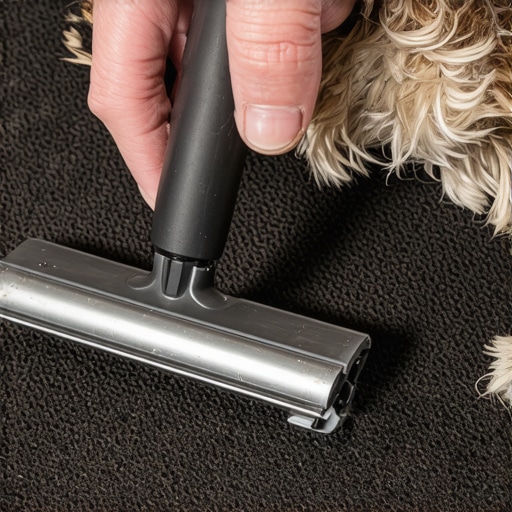
The core of this method involves a humble rubber squeegee. Just as you might perform vehicle diagnostics to find a hidden fault before a long drive, you need to identify the ‘grain’ of your carpet. Lightly mist the area with a spray bottle of water—not enough to soak it, but just enough to lubricate the surface. Use short, three-inch strokes, pulling the squeegee toward your body. You aren’t trying to ‘wipe’ the carpet; you are trying to ‘rake’ it. You will see the hair instantly begin to roll into long, gray cylinders that look like small fuzzy worms. This process is far more efficient than any oil change innovations you’ve seen; it is pure, low-tech mechanical advantage at work.
A $3 Tool That Saved a Work Truck
I remember helping my brother-in-law clean his old work truck about two years ago. He had given up on the interior and was convinced he would have to settle for a bottom-dollar price when he eventually sold it. It reminded me of why Charlotte buyers keep lowballing your junk car—if it looks neglected, people assume it is mechanically unsound too. We spent twenty minutes with a cheap window squeegee and pulled out enough golden retriever fur to fill a grocery bag. The transformation was so jarring that he actually decided to keep the truck for another year. This taught me that the right auto repair hacks aren’t always about the engine; sometimes they are about restoring the pride you feel when you open the driver’s door.
Mastering the Cross-Hatch Pattern
Once you have finished your first pass, you might notice thin lines of hair still remaining. This is because car carpet is woven in loops. You need to change your angle by 90 degrees and go over the area again. Think of it like a thorough brake service where you check both the pads and the rotors—you can’t just do half the job and expect safety. By cross-hatching your strokes, you catch the hairs that were tucked under the weave from the first direction. This double-pass ensures that when you finally bring the vacuum back in for the ‘victory lap,’ there is nothing left for the suction to fight against. You are simply picking up the loose debris you’ve already defeated.
While the squeegee trick saves your carpet, it reflects a larger philosophy in car care: precision over power. Many enthusiasts believe that more expensive tools always yield better results, but that’s a myth that often leads to wasted money. This is especially true when we move from the upholstery to the engine bay. Just like people assume a powerful vacuum is the only way to clean fur, many drivers assume that an OBD-II scanner provides a ‘fix-it’ list. This is perhaps the most dangerous misconception in modern car maintenance. Have you ever fallen into this trap of replacing a part only to find the noise didn’t go away? Let me know in the comments.
Don’t Trust the Scanner Without a Second Opinion
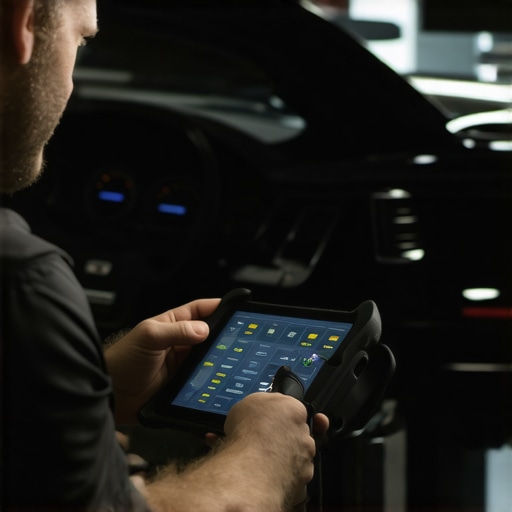
The contrarian truth about modern cars is that the computer is often ‘guessing’ based on incomplete data. Most DIYers see a code and immediately buy the corresponding sensor. However, a fault code is just a starting point for decoding vehicle diagnostics. According to the National Institute for Automotive Service Excellence (ASE), diagnostic trouble codes (DTCs) identify a circuit or system that is out of range, not necessarily a failed component. For example, why your scanner says p0420 but the converter is actually fine often comes down to an exhaust leak or a faulty downstream oxygen sensor rather than the expensive converter itself.
Why does my engine make a tapping noise only after an oil change?
This is a sophisticated question that often stumps even experienced owners. You might have used the highest quality synthetic oil and a premium filter, yet a new rhythmic sound emerges. This is frequently caused by why your engine makes a tapping noise only after an oil change, which can be linked to the oil’s flow rate or the anti-drainback valve in the filter. If the filter isn’t perfect, it can cause dry starts that wear down your lifters. It is a subtle reminder that oil change innovations are only effective if the parts are perfectly matched to your specific engine’s tolerances.
The Hidden Trap of Aftermarket Sensors
The biggest ‘oops’ factor I see today involves the temptation of the twenty-dollar sensor from a generic online marketplace. When it comes to engine management, the car’s computer expects a very specific voltage signature. If you succumb to the truth about using cheap aftermarket sensors in your engine, you might find your car running worse than before. These cheap parts often have slower response times, which leads to poor fuel trim and eventual catalytic damage. It’s much like trying to perform a brake service with pads made of wood; the fit might be right, but the performance is a safety hazard. To truly master essential auto repair strategies for frequent drivers, you must learn to distinguish between where you can save money—like my squeegee trick—and where you must invest in OEM quality.
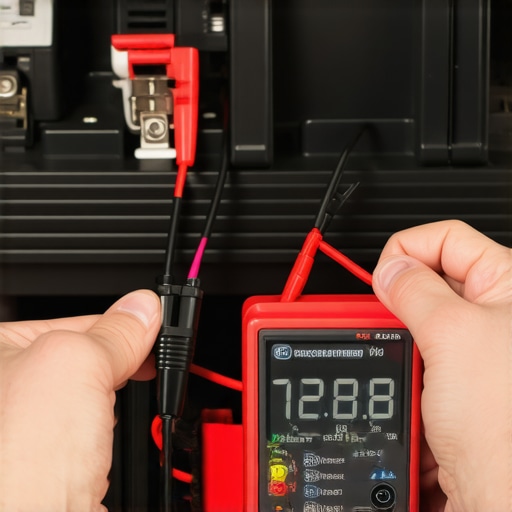
If you want to move beyond the occasional weekend project and into the realm of true reliability, you need to own a digital multimeter. I am not talking about a professional-grade unit that costs more than your first car, either. Even the $20 tool every driver needs for basic electrical troubleshooting can save you from a dozen ‘no-start’ headaches. I personally keep a multimeter in my glovebox because wires do not lie, whereas car computers often report symptoms rather than causes. For instance, when I was hunting for a mystery power loss last winter, I used it to find a parasitic battery drain that two different local shops had missed because they were only scanning for codes instead of measuring actual current draw. It is the ultimate tool for essential auto repair strategies for frequent drivers who cannot afford to be stranded.
Stop Guessing and Start Testing with a Multimeter
The beauty of this tool is its versatility. You can use it to verify the health of your alternator, check if a fuse is actually blown without pulling it out, or even perform the trick to identifying which ignition coil is actually failing before your engine starts misfiring. As noted in the Bosch Automotive Handbook (10th Edition), the accuracy of electrical measurements is paramount because modern CAN-bus systems operate on milliampere variations that a standard test light simply cannot detect. Using a test light on a modern car is like trying to perform surgery with a butter knife; you are more likely to cause damage to the sensitive ECU than you are to find the fault.
How do I maintain my diagnostic skills as cars get smarter?
The learning curve never really ends, and that is actually the fun part. Maintaining your vehicle over the long haul requires a shift from ‘part swapper’ to ‘systems analyst.’ I recommend spending ten minutes every month just looking under your hood while the engine is running. Listen for new rhythms and look for fresh leaks. This proactive approach is the foundation of tips to extend your vehicle’s lifespan. When you combine this visual inspection with the data from a basic scanner, you become your car’s best advocate. It ensures you don’t fall for brake service myths or unnecessary ‘flushes’ that many quick-lube joints try to upsell when your car is actually in perfect health.
The Coming Wave of Remote Vehicle Health Reports
Looking ahead, I predict that the DIY community is about to go through a massive digital transformation. We are moving away from handheld scanners and toward integrated telematics where your phone will receive real-time telemetry from your car. Imagine getting a notification that your fuel trim is 5% off before the check engine light even flickers. This is the future of oil change innovations and predictive maintenance. We will soon be able to catch a failing fuel pump weeks before it actually dies, simply by monitoring the electrical load it pulls from the battery. My advice? Get comfortable with the ‘why’ behind the repair today, so you aren’t left behind by the ‘how’ of tomorrow. My advanced tip for this week: learn how to perform a ‘Voltage Drop Test’ on your battery terminals—it is the single most effective way to ensure your starter and alternator are communicating without resistance.
The Most Expensive “Free” Advice I Ever Followed
Over a decade of working in my own driveway has taught me that the loudest person in the internet forum isn’t always right. One of the biggest mistakes I made early on was treating my car’s computer like an absolute oracle. I once replaced an entire exhaust system because of a single code, only to find out a loose gas cap was the real culprit. Now, I never buy a part until I’ve verified the failure with my own hands using actual measurements. Another hard-won lesson is that a clean car actually runs better—not because of physics, but because you’re much more likely to notice a small leak if the engine bay and interior aren’t caked in grime. Finally, remember that ‘saving money’ on low-quality sensors is just a down payment on a future breakdown. True auto repair hacks are about working smarter with quality components, not just finding the cheapest price tag.
The Only Tools That Haven’t Let Me Down
If you’re serious about taking your maintenance to the next level, you don’t need a professional-grade lift, but you do need these three specific assets. First, grab that $20 tool every driver needs for basic electrical troubleshooting. A simple multimeter will tell you more about your battery and alternator than any dashboard light ever will. Second, I highly recommend keeping a dedicated physical notebook for your vehicle; tracking exactly when you performed a simple fluid exchange or a rotation can prevent you from over-servicing or neglecting critical components. Finally, always have a high-quality rubber squeegee in your detailing kit—it’s the only way to truly win the war against pet hair without damaging your fabric. I also suggest bookmarking a guide that covers brake service myths busted so you can identify which noises are emergencies and which are just standard wear.
Take Back Control of Your Garage
Car ownership doesn’t have to be a series of expensive surprises. When you shift your mindset from being a passive owner to being an active caretaker, the anxiety associated with a check engine light begins to fade. By mastering essential auto repair strategies for frequent drivers, you aren’t just saving cash; you’re gaining the peace of mind that comes with knowing exactly what is happening under your hood. Don’t be afraid to get your hands dirty, and remember that even the most complex vehicle diagnostics start with a single, simple observation. Whether you are dealing with a stubborn oil change or a mystery electrical drain, your curiosity is your most valuable tool. Have you ever discovered a ‘miracle’ tool like the rubber squeegee that completely changed how you maintain your car? Let me know in the comments below!