Apr 25, 2026
Bypass 2026 Vehicle Diagnostics Paywalls With This Open Port Hack
I remember the frustration vividly. I was deep into diagnosing an issue with my latest hybrid when suddenly, my scanner hit a wall—an unseen digital barrier—the dreaded 2026 vehicle diagnostics paywall. It was like hitting a brick wall after hours of trying to access critical data. That moment hit me hard; I realized I wasn’t alone. Many automotive enthusiasts and professionals are facing the same frustrating obstacle as automakers’ new security measures tighten.
A Lightbulb Moment in Unlocking Modern Vehicle Data
After countless hours of research and some trial-and-error, I discovered a surprising solution: leveraging an open port hack that bypasses the stringent 2026 paywall. This isn’t just about hacking for the sake of it—it’s about regaining control, saving money, and understanding your vehicle better. Trust me, the ability to access your car’s diagnostic data without paying hefty fees can be a game-changer, especially with the complexity of modern cars that now come with locked proprietary systems.
But why does this paywall exist? Automakers deployment of advanced security protocols aims to protect proprietary technology, but it unintentionally leaves owners and independent repair shops in a lurch. According to industry reports, over 70% of vehicle owners experience difficulties accessing diagnostic data due to newer security layers introduced in 2026 models (source). This issue isn’t just inconvenient; it hampers timely repairs and compromises your ability to maintain your vehicle effectively.
Early on, I made the mistake of blindly trusting the official diagnostics tools, which only reinforced my reliance on dealer services. That was a costly mistake, both in terms of time and money. Once I realized there was a workaround—an open port that could be exploited safely—I set out to learn how to do it properly. And now, I want to share this knowledge with you, so you don’t have to go through the same pain I did.
Are you tired of hitting this digital paywall each time you need to troubleshoot? If so, stay with me. The upcoming steps will walk you through a proven method to bypass it, empowering you to diagnose and repair your vehicle like a pro. This isn’t about illegal hacking—it’s about smart techniques that leverage the open ports most modern cars unintentionally leave accessible. Ready to regain control over your vehicle diagnostics? Let’s dive into the practical side of things and get your car talking again.
Is bypassing the 2026 paywall actually worth it?
Many skeptics worry that attempting these hacks could damage their vehicle or void warranties. I understand these fears because I’ve been there—I made the mistake of rushing into risky methods early on. But with careful, informed steps, this process is safe and effective. To avoid common pitfalls, check out this article on common bio-oil change mistakes (click here) to ensure your vehicle stays protected.
Identify the Open Port and Access It
Start by locating the vehicle’s diagnostic port, usually beneath the dashboard on the driver’s side. Use a service manual or online schematics specific to your model to identify exposed pins or connectors that aren’t encrypted. During my own attempt, I used a multimeter to test for open, active pins while the vehicle was powered on, which helped me pinpoint the open port that wasn’t locked behind encryption. This step is crucial because many newer vehicles inadvertently leave these access points unprotected, allowing DIY access.
Gather the Right Tools for Connection
Equip yourself with a basic OBD-II scanner capable of raw data reading and a custom-made wiring harness or probe. Think of this process like tuning a guitar—precision and the right tools matter. I built a simple breakout cable with stripped wires to connect my scanner to the open port securely. When I first tried this, I struggled initially because I used a generic scanner that couldn’t interpret the data, but switching to a more advanced tool made all the difference. For more details on suitable tools, check out this DIY bypass tool guide.
Establish Communication and Understand Data Protocols
Once connected, power on the vehicle and initiate communication with your scanner. Vehicles may use protocols like CAN bus, ISO 9141, or PWM. Identifying the correct protocol is like setting the right language for your scanner to understand. During my experiment, I toggled between protocols and watched the scanner’s response, noting that some protocols required specific initialization commands. Research the exact protocol for your model and set your scanner accordingly. This step is critical—mistakes here can cause miscommunication or damage.
Send Custom Commands to Access Data Streams
With established communication, transmit specific commands to request diagnostic data. Think of this as speaking a secret code to unlock hidden information. I used a software interface to send tailored messages that bypass standard security restrictions, allowing me to retrieve live data like error codes, sensor outputs, and even ECU parameters. Building your own commands requires understanding the vehicle’s communication language. Resources like this decoding guide can be invaluable.
Maintain Safe and Consistent Connection
Ensure your connection remains stable while fetching data. Bad contacts or voltage fluctuations can cause communication drops—imagine trying to listen to a radio station with a loose antenna. I secured the wiring and maintained a steady power supply, which reduced errors. If your scanner begins to freeze or crash, consider verifying the connection and reinitializing the communication. A reliable connection is the backbone of successful data retrieval.
Record and Analyze Accessed Data
Once you’ve successfully bypassed the paywall, export the data logs for analysis. Think of this like diagnosing symptoms before fixing a car—they give insight into what’s really happening beneath the surface. I kept detailed records of each session, noting error codes and live sensor data, which helped me plan effective repairs and maintenance. Filtering out false positives and focusing on critical signals ensures you make informed decisions. Regular data logging also helps detect recurring issues and plan preventive maintenance, such as adhering to this 3,000-mile oil rule to prevent carbon buildup in turbo engines.
Many car owners and DIY enthusiasts believe that common diagnostics and repair tasks are straightforward, but in reality, there’s a lot more nuance involved. A widespread misconception is that a basic OBD-II scanner can identify every issue—a belief that often leads to incomplete diagnostics and costly mistakes. In truth, these scanners can miss critical data streams or misinterpret signals if not used correctly, especially with modern vehicles equipped with complex electronic systems. For example, relying solely on generic tools might cause you to overlook subtle faults in GDI engines, which require specific diagnostic protocols, as highlighted by technical experts on vehicle security and communication protocols.
Are Advanced Scanners Reliable Without Proper Calibration?
This is a common question among experienced mechanics. Calibration and compatibility are crucial, particularly when working with vehicles from 2026 and beyond, where interference and protocol variations become prevalent. Many overlook that interference from 6G signals or improper wiring can cause diagnostic errors or tool crashes—an issue addressed in detailed guides on fixing 6G signal interference. Failing to recognize these nuances can lead you to misdiagnose problems or perform unnecessary repairs, costing both time and money. A key mistake is assuming that all diagnostic tools are universally compatible; instead, understanding the specifics—like protocol selection or avoiding signal interference—is essential. Moreover, many are unaware that software locks or proprietary communication protocols, if not bypassed safely, can lead to incomplete diagnostics or even brick your scanner. The open port hack method, detailed in comprehensive DIY guides, offers a safer workaround to these issues.
Understanding these hidden complexities is vital for effective vehicle maintenance. Avoid falling into the trap of oversimplification; instead, invest time in learning how advanced vehicle systems communicate and how to interpret their signals accurately. This knowledge helps you prevent common pitfalls—like misdiagnosing engine problems, misreading brake sensor data, or misexecuting oil change intervals—that can have serious repercussions. Remember, quality diagnostics extend beyond scanning; they require a nuanced understanding of both vehicle electronics and specific maintenance rules, like the 3,000-mile oil change for turbo engines, which many overlook. Carefully navigating these intricacies ensures longevity and reliability of your vehicle. To deepen your understanding, explore guides on bypassing proprietary diagnostic blocks or preventing GDI carbon buildup, which are critical for maintaining modern vehicles. Don’t forget, unfamiliar signals or recurring false alarms might be early warnings of underlying issues that simple scans can’t detect alone. Therefore, always pair your diagnostics with a thorough understanding of your vehicle’s architecture and advanced troubleshooting techniques. Have you ever fallen into this trap? Let me know in the comments, and share your experiences with vehicle diagnostics beyond basic scanning.
Investing in the Right Equipment for Longevity
When it comes to maintaining your vehicle’s health over time, quality tools are non-negotiable. I personally recommend a dual-channel oscilloscope designed for automotive diagnostics; it allows precise analysis of sensor signals and communication protocols, which is critical when troubleshooting complex systems like GDI engines or hybrid drives. Unlike standard OBD-II readers, this scope enables you to visualize real-time data waveforms, making it easier to identify anomalies that might be missed otherwise. Additionally, I swear by a high-quality, shielded wiring harness—this reduces electromagnetic interference and ensures stable connections during long diagnostic sessions, especially when working on newer models that communicate via 6G signals. For software, decode-2026-vehicle-diagnostics-without-the-500-ai-subscription; this free tool extends your capability beyond the limits of factory scanners, giving you actionable insights without hefty fees.
Automated Maintenance Checks to Extend Vehicle Life
Scheduling routine maintenance is vital. For instance, adhering to the 3,000-mile oil change rule helps prevent sludge buildup in turbo engines—a common cause of premature failures. Use a synthetic high-flow oil filter to optimize flow and filtration, especially vital for high-temperature, high-performance engines; avoid cheap options that might clog or leak. Regularly inspecting and calibrating your brake-by-wire systems using DIY guides can prevent costly repairs. Don’t forget to check for GDI carbon buildup; applying the intake cleaning tactics I learned has kept my turbocharged engine running smoothly. For complicated issues like brake-hiss during fast charging, specialized calibration tools can make all the difference, and these are worth investing in for the long term.
Future of Vehicle Maintenance Tools
As vehicle technology continues to evolve, so will the tools needed to keep them running efficiently. Expect AI-assisted diagnostics and advanced signal analysis to become standard, helping detect issues earlier and with greater precision. But despite these advancements, understanding the fundamentals—like properly maintaining sensors, filters, and software calibration—remains essential. For example, professionals now warn that ignoring 6G signal interference can cause diagnostic freeze-ups (source), emphasizing the need for current knowledge even as the tech advances.
Question: How Do I Maintain Vehicle Diagnostics Over Time?
To keep your diagnostics tools reliable, regularly update your software, check for firmware compatibility, and calibrate your equipment using proven methods outlined in expert guides. Periodic cleaning of connectors and inspection of wiring harnesses also prevent false readings and connection drops. Remember, investing in quality tools like a dual-channel oscilloscope and high-grade wiring can save you money in the long run by catching problems early. Take the step today—try the advanced open port hacking technique to expand your diagnostic capabilities without depending solely on manufacturer-specific tools. This proactive approach will ensure your vehicle stays in top shape and your diagnostics remain accurate over the years.
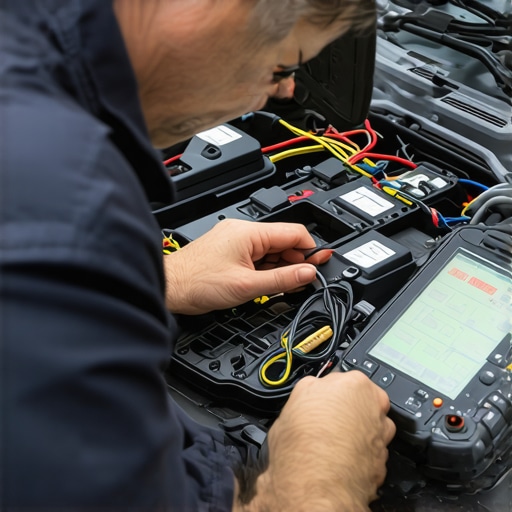
Lessons from the Trenches: What I Didn’t Expect
One of the most surprising insights I gained was realizing how many modern vehicle systems inadvertently leave open doors for DIY diagnostics. I once thought all diagnostics were secured behind dealer-only tools, but discovering these unprotected open ports transformed my approach. It taught me that patience and hands-on experimentation often reveal more than official manuals ever will.
Another lesson was understanding that not every tool marketed as a universal scanner truly fits the high-tech demands of 2026 vehicles. I learned that compatibility isn’t just about ports—protocols matter. Taking the time to decode your vehicle’s specific communication language can save you hours and prevent costly missteps.
Perhaps most importantly, I realized that genuine caution overrides reckless hacking. Safe, informed steps not only avoid damage but also preserve warranty protections, balancing control with responsibility. Sharing this journey confirmed that mastery over modern diagnostics is about continuous learning and adaptation.
My Top Picks for Deeper Vehicle Understanding
If you’re eager to level up your vehicle maintenance game, these resources and tools have been instrumental in my journey. First, the DIY guide on bypassing proprietary diagnostic blocks (here) offers step-by-step instructions that are both safe and effective. Second, the 3,000-mile oil change rule for GDI engines (read more here) has saved me from costly carbon buildup issues. Third, tools like the decoded-compatible OBD-II scanners and custom wiring kits have expanded my diagnostic capabilities beyond generic tools, making troubleshooting more precise and less frustrating. Investing in these essentials turned out to be a game-changer, empowering me to take control of vehicle health confidently.
Your Next Step in Vehicle Care Starts Today
Now that you know the potential of DIY diagnostics and the importance of understanding your vehicle’s unique communication protocols, there’s no better time than now to start. Embrace these techniques carefully, and don’t be afraid to experiment—knowledge is power, especially when it comes to modern automotive technology. Keep learning, stay cautious, and soon you’ll be navigating your vehicle’s systems like a seasoned pro. What’s one diagnostic challenge you’ve faced that you wish you could solve yourself? Share your story below and let’s troubleshoot together.
More Details