
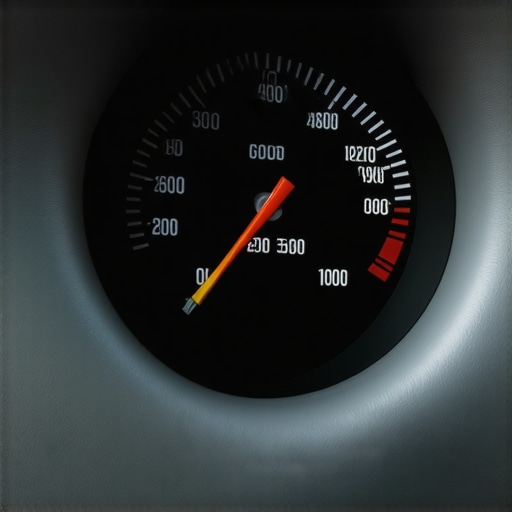
I’ll never forget the morning I sat in my driveway for fifteen minutes, teeth chattering, waiting for my heater to kick in. It didn’t. Even after a twenty-minute highway stretch, the air coming out of the vents was lukewarm at best. I initially brushed it off as just another “old car quirk,” but I was dead wrong. My engine was actually suffering. I’d fallen into a common trap, ignoring the subtle signs of what my car was trying to tell me. Today, I want to make sure you don’t make the same mistake I did by showing you exactly how to spot a thermostat that refuses to close. We are going to reclaim your cabin heat and protect your engine from premature wear.
Your Engine Needs to Run Hot to Stay Healthy
It sounds counterintuitive, right? We usually worry about overheating. But an engine that stays too cold is just as problematic. When your thermostat is stuck open, it allows coolant to circulate through the radiator constantly, even when the engine hasn’t reached its sweet spot. This leads to poor fuel economy and increased emissions. According to technical data shared by Car and Driver, running an engine below its intended operating temperature can significantly increase internal friction and reduce the efficiency of your internal combustion cycle. I once let this slide for a whole month, thinking I was “saving” the engine from heat, but I ended up with a sluggish performance and a wallet-draining gas bill. Learning these advanced vehicle diagnostics early on is the best way to prevent those massive repair bills down the road.
Is a little cold air really worth the repair hassle?
You might be thinking that as long as the car starts and gets you to point B, a chilly cabin is just a minor inconvenience. Trust me, it’s not. Beyond your own comfort, a cold engine never enters “closed-loop” mode, meaning your computer is constantly dumping extra fuel into the cylinders to try and heat things up. If you’ve noticed your heater takes forever to warm up, you are literally burning money every time you drive. Have you ever noticed your temperature gauge staying stuck at the bottom even after a long drive?
The Quick Driveway Test for a Stuck Thermostat
Before you go tearing into your engine bay, there are a few simple ways to check if your thermostat is stuck open or closed without needing a degree in mechanical engineering. Most of the time, the symptoms are hiding in plain sight on your dashboard or right under your hood.
Feel the Radiator Hoses Before the Engine Gets Hot
This is the most reliable old-school trick in the book for identifying cooling issues. Start with a completely cold engine—let it sit overnight if you have to. Pop the hood and locate the upper radiator hose, which is the thick black rubber tube running from the engine block to the top of the radiator. In a healthy cooling system, this hose should stay cold for several minutes while the engine warms up because the thermostat acts like a locked gate. It keeps the coolant inside the engine block so it reaches operating temperature quickly. If you feel that hose getting progressively warmer immediately after you turn the key, your thermostat is stuck open. 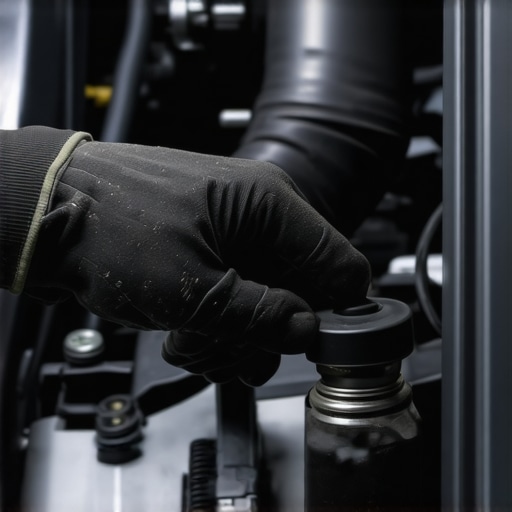 I remember trying this on an old high school project car. I held the hose and waited, expecting a sudden surge of heat once the thermostat popped. Instead, it just got lukewarm within seconds. It was a messy realization because I ended up splashing coolant everywhere when I finally pulled the housing off later that afternoon, but that physical check saved me from a winter of shivering. It’s one of those essential vehicle diagnostics explained for anyone who wants to avoid being stranded.
Spotting the Needle That Refuses to Rise
Your dashboard is more than just a decorative display; it is a constant health report for your powertrain. When a thermostat is stuck open, your temperature needle will behave like it is lazy. On the highway, the rushing air cools the radiator so effectively that the engine temperature might actually drop instead of staying steady. If you see that needle falling toward the ‘Cold’ mark while you are cruising at 60 mph, your thermostat has definitely failed. This constant under-cooling is a silent killer for your internal components. Because the engine never gets hot enough to burn off moisture and combustion byproducts, you will eventually deal with the hidden sludge building up behind your clean dipstick. I have seen engines that looked pristine on the outside but were filled with thick ‘mayonnaise’ under the valve covers simply because they ran too cold for too long. This is why staying on top of oil change innovations is useless if your thermal management is broken.
Grab a Scanner to See the Real Temperature
Sometimes your dashboard gauge is ‘buffered,’ meaning it is programmed to stay in the middle even if the temperature fluctuates by twenty degrees to avoid panicking the driver. To get the absolute truth, you need digital data. Plug in the $20 tool every driver needs for basic electrical troubleshooting—a simple OBD-II scanner. Look for the ‘ECT’ or Engine Coolant Temperature reading in the live data stream. A healthy engine should sit comfortably between 195°F and 220°F. If you are stuck at 160°F after twenty minutes of driving, you have found your culprit. It is a much more precise way of how to tell if your thermostat is stuck open or closed than just guessing based on the air coming out of your vents. I once spent two hours trying to bleed air out of a cooling system thinking I had a stubborn bubble, only to plug in my scanner and see a steady 155°F reading. The digital sensor data does not lie.
You’ve probably been told that if the Check Engine Light isn’t on, your car is fine. In my experience, that is one of the most dangerous myths in the automotive world. I’ve seen countless drivers ignore a lukewarm heater or a slightly sluggish throttle because they assumed the computer would catch the error. But here is the nuance: your car’s Engine Control Unit (ECU) has thresholds. If a thermostat is failing but still keeping the temperature within a wide ‘acceptable’ window, the computer won’t complain. However, your engine is still suffering. Using how advanced vehicle diagnostics prevent costly breakdowns is about finding these ‘soft failures’ before they become hard, expensive realities.
Don’t Wait for the Dashboard to Scream
Most people treat the Check Engine Light as the start of a problem, but by the time it illuminates, the problem has often been brewing for weeks. A thermostat that hangs slightly open is a prime example. It might let the engine reach 170°F instead of the required 195°F. To the car’s computer, that’s ‘warm enough’ to avoid a code, but to your engine, it is an efficiency nightmare. According to a study by the Society of Automotive Engineers (SAE), engines operating even slightly below their thermal design point experience accelerated piston ring wear and increased carbon deposits. I once had a client who ignored a ‘lazy’ temp gauge for a year. By the time they brought it in, the internal friction had prematurely aged the engine by at least 50,000 miles. This is why essential auto repair strategies for frequent drivers always prioritize thermal management over almost anything else.
Can a lazy thermostat actually ruin my catalytic converter?
Absolutely. This is the ‘trap’ most DIYers fall into. When your engine runs too cold, the ECU stays in a rich-burn mode, dumping extra fuel to compensate for the perceived cold. This unburnt fuel travels down the exhaust and literally melts the internal structure of your expensive catalytic converter. I’ve seen people spend $1,200 on a new converter because they saw a P0420 code, only to have the new one fail three months later because they didn’t fix the $20 thermostat that caused the mess. It’s a classic case of why your scanner says P0420 but the converter is actually fine—or at least, why the converter wasn’t the root cause. 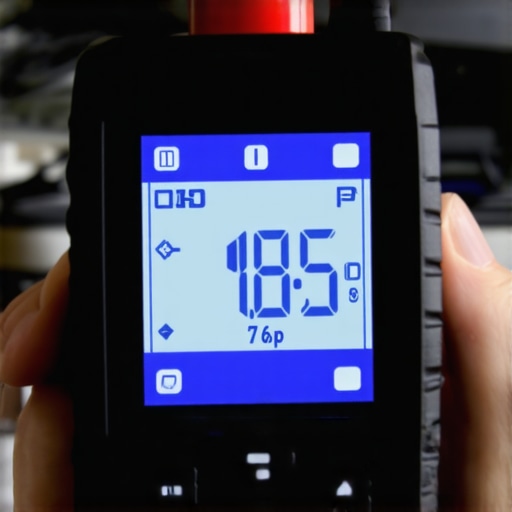
Stop Throwing Parts at Your Problems
The biggest mistake I see is ‘parts cannon’ diagnostics. People see a symptom and immediately buy the most expensive component related to it. Whether it’s a cooling issue or brake service myths busted, the secret to longevity is understanding the *why* behind the failure. Real expertise means looking at the live data, not just the error codes. Have you ever replaced a part thinking it was the ‘obvious’ fix, only for the problem to stay exactly the same? I’d love to hear your stories—have you ever fallen into this trap? Let me know in the comments. We can all learn from those expensive ‘oops’ moments.
Building that diagnostic muscle takes more than just a single repair; it takes a consistent setup of tools you can actually trust. While I started with a basic code reader, I quickly learned that identifying the root cause of a rough idle or a cooling failure requires digging into live data streams. If you want to move beyond the ‘parts cannon’ approach, you need to transition from just reading codes to analyzing PIDs (Parameter IDs) in real-time. This is how you differentiate between a failing sensor and a physical mechanical leak. For instance, when I’m chasing a weird electrical ghost, I don’t just look for a light; I use how to find a parasitic battery drain with a basic multimeter to see exactly where the voltage is dropping while the car is off.
Stop Guessing and Start Measuring
I’ve found that a dedicated infrared thermometer is one of the most underrated tools in a home garage. When your dashboard gauge is acting up, you can point that laser directly at the thermostat housing and the radiator inlet to see the actual temperature delta. It’s a foolproof way to verify if the fluid is moving. If the block is 210°F but the radiator is barely 130°F, you know you have a blockage or a dead pump. Combining this with top auto repair tips to extend your vehicles lifespan ensures that you aren’t just fixing what’s broken today, but preventing the heat-soak that kills gaskets tomorrow.
How do I maintain my car’s thermal health long-term?
Consistency is your best friend here. Don’t wait for the coolant to turn into a brown, acidic sludge that eats your heater core from the inside out. I personally recommend a full system flush every three years or 30,000 miles, regardless of what the ‘lifetime fluid’ stickers say on the reservoir. According to the repair procedures outlined in Mitchell 1’s ProDemand database, precise coolant mixture ratios are just as critical as the mechanical state of the thermostat itself; an improper mix can lead to cavitation at the water pump impeller. 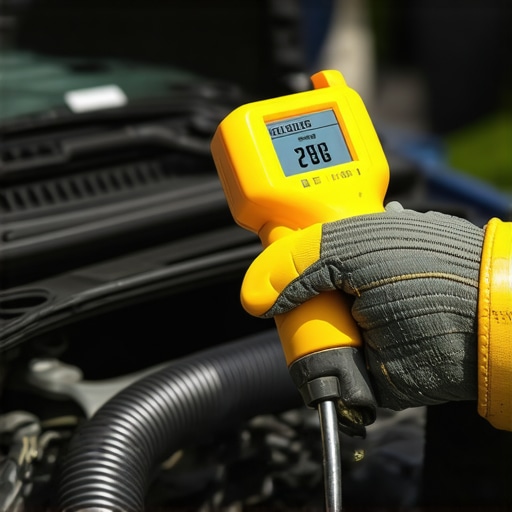 I’ve seen enthusiasts get so focused on performance that they ignore the basics, but the most essential auto repair strategies for frequent drivers always come back to fluid integrity and heat management.
Smart Data is the New Mechanic’s Best Friend
As we look toward the future, I predict that DIY diagnostics will shift heavily toward predictive AI. We are already seeing apps that can listen to your engine’s frequency and predict a bearing failure before you can even hear it with your own ears. Until those tools are perfected, you have to rely on your own ‘manual’ checks. Don’t forget that your brakes are part of this ecosystem too; a sticking caliper can create enough drag to make your engine work harder and run hotter. Checking the ultimate guide to brake service for safety and performance is a great way to ensure your entire powertrain is operating without unnecessary resistance. I want you to try this next time you finish a commute: use an infrared thermometer to check the temperature of your wheels. If one is significantly hotter than the others, you’ve found a dragging brake before it warped your rotors.
The Hardest Lesson I Learned About Thermal Management
I used to think that as long as the car wasn’t overheating, I was winning. That was a huge mistake. I learned that an under-cooled engine is a “slow-motion disaster.” First, I realized that modern lubricants are designed to work within a specific heat range; if you don’t hit it, your oil never reaches the viscosity it needs to protect your bearings. Second, I discovered that ignoring a lukewarm heater is basically a subscription to higher fuel costs. The lightbulb moment for me was realizing that how advanced vehicle diagnostics prevent costly breakdowns isn’t just for mechanics—it’s for anyone who wants their car to last 200,000 miles. Don’t let your car sit in a “permanent warmup” phase.
The Kit I Actually Keep in My Glovebox
You don’t need a massive rolling tool chest to be a diagnostic pro. I personally rely on three main things. First, an entry-level OBD-II scanner—it’s the $20 tool every driver needs for basic electrical troubleshooting. It gives you the digital truth that gauges often hide. #IMAGE_PLACEHOLDER_E# Second, a handheld infrared thermometer is vital for verifying actual surface temps on hoses and radiators. Finally, I always keep a digital copy of my car’s specific cooling system diagrams. These small additions to your arsenal are part of the most effective auto repair hacks to save money without sacrificing quality. Having the right data at your fingertips changes the game from guessing to knowing.
Stop Letting Your Engine Run Cold
Your vehicle is a complex machine that thrives on balance. While we often fear the “boil-over,” the silent chill of a stuck-open thermostat can be just as damaging over time. By taking ten minutes to perform these simple checks, you are taking control of your vehicle’s longevity and your own comfort. Integrating these top auto repair tips to extend your vehicles lifespan into your routine ensures that small parts like a thermostat don’t lead to massive bills. It’s time to stop ignoring that lazy temperature needle and give your engine the thermal environment it deserves. Have you ever been surprised by a “hidden” cooling issue that didn’t trigger a warning light? Let me know your story in the comments below!