

It was a Tuesday evening in a downpour when I learned that “just a little squeak” usually means a massive headache. I was cruising home, thinking about dinner, when a high-pitched chirp started coming from under the hood. I ignored it. I figured it was just some rainwater splashing on the pulleys. Two miles later, as I tried to navigate a tight turn into my neighborhood, the steering wheel suddenly fought back. It felt like I was trying to steer a semi-truck through a vat of molasses. The battery light flickered, the temperature gauge started climbing, and I barely limped into my driveway. I’d snapped my serpentine belt. My early mistake? I assumed because the belt looked “okay” to my untrained eyes, it was okay. I didn’t know that modern belts hide their wear until it’s too late. Today, I’m going to show you exactly how to catch these red flags so you never find yourself wrestling a dead steering wheel in the rain. Have you ever heard a strange noise from your engine and just hoped it would disappear on its own?
Your Car is Literally Screaming for Help
That single belt is the unsung hero of your engine bay. It powers your alternator, power steering, air conditioning, and often your water pump. If it goes, everything goes. According to the Car Care Council, neglected maintenance—including belts and hoses—is a leading cause of roadside breakdowns that could have been avoided with a simple five-minute inspection. We often focus on big things like decoding vehicle diagnostics or complicated engine codes, but sometimes the most vital part is just a long loop of reinforced rubber. When I first started working on my own rigs, I ignored the small stuff. I thought as long as the car started, I was winning. I was wrong. Catching a belt failure early is one of the best top auto repair tips I can give you to prevent a tow truck bill.
Wait, can’t I just wait until it actually breaks?
You could, but that’s a gamble with your engine’s life. When a belt snaps, the water pump stops. When the water pump stops, your engine overheats in minutes. You’re not just looking at a thirty-dollar belt anymore; you’re looking at a blown head gasket or a seized block. Modern EPDM belts don’t always crack like the old neoprene ones did; they just lose material in the grooves until they slip or snap. If you’ve ever noticed your alternator is whining or your lights are flickering, the belt might be the culprit. Let’s look at the physical signs you can check right now in your driveway.
Stop Guessing with This Hands-On Inspection
The first rule of thumb: you cannot trust your eyes alone. Modern belts are made from EPDM (ethylene propylene diene monomer), which is basically a fancy way of saying they are tough as nails and do not crack like the old-school neoprene belts. Instead of cracking, they wear down like the tread on your tires. You need to get your hands in there. Turn the engine off, obviously, and find the longest stretch of belt between two pulleys. Grab it and try to twist it. If you can rotate that belt more than 90 degrees, your tensioner is weak or the belt has stretched beyond its limits. I learned this the hard way with an old SUV that kept squealing every time I turned the wheel. I kept tightening things, but the belt was just too far gone. It is a similar logic to how to tell if your timing belt is about to snap, though the consequences for a serpentine belt are slightly less ‘engine-explosive’ and more ‘strand-you-on-the-highway’ annoying.
How to Feel for Glazing Before It Slips
Take your thumb and run it along the smooth side of the belt. It should feel like firm rubber with a bit of a matte grip. If it feels as slick as a polished marble or a pane of glass, that is ‘glazing.’ Glazing happens when the belt slips, creates heat, and essentially bakes the rubber until it loses its friction. Once it is glazed, no amount of tension will stop it from slipping under load—like when your AC compressor kicks in. 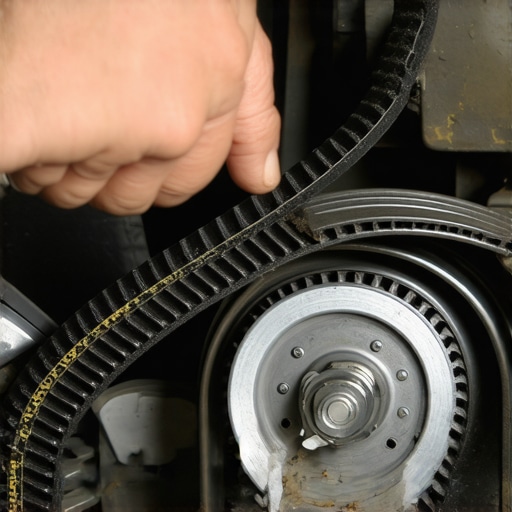 If you have recently replaced parts and find why your new alternator is whining right out of the box, a glazed or misaligned belt is often the secret culprit. It is like trying to run on ice with smooth-soled shoes; you are working twice as hard to get nowhere.
Check Your Tensioner or Risk a Repeat Disaster
The belt is only as good as the spring-loaded arm holding it tight. While the engine is running (carefully!), look at the tensioner pulley. It should be rock steady. If it is bouncing or vibrating like it is caffeinated, the internal spring is shot. I once replaced a belt on a client’s truck and skipped the tensioner inspection. Big mistake. Within a week, the erratic vibrations shredded the new belt into literal confetti. If you notice why your power steering feels heavy only when turning left, do not just blame the pump. A weak tensioner might be letting the belt slip specifically when the steering pump is under the highest pressure. It is the same type of neglected maintenance that leads people to wonder how to tell if your caliper slide pins are bone dry—we look at the big moving parts and forget the little things that actually make them move.
Listen for the Bearings Before They Seize
Sometimes the belt is fine, but the things it touches are failing. Take a long screwdriver and touch the handle to your ear and the tip to the non-moving bolt in the center of an idler pulley while the engine idles. It works like a doctor’s stethoscope. You are listening for a smooth whir. If you hear a gritty, growling, or chirping sound, that bearing is dying. This is a great precursor to the simple test to see if your fan clutch is actually spinning because often, a noise you think is the belt is actually a pulley bearing giving up the ghost. Catching this now means you spend twenty dollars on a pulley instead of two hundred dollars on a tow and a whole new accessory drive system. Every time I do a routine inspection, I give these pulleys a quick spin with the belt off just to be sure.
Most people think that once they’ve addressed a noise, they’re in the clear. But that’s a rookie assumption. One of the biggest myths in the DIY world is that a ‘Check Engine’ light is a grocery list. You plug in a cheap scanner, it says ‘O2 Sensor,’ and you swap the sensor. Then, the light comes back on two days later. Why? Because the sensor was just the messenger reporting a lean condition caused by a cracked vacuum hose. In my years under the hood, I’ve seen more money wasted on unnecessary parts than on actual repairs because people forget that decoding vehicle diagnostics requires logic, not just a code reader. For instance, why your scanner says p0420 but the converter is actually fine is a classic trap that leads to thousand-dollar mistakes for a ten-dollar fix. According to the National Institute for Automotive Service Excellence (ASE), diagnostic errors are the leading cause of ‘comebacks’ in professional shops—if the pros struggle with it, you know it’s a nuanced game. 
Why does your car still pull right after a professional alignment?
You just spent a hundred bucks at the alignment shop, but the steering wheel is still off-center. Most drivers blame the tech, but the ‘hidden nuance’ here is often weight distribution or sensitive electronic systems. If you have a modern vehicle, why your lane keep assist acts erratic after a standard wheel alignment is likely due to the steering angle sensor not being recalibrated. Or, it could be as simple as why your car drifts to the right only when you’re carrying passengers; sometimes the suspension geometry changes enough under load to reveal worn bushings that look fine on a lift.
The Sludge That Hides Behind a Clean Dipstick
We’ve been told that if the oil looks honey-colored, it’s good. That is a dangerous half-truth. Modern detergents are so good at suspending contaminants that the oil can look ‘clean’ while the hidden sludge building up behind your clean dipstick is slowly choking your oil pickup tube. This is especially true if you do a lot of short-trip driving where the engine never reaches full operating temperature to burn off moisture. I always tell people to look at oil change innovations and technologies that save your engine, but nothing beats a consistent interval, regardless of color. Finally, let’s talk about the ‘Oops’ factor: the torque wrench. I’ve seen so many weekend warriors deal with the common mistake that snaps your wheel studs during a tire rotation because they used an impact gun instead of a calibrated tool. Have you ever fallen into this trap or replaced a part only to find the problem was something much smaller? Let me know in the comments.
Why You Need a Real Multimeter Instead of a Test Light
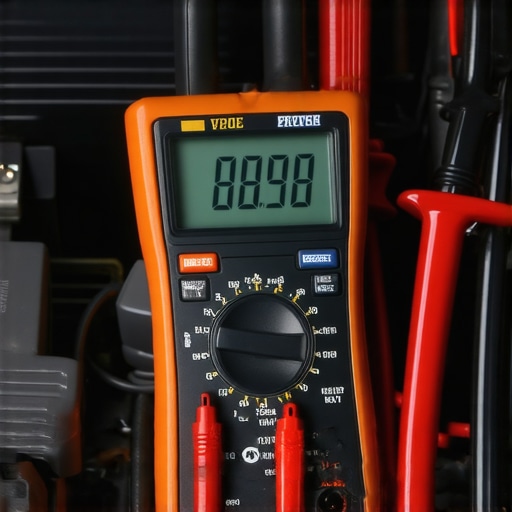
If you are serious about DIY, stop reaching for that old-school test light with the glowing bulb. While it is fine for checking a fuse, it is a dangerous weapon against a modern ECU. I always keep a high-impedance digital multimeter in my top drawer because it allows me to measure voltage drops without overloading the circuit. For instance, when I am trying to figure out how to find a parasitic battery drain with a basic multimeter, the precision of a digital readout is the only way to see those tiny milliamp draws that kill a battery overnight. It is arguably the $20 tool every driver needs for basic electrical troubleshooting because it removes the guesswork from sensors and wiring harnesses alike.
How do I maintain my diagnostic precision over the years?
Maintenance is not just about the car; it is about your process. I make it a habit to clean my tool leads and calibrate my torque wrenches once a season. As vehicles become more complex, your tools must remain reliable, or you will end up chasing your tail. This is part of the essential auto repair strategies for frequent drivers that I live by. If your equipment is lying to you, you might think you have a dead computer when you really just have a loose ground. I have seen many people get frustrated because why your OBD-II scanner can’t find the real electrical ghost often boils down to poor testing technique rather than a hidden fault in the car itself.
The Long Game of Brake System Health
When most people think of a the ultimate guide to brake service for safety and performance, they just think of new pads. But the pros know that moisture is the silent killer of brake systems. Brake fluid is hygroscopic, meaning it absorbs water from the air. Over time, that water boils during hard braking or corrodes your expensive ABS valves from the inside out. I personally flush my fluid every two years using the trick to bleeding brakes alone without a helper—a simple one-way valve bottle. This prevents that spongy pedal feel and helps you identify issues like how to tell if your brake booster is leaking air before you lose power assistance in a panic stop.
The Shift from Wrenches to Wireless Data
I predict that the next five years of home repair will be dominated by bidirectional control apps. We are moving away from simple code reading toward ‘active testing’ where you can command your radiator fan to turn on or your fuel pump to pulse directly from your smartphone. This level of how advanced vehicle diagnostics prevent costly breakdowns is becoming accessible to everyone, not just dealership techs. According to technical documentation from Robert Bosch GmbH, the pioneers of modern fuel injection, the future of maintenance is ‘predictive,’ meaning the car will tell you it needs a belt 500 miles before the rubber even begins to wear. For now, we still have to do the legwork. My challenge to you: Grab your multimeter this weekend and check your battery’s resting voltage versus its charging voltage. It takes two minutes and could save you from being stranded in a parking lot. It is the kind of small win that builds the confidence to tackle the big stuff.
What Decades Under the Hood Taught Me About Gut Instincts
The biggest lightbulb moment I ever had wasn’t from a textbook; it was when I realized that every component in your car is part of a conversation. If your belt is slipping, it’s not just a ‘belt issue’—it’s an ‘alternator efficiency issue’ and an ‘engine cooling issue.’ I used to think I could save money by pushing a belt another 5,000 miles, but the stress it puts on the bearings of your water pump actually costs you more in the long run. One of the best top auto repair tips to extend your vehicles lifespan is to stop treating symptoms and start looking for the root cause. For instance, many drivers fall for brake service myths busted what really matters for safety by only changing pads while ignoring the hydraulic health of the system—it is the same narrow focus that leads to snapped belts.
The Gear I Grab Before Touching a Single Bolt
You don’t need a professional garage, but you do need tools that don’t lie to you. I personally rely on a dedicated belt wear gauge—a tiny plastic tool that fits into the grooves—because modern EPDM rubber hides its wear perfectly from the naked eye. Beyond that, my digital multimeter is non-negotiable for decoding vehicle diagnostics when the battery light flickers. I also keep a stash of auto repair hacks save money without sacrificing quality, like using a spray bottle of water to isolate a squeak (if the noise stops when wet, it’s the belt; if it continues, it’s a pulley). These simple resources are why I feel confident every time I pop the hood.
Take Control of Your Engine’s Future Today
Working on your own vehicle is about more than just saving money; it is about the peace of mind that comes from knowing exactly what is happening under the hood. Whether you are performing vehicle diagnostics explained easy checks before your road trip or just checking your tensioner, every small step makes you a more capable driver. Don’t let the fear of a complex engine stop you from the basics of auto repair. You have the tools, you have the knowledge, and now you have the plan. Have you ever had a ‘simple’ noise turn into a major repair because you waited a day too long? Let me know in the comments below.