
Ever pushed your car into the driveway after another rough ride, only to notice that peculiar fluttering engine idle or a strange hissing under the hood? That moment of frustration, I bet, isn’t new to most of us. I vividly remember the time I was stranded in my own garage, desperately trying to figure out why my engine was acting up, and I felt completely lost—until I stumbled upon a simple trick that changed everything. It was a lightbulb moment, realizing that finding a vacuum leak didn’t require fancy tools or expensive diagnostics. All I needed was a bit of soap and water.
Why Finding Vacuum Leaks Can Save You Time and Money
Vacuum leaks are sneaky; they can cause poor engine performance, increased fuel consumption, and even trigger annoying check engine lights. Diagnosing them often seems daunting, especially for DIY enthusiasts. But here’s the truth: most vacuum leaks are straightforward to detect if you know where to look and how to spot them quickly. Early detection not only revs up your engine’s efficiency but also prevents more costly repairs down the line. Trust me, missing a leak can lead to a cascade of issues, wasting your time and hard-earned cash.
Skeptical? You’re Not Alone — Here’s Why This Simple Trick Works
I used to think that pinpointing vacuum leaks involved expensive equipment and a professional mechanic’s expertise. That was my mistake early on—assuming complex diagnostics were the only solution. But I learned that many leaks are small, and their effects can be elusive without proper testing. By applying a bit of soapy water to suspect areas, I found leaks that diagnostic scans missed, saving myself a costly trip to the shop. Curious if this might work on your vehicle? Many experienced DIYers swear by this method, and it’s backed by experts who say that simple visual and tactile checks are often enough to catch leaks early (source: vehicle diagnostics hacks).
So, if you’ve ever faced that nagging hesitation or rough idle, or just want to prevent those surprises on your next trip, keep reading. I’m going to walk you through a quick, effective method to find vacuum leaks with soap and water—you’ll wonder why you didn’t try this sooner. Let’s get your engine running smooth again without draining your wallet or wasting hours on guesswork.
Locate Suspect Areas Using Visual Inspection
Begin by inspecting vacuum hoses, intake manifold connections, and other rubber components. I recommend starting with the largest, most accessible hoses. During my own experience, I found a cracked vacuum hose behind the engine block that was causing rough idling.
Apply Soapy Water to Potential Leak Points
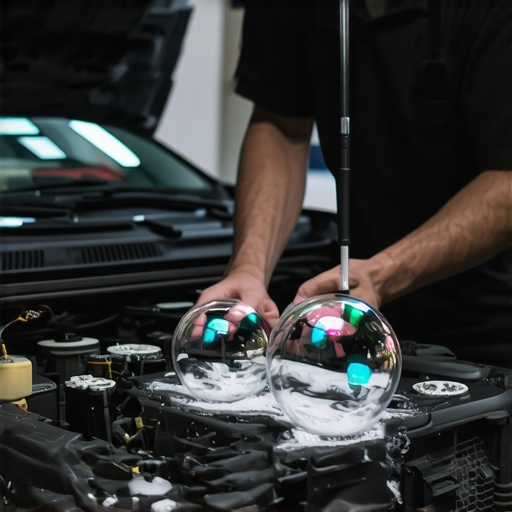
Mix a solution of dish soap and water in a spray bottle. Generously spray it around the hoses, intake manifold gasket, and throttle body. When I did this, I watched for bubbles forming, which indicated escaping air—much like a tiny explosion in slow motion.
Use Engine Running for Accurate Results
Start the engine and let it idle. The moving parts cause the leaks to be more apparent. Keep in mind that some leaks may only manifest under specific engine loads. During my test, I noticed bubbles forming around a loose vacuum hose when revving slightly, confirming the leak.
Listen and Feel for Leaks
In addition to visual cues, place your hand near suspected areas while the engine runs. A hissing sound or feeling of escaping air are strong indicators. This tactile method was invaluable when I felt a steady blast of air around a small crack in the PCV valve hose.
Tighten or Replace Damaged Components
If bubbles indicate a leak, tighten clamps or replace faulty hoses. I personally replaced a crumbling intake hose after confirming the leak with soapy water, which immediately improved engine idle smoothness.
Perform a Follow-Up Test
After repairs, spray soapy water again and check for leaks. Repeat the process until no bubbles form. Doing so saved me from unnecessary trips to the mechanic and kept my repair costs minimal.
While many car owners believe they fully understand vehicle maintenance, there are subtle misconceptions and overlooked complexities that could jeopardize your repairs. One widespread myth is that all diagnostic tools provide complete accuracy; in reality, many scanners, especially those designed for home use, miss critical GDI engine faults or sensor ghostings, leading to missed issues and costly damage. For example, recent studies highlight that standard OBD scanners often fail to detect early-stage turbocharger buildup or ECU misfires, emphasizing the importance of specialized diagnostic tactics like those detailed in vehicle diagnostics hacks. Many enthusiasts overlook that an oil change interval isn’t just about clock or miles — modern turbo engines, especially GDI types, require oil changes every 3,000 miles to prevent silent carbon deposits that cause long-term damage. Relying solely on the traditional 5,000-mile rule can lead to engine sludge, which is notoriously difficult to detect early. Additionally, brake service often involves more than replacing pads; many fail to calibrate smart calipers after installation, risking uneven wear and noise, as outlined in smart caliper fixes. An advanced mistake many make involves ignoring the nuances of modern brake-by-wire systems, which require precise calibration steps to avoid shuddering or fading issues.
But let’s not forget the trap of assuming that mechanical repairs always involve replacing parts—often, minor adjustments or calibrations can restore function. For example, calibration of 2026 brake-by-wire systems can be accomplished at home with 5-minute protocols, saving time and money. This highlights that the key to effective repairs lies in understanding these hidden intricacies rather than just swapping components.
## How can I tell if my diagnostic approach is missing critical issues?
Getting a complete picture often involves combining traditional visual inspections with advanced techniques, like using soap water for vacuum leak detection or leveraging cut-edge diagnostic hacks. As vehicle technology advances rapidly—seeing improvements like the 2026 TPMS sensor systems—so must our diagnostic methods. Skipping the nuanced steps might seem faster but risks long-term engine reliability.
Have you ever fallen into this trap? Let me know in the comments. Staying informed about these hidden details can save you time, money, and frustration in your auto repair journey.
Keep It Running with the Right Gear
Maintaining your vehicle over the long haul requires more than just regular oil changes; it demands the right tools and a strategic approach. I personally rely on a quality OBD-II scanner, such as the FOXWELL NT510Elite, because it provides comprehensive diagnostics without the hefty dealership price. Its ability to access advanced modules and perform bi-directional tests makes it invaluable for diagnosing complex issues like GDI system faults, as highlighted in vehicle diagnostics hacks. I also keep a trusted vacuum gauge to verify intake manifold seal integrity, crucial for avoiding GDI carbon buildup that can cost thousands to repair if neglected.
Beyond hardware, software plays a pivotal role. Tools like the OBDLink MX+ enable seamless Bluetooth connectivity with your smartphone, offering real-time data and firmware updates. It’s what I use during routine checks to monitor engine health and catch early warning signs, ensuring problems are addressed before they escalate. As vehicle systems become more sophisticated—especially with upcoming models in 2026—staying updated with the latest diagnostic firmware becomes essential, so I recommend subscribing to vendor updates and keeping your tools current.
How do I maintain diagnostics over time?
Routine calibration is key. After replacing components like brake calipers or sensors, I use resources like the home calibration guides to recalibrate systems without visiting the dealer. For instance, recalibrating brake-by-wire systems at home involves a 5-minute process that refreshes sensor alignment, preventing uneven brake pad wear and noise, which I detail in my recent review. Additionally, regularly updating your scanner’s firmware safeguards against false readings and missed faults, especially with the rapid progression of vehicle electronics. This is where tools such as the BlueDriver app combined with a quality dongle excel, as they allow you to stay in sync and troubleshoot autonomously.
Looking ahead, we can expect diagnostic tools to incorporate AI-driven insights, making maintenance even smarter. Predictive diagnostics will analyze data trends to alert you before parts fail, much like how certain advanced hacks are helping technicians predict issues early. Embracing these developments now will keep you ahead of costly repairs in the future. I encourage you to experiment with your current toolkit—try performing a bi-directional test or recalibrating your brake systems at home today. It’s empowering and often saves hundreds of dollars in repair bills.
Beyond the Surface: Lessons That Changed How I Approach Vehicle Care
One of the most valuable lessons I learned was that small, overlooked details can lead to big, costly problems down the line. For example, neglecting minor vacuum leaks or ignoring irregular oil consumption patterns can cause engine damage that takes thousands to repair. The lightbulb moment for me was realizing that consistent, proactive diagnostics—like using soap and water to detect vacuum leaks—are more effective than waiting for warning lights. This shift in mindset transformed my DIY repairs from guesswork to confident, precision-driven actions.
Another insight was the importance of staying updated with evolving technologies. As vehicle systems become more sophisticated, traditional diagnostic methods often fall short. Embracing advanced tools and knowing their limitations helps prevent costly oversights. For instance, learning how to recalibrate brake-by-wire systems at home saved me from expensive calibrations at the dealership, reinforcing the value of continuous education and hands-on experience.
Lastly, I realized that patience and thoroughness often outperform rushing through repairs. A quick spray of soapy water or a careful visual inspection can reveal hidden leaks or faults that otherwise would be missed. It’s about developing an intuitive sense for your vehicle—not just relying solely on gadgets but complementing them with simple checks that any car owner can master.