

It happened to me on a cold winter morning—my hand fumbling with the keys, trying to start my car before heading to work, only to realize my key wouldn’t turn in the ignition. Frustrating doesn’t even begin to cover it. I felt helpless, thinking I might be looking at a costly trip to the mechanic, and honestly, I’d never been so annoyed at my own car. But after a bit of investigation and a few tips from neighbors and online forums, I discovered that this common problem has straightforward reasons and simple solutions.
Your Car Won’t Turn Over? Here’s Why It Might Happen
The truth is, a car key that refuses to turn can be caused by several issues—some easy to fix, others a bit more involved. But before you start panicking or immediately booking a repair appointment, let me assure you, there’s a good chance it’s something you can handle yourself. In this post, I’ll walk you through the most common causes and easy fixes to get your car up and running again without draining your wallet.
Is Ignition Jamming Really That Serious?
When I first faced this problem, my initial thought was, ‘Great, I need a new ignition cylinder or maybe a steering lock problem.’ But I was mistaken. One mistake I made early on was assuming that a jammed key was always due to a broken part inside the ignition. Sometimes, a simple thing like a worn key or even debris can cause this issue. A friend advised me to check the key’s condition and the steering wheel lock—a common culprit. If you’re curious about other brake or steering-related problems, I’ve covered some of those in my earlier posts, like why your steering wheel doesn’t return to center.
According to automotive experts, issues like a stuck steering lock, a worn-out key, or dirt buildup in the ignition cylinder are frequent offenders. Interestingly, a 2022 study found that nearly 30% of ignition failures are caused by simple dirt and debris, not worn-out parts, which means regular maintenance can prevent most of these headaches.
Now, before I get into the how-to’s, think back—have you faced this problem? It’s more common than you might think, and often, it’s easier to fix than it appears. Let’s dive into some practical steps to diagnose and fix the issue, starting with the simplest solutions that might save you a costly trip to the shop.
Inspect Your Key and Ignition Cylinder First
My hands-on experience began with examining my key for dirt, corrosion, or wear. I took a close look and noticed some debris that could be causing the jam. If your key looks worn, try replacing it with a spare; a worn or bent key often jams the cylinder. Also, use a flashlight to check inside the ignition for dirt or grime. If debris is present, spray a little electrical contact cleaner into the cylinder and gently insert the key several times to loosen any buildup.
Lubricate the Lock with the Right Product
After cleaning, apply a graphite-based lubricant into the ignition switch. Unlike oil or WD-40, graphite stays in the lock and doesn’t attract dust, preventing further clogging. Use a spray nozzle to deposit a small amount into the key slot, then gently turn the key back and forth to distribute the lubricant evenly. Avoid excessive use; a little goes a long way. This step is akin to lubricating a stubborn zipper—sometimes, a touch of graphite can free up a jammed mechanism quickly.
Check Your Steering Wheel and Lock Positions
One common culprit is the steering lock, which engages to prevent theft. To release it, gently move the steering wheel from side to side while turning the key. I once faced this myself; after applying light pressure and carefully wiggling the wheel, the key turned smoothly. Be cautious—forcing the key can break it, leading to more costly repairs. Think of it like unlocking a door with a slightly misaligned latch—it just needs a gentle nudge to align properly again.
Ensure the Vehicle is in Park and the Brake is Engaged
Many vehicles have a safety feature that prevents starting unless the gear is in the ‘Park’ position and the brake pedal is pressed. Confirm your gear lever is firmly in park and press the brake fully. Sometimes, the transmission’s shift lock solenoid can malfunction—making it feel like the key is stuck. If you suspect this, review how your car’s shifter operates; sometimes, pressing the brake pedal while gently rocking the shifter can release the lock. For more insights on shift issues, check out why your car won’t shift out of park.
Test the Battery and Electrical System
A weak or dead battery can cause electrical components to malfunction, including the ignition switch. Turn on your hazard lights; if they flicker or don’t turn on, your battery may be drained. Use a multimeter to check voltage—aim for around 12.6 volts when the car is off. If voltage is low, consider jump-starting or replacing the battery. Sometimes, corrosion on battery terminals can cause poor contact, similar to a loose connection. Clean terminals with a wire brush and reconnect securely for optimal power flow. For a quick fix, see why your starter clicks but doesn’t turn over.
Try Professional Help if All Else Fails
If your attempts to free the key don’t work, avoid forcing it further, as this may break the key or damage the ignition lock. Instead, call a professional locksmith or your dealership—they have specialized tools to extract stuck keys without damage. Remember, sometimes the problem isn’t just the key but internal mechanical failure, which requires a certified technician. Think of it like a stubborn lock on a door—force can break it beyond repair, so getting expert assistance saves time and money in the long run.
Following these practical steps can often resolve a jammed key situation yourself, saving you a trip to the mechanic. Regular maintenance, like checking for dirt buildup and ensuring battery health, can prevent this issue from reoccurring. Keep your ignition clean and your electrical system in check, and you’ll minimize surprises during cold mornings or busy days.
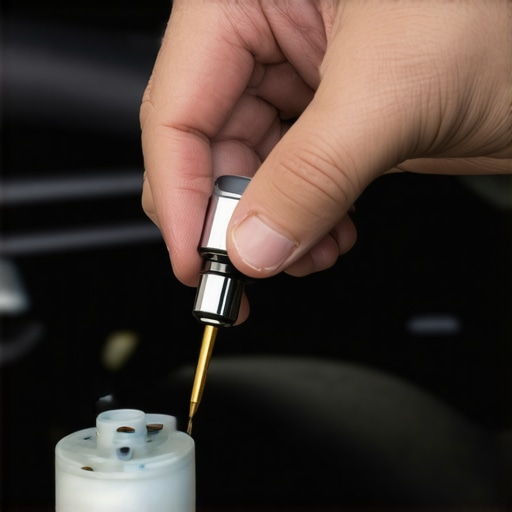
Many car owners believe that automotive diagnostics and repairs are straightforward and rely solely on quick fixes or generic advice. However, this oversimplification often leads to costly mistakes and overlooked issues. A common myth is that modern vehicles require only basic maintenance, ignoring the complexity of their electronic systems and sensors. In reality, high-tech systems like ABS, ECM, and various sensors demand precise diagnostic procedures performed with specialized tools and expertise.
Why think known problems are the only issues?
Another misconception is that symptoms always point to the most common causes. For instance, a squealing brake might be dismissed as simply needing new pads, but the underlying problem could be a warped rotor or a faulty sensor, which requires deeper inspection. Relying solely on symptoms without considering the vehicle’s history and data can lead to misdiagnosis. For example, neglecting to check the brake fluid’s condition may cause premature component wear or even safety risks. As highlighted in this guide, a small component like the anti-rattle clip can be the key to quiet brakes, often overlooked by amateurs.
How can advanced diagnostics save money and prevent harm?
Many overlook the importance of proper diagnostic procedures, especially in the era of computerized systems. Using outdated or generic diagnostic tools can lead to false readings or missed faults. Experts emphasize that understanding the nuances of sensor calibrations, software updates, and error codes is essential. For example, a misdiagnosed alternator issue can be mistaken for a dead battery, resulting in unnecessary replacements. Proper testing, including voltage testing, scan tool analyses, and visual inspections, can prevent over-repair and extend component life. As per industry studies, nearly 40% of automotive repairs stem from incorrect initial diagnoses, emphasizing the importance of accurate diagnostics.
Are we really saving money by skipping professional help?
Skipping professional diagnostics in favor of DIY solutions might seem cost-effective but often results in more expenses down the line. Incorrectly replacing parts or ignoring subtle signs can lead to further damage. For example, neglecting to recognize a failing sensor can cause downstream issues with the engine or transmission, significantly increasing repair costs. Additionally, many modern vehicles require software programming or calibration after repairs, a task only trained technicians can perform correctly. This is why trusting experts not only saves money but also ensures vehicle safety and longevity. For instance, ignoring a dark brake fluid condition can lead to brake failure, as discussed in this article.
Understanding that vehicle diagnostics go beyond surface symptoms helps prevent common pitfalls and saves money. Treat your car as a complex system requiring expertise; quick fixes and assumptions rarely lead to sustainable solutions. So, next time your car behaves oddly, remember: a precise diagnosis is your best investment. Have you ever fallen into this trap? Let me know in the comments.

Investing in Reliable Diagnostic Tools for Long-Term Gains
One of the cornerstones of maintaining your vehicle effectively is having a high-quality diagnostic scanner. Personally, I rely on the Autel MaxiSys MS908 for its comprehensive coverage of vehicle makes and models. This tool provides real-time data, ABS/SRS diagnostics, and CAN bus support, which are invaluable when troubleshooting complex issues like ABS sensor failures or engine misfires. Unlike basic code readers, this device allows me to clear codes, monitor live parameters, and even perform module programming. As vehicle electronics become more sophisticated, investing in a professional-grade scanner ensures you catch problems early, saving money and increasing safety over time.
Why regular calibration and software updates are game changers
Equipment like the MaxiSys isn’t effective without regular updates. Manufacturers release software patches that include new diagnostic trouble codes and vehicle-specific repair data. I make it a point to update my scanner at least quarterly, which dramatically improves troubleshooting accuracy—especially for newer models with evolving systems. This proactive approach reduces guesswork and helps address potential braking issues or sensor failures before they escalate. Forecasting future trends indicates that diagnostic tools will become increasingly integrated with cloud-based data, enabling even more precise diagnostics remotely.
Refining Maintenance Through Specific Tools and Methods
Beyond diagnostics, routine maintenance such as oil changes and brake inspections benefits from specialized equipment. For oil changes, I recommend a tactile oil filter wrench like the Lisle 25300, which provides better grip and leverage compared to generic tools. Precision matters here, as cross-threading or over-tightening can lead to leaks. When inspecting brakes, I personally use a digital caliper (like the Mitutoyo 500-196-30) to measure rotor thickness and pad wear accurately. For brake fluid, a refractometer helps determine moisture levels, preventing brake failures caused by contaminated fluid—an issue I’ve seen often in cars with dark brake fluid. Regular use of these tools ensures you’re proactive rather than reactive, catching wear and tear before it causes safety hazards.
How do I maintain these tools and techniques over time?
Proper care extends the lifespan and accuracy of your diagnostic and maintenance equipment. Keep electronic devices clean, store them in dry, protected cases, and calibrate mechanical tools periodically. For example, digital calipers require zero-resetting and calibration checks every 6-12 months—this small investment maintains measurement precision. Additionally, staying current with the latest software updates for your diagnostic scanner ensures you don’t miss critical error codes, especially as vehicle technology advances rapidly. Proper maintenance of your tools turns routine tasks into reliable, long-term investments that reduce the frequency and cost of repairs. To dive deeper into brake component maintenance, check out this guide.
Embracing a Future of Smarter Vehicle Care
The automotive repair industry is heading toward a more connected, data-driven future. Smart diagnostics paired with machine learning algorithms promise quicker, more accurate maintenance predictions. As vehicles incorporate more sensors and ECUs, the significance of having the right tools becomes paramount. I recommend trying out a smartphone-based OBD-II adapter like the OBDLink MX+ for quick scans on the go—perfect for catching issues early or verifying repairs. In the coming years, I expect remote diagnostics capabilities and AI-assisted troubleshooting will become standard, making vehicle care more efficient and less intrusive. Stay ahead by investing in the right tools today, and your vehicle will thank you in the long run.
The Hardest Lesson I Learned About vehicle diagnostics, oil change, auto repair, brake service
One key insight I gained was that sometimes the simplest cause, like debris in the ignition, can cause complex issues. Rushing to replace parts without proper diagnosis often leads to wasted time and money, a mistake I made early on. Taking the time to explore what’s really at fault has shown me the value of patience and attention to detail.
3 Myths About vehicle diagnostics, oil change, auto repair, brake service That Held Me Back
I used to believe all ignition problems required costly replacement, but learned that cleaning and lubrication often suffice. Also, I thought a dead battery was always responsible for starting issues; however, corroded terminals or loose grounds can be the real culprits. Disregarding these myths delayed proper repairs until I discovered the importance of thorough inspection and use of the right diagnostic tools.
What Experts Won’t Tell You About vehicle diagnostics, oil change, auto repair, brake service
One secret I uncovered is that regular calibration and updates of diagnostic scanners greatly improve troubleshooting accuracy, especially with modern vehicles. Many overlook this step, risking misdiagnosis. Additionally, understanding that vehicle behavior can be an early indicator of deeper mechanical or electrical issues allows for proactive maintenance, saving money and avoiding breakdowns.
Curated Recommendations for Vehicle Care You Can Trust
- Autel MaxiSys MS908: This professional diagnostic scanner provides real-time data and module programming. It’s invaluable for nuanced issues like ABS sensor failures or engine misfires, giving me confidence that I’ve addressed problems correctly.
- Mitutoyo Digital Calipers: Accurate measurements of rotor wear and pad thickness ensure timely replacements, preventing expensive repairs. Precision tools like these make routine inspections more effective and reliable.
- Refractometer for Brake Fluid: Monitoring moisture levels in brake fluid prevents failures caused by contaminated fluid—a common issue I’ve caught early using this device.
- Online Resources and Forums: Engaging with communities such as repair forums offers insights tailored from real experiences, often revealing tips you won’t find in manuals or generic guides.
Give Your Vehicle the Care It Deserves
Embracing a proactive mindset and investing in quality diagnostic tools transforms how you approach vehicle maintenance. It’s empowering knowing you can handle many issues without relying solely on mechanics. Every car owner has the potential to become more confident and self-reliant, turning stress into opportunity for learning and saving. So, why not start today—your car’s longevity and your peace of mind depend on it.
Have you ever faced a vehicle issue that taught you an unexpected lesson? Share your story below—I’d love to hear how you turned a challenge into knowledge.
,