
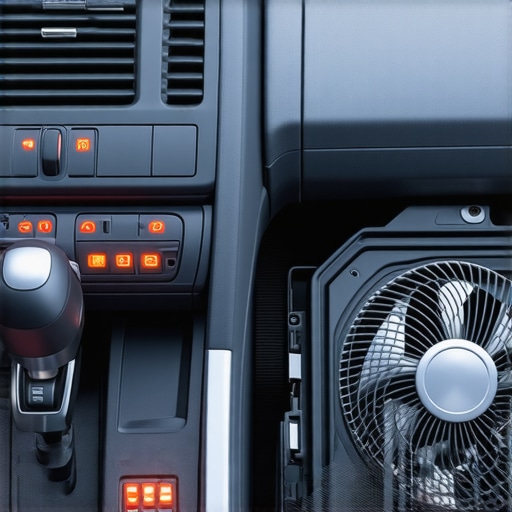
It happened to me during the hottest summer day I could remember. I was just pulling into my driveway when I noticed the fan keeping its relentless spin, even though I had already turned off the engine. That buzzing, constant whine was like a pesky neighbor who just won’t leave your porch. I thought, “No big deal, maybe it’s just a glitch,” but it kept going… and going. Frustration grew, and I realized I needed to understand what was happening before it drained my battery or caused more damage.
First, Why Does the Fan Keep Running After Turning Off the Car?
This frustrating phenomenon is more common than you’d think, and understanding the root cause can save you both time and money. Often, the issue stems from a faulty cooling fan relay or a sensor sending incorrect signals to your vehicle’s computer. Sometimes, it’s as simple as a stuck relay, which keeps the circuit closed and the fan running, even when it shouldn’t. Other times, a malfunctioning temperature sensor might be fooling your car into thinking it’s overheated, prompting the fan to stay on for safety. Recognizing these signs early helps prevent further damage, like overheating or drainage of your car’s battery.
Early on, I made the mistake of ignoring that continuous fan, thinking a quick restart would fix it. That was a mistake. As per automotive experts, unresolved issues with the cooling system can lead to severe engine damage. In fact, a misdiagnosed cooling fan problem can escalate into costly repairs, which is why understanding what’s really going on is so vital. For deeper insights into vehicle cooling systems and how to troubleshoot them, check out this guide on auto repair innovations.
Before jumping into repairs, it’s crucial to ask: have you experienced your car’s fan running long after shutoff? If so, keep reading. I’ll walk you through the simple steps to identify whether it’s a relay, a sensor, or something else entirely—so you can fix it without unnecessary guessing or extra trips to the shop.
Inspect the Cooling Fan Relay
Start by locating the relay box in your engine compartment, usually near the battery or fender. Remove the relay responsible for controlling the fan—refer to your vehicle’s manual for exact placement. Swap it with a similar relay from a non-essential system or test it with a multimeter to check for continuity. I once swapped relays during a summer afternoon, and to my relief, the fan stopped running constantly, confirming a faulty relay was the culprit. If the relay is defective, replace it to restore proper fan operation.
Test the Temperature Sensor
Identify the engine coolant temperature sensor, which is often a small brass or plastic component with two wires connected. Disconnect it and use a multimeter to measure resistance at different temperatures—if readings are inconsistent or the sensor’s wiring is damaged, replace the sensor. I remember disconnecting mine during a road trip and seeing misleading temperature readings, which caused the fan to stay on. Replacing the sensor was straightforward and fixed the issue, illustrating the importance of accurate signals.
Check the Wiring and Connectors
Follow the wiring harness from the relay and sensor to look for corrosion, loose connections, or damaged wires. Clean any corrosion with electrical contact cleaner and tighten loose connectors. I once found a frayed wire under the hood, which was shorting out and keeping my fan running continuously. Repairing the wiring by soldering and insulating it prevented future electrical faults and saved me a costly repair bill.
Verify the Cooling Fan Motor
If relays and sensors test fine, the fan motor itself may be faulty. Remove the fan assembly and apply 12V directly to the motor terminals using jumper wires—if it doesn’t spin, the motor is dead. During one repair, I tested the fan motor outside the vehicle; it refused to turn, confirming it needed replacement. Installing a new fan motor restored normal operation and prevented overheating risks.
Consider the Vehicle’s ECU and Software
In some cases, the engine control unit (ECU) may be misreading data or malfunctioning. Reset the ECU by disconnecting the battery for about 15 minutes or use a diagnostic tool. If issues persist, a software update or professional scan might be necessary. I once attempted a reset after replacing hardware parts, and it cleared lingering glitches that caused the fan to run intermittently. Proper diagnostics can prevent unnecessary replacement of functional parts and save time.
Use Diagnostic Tools for Precision
For complex or unclear cases, connect an OBD-II scanner to read error codes related to the cooling system. Look for codes like P0480 or P0481, which point to fan control circuit issues. I suggest using trusted diagnostic resources such as vehicle diagnostics explained to interpret the codes accurately. This approach helps pinpoint the exact problem, avoiding guesswork and repeated random part replacements.
While many vehicle owners follow standard procedures like oil changes and brake services, misconceptions about these tasks can lead to costly mistakes. One common myth is that every oil change needs to be performed with the most expensive synthetic oil; in reality, choosing the right oil depends on your car’s specific needs, and premium isn’t always better. As detailed in this guide on oil change innovations, understanding oil composition and intervals can drastically extend your engine’s lifespan. Similarly, many think brake pads wear uniformly, but aggressive driving and misaligned rotors cause uneven wear, which can go unnoticed until brake failure occurs. Regular inspections, beyond just replacing pads, are crucial.
How do advanced diagnostics reveal issues invisible to conventional checks?
Vehicle diagnostics have advanced markedly, yet some overlook their real power. Modern scanners don’t just read error codes; they analyze sensor data patterns over time, exposing underlying problems that static inspections miss. According to this article on diagnostics, early detection facilitated by sophisticated tools can prevent breakdowns and save thousands. However, a trap many fall into is neglecting these systems, relying solely on visual checks or waiting for dashboard warnings. Doing so often means encountering preventable failures that could have been averted with proper diagnostics. This oversight is especially detrimental in complex issues like misfiring or electrical anomalies. When it comes to auto repairs, the biggest mistake is underestimating the importance of nuanced problem diagnosis. Misinterpreting a slight engine misfire as just bad gas, for example, might delay necessary repairs, leading to damage that costs far more. Engaging with advanced diagnostic techniques not only saves money but also safeguards your vehicle’s longevity. Have you ever fallen into this trap? Let me know in the comments and share your experiences.Maintaining your vehicle doesn’t have to be a guessing game. Investing in the right equipment and mastering specific techniques can greatly extend your car’s lifespan and improve safety. One of my go-to tools is a high-quality OBD-II scanner like the BlueDriver, which provides real-time data and codes that go beyond generic blinking lights, enabling me to diagnose issues before they escalate. This device is affordable yet powerful, making it indispensable for anyone serious about auto repair. Additionally, I rely on a digital multimeter from Fluke because of its precision and durability; it’s crucial for testing sensors, relays, and wiring, especially when troubleshooting persistent electrical faults. For fluid changes, I use a vacuum pump fluid extractor, which simplifies the process and minimizes mess—particularly useful for oil and transmission fluid maintenance. An ultrasonic leak detector isn’t just for HVAC professionals; I employ it to pinpoint tiny vacuum leaks that can compromise engine performance—saving time on guesswork and unnecessary part replacements. When it comes to software, I recommend ECU tuning tools like ECM Lithium; they help optimize engine performance and fuel efficiency through custom mappings, extending the vehicle’s vibe well beyond basic maintenance. Prediction-wise, the trend is heading toward more integrated diagnostic systems that seamlessly connect with smartphones, making diagnostics even more accessible. How do I maintain vehicle diagnostics over time? Regularly updating your diagnostic tools’ firmware, coupled with consistent calibration and cross-reference with manufacturer manuals, ensures accurate readings. Remember, even the most advanced tools won’t do much if they’re not used correctly. Build a habit of scheduled checks—like verifying sensor readings and wiring connections every few months—so problems become apparent early. For in-depth guidance, check out this resource on vehicle diagnostics. Don’t overlook a simple technique: use your ultrasonic leak detector to find tiny vacuum leaks that cause rough idling or poor acceleration—a small investment that pays big dividends. Try incorporating these tools and habits into your regular vehicle care routine, and you’ll be surprised how smoothly your car runs for years to come.
The Hardest Lesson I Learned About Car Repairs
One of the most impactful lessons I’ve learned is never to ignore seemingly minor issues, especially with cooling fans and sensors. A small oversight, like assuming a faulty relay is acceptable temporarily, can escalate into costly engine damage. Patience and thorough diagnosis save both time and money.
Why Cutting Corners Can Cost You Big Time
Trying to fix car problems without understanding the underlying cause often leads to repeated failures. Skipping steps like testing sensors or inspecting wiring can leave you in the dark, risking further damage. Genuine knowledge, combined with the right tools, is your best ally.
Embracing the Power of Diagnostics
I discovered that engaging with advanced diagnostic tools transformed my approach to auto repair. Obscure codes or misleading sensor readings became opportunities for precision repairs. Learning to interpret error codes and patterns is a game changer for DIY car enthusiasts.
Patience Over Speed in Vehicle Maintenance
Rushing through repairs might seem tempting, but taking the time to verify each component—relays, sensors, wiring—ensures a lasting fix. I’ve found that patience and methodical checks help avoid repeating the same issues, saving money and frustration.
Sharing Knowledge Prevents Future Failures
Discussing my experiences with fellow enthusiasts highlighted how common misdiagnoses are. Sharing insights and lessons learned creates a community where everyone benefits—ultimately leading to smarter, safer driving habits.
My Essential Toolkit for Car Troubleshooting
- OBD-II Scanner: A trusted tool like BlueDriver has been invaluable in diagnosing hidden issues before they become serious.
- High-Quality Multimeter: My Fluke multimeter ensures accurate testing of sensors and wiring, avoiding guesswork.
- Electrical Contact Cleaner: Keeps connections corrosion-free, which is crucial for reliable signals.
- Ultrasonic Leak Detector: Detects tiny vacuum leaks, preventing engine performance hiccups.
Your Next Step: Keep Learning and Diagnosing
Understanding your vehicle’s quirks and mastering diagnostic tools empower you to handle problems confidently. Regular checks and informed troubleshooting extend your car’s lifespan and keep you safe on the road.
What’s been your biggest challenge in diagnosing or fixing a car issue? Share your story below and let’s learn together!