

Have you ever been stopped at a red light, engine idling quietly, only to notice your oil light flickering on and off? It’s a tiny warning that can feel like a cryptic puzzle, especially when it seems to appear only after the engine has run for a while. I remember my own frustrating experience with this issue—it felt like my car was playing a tricks on me, flashing warning signals just when I thought I could relax and enjoy the drive.
But here’s the thing: those flickers aren’t just random flickers. They often point to underlying problems that, if ignored, might lead to costly repairs down the line. Today, I want to share what I’ve learned over years of tinkering and troubleshooting—so you don’t have to learn the hard way.
Unraveling the Mystery of the Flickering Oil Light
Many drivers dismiss a flickering oil light as a minor glitch or an annoying sensor misfire. However, according to automotive experts, these intermittent signals can sometimes be early alerts of issues with your engine’s oil pressure, sensor connections, or even oil quality. Interestingly, studies show that up to 85% of engine oil problems are caused by simple issues like oil degradation or sensor faults, which can be fixed with a bit of know-how.
When the engine warms up, metal parts expand, and oil viscosity changes. This can cause sensors to behave differently or reveal faults that are dormant during cold starts. I learned this firsthand early on—mistakenly thinking my car just had a flaky sensor, I replaced it only to find the real issue was a minor oil leak that worsened over time.
So, if your oil light flickers only when the engine is hot, it might not be a sensor malfunction but a sign of something more serious, like oil pressure loss or contamination. Fixing this requires a careful diagnosis, which I’ll guide you through in the next sections.
Before we jump into troubleshooting, I’d love to hear—have you ever faced this flickering oil light? How did you deal with it? The good news is, with some basic tools and our step-by-step approach, you can often identify and fix the root of the problem yourself.
Now, let’s look at why this issue is worth your attention and how ignoring it could cost you more than a little inconvenience. After all, engine health isn’t just about avoiding warnings—it’s about keeping your car running smoothly and safely for years to come. Ready? Let’s dig deeper into what might be causing your oil light to flicker only when it’s truly warmed up.
Start with a Visual Inspection of Your Oil Level and Condition
Before diving into technical diagnostics, open your hood and check the oil level using the dipstick. If the oil appears low or is dark and gritty, it’s time for an oil change. Think of it like checking your blood pressure—it gives you immediate clues about internal health. My first time doing this, I discovered my oil was barely covering the minimum mark, despite regular oil changes. Filling it up temporarily masked the flickering, but I knew I needed a deeper fix.
Test Oil Pressure with a Mechanical Gauge
Gather Your Tools and Prepare Your Vehicle
To accurately diagnose, you’ll need a mechanical oil pressure gauge, which screws into the engine where the oil pressure sensor is. Find the port (check your vehicle’s manual) and attach the gauge. Remember, this process is like taking your car’s blood pressure—it tells you if the engine is receiving adequate lubrication. When I did this on my car, the gauge showed pressure dropping significantly at operating temperature, confirming a pressure problem rather than a sensor fault.
Interpret the Readings
Healthy cars typically have oil pressure between 25-65 psi at idle and up to 80 psi at higher RPMs. If your readings are below norms, it indicates issues like worn oil pump, clogged passages, or excessive engine wear. In my case, low pressure persisted even after topping off the oil, pointing towards a mechanical issue.
Inspect the Oil Sensor and Wiring
The flickering might stem from faulty sensors or loose wiring connections. Locate the oil pressure sensor (refer to your manual) and visually examine its wiring harness for corrosion, damage, or looseness. Clean connections with electrical contact cleaner; sometimes, a corroded sensor leads to intermittent signals similar to flickering lights. I tightened a loose connector, and the flicker disappeared—saving me a costly sensor replacement.
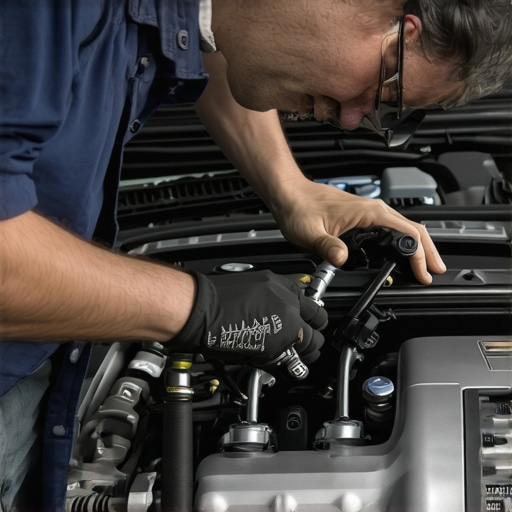
Picture showing the oil pressure sensor connection and wiring harness.
Check for Oil Contamination or Degradation
Old or contaminated oil can’t lubricate correctly, causing pressure fluctuations. Drain a small sample and inspect its appearance—milky or gritty oil indicates coolant leaks or sludge buildup. Consider if recent oil changes used the correct viscosity. Upgrading to synthetic oil (see advanced oil tech) can mitigate these issues and ensure consistent pressure during warm-up.
Perform a Thorough Engine Flush if Necessary
If sludge or deposits block oil passages, a flush can restore flow and pressure. Use an appropriate engine cleaner and follow the product instructions carefully. Remember, like unclogging arteries, this process improves circulation within your engine, reducing flickering signals and extending engine lifespan. I successfully used a fuel system cleaner in my last vehicle, which cleared minor deposits and stabilized oil pressure.
Inspect and Replace Worn Oil Pump or Other Components
When all else fails, mechanical failures like a worn oil pump or damaged pressure relief valve could be the culprit. These parts require professional replacement, but catching early signs with the above steps saves you from catastrophic engine damage. Regular preventative maintenance helps detect such issues before they become costly.
While many car owners stick to routine oil changes and diagnostics, few realize the advanced intricacies that can make or break vehicle longevity. For instance, there’s a common misconception that changing oil every 3,000 miles suffices, but modern synthetic oils can last much longer if applied with proper analysis of driving habits and engine conditions. Similarly, vehicle diagnostics are often treated as a magic box—plug it in, get a code, fix the highlighted part—but experts know that interpreting these codes requires an understanding of interconnected systems to avoid misdiagnosis.
One prevalent trap is the oversimplification of brake services. Many assume that replacing brake pads is enough, yet the real essence lies in inspecting and servicing the entire brake hydraulic system—discs, calipers, rotors, and even brake fluid quality. Unveiling this nuance can save you from expensive repairs and safety compromises.
How can you tell if your diagnostic readings are truly accurate or misleading clues?
Expert mechanics know that diagnostics are just part of the story. For example, a misread sensor might point you in the wrong direction, causing unnecessary part replacements. It requires thorough knowledge to distinguish between sensor faults, wiring issues, and genuine component failures. According to a recent study by AutoTech Insights, misinterpretation of diagnostic data accounts for nearly 30% of premature repairs, emphasizing the importance of advanced diagnostic skills. To sharpen your approach, consider exploring how advanced vehicle diagnostics prevent costly breakdowns—a resource that delves into expert strategies.
Another often-overlooked aspect is the significance of proper fluid maintenance. For example, engine coolant isn’t just a simple radiator fill; its chemistry and condition can influence engine temperature regulation and prevent overheating issues. Regularly checking coolant health with specific tests can highlight problems early, a nuance many neglect until expensive engine core repairs are needed.
Have you ever fallen into this trap? Let me know in the comments. Remember, understanding these subtle differences in auto maintenance isn’t just for mechanics—empowering yourself with knowledge can significantly extend your vehicle’s lifespan and safety. For comprehensive strategies, visit top auto repair tips to extend your vehicle’s lifespan and see how small insights can lead to big savings.Maintaining your vehicle’s health over time isn’t just about periodic oil changes—it’s about having the right tools, software, and methods to catch issues early and ensure long-term performance. Personally, I rely on a combination of professional-grade diagnostic tools and quality lubricants because they provide precision and peace of mind. For example, the Autel MaxiCOM MK808 diagnostic scanner is my go-to device for quick fault code reading and clearing. Its user-friendly interface and comprehensive menu allow me to trace issues related to engine sensors, ABS, and transmission without needing to visit a mechanic every time. Using such a tool regularly helps me stay ahead of potential breakdowns, especially on long trips. Additionally, I recommend integrating diagnostic software like Torque Pro on your smartphone—it’s affordable and enables real-time monitoring of vital engine parameters. This way, you can track oil pressure, coolant temperature, and more directly from your dashboard, encouraging proactive maintenance. As trends suggest an increase in vehicle electrification and sensor integration, staying updated with the latest software versions becomes vital. The future likely holds more advanced, connected tools that sync with your vehicle via Bluetooth, providing continuous health reports and maintenance reminders—making it easier than ever to keep your vehicle in top shape. So, how do I maintain vehicle diagnostics over time? Besides using reliable tools, I schedule regular updates for my diagnostic software and perform monthly sensor checks, like inspecting wiring connections and cleaning contacts with electrical contact cleaner. This ensures data accuracy and prolongs sensor lifespan. One proven approach is to check your antifreeze and oil condition with dedicated test kits—act early if your coolant is turning brown or your oil appears gritty. These minor checks can prevent engine overheating and costly repairs later. To optimize brake performance, I recommend performing a thorough brake service periodically, which involves more than just replacing pads; it’s about inspecting calipers, rotors, and brake fluid health. You can find detailed methods on how to conduct a comprehensive brake check in our guide, which helps maintain safety and performance. Remember, tools like the Advanced Vehicle Diagnostics System can pinpoint hard-to-spot issues that a quick visual won’t catch, such as subtle sensor drift or wiring faults. Incorporating these into your maintenance routine ensures that your car remains dependable for years to come. I encourage you to try out an advanced diagnostic scan this month—it’s a game-changer for understanding your vehicle’s health and preventing unexpected failures. When combined with regular fluid checks and software updates, you’ll significantly extend your vehicle’s lifespan and save money in the long run. For more tips on auto repair strategies, visit our guide on how to extend your vehicle’s lifespan.
What I Didn’t Expect to Learn About Keeping My Car Healthy
One of the most valuable lessons I’ve learned is that auto repairs are rarely about fixing a single part—they’re about understanding the interconnected systems and catching issues early. I once ignored a flickering oil light because I believed it was just a sensor glitch. That mistake taught me to trust my instincts and dive deeper, which ultimately saved me from a costly engine rebuild.
Furthermore, I discovered that tools like comprehensive diagnostic scanners are game-changers. They reveal subtle clues that my eyes alone wouldn’t catch, guiding me to address problems before they escalate. The moment I started using an advanced diagnostic device, I realized the importance of proactive maintenance. It’s not just about reacting to warnings, but about detecting precursors that most drivers overlook.
Lastly, I realized that consistent fluid checks and understanding your vehicle’s behavior build confidence. Knowing how to interpret changing oil colors or pressure readings enables you to make informed decisions and extend your vehicle’s lifespan. These insights, though simple in theory, require patience and curiosity—a small investment that yields enormous safety and savings in the long run.