
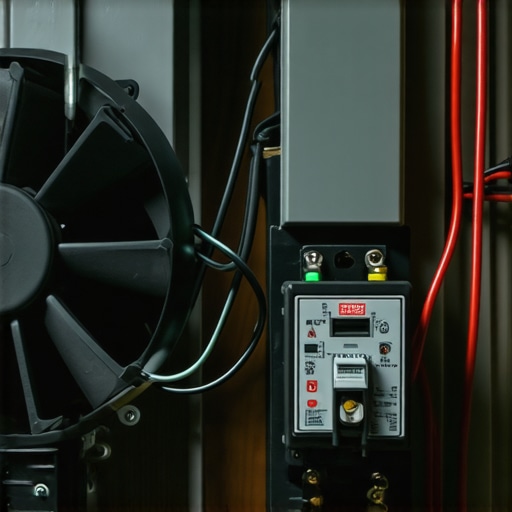
The Ghost in the Machine: Why Your AC Relay is Killing Your Battery
There is a specific kind of “sinking feeling” that only a car owner knows. You park your car, lock the doors, and start walking toward your front porch. But as the evening quiet settles in, you hear it – a low, persistent hum coming from your driveway. You turn around, and sure enough, your radiator fan is spinning at full blast, even though the keys are in your pocket. You think, “Maybe it just needs to cool down,” and you head inside. But when you come out the next morning, the hum is gone, and so is every ounce of power in your battery. Your car is dead.
In my decades as a Master ASE Certified Specialist, I’ve seen this exact scenario play out thousands of times. While modern vehicles are designed to keep the cooling fan running for a minute or two after a particularly hot drive to prevent heat soak, a fan that runs for 15, 30, or 60 minutes is not a feature – it’s a failure. This is one of the most common “parasitic draws” we handle at professional car repair shops. It’s a ghost in the machine, and the primary suspect is almost always a small, plastic cube hidden in your fuse box: the AC/cooling fan relay.
Understanding why your radiator fan keeps running after the engine is off is the first step in preventing a costly tow and an even costlier repair bill. This isn’t just an annoyance; it’s a mechanical breakdown that can leave you stranded at the worst possible moment.
What is an AC/Cooling Fan Relay? (The Hardware)
To understand the failure, you first have to understand the hardware. Think of a relay as an electromagnetic switch. In your car, most components don’t have a direct physical connection between the dashboard switch and the high-power device they control. If they did, we would have to run massive, thick wires through your steering column, which would be a fire hazard and a packaging nightmare.
Instead, your car’s computer (the PCM or Powertrain Control Module) sends a very low-current signal to the relay. This signal energizes a small copper coil inside the relay, creating a magnetic field. This magnetism pulls a metal contact arm down, closing a high-current circuit that sends power directly from the battery to the cooling fan. It’s exactly like a light switch, but instead of your finger flipping the toggle, electricity does the work.
The problem arises from a phenomenon we call “contact welding” or “sticking.” Every time that relay closes, a tiny spark, or arc, jumps between the metal contacts. Over thousands of cycles, this arcing creates heat and microscopic pits on the surface of the metal. Eventually, the metal becomes so hot or the surface becomes so jagged that the contacts literally fuse together. When the PCM tells the relay to “turn off,” the magnetic field disappears, but the contacts stay stuck in the “on” position. The circuit remains closed, the fan keeps spinning, and your battery begins its slow, inevitable march toward zero volts.
Common Cooling Fan Relay Symptoms
How do you know if your relay is the culprit? The symptoms are usually quite distinct. First and foremost is the radiator fan won’t turn off. If you’ve been inside for dinner and come back out an hour later to find the fan still humming, the relay is almost certainly stuck. This leads directly to a parasitic battery drain, which is the technical term for something “eating” your battery power while the car is supposed to be asleep.
Other symptoms include:
- AC Performance Issues: If the relay fails in the “off” position, your fan won’t turn on when you start the AC. This causes the high-side pressure in your AC system to skyrocket, which can lead to the compressor cutting out or even blowing a seal. If you notice your vents blowing warm air while idling, you should search for auto ac repair near me immediately.
- Clicking Sounds: You might hear a rapid “machine gun” clicking coming from the fuse box under the hood. This happens when the relay coil is failing or when there is a bad ground wire somewhere in the system.
- Intermittent Dead Battery: Sometimes the relay only sticks occasionally. You might find why your car battery keeps dying even with a new alternator is actually due to this intermittent sticking relay rather than a charging system failure.
I often tell my customers that why your engine runs perfectly until you turn on the AC often traces back to these small electrical components that manage the heavy loads of the cooling system.
The 15-Minute DIY Fix vs. Professional Diagnosis
The good news is that testing a relay is one of the few things a DIYer can do with zero specialized tools. If you find your fan running after the car is off, follow these steps:
1. Locate the Fuse Box
Most cars have two fuse boxes: one inside the cabin and one under the hood. The cooling fan relay is almost always in the under-hood box, near the battery. Open the plastic lid and look at the diagram printed on the underside.
2. The “Tap Test”
This is an old-school mechanic’s trick. While the fan is running (and the car is off), take the handle of a screwdriver and gently tap the top of the relay labeled “FAN” or “RAD.” If the fan suddenly stops, you’ve confirmed the relay was stuck. The vibration from the tap broke the “weld” on the internal contacts. Note: This is not a permanent fix. If it stuck once, it will stick again.
3. The Relay Swap
Most cars use the same type of relay for multiple systems. Find another relay in the box with the exact same part number – often the horn or the fog light relay is identical. Swap them. If the fan stops and the horn doesn’t work, you’ve found your “smoking gun.”
However, there are times when you must seek professional auto service and repair. If you open the fuse box and smell burnt plastic, or if you see melted plastic around the relay pins, do not attempt to swap it. This indicates a high-resistance short or a failing fan motor that is drawing too much current. Simply putting a new relay in a melted socket is a recipe for a vehicle fire.
Proper vehicle diagnostics explained by a professional can identify if the relay failed because it was old, or if it failed because the fan motor is “dragging” and pulling 40 amps when it should only be pulling 20.
The Financial Aspect: Don’t Get Scammed
In my years at the bench, I’ve heard horror stories of people being told they need a $1,400 AC compressor or a $600 PCM replacement when the only thing wrong was a $15 relay. It’s vital to understand the cost expectations so you don’t get taken for a ride.
A high-quality, OEM-spec relay typically costs between $10 and $50. If you take your car to a reputable auto repair center, you should expect to pay for about an hour of diagnostic time. This ensures the mechanic checks the rest of the circuit to make sure the relay didn’t die for a more sinister reason. Total costs for a professional relay replacement usually land between $200 and $400, depending on the vehicle’s complexity and local labor rates.
Be wary of shops that immediately jump to the most expensive part. If your fan won’t turn off, it is almost never the compressor. The compressor and the fan are separate components that work together, but a failure in one doesn’t always mean a failure in the other. If a shop won’t show you the diagnostic steps they took to rule out the relay, it might be time to find a new auto repair shop.
Why This Isn’t Just a “Fan Issue”
It’s tempting to think of a stuck relay as a minor nuisance, but it’s actually a symptom of stress on your entire car electrical system repair needs. When a fan runs continuously, it puts an enormous strain on the battery. Lead-acid batteries are not designed to be “deep-cycled” (drained to zero and recharged). Every time this relay kills your battery, you are permanently losing a portion of that battery’s life.
Furthermore, if the relay is arcing, it can send electrical “noise” or voltage spikes back through the wiring harness. This can occasionally interfere with other sensors. I’ve seen cases where a bad relay ground was actually the ground wire that makes your dashboard look like a Christmas tree, causing phantom codes for oxygen sensors or transmission solenoids.
Ignoring a failing relay can also lead to alternator failure. Once you jump-start your car, the alternator has to work overtime to charge a completely dead battery while also powering the vehicle. This generates excessive heat in the alternator’s diodes, leading to premature failure. What started as a $20 part can quickly escalate into a $1,000 repair involving a new battery, a new alternator, and a new relay.
Conclusion: Catch It Early
The AC/cooling fan relay is a small part with a big responsibility. Whether it’s preventing your engine from overheating in stop-and-go traffic or ensuring your battery is ready to start the car on a cold morning, this little switch is a critical link in your vehicle’s health.
If you hear that tell-tale hum after you’ve turned off the ignition, don’t ignore it. Try the “tap test” or the “relay swap” to see if you can solve the problem yourself. But if you see signs of melting, or if the new relay blows immediately, it’s time to call in the experts. Sometimes the issue is a deeper fault, like the $20 sensor that stops your engine from stalling in traffic but also tells the fan when to kick in.
Don’t let a simple electrical switch turn into a major headache. If you’re unsure, visit a professional auto repair shop for a full system health check. At Christian Brothers Automotive, we believe in “fixing it right the first time,” and that starts with an honest, thorough diagnosis of the small things before they become big things.