

It was a Tuesday night, and I was just trying to get home without my take-out getting cold. I hit the switch to roll up my driver’s side window, and for a heartbeat, the road ahead went dim. My headlights flickered. It’s a spooky sensation, like your car is gasping for breath. I remember the first time it happened to me years ago; I panicked and bought a brand-new alternator the very next morning. Talk about a waste of money. It turns out, I didn’t need a heavy-duty part; I just needed to clean a dirty connection.
That Annoying Moment Your Lights Dip for a Second
When your headlights flicker the moment you touch those window switches, your car is essentially telling you that it’s struggling to share its lunch. Most modern vehicles are packed with electronics, and sometimes the demand for power outstrips what the system can deliver in a millisecond. It’s a classic case of a voltage drop. I’ve spent way too many hours decoding vehicle diagnostics to know that while this might seem like a ghost in the machine, it’s usually just basic physics. I’ve seen folks ignore this for months until their car won’t start on a frosty morning. Don’t be that guy. Usually, your alternator is trying its best, but something is getting in the way. Whether it’s a tired battery or a loose ground wire, we’re going to pinpoint the culprit today so you don’t end up throwing money at parts you don’t need. Have you ever felt that momentary panic when your dash lights dim while you’re just trying to get some fresh air?
Is my electrical system actually on its last legs?
You might be thinking this is just old car charm. While it’s true that older wiring can be finicky, even newer cars can suffer from these glitches if the battery terminals are corroded. According to the Car Care Council, electrical system failure is one of the top reasons for roadside breakdowns, often preceded by small warnings like flickering lights. If you’ve noticed why your dashboard lights flicker when you use your turn signal, you’re already seeing the symptoms of a system under stress. My biggest mistake early on was ignoring the small stuff. I thought as long as the car started, I was fine. But those small flickers are the check engine light for your electrical grid. Using the $20 tool every driver needs for basic electrical troubleshooting can save you hundreds in shop labor. We’re going to look at why this happens and how advanced vehicle diagnostics prevent costly breakdowns by catching these hiccups early. Let’s get under the hood and see what’s really going on.
Test Your Battery Potential Under Load
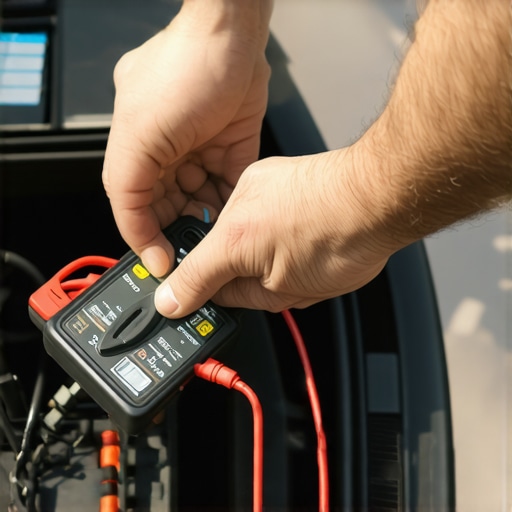
Before you blame the alternator, you have to prove the battery can handle a sudden surge. Think of your battery like a savings account; if it’s nearly empty, any large withdrawal—like powering a heavy window motor—leaves the rest of your electrical ‘bills’ unpaid for a split second. Use the $20 tool every driver needs for basic electrical troubleshooting to check the resting voltage while the engine is off. You are looking for a minimum of 12.6 volts. If it is sitting at 12.2, your battery is already half-depleted and lacks the buffer needed to stabilize the system when those motors kick in. Try a load test by watching the meter while you crank the engine; if it dips below 9.6 volts during the start, that battery is on its way out.
Hunt for the Hidden Corrosion on Grounds
Electricity travels in a loop, and that loop is only as strong as its weakest connection. Most people focus on the power side, but the ground side is where the real drama happens. I once worked on a sedan that flickered so badly the radio would actually reset when the driver hit the window switch. I spent hours checking fuses, only to find the main engine-to-chassis ground strap was hanging by a single thread of oxidized copper. By learning vehicle diagnostics explained through easy checks, you can spot these frayed wires before they leave you stranded. Scrub those contact points with a wire brush until you see shiny metal. If you have ever wondered why your dashboard lights flicker when you use your turn signal, a poor ground is almost always the culprit.
Give Your Window Motors a Health Check
Sometimes the problem isn’t the whole car; it is just the window itself. As regulators get old and gunked up with dried grease and road grit, the motor has to work three times harder to move the glass. This creates a massive amperage spike that pulls juice away from the headlights. You can often tell this is happening if you notice the real reason your power windows are moving so slowly is actually mechanical resistance rather than electrical failure. I have seen window motors get so hot they actually started to smell like burning plastic because they were fighting against a misaligned track. If the flicker only happens with one specific window, that is your smoking gun. Lubricating the tracks with silicone spray is a cheap fix that can lower the electrical demand significantly.
Verify Your Alternator Output Under Stress
Finally, we have to talk about the pump. If your alternator is failing, it will not be able to keep up with the fluctuating demand of modern electronics. You can test this by keeping your multimeter on the battery while the engine is running and having someone else hit the window switch. A healthy alternator should stay between 13.5 and 14.7 volts even under load. If it drops below 13 during the window operation, the internal voltage regulator is likely shot. We have seen cases where why your new alternator is whining right out of the box indicates a cheap rebuild that cannot handle high-load surges. We also used similar techniques when how we diagnosed a parasitic drain using only a test light to ensure the system was not being bled dry by a short circuit. Always verify the voltage drop across the cables themselves before you spend money on a new unit.
It was a Tuesday night, and I was just trying to get home without my take-out getting cold. I hit the switch to roll up my driver’s side window, and for a heartbeat, the road ahead went dim. My headlights flickered. It’s a spooky sensation, like your car is gasping for breath. I remember the first time it happened to me years ago; I panicked and bought a brand-new alternator the very next morning. Talk about a waste of money. It turns out, I didn’t need a heavy-duty part; I just needed to clean a dirty connection.
That Annoying Moment Your Lights Dip for a Second
When your headlights flicker the moment you touch those window switches, your car is essentially telling you that it’s struggling to share its lunch. Most modern vehicles are packed with electronics, and sometimes the demand for power outstrips what the system can deliver in a millisecond. It’s a classic case of a voltage drop. I’ve spent way too many hours decoding vehicle diagnostics to know that while this might seem like a ghost in the machine, it’s usually just basic physics. I’ve seen folks ignore this for months until their car won’t start on a frosty morning. Don’t be that guy. Usually, your alternator is trying its best, but something is getting in the way. Whether it’s a tired battery or a loose ground wire, we’re going to pinpoint the culprit today so you don’t end up throwing money at parts you don’t need. Have you ever felt that momentary panic when your dash lights dim while you’re just trying to get some fresh air?
Is my electrical system actually on its last legs?
You might be thinking this is just old car charm. While it’s true that older wiring can be finicky, even newer cars can suffer from these glitches if the battery terminals are corroded. According to the Car Care Council, electrical system failure is one of the top reasons for roadside breakdowns, often preceded by small warnings like flickering lights. If you’ve noticed why your dashboard lights flicker when you use your turn signal, you’re already seeing the symptoms of a system under stress. My biggest mistake early on was ignoring the small stuff. I thought as long as the car started, I was fine. But those small flickers are the check engine light for your electrical grid. Using the $20 tool every driver needs for basic electrical troubleshooting can save you hundreds in shop labor. We’re going to look at why this happens and how advanced vehicle diagnostics prevent costly breakdowns by catching these hiccups early. Let’s get under the hood and see what’s really going on.
Test Your Battery Potential Under Load
Before you blame the alternator, you have to prove the battery can handle a sudden surge. Think of your battery like a savings account; if it’s nearly empty, any large withdrawal—like powering a heavy window motor—leaves the rest of your electrical ‘bills’ unpaid for a split second. Use the $20 tool every driver needs for basic electrical troubleshooting to check the resting voltage while the engine is off. You are looking for a minimum of 12.6 volts. If it is sitting at 12.2, your battery is already half-depleted and lacks the buffer needed to stabilize the system when those motors kick in. Try a load test by watching the meter while you crank the engine; if it dips below 9.6 volts during the start, that battery is on its way out.
Hunt for the Hidden Corrosion on Grounds
Electricity travels in a loop, and that loop is only as strong as its weakest connection. Most people focus on the power side, but the ground side is where the real drama happens. I once worked on a sedan that flickered so badly the radio would actually reset when the driver hit the window switch. I spent hours checking fuses, only to find the main engine-to-chassis ground strap was hanging by a single thread of oxidized copper. By learning vehicle diagnostics explained through easy checks, you can spot these frayed wires before they leave you stranded. Scrub those contact points with a wire brush until you see shiny metal. If you have ever wondered why your dashboard lights flicker when you use your turn signal, a poor ground is almost always the culprit.
Give Your Window Motors a Health Check
Sometimes the problem isn’t the whole car; it is just the window itself. As regulators get old and gunked up with dried grease and road grit, the motor has to work three times harder to move the glass. This creates a massive amperage spike that pulls juice away from the headlights. You can often tell this is happening if you notice the real reason your power windows are moving so slowly is actually mechanical resistance rather than electrical failure. I have seen window motors get so hot they actually started to smell like burning plastic because they were fighting against a misaligned track. If the flicker only happens with one specific window, that is your smoking gun. Lubricating the tracks with silicone spray is a cheap fix that can lower the electrical demand significantly.
Verify Your Alternator Output Under Stress
Finally, we have to talk about the pump. If your alternator is failing, it will not be able to keep up with the fluctuating demand of modern electronics. You can test this by keeping your multimeter on the battery while the engine is running and having someone else hit the window switch. A healthy alternator should stay between 13.5 and 14.7 volts even under load. If it drops below 13 during the window operation, the internal voltage regulator is likely shot. We have seen cases where why your new alternator is whining right out of the box indicates a cheap rebuild that cannot handle high-load surges. We also used similar techniques when how we diagnosed a parasitic drain using only a test light to ensure the system was not being bled dry by a short circuit. Always verify the voltage drop across the cables themselves before you spend money on a new unit.
The Trap of Assuming the Part is Always the Problem
I’ve noticed a trend where folks assume a new part is a guaranteed fix. It’s actually the opposite. In my years under the hood, I’ve found that high-quality essential auto repair strategies for frequent drivers focus more on the environment of the part than the part itself. For example, people obsess over brake pads but ignore the how to tell if your caliper slide pins are bone dry. If those pins are stuck, your expensive ceramic pads will wear out in a month. It’s the same with electrical surges. You can swap every wire, but if you don’t understand how to interpret live data, you’re just guessing.
Wait, why does my brand new oil look like ink already?
This is a question I get all the time. You just did a fresh swap, and 50 miles later, it’s jet black. Most people panic and think their engine is toast. The truth? Modern detergents are just doing their job. However, there is a darker side: the hidden sludge building up behind your clean dipstick. If your oil turns black instantly, it usually means your previous service intervals were too long, and the new oil is currently melting old deposits. Experts at the National Institute for Automotive Service Excellence (ASE) point out that neglecting these indicators of internal cleanliness can lead to catastrophic failure even if you follow the manual’s schedule. 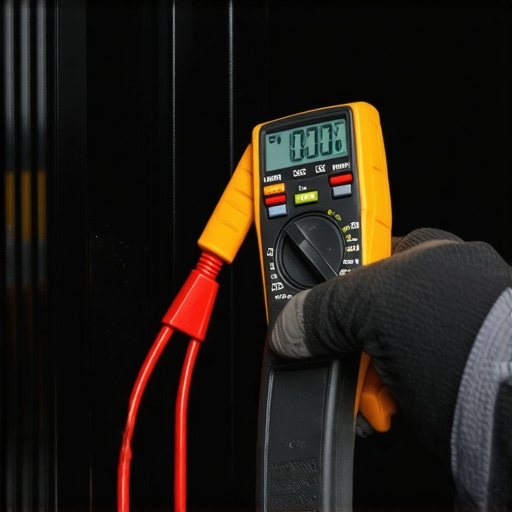
Avoid the Over-Tightening Disaster
Here is the ‘Oops’ factor that breaks more cars than old age: the ‘more is better’ philosophy. I’ve seen so many beginners snap bolts because they think ‘tight’ isn’t enough. This is especially true during a tire rotation; the common mistake that snaps your wheel studs during a tire rotation is almost always a lack of a torque wrench. Use the right tools and consult the ultimate guide to brake service for safety and performance to ensure you aren’t creating new problems while fixing old ones. Have you ever fallen into the trap of over-tightening a bolt until it snapped? Let me know in the comments below, and let’s help each other avoid these costly headaches. Check out our privacy policy or contact us if you have specific questions about your rig’s electrical ghosts.
Stop Trusting Cheap Code Readers
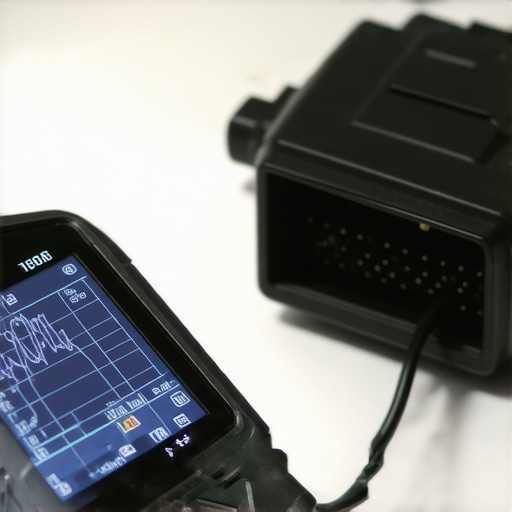
After years of wrestling with electrical ghosts and mechanical gremlins, I’ve realized that the difference between a ‘money pit’ and a reliable daily driver often comes down to the gear you keep in your garage. I used to think a basic socket set was all I needed, but as cars became rolling computers, my toolbox had to evolve. If you’re still using a $10 code reader from the gas station, you’re only getting half the story. To truly master decoding vehicle diagnostics, you need a tool that offers bi-directional control. This allows you to command the car to roll the windows up or turn on the fuel pump while you’re standing there watching the multimeter. It is the only way to prove a circuit is actually working under real-world conditions rather than just reading a stored error message from three weeks ago.
How can I keep my car running for 300,000 miles?
Maintaining a vehicle over the long term isn’t about grand gestures; it is about a simple six-month ritual. I take twenty minutes twice a year to spray down my window tracks with high-quality silicone—not WD-40, which can attract dust—and I apply a fresh dab of dielectric grease to my battery terminals. These top auto repair tips to extend your vehicles lifespan aren’t just suggestions; they are the barrier between you and a $500 shop visit. When you consider oil change innovations and technologies that save your engine, remember that chemical maintenance is just as vital as mechanical repair. Keeping your fluids clean and your connections corrosion-free prevents the resistance that leads to the flickering lights we discussed earlier.
Prepare for the Age of Software Cars
We are rapidly moving toward a world of software-defined vehicles where a glitch is more likely to be a line of code than a frayed wire. According to technical documentation from Robert Bosch GmbH, future automotive architectures will rely heavily on centralized ‘zonal’ controllers. This means the days of chasing a single power wire might be fading, replaced by the need to understand data bus communication. If you want to stay ahead of the curve, start learning about CAN bus protocols today. Using advanced vehicle diagnostics to prevent costly breakdowns is the only way to keep modern rigs on the road without needing a dealership subscription for every minor hiccup. I suspect we will soon see more DIY tools that focus on ‘flashing’ modules rather than just turning wrenches.
Master the Art of the Vacuum Test
Next time you’re under the hood, don’t just look for leaks with your eyes; use your ears and the right equipment. I always recommend that drivers move beyond basic visual checks and actually test the integrity of their intake system. You can learn how to find a vacuum leak with soapy water and a hand pump in about ten minutes, and it is one of the most satisfying ‘detective’ jobs you can do on your own. It solves rough idles that even the most expensive sensors can’t fix. While you’re at it, don’t forget to review the ultimate guide to brake service for safety and performance to ensure your stopping power is as reliable as your electrical system. My challenge to you this weekend is to pick up a simple vacuum pump and test one line on your engine—you might be surprised at what you find lurking in the shadows of your intake manifold.
The Bitter Pill I Swallowed About Garage Guesswork
If there is one thing a decade of grease under my fingernails has taught me, it is that your car is almost always a better communicator than you think. We just have to learn the language. I spent years playing ‘part-darts,’ throwing new components at problems and hoping something would stick. Here is what I know now: most electrical ghosts are just bad hygiene for your car’s wiring. Using auto repair hacks to save money without sacrificing quality often starts with a simple wire brush and a can of contact cleaner. I’ve realized that the loudest symptom—like a whining pump or a flickering dash—is rarely the source of the fire. It is just the victim of a surge elsewhere. Most importantly, I learned that ignoring a small flicker today is an invitation for a tow truck tomorrow. By embracing vehicle diagnostics explained through easy checks, you stop being a victim of your car’s moods and start being the one in charge.
Gear That Actually Earns Its Keep in My Toolbox
You don’t need a thousand-dollar setup to fix these issues, but you do need gear that speaks the truth. My first recommendation is a dedicated Bluetooth OBD-II adapter like the BlueDriver. Unlike basic scanners, it lets you log voltage in real-time on your phone while you drive, which is vital for catching a momentary dip. Secondly, I never start an electrical job without a High-Quality Digital Multimeter. I personally trust the Kaiweets brand for DIYers because it is rugged and accurate. Third, keep a bottle of Electronic Cleaner and Dielectric Grease on your shelf. Applying these after cleaning grounds prevents the corrosion from returning. Lastly, check out brake service myths busted to see how even your mechanical systems rely on these electrical foundations to keep you safe.
#IMAGE_PLACEHOLDER_E#
Reclaiming Your Drive from Electrical Gremlins
There is a specific kind of peace that comes from driving a car you truly trust. When you can hit that window switch and the road ahead stays bright and steady, you know your electrical system is in peak health. No more ‘spooky’ sensations or wondering if the engine will turn over tomorrow. Taking the time to master these checks isn’t just about saving money; it’s about the confidence of knowing you won’t be the one stranded on the shoulder. Whether you are performing a simple swap or following the ultimate guide to brake service for safety and performance, your attention to detail is what makes your rig a high-mileage legend. So, don’t let a tiny flicker ruin your night—get under the hood, clean those grounds, and take back control of your commute. Have you ever spent a fortune on a brand new alternator only to find out the real culprit was just a $2 loose wire? Let me know your biggest ‘oops’ moment in the comments below!