

I remember the first time it happened to me: I was halfway up a steep mountain pass, my trunk loaded with camping gear, and the engine suddenly felt like it had been replaced with a sewing machine motor. I floored it. Nothing. The speedometer needle didn’t just stop moving; it actually started to crawl backward. It is a terrifying, helpless feeling when your vehicle refuses to respond while a line of angry drivers forms behind you. I spent weeks guessing, even falling for the mistake where my EGR valve stayed gunked up because I was treating the symptom rather than the source of the carbon buildup. It was a classic throw-parts-at-it failure that cost me time I could have spent on the trail. Today, we are going to end that guesswork. I am going to show you exactly how to find out why your car is wheezing on the inclines and how you can get that new car pull back without taking out a second mortgage.
Why Your Engine Suddenly Acts Like It Is Dragging an Anchor
When you are cruising on a flat highway, your engine is in its comfort zone. But a hill? A hill is a demand for maximum efficiency. If your fuel system is even slightly off, or if your air intake is restricted, the incline will expose it immediately. I have found that most folks jump straight to fearing the worst—a blown transmission or a dying engine. In reality, a simple clogged filter or a tired sensor is usually the culprit. You need to think of your engine like a marathon runner; if they cannot breathe properly or get enough calories, they are going to collapse on the first big slope. I remember wasting an entire weekend and three hundred dollars on a fuel pump I did not need, only to realize cleaning a tiny sensor would have fixed the whole thing in minutes.
Can a cheap sensor really kill your momentum?
You might be skeptical that something the size of a matchbox could leave you stranded on a mountain road, but modern cars are controlled by tiny electronic brains that are incredibly sensitive. According to the Car Care Council, over 70 percent of vehicles on the road have at least one maintenance item that is neglected, and many of those directly impact your car’s ability to handle a load. If you have ever wondered what your car is trying to tell you through those subtle hesitations, you are not alone. Have you ever felt that sinking sensation in your stomach when the gas pedal goes soft on a hill? Let me know in the comments, because I have definitely been the guy with his flashers on at the side of the road. To get things moving again, we first have to look at how advanced vehicle diagnostics can help us pinpoint the ghost in the machine before we start turning wrenches.
Check the Lungs of Your Engine First
Imagine trying to run a sprint while breathing through a straw. That is exactly what happens when your air filter is packed with dust and debris. Before you start buying expensive parts, pull that filter out and hold it up to the sun. If you cannot see light through the pleats, it is time for a change. Sometimes, even a clean-looking filter can cause issues if the housing is not sealed. I once dealt with a frustrating stutter on inclines just because of a loose air filter housing that was letting unmeasured air bypass the sensors. While you are in there, you must address the Mass Air Flow (MAF) sensor. This little component tells the engine how much air is coming in. If it is coated in a film of oil or dust, the computer gets bad data and cuts your power. Learning how to clean your mass air flow sensor without ruining it is one of the highest-value skills you can pick up for the cost of a ten-dollar can of cleaner.

Is a Clogged Filter Starving Your Pistons?
If the air is fine, you need to look at the calories—the fuel. When you hit a hill, your engine’s demand for fuel spikes. If your fuel filter is partially blocked, it might flow enough for a flat road but fail miserably when gravity starts working against you. This is the hidden filter that blocks your fuel flow and kills your torque right when you need it most. I remember a specific trip to the Blue Ridge Mountains where my truck started bucking every time the road tilted upward. I was convinced the transmission was toast. I spent three hours under the chassis in a rainy gravel pull-off, swapping out a three-year-old fuel filter. The result? The truck pulled like a freight train the rest of the way. If a filter change doesn’t help, you might need to listen for a fuel pump that is crying or whining before it finally gives up the ghost.
Plug in a Scanner to See What Your Computer Knows
Modern vehicles are smarter than we give them credit for. Even if your dashboard isn’t glowing with a warning light, the computer might have pending codes stored. Using a basic OBD-II scanner allows you to perform easy vehicle diagnostic checks that can point you directly to a misfiring cylinder or a lazy oxygen sensor. Think of it as a doctor’s stethoscope for your car. You should also stay on top of your maintenance schedule, as oil change innovations have made it easier to keep the internal components of your engine moving freely, reducing the friction that saps power during a climb. This prevents the heat buildup that often occurs when you are working the drivetrain hard on a steep grade.
Common wisdom tells you that if the oil on your dipstick is amber and clear, your engine is in the clear. I hate to be the bearer of bad news, but that is a dangerous oversimplification. I have cracked open engines that looked pristine on the stick only to find the hidden sludge building up behind your clean dipstick. It is a chemical reality: oil does not just lubricate; it suspends contaminants. Once those additives are spent, the oil might look fine, but it is no longer protecting your bearings. According to a technical paper by SAE International, the rate of additive depletion can vary by up to 50 percent based on driving habits alone, meaning a standard interval might be too long for a heavy-footed driver who frequently tackles mountain passes. Have you ever fallen into this trap and waited too long? Let me know in the comments.
Why does your scanner say P0420 when the converter is actually healthy?
This is where the ‘parts cannon’ starts firing and bank accounts start draining. Most DIYers see a Catalyst Efficiency code and immediately drop hundreds on a new catalytic converter. But here is the nuance: the computer is not actually testing the converter directly; it is comparing data between two oxygen sensors. If you have a tiny exhaust leak or a lazy sensor, the math does not add up, and the computer blames the most expensive part. I have seen countless people realize why your scanner says P0420 but the converter is actually fine after a simple smoke test reveals a two-dollar gasket leak. It is about interpreting data, not just reading it.  One of the biggest ‘oops’ factors I see involves the humble oil change. You focus so much on the oil type that you forget the hardware. If you are not careful, you will end up with the drain plug crush washer mistake that ruins driveways. Worse, if you have inherited a car with a neglected history, you might find yourself searching for the secret to getting a rounded oil drain plug off without a welder because someone used the wrong size wrench. The same logic applies to your brakes. Everyone swaps pads, but almost no one checks the moving hardware. You can buy the most expensive ceramic pads on the market, but if you do not know how to tell if your caliper slide pins are bone dry, those pads will wear unevenly and vibrate within a month. We need to look at brake service myths busted to realize that safety is not just about friction material; it is about smooth mechanical movement.I have spent a lot of late nights in my garage, grease under my fingernails, wondering if I really needed that five-hundred-dollar scan tool. The truth is, you do not need the pro-level gear to get pro-level results, but you do need to be smart about what you carry. To truly master your car’s health, you should grab the $20 tool every driver needs for basic electrical troubleshooting—a simple multimeter. It is the difference between guessing that your battery is dead and knowing your alternator is actually the culprit. I use mine to verify everything from fuse continuity to sensor voltages. If you are serious about DIY, knowing how to find a parasitic battery drain with a basic multimeter can save you from waking up to a dead car three mornings in a row. These are not just gadgets; they are your eyes and ears inside the wiring harness.
How can I stay ahead of major repairs over the long haul?
The secret is not just fixing things when they break; it is building a data set for your specific vehicle. I keep a small notebook or a dedicated app where I track every odd noise or slight dip in MPG. This is part of the essential auto repair strategies for frequent drivers that turn a hundred-thousand-mile car into a three-hundred-thousand-mile legend. You want to see the failure coming a mile away. For instance, according to the Bosch Automotive Handbook, even a minor 10 percent deviation in fuel pressure, often caused by a failing regulator or aging pump, can cause significant torque loss on inclines without ever tripping a Check Engine Light. By staying on top of top auto repair tips to extend your vehicles lifespan, you are essentially playing defense against the inevitable wear and tear of the road. 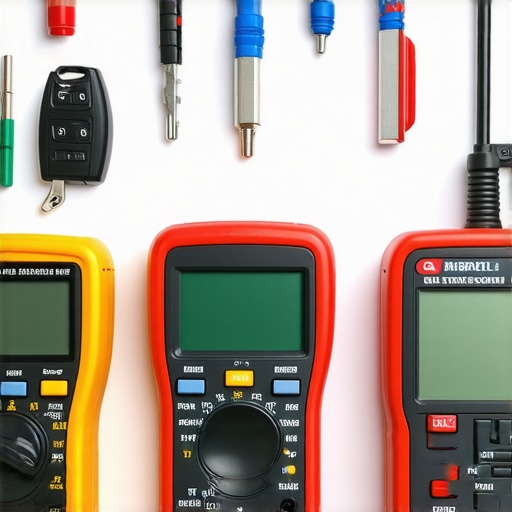
Build Your Own Diagnostic Strategy
If you want to stop overpaying for ‘parts cannon’ solutions, you need to start thinking like a technician. I always recommend these auto repair hacks to save money without sacrificing quality: start with the cheapest, most likely culprit and verify it with a tool before you buy. Do not just buy a new coil pack because of a misfire; swap the suspect coil to a different cylinder and see if the code follows it. That is a free diagnostic. In the future, I expect vehicles to become even more locked down by proprietary software, making these basic mechanical and electrical skills even more valuable. The more the ‘brain’ of the car becomes a black box, the more we need to rely on the fundamentals of air, fuel, and spark. I challenge you to go out this weekend, pop the hood, and just find your MAF sensor. Give it a look. If you see dust, you know what to do next. Staying proactive today means you will not be that person on the side of the mountain tomorrow.
Hard Truths Learned While Stranded on a Mountain
After years of turning wrenches, I have realized that the most expensive repair is the one you do twice because you didn’t test it the first time. #IMAGE_PLACEHOLDER_E# I spent far too much money in my early years firing the ‘parts cannon’ at problems instead of learning these auto repair hacks to save money without sacrificing quality. One major lightbulb moment was discovering that a clean dipstick is a lie; chemical depletion happens long before the oil looks ‘dirty.’ Another realization was that safety isn’t just about new parts; it is about how they move, which is why I stopped falling for brake service myths busted by common garage talk. Most importantly, I learned that a vehicle is a system of systems—if one piece is struggling, the whole machine feels it.
Gear That Saves My Wallet Every Month
If you want to move beyond guessing, you need a few core items in your arsenal. First, never underestimate the power of a basic scanner for easy vehicle diagnostic checks before you even think about visiting a shop. I also swear by the $20 tool every driver needs for basic electrical troubleshooting—the multimeter—because it reveals secrets the dashboard won’t. Finally, keeping a consistent log of your car’s behavior is one of those essential auto repair strategies for frequent drivers that prevents small hiccups from becoming total engine failures. These tools aren’t just for pros; they are for anyone who wants to stay in control of their machine’s destiny.
You Are Capable of More Than Just Adding Gas
It is easy to feel intimidated by modern engines, but the fundamentals of physics haven’t changed. By staying proactive and using top auto repair tips to extend your vehicles lifespan, you are not just maintaining a car; you are gaining peace of mind. Every time you successfully diagnose an issue, you build a set of skills that stay with you forever. Understanding how advanced vehicle diagnostics prevent costly breakdowns is the final piece of the puzzle that turns a casual driver into a savvy owner. Don’t wait for the next steep hill to find out if your engine is healthy—get out there and check it today. Have you ever felt your engine bog down on a hill and feared the worst? What was the actual fix? Let me know in the comments below!