
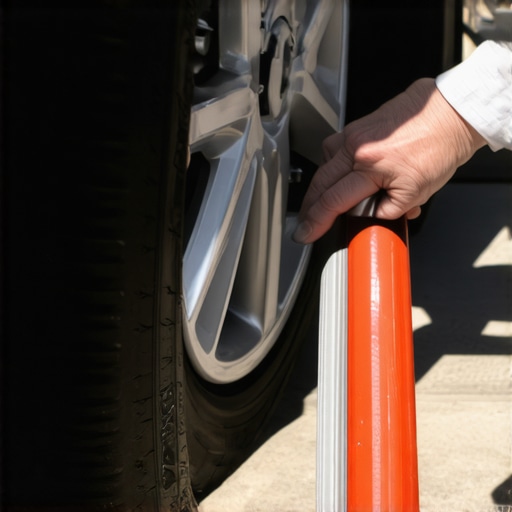
The steering wheel shouldn’t feel like a mere suggestion. Last summer, I was cruising down the interstate when I realized I was fighting my truck just to stay in the lane. It wasn’t a gust of wind, and it wasn’t the road crown. It felt like the front wheels had a mind of their own. I remember thinking, “I’ll just turn up the radio and deal with it Saturday.” That was my first mistake. A few days later, that subtle wandering turned into a terrifying shimmy every time I tapped the brakes. I spent a fortune on a professional alignment only for the tech to tell me my outer tie rods were shot. If I had just spent ten minutes in my driveway, I could have saved myself the headache and the extra shop fees. Today, I’m going to show you how to avoid that trap. [image-placeholder]
Stop Guessing and Start Testing Your Steering
Most people assume that if the car is driving relatively straight, everything underneath is fine. But steering components don’t always fail all at once; they scream at you in whispers first. You might notice why your car wanders across the lane on the highway, or perhaps you’ve noticed why your steering wheel is off-center after hitting a pothole. These are classic symptoms of a tie rod that has developed “play.” According to data from the National Highway Traffic Safety Administration (NHTSA), component failures in the steering and suspension systems are a leading cause of loss-of-control crashes, accounting for a significant portion of mechanical-related accidents. This isn’t just about a smooth ride; it’s about making sure your wheels actually go where you point them. I once made the rookie mistake of ignoring a rhythmic clunking sound, thinking it was just a loose plastic splash shield. It turned out to be a bone-dry tie rod end that was literally one pothole away from separating. Don’t be like younger me.
Can a Regular Person Really Spot a Failing Part Without a Shop?
I get it. You’re worried you’ll get under there, shake a few things, and have no idea what you’re looking at. Or worse, you’re afraid you’ll misdiagnose it and replace a perfectly good part. Skepticism is healthy—it keeps you from wasting money. But here’s the reality: the “shake test” is one of the most reliable easy checks before your road trip that even seasoned mechanics use. You don’t need a computer or a specialized degree to feel a mechanical clunk. Have you ever felt like your steering has a “dead spot” in the middle where nothing happens for a split second? If so, you are exactly who I wrote this for. We’re going to use some basic top auto repair tips to extend your vehicle’s lifespan by catching this wear early. Let’s get your hands dirty and see what’s actually going on with your front end.
Get the Front End Off the Ground
First, you need to get the weight off the wheels. You cannot feel the ‘play’ in a mechanical joint if the entire weight of the engine is squashing it down. I learned this the hard way when I was twenty, trying to diagnose a shake while the car was on the ground. I almost pulled a muscle and found nothing, only to realize later that the tire’s footprint on the pavement was masking a tie rod that was basically held together by luck. Jack up the front end of your vehicle and secure it on sturdy jack stands. Never trust a floor jack alone—I have seen one fail, and it is a sound you never want to hear. Once the wheels are dangling, you are ready to isolate the components. This is a fundamental step in easy checks before your road trip to ensure your suspension is tight.
Use the 3 and 9 O’clock Grip
With the wheel in the air, grab the tire at the 3 and 9 o’clock positions. Give it short, firm tugs back and forth. You are not trying to rip the wheel off; you are looking for a tiny mechanical ‘click’ or ‘thunk.’ It feels exactly like a loose tooth. If the wheel moves even a fraction of an inch before the steering rack engages, you have found your culprit. While you are there, try the same thing at 12 and 6 o’clock. Knowing how to spot a bad wheel bearing before the grinding starts is crucial here, because a 12 and 6 shake usually points to a bearing or ball joint, whereas the 3 and 9 shake is almost always the steering linkage. 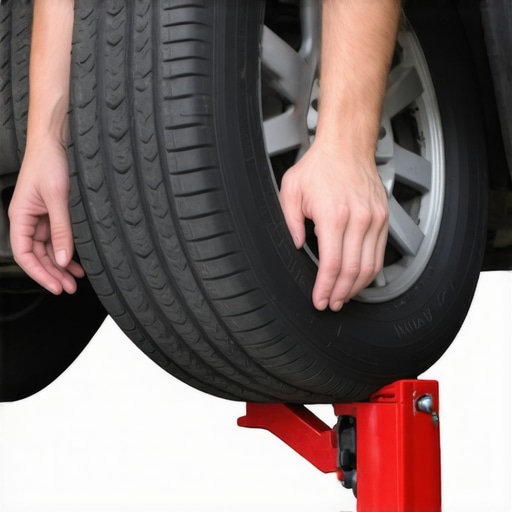
Find the Play Before It Finds You
The physical shake tells you there is a problem, but you need to see the failure to confirm it. Crawl under there with a good flashlight and look at the rubber boot covering the tie rod end. If that boot is torn or cracked, the protective grease has leaked out and road salt has moved in. This is a primary part of decoding vehicle diagnostics through physical evidence. I once helped a friend who swore his rack and pinion was dying, but a quick look revealed a simple torn boot that had turned the internal lubricant into a grinding paste. We used some auto repair hacks to save money without sacrificing quality by replacing just the outer end rather than the whole assembly.
The Helper Method for Real-Time Testing
If the shake test feels vague, grab a buddy. Have them sit in the driver’s seat and wiggle the steering wheel back and forth rapidly—just a few inches in each direction—while you watch the tie rod ends from underneath. You are looking for ‘lost motion’ where the metal rod moves but the wheel knuckle stays still for a split second. This visual confirmation is one of the most essential auto repair strategies for frequent drivers. I remember a messy moment when I forgot to tighten the jam nut after an adjustment. The steering wheel was straight when I left the driveway but 45 degrees off by the time I hit the corner. It was a terrifying reminder that even a small oversight in top auto repair tips to extend your vehicle’s lifespan can lead to the dangerous truth about ignoring a grinding noise in your wheels.However, there is a nuance most DIYers miss: the difference between mechanical play and steering ‘weight.’ Most people think a heavy steering wheel means the pump is dying, but it could actually be a seizing lower steering shaft joint. This is a common trap that leads people to spend hundreds on a power steering pump they didn’t need. Before you swap parts, verify how to spot a leaking rack and pinion before the steering gets heavy versus a mechanical bind.
Why does your steering feel tight but the car still wanders?
If your components pass the shake test but the car still feels ‘darty,’ you might be dealing with ‘memory steer.’ This happens when a joint is too tight or seized rather than loose. Everyone tells you to look for looseness, but in my experience, a seized upper strut mount or a dry ball joint can be just as dangerous because it prevents the wheels from returning to center naturally. Research from the Society of Automotive Engineers (SAE) indicates that excessive friction in steering pivots can cause significant delays in the self-centering action of the steering wheel, which confuses both the driver and the vehicle’s stability control systems. This is a critical part of how advanced vehicle diagnostics prevent costly breakdowns.
The Alignment Myth and Modern Electronics
Many drivers believe a professional alignment is a ‘fix-all’ for a wandering car. This is a mistake. An alignment technician will often set the ‘toe’ and ‘camber’ within factory specifications, but if your control arm bushings are soft or a tie rod is borderline, those specs will shift the moment you hit a real-world bump. You should check how to tell if your car is out of alignment by looking at your tires before even booking an appointment. Just like brake service myths busted what really matters for safety, many steering issues are systemic rather than isolated to one adjustment. Furthermore, on modern cars, the job isn’t done just because the wrenches are put away. If you have electronic power steering, you likely need a Steering Angle Sensor (SAS) reset to tell the computer where ‘straight’ actually is. This is precisely why your lane keep assist acts erratic after a standard wheel alignment. 
Avoid the Single-Sided Repair Trap
One of the biggest ‘oops’ factors I see in the garage is the temptation to replace only the one part that looks the worst. If your driver’s side tie rod is toast, the passenger side has been through the same 100,000 miles of road salt and speed bumps. Replacing them in pairs is one of the smartest top auto repair tips to extend your vehicle’s lifespan. Not only does it ensure balanced steering response, but it saves you from paying for a second alignment six months down the road when the other side finally gives up. It’s a classic example of auto repair hacks to save money without sacrificing quality. Have you ever fallen into this trap and had to pay for two alignments in one year? Let me know in the comments.
Once you’ve diagnosed and swapped your tie rods, the battle isn’t over. I used to think ‘tight enough is tight enough,’ but after a nightmare involving a snapped bolt on a Saturday night, I realized precision is everything in the garage. This is where a digital torque adapter becomes your best friend. Unlike those old clicking wrenches that lose calibration sitting in a cold toolbox, a digital adapter lets you see the exact foot-pounds in real-time. It is one of those the $20 tool every driver needs for basic electrical troubleshooting and mechanical precision that transforms a guessing game into a professional-grade repair. If you are doing your own work, you need to understand the common mistake that snaps your wheel studs during a tire rotation so you don’t end up stranded over a simple maintenance task.
Don’t Let Sticking Calipers Fool Your Steering
Maintenance isn’t just about the steering rack; it is about how all these systems play together. For instance, did you know that sticking brake calipers can mimic a failing tie rod by pulling the car hard to one side? I always make it a habit to check how to tell if your caliper slide pins are bone dry every time I have the wheels off for a rotation. It is a five-minute check that prevents uneven tire wear and keeps your steering crisp. Using essential auto repair strategies for frequent drivers helps you catch these overlapping issues before they snowball into a $1,500 shop bill. When your brakes are healthy, your steering diagnostic becomes much more accurate.
How can I keep my steering tight for the next 100,000 miles?
The secret to longevity is high-quality lubrication and heat management. If you installed greaseable joints, don’t just pump them full until the boot pops like a balloon. According to technical bulletins from Moog Steering & Suspension, over-pressurizing a grease boot can actually trap contaminants inside and create a path for water to enter by stretching the seal. You want just enough to see the boot swell slightly. This proactive approach is exactly how advanced vehicle diagnostics prevent costly breakdowns—you are managing the environment the part lives in, not just waiting for it to fail. I also recommend checking your power steering fluid color; if it looks like burnt coffee, you are wearing out your seals from the inside out. Checking for oil change innovations technologies that save your engine and applying that same fluid-care mindset to your steering system will double the life of your rack and pinion.
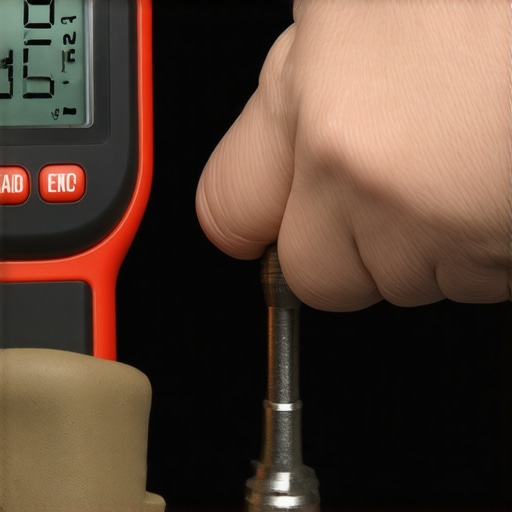
Looking ahead, I suspect we are moving toward a world where your car’s onboard sensors will monitor steering ‘drag’ and ‘play’ in real-time, alerting you via a smartphone app before you even feel a vibration. We are already seeing how advanced vehicle diagnostics prevent costly breakdowns in high-end electric vehicles, and traditional steering systems aren’t far behind. For now, we rely on our hands and a few good tools to stay safe. If you’ve never used a torque wrench on your suspension before, make that your next purchase. It is the single biggest upgrade you can make to your DIY toolkit. I challenge you to grab a digital adapter this weekend and re-check those lug nuts and tie rod jam nuts—you’ll be surprised how much peace of mind those extra few minutes provide.
Three Hard Truths About Front-End Maintenance That Most Shops Won’t Mention
Over the years, I’ve realized that the “cheapest” part is often the most expensive one. Buying a generic tie rod might save you $20 today, but if you have to pay for another alignment in six months because the joint failed, you’ve lost money. Always opt for heavy-duty or “problem-solver” series parts when available. I also learned that cleanliness is next to mechanical godliness; if you aren’t wiping your grease gun tip before attaching it to a zerk fitting, you’re just pumping old road grit directly into your new bearing. It’s a tiny detail, but it’s one of those top auto repair tips to extend your vehicle’s lifespan that separates the pros from the amateurs. Finally, remember that your steering doesn’t exist in a vacuum. A vibration you think is a tie rod might actually be related to how to tell if your shocks are leaking or just dirty, which can cause the tire to hop and mimic steering play. Look at the whole picture before you start throwing parts at a problem.
My Must-Have Arsenal for Conquering Steering Jobs
If you’re ready to get serious about your driveway repairs, you need a high-quality tie rod end puller. Using a hammer can work, but it often mushrooms the bolt or tears the boot. A dedicated puller makes the job silent and stress-free. I also swear by a long breaker bar—suspension bolts have a way of seizing after a few winters, and having that extra leverage is a literal lifesaver for your knuckles. Don’t forget that the $20 tool every driver needs for basic electrical troubleshooting is surprisingly useful here too; sometimes “steering” issues are actually electronic stability control sensors acting up. Lastly, always keep a can of high-quality penetrating oil on hand. Spraying your bolts 24 hours before you start the job is the difference between a one-hour repair and a whole weekend of frustration. [image-placeholder]
Take Control of Your Vehicle’s Safety Today
You don’t need to be a master mechanic to have a safe, reliable car. By taking the time to perform these easy checks before your road trip, you are reclaiming ownership of your machine. There is a profound sense of satisfaction that comes from knowing exactly why your car handles the way it does. Don’t let a “wandering” feeling steal your confidence on the highway. With the right auto repair mindset and a few simple tools, you can keep your vehicle tracking straight for years to come. If you ever feel stuck, you can always reach out to a professional through a contact us page for a second opinion on a tricky diagnosis.
Have you ever found a loose part during a routine inspection that completely changed how your car felt? Let me know in the comments below!