

I remember a humid Tuesday driving down I-85 when my sedan decided it wanted to be a kite. Every time I hit 65 miles per hour, the car started a slow, ghostly drift toward the rumble strips, even though my steering wheel was dead center. I gripped that leather rim so hard my knuckles turned white, convinced I was just fighting a crosswind that didn’t exist. It turns out, I wasn’t losing my mind; my car was literally losing its grip on the road. If you have ever felt that sickening sensation of your vehicle ‘searching’ for a path instead of following yours, you know exactly how exhausting a thirty-minute commute can become.
Stop Wrestling with Your Steering Wheel for Every Mile
That ‘wandering’ feeling—often called tramlining or hunting—is your car’s way of telling you that something in the geometry of your front end has gone rogue. Most people assume they just need a quick trip to the shop for a computerized adjustment, but I have learned through plenty of greasy-fingered trial and error that the root cause is rarely that simple. We are going to deconstruct exactly why your car feels like it is wandering and how you can spot the culprit before your tires are bald.
Is My Suspension Actually Broken or Am I Just Overthinking It?
It is easy to dismiss a slight drift as a ‘crowned’ road or a bit of rought pavement. You might even think it is just a quirk of an older vehicle. However, mechanical components do not have ‘personalities’—they have tolerances. I once spent nearly two hundred dollars on a premium four-wheel alignment, only to realize the real issue was a twenty-dollar rubber bushing I had completely overlooked during my own inspection. This is a common trap. Before you throw money at a professional rack, you need to know how to check your alignment by looking at your tires. According to data from the National Highway Traffic Safety Administration, steering and suspension failures are disproportionately represented in accidents involving older vehicles, often due to deferred maintenance on these very parts.
The Ghost in the Steering Rack
When your car starts behaving like it has a mind of its own, the steering rack or the tie rod ends are usually the primary suspects. If those joints have even a millimeter of ‘play,’ your tires will oscillate back and forth, following every tiny groove in the asphalt. Even modern tech can make this worse; I’ve seen cases where lane keep assist acts erratic because the underlying mechanical parts are too loose for the computer to calibrate correctly. Have you ever felt your car suddenly ‘dart’ toward a different lane when you hit a small bump? Drop a comment and let me know—I’ve likely chased that same ghost myself. Understanding these auto repair strategies for frequent drivers is the only way to ensure your highway miles are spent relaxing, not fighting for your life. [IMAGE_PLACEHOLDER]
Check for Wiggle Room Without a Lift
To find the source of that highway sway, you need to act like a doctor checking a joint. Safely jack up the front end and grab the tire. If you hold it at 12 and 6 o’clock and feel a click, your wheel bearing or ball joint is crying for help. However, if the wiggle happens at 9 and 3 o’clock, your tie rods—the “tendons” of your steering—are likely stretched beyond their limits. While you are under there, take a second to learn how to tell if your shocks are leaking or just dirty. A shock that has lost its internal pressure won’t hold the tire firmly against the pavement, leading to that floating sensation that mimics a bad alignment. When the tire isn’t planted, it follows the road’s crown instead of your commands.
The Silent Weight Shift That Ruins Your Line
I once spent four hours under my old truck trying to find a clunk that felt like a sledgehammer hitting the floor every time I accelerated. I replaced the shocks and checked the tie rods twice, but the wandering persisted. It wasn’t until I had a friend shift the gears while I watched the engine that I saw the block nearly jump out of the bay. I realized the thud under your floorboard usually means your transmission mount is gone. When that mount fails, the engine and transmission shift under load, pulling the steering linkage with them. You think you are fighting the road, but you are actually fighting the weight of your own drivetrain swinging like a pendulum and altering your steering geometry in real-time.
Why Your Hands Feel the Road More Than They Should
If the steering feels notchy or pulls specifically when you hit the brakes, you might be looking at a caliper issue rather than a steering rack failure. A sticking brake can pull the car to one side, forcing you to compensate constantly. This is a great time to learn how to tell if your caliper slide pins are bone dry. If the pins can’t slide, the pad stays in contact with the rotor, creating a drag that feels exactly like a bad alignment. These are the kinds of vehicle diagnostics explained for anyone wanting to avoid a white-knuckled drive to their vacation spot. Think of your brakes and steering as a synchronized team; if one player is dragging their feet, the whole vehicle loses its balance.
Stop Chasing Digital Ghosts in a Mechanical System
Modern cars often use Electric Power Steering (EPS). While this is great for fuel economy, it adds a layer of complexity that a standard wrench cannot always solve. Sometimes the mechanical parts are fine, but the Steering Angle Sensor (SAS) has lost its zero point. This is a classic example of why your OBD II scanner can’t find the real electrical ghost. The scanner might show no codes, but the computer is constantly trying to correct a drift that it thinks exists because the sensor is poorly calibrated. Always verify the physical hardware—bushings, rods, and racks—before you start blaming the software. If you suspect a hydraulic issue, you should also know how to spot a leaking rack and pinion before the pump burns out.Many drivers obsess over the color of their oil, thinking a dark amber or black hue means their engine is eating itself. In my experience, if your oil stays perfectly golden for 5,000 miles, your detergents aren’t doing their job. Modern lubricants are designed to suspend soot and contaminants to prevent them from settling on internal components. This is exactly why your synthetic oil turns black after just five hundred miles; it’s a sign the chemistry is working. According to engine oil analysts at Blackstone Laboratories, oil color is a poor indicator of remaining service life, yet thousands of gallons of perfectly good oil are dumped every day because of this visual myth.
Does Your Maintenance Reminder Actually Know Your Engine’s Health?
While oil change innovations have brought us sophisticated algorithms, these systems are still just mathematical models based on engine revolutions and operating temperatures—they don’t have a sensor for fuel dilution or moisture. If you frequently take short trips in cold weather, you might have hidden sludge building up behind your clean dipstick even if the dashboard says you have 40% life left. The ‘Oops’ factor here is relying solely on a digital countdown instead of physically checking for that milky residue under the oil cap.  Then there is the braking system. Most people assume a soft pedal always means air in the lines, but I have seen countless DIYers bleed their brakes three times without success because they didn’t know how to tell if your brake booster is leaking air. It’s a mechanical vacuum failure masquerading as a hydraulic one. These are the brake service myths busted by garage reality. Even a perfectly bled system will feel ‘mushy’ if the internal diaphragm of the booster is failing. Have you ever spent a whole weekend replacing the wrong part because you followed a ‘common sense’ tip that turned out to be wrong? Let me know in the comments—I’ve definitely been there, and those are the essential auto repair strategies we only learn after the first hundred mistakes.
Build a Diagnostic Arsenal That Does Not Break the Bank
Most DIYers think they need a five-thousand-dollar Snap-On scanner to get real work done. In reality, I have solved more drivability issues with a basic vacuum pump and the $20 tool every driver needs for basic electrical troubleshooting than any fancy tablet. When my truck started stalling at red lights, I did not wait for a code. I grabbed a multimeter. Learning how we diagnosed a parasitic drain using only a test light or a meter saves you from the cycle of ‘part-darting’ where you replace a hundred-dollar alternator when the problem is just a corroded ground wire. To truly dominate your garage, you need to stop reading codes and start decoding vehicle diagnostics to understand the ‘why’ behind the ‘what.’ 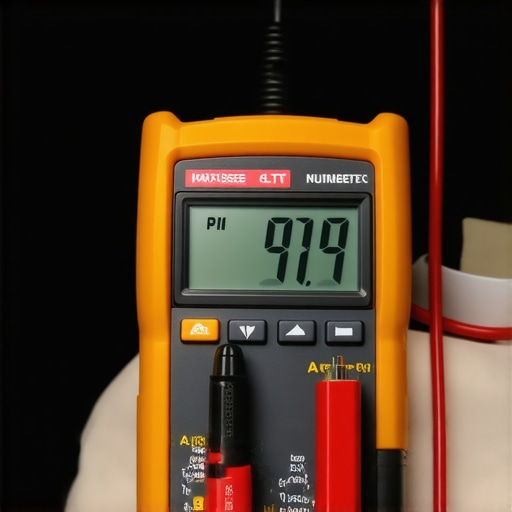
How do I keep my car running smooth for another 100,000 miles?
The secret to extreme longevity is not some miracle additive in a silver can; it is consistent, documented monitoring. I keep a dedicated logbook for every vehicle, tracking not just when I changed the oil, but the specific brand and filter used. This lets me spot patterns—like if a specific synthetic oil causes tapping noises after an oil change. Beyond the logbook, I am a firm believer in the ‘inspection’ phase of every service. When you are rotating tires, that is your chance to look for how to tell if your cv boot is torn. Catching a $20 boot failure now prevents a $200 axle replacement later. These are the top auto repair tips to extend your vehicles lifespan that actually move the needle for high-mileage drivers.
Swap the Guesswork for Precise Fluid Management
I see so many people ‘flushing’ their transmissions under high pressure, which can actually dislodge debris and clog valve bodies. Instead, I advocate for the drain-and-fill method. Learning how to save your transmission with a simple fluid exchange is much safer for older gearboxes. According to technical documentation from SAE International regarding lubricant shear stability (SAE J300), the chemical breakdown of your fluids is inevitable, but heat is the catalyst. If you can keep your fluids fresh and your temperatures down, mechanical wear slows to a crawl. If you ever feel a hesitation, don’t just hope it goes away; use how to find a vacuum leak with soapy water and a hand pump to verify the engine’s integrity before the check engine light even flashes. Looking ahead, I suspect we will see more consumer-level telematics that predict these failures weeks before they happen, but for now, your hands and a few simple tools are still the best defense. Try this today: Grab a bottle of soapy water and spray your intake vacuum lines while the engine is idling; if the bubbles get sucked in, you’ve just saved yourself a $150 diagnostic fee at the dealership.
The Lessons I Paid for in Grease and Frustration
Over the years, I’ve realized that the most expensive tool in my shop isn’t my scanner—it’s my own assumptions. I used to spend hundreds ‘part-darting’ because a computer told me a sensor was out of range, only to find a frayed wire. Now, I always start by listening to the machine itself. You can actually learn how to diagnose a failing wheel bearing using only your ears before you ever lift the car. Another lightbulb moment? Cheap parts are a tax on your future time. I’ve seen budget tie rods fail in six months, turning a simple fix into a recurring nightmare. If you want to keep your sanity, prioritize quality components and use these auto repair hacks to save money without sacrificing quality on the parts that actually matter, like premium fluids and heavy-duty seals.
My Go-To Gear for a Bulletproof Garage
If you’re serious about moving past basic maintenance, you need more than a generic toolkit. First, get a vehicle-specific shop manual; having the exact torque specs for your year and model is non-negotiable. Second, invest in a high-quality torque wrench because guessing ‘tight enough’ is how wheel studs snap and gaskets leak. I also swear by a simple vacuum gauge for finding those phantom intake leaks that drive people crazy. For those diving deep into safety, the ultimate guide to brake service for safety and performance is a resource I keep bookmarked for every pad swap. These tools transition you from a ‘parts swapper’ to a true technician who understands the ‘why’ behind every turn of the wrench.
[IMAGE_PLACEHOLDER]
Stop Overthinking and Start Turning Wrenches
It’s easy to get paralyzed by a check engine light or a strange vibration on the highway, but remember that every master mechanic started with a single loose bolt. Modern vehicles are complex, but the core physics of auto repair hasn’t changed—metal still wears, and fluids still break down. By staying proactive, you can use how advanced vehicle diagnostics prevent costly breakdowns to stay ahead of the curve. Your car isn’t just a machine; it’s a series of systems that need your attention. Don’t be afraid to get your hands dirty, because the confidence you gain behind the wheel of a car you maintained yourself is worth every bit of effort. What was the one ‘mystery noise’ that finally drove you to pick up a wrench? Let me know in the comments below!