

I was sitting at the busiest intersection in my neighborhood last Tuesday when it happened. The light turned red, I eased off the gas, and my engine simply gave up the ghost. No coughing, no sputtering—just a sudden, terrifying silence followed by a chorus of angry car horns behind me. It’s that sinking feeling in your gut where you realize your reliable daily driver has suddenly become a 4,000-pound paperweight. [image]
That Sinking Feeling When the RPMs Drop
I’ve spent more hours than I’d like to admit under the hood of various clunkers, and let me tell you, stalling at a stop is the ultimate confidence-shaker. It makes every red light feel like a game of Russian roulette. Early in my DIY journey, I made the expensive mistake of replacing my entire fuel pump when the real culprit was a five-dollar vacuum leak. I didn’t know then that decoding vehicle diagnostics is more about listening than throwing parts at a problem. You can save yourself a lot of headache by learning about decoding vehicle diagnostics before you start buying expensive components. Today, we are going to pinpoint exactly why your engine is quitting on you so you can stop fearing every intersection.
Is My Engine Actually Dying?
That is the big question, right? You worry that a stall is the first sign of a total mechanical collapse. Most people assume they’re looking at a multi-thousand-dollar repair bill. In reality, it is frequently just the common sensor that makes your engine idle rough in the morning or a bit of carbon buildup in the throttle body. Have you ever felt that frantic rush to shift into neutral and restart the car before the guy behind you loses his mind? According to data from the National Institute for Automotive Service Excellence (ASE), nearly 80% of drivability issues like stalling are related to sensor malfunctions or basic maintenance lapses rather than catastrophic internal engine failure. We are going to dig into the why behind this behavior so you can go from panic to prepared.
Stop the Stalls by Finding the Ghost in the Intake
Think of your engine as a giant, sophisticated set of lungs. It needs a very specific ratio of air and fuel to stay alive. When you are flying down the highway, the engine is breathing deeply and can mask minor issues. But when you come to a stop, that ‘breath’ narrows down to a tiny straw-sized opening. If there is even a pinhole leak in the system, it’s like trying to suck a milkshake through a straw with a hole in it—the vacuum is lost, and the engine suffocates. I remember my old 2004 sedan; I was convinced the transmission was dying because it quit every time I slowed for a school zone. I spent hours panicking about rebuild costs until I tried a simple diagnostic trick. I found a tiny rubber elbow on the intake manifold with a crack no wider than a fingernail. That two-dollar piece of rubber was the only thing standing between me and a reliable commute. 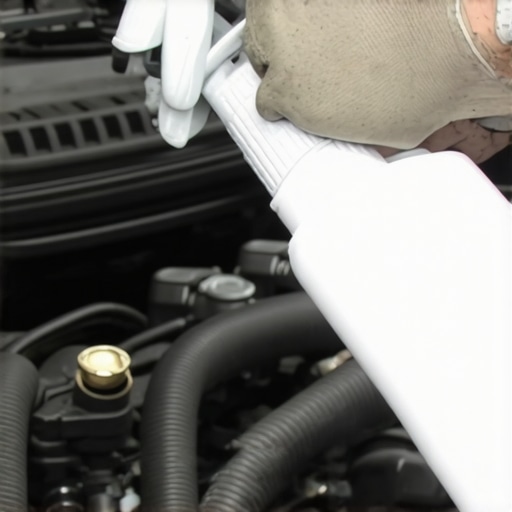
Hunt for the Invisible Air Leak
The most common reason an engine dies at a stop is ‘unmetered air’ entering the system. This is air that the car’s computer doesn’t know about, so it doesn’t add the extra fuel needed to keep the fire burning. You can actually learn how to find a vacuum leak with soapy water and a hand pump to pinpoint these cracks. While the engine is idling, spray a little soapy water or even a non-flammable cleaner around the intake hoses. If the engine RPMs suddenly change or the bubbles get sucked in, you’ve found your culprit. It’s one of those auto repair hacks to save money without sacrificing quality because it prevents you from replacing expensive sensors when you just needed a new ten-cent hose clamp.
Give Your Engine a Better Way to Breathe
If there are no leaks, the problem is likely a ‘clogged nose.’ Your Mass Air Flow (MAF) sensor and the throttle body are the gatekeepers of air. Over time, oily mist and carbon buildup create a sticky film. This is often the reason your gas pedal feels sticky in the morning or why the idle feels shaky. A dirty sensor sends the wrong data to the computer, causing it to lean out the fuel mixture until the engine simply stalls. You should learn how to clean your mass air flow sensor without ruining it using a specific electronic cleaner. Never use a rag or a brush; those delicate wires are thinner than a human hair and will snap if you touch them.
Test the Sensors Before You Buy the Pump
Sometimes the issue isn’t mechanical air flow but an electrical signal that has gone haywire. The Idle Air Control (IAC) valve is a small motor that acts like a bypass, letting air in when the throttle plate is closed. If this motor gets stuck, the engine has no way to breathe at a stoplight. Before you go to a mechanic, grab the 20 tool every driver needs for basic electrical troubleshooting and check the resistance on the sensor. If the circuit is open, the sensor is dead. If it’s just dirty, a quick blast of carb cleaner might save you a hundred bucks. We are moving from the simple air-flow issues into the more complex electrical ghosts that haunt your dashboard.
The biggest trap in modern auto repair is the belief that the car’s computer is an all-knowing oracle. Everyone says you should just ‘scan the code’ and buy whatever part the screen tells you to, but in my experience, the computer is often just reporting the symptom, not the cause. For example, many drivers see a P0420 code and immediately drop $800 on a new catalytic converter. I’ve seen this happen dozens of times when the real issue was a simple exhaust leak or a lazy oxygen sensor. You should understand why your scanner says p0420 but the converter is actually fine before you authorize a massive repair bill.
Don’t Let Your Scanner Lie to You
The nuance that separates a DIYer from an expert is the realization that sensors are often the victim, not the criminal. When your engine stalls at a stoplight, the computer might flag a lean fuel condition. If you just start swapping parts, you are playing an expensive game of ‘guess and check.’ This is exactly why your obd-ii scanner cant find the real electrical ghost sometimes; the software only monitors specific parameters, missing the frayed ground wire or the corroded connector that’s causing intermittent power loss. According to a technical bulletin from the National Car Care Council, nearly 40% of DIY engine repairs are misdiagnosed because of over-reliance on code readers without performing physical circuit tests.
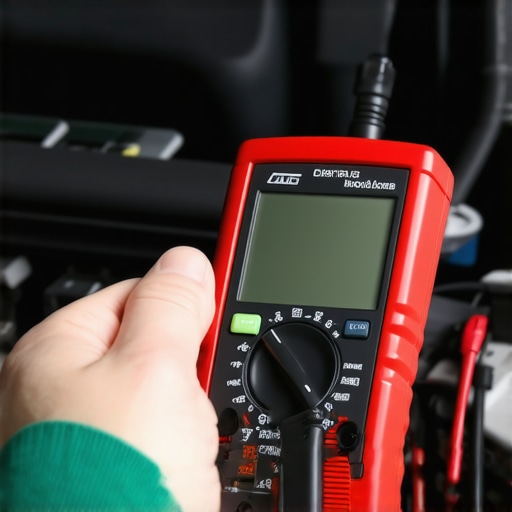
Why does your high-end scanner keep missing the real problem?
It’s because diagnostic tools are only as good as the electrical flow they are measuring. If you have a ‘parasitic drain’ or a bad ground, the signals sent to the computer become ‘noisy’ and inaccurate. I always recommend using the 20 tool every driver needs for basic electrical troubleshooting to verify that the sensor is actually getting the 5 volts it needs. Without a solid ground, your engine will behave like it’s haunted, stalling and surging for no apparent reason. Have you ever fallen into the trap of replacing a sensor three times only to find out a mouse chewed through a wire in the back of the engine bay? Let me know in the comments.
The Dangerous Truth About Sinking Brake Pedals
Another area where common wisdom fails is the braking system. People assume that if they have plenty of pad life, they are safe. However, I’ve worked on vehicles where the pads were brand new, but the car was a rolling death trap because of internal master cylinder failure. If you notice why your brake pedal sinks slowly while waiting at red lights, it is almost never a pad issue—it’s a hydraulic bypass problem. Most drivers also ignore their fluid levels, but you need to know why your brake fluid is low even though you dont see a leak; as your pads wear down, the calipers extend further, ‘stealing’ fluid from the reservoir. It is a closed system, so if it’s low, something is changing.
Stop the Snap Before You Turn the Wrench
The ‘Oops’ factor often comes from over-enthusiasm. One of the most common mistakes I see—and one I’ve made myself in my early years—is the ‘tighter is better’ philosophy. This is the common mistake that snaps your wheel studs during a tire rotation. Using an impact wrench to ‘be sure’ it’s tight can stretch the metal until it fails, potentially sending your wheel bouncing down the highway. Always use a torque wrench and follow the manufacturer’s specs. Similarly, don’t trust a clean dipstick to mean your engine is healthy. There is often the hidden sludge building up behind your clean dipstick that only a true mechanical inspection or a borescope can reveal. Real expertise isn’t about having the most expensive tools; it’s about knowing which ‘simple’ signs most people are ignoring.
The right tools turn a nightmare into a quick fix
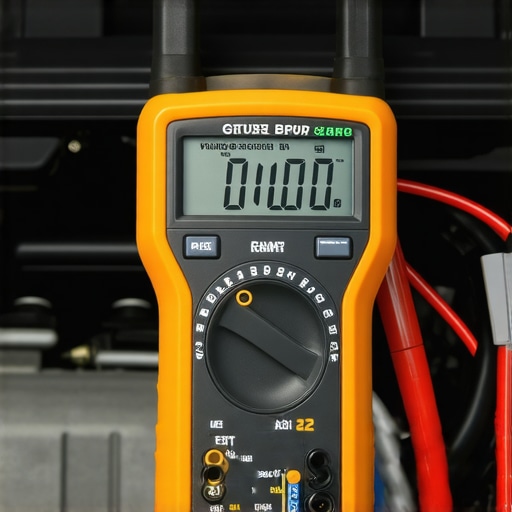
I learned the hard way that you can’t fix a modern car with just a hammer and a set of sockets. After that fiasco with the vacuum leak, I invested in a decent digital multimeter. It’s easily the 20 tool every driver needs for basic electrical troubleshooting because it removes the guesswork. Most people don’t realize that the computer is just measuring electrical resistance; if you know how to read those numbers, you become the car’s brain. I personally use my multimeter for every single diagnostic job now, especially when tracking down an intermittent stall. According to the Robert Bosch GmbH technical documentation on electronic fuel injection, a voltage drop as small as 0.2 volts in a ground circuit can cause significant erratic behavior in the ECU’s adaptive learning, making your car behave like it has a haunted engine.
When you move beyond the ‘guess and check’ method, you start noticing patterns. For instance, if you’re doing a the ultimate guide to brake service for safety and performance, you’ll stop looking just at the pads and start looking at the color of the fluid. Clear fluid is happy fluid; dark fluid is a recipe for internal corrosion in your ABS module. This is where top auto repair tips to extend your vehicles lifespan actually pay off—not by doing more work, but by doing the right work at the right time. I’ve seen cars hit 300,000 miles on original engines simply because the owners understood that maintenance is a conversation with the machine, not a chore.
How do I keep my car running smooth for another 100k miles?
The secret is staying ahead of the curve. You shouldn’t wait for a light to pop up on the dash. I recommend performing essential auto repair strategies for frequent drivers, like a monthly check of your vacuum hoses and a quick listen for odd sounds. You can even learn how to diagnose a failing wheel bearing using only your ears long before the vibration becomes dangerous. Another major factor is staying current with oil change innovations technologies that save your engine. Modern synthetic oils and high-efficiency filters can trap particles that would have shredded an engine twenty years ago, but only if you change them before they saturate.
Prepare for the software-defined garage
Looking ahead, the DIY world is changing. We are moving toward ‘software-defined vehicles’ where your laptop will be just as important as your torque wrench. I predict that within five years, the most successful home mechanics will be the ones who can navigate proprietary software interfaces as easily as they can change a spark plug. It’s no longer about just ‘grease monkey’ work; it’s about being a systems analyst for your own driveway. If you want to get ahead of this trend, start by mastering the electrical basics. Grab that basic multimeter tonight and perform a simple voltage drop test on your battery terminals. It is the single best way to get comfortable with the electrical ‘ghosts’ that cause most of the stalls and stutters we’ve been talking about.
The Hardest Lesson I Learned About Chasing Electrical Ghosts
Early in my journey, I thought a ‘Check Engine’ light was a direct command to buy parts. It took several hundred dollars of wasted money to realize it is actually just the start of a conversation. One of the most frustrating weeks I ever spent was chasing a persistent misfire that wouldn’t go away until I learned how to tell if your engine misfire is mechanical or electrical. Sometimes, the problem isn’t the expensive fuel injector; it’s a cracked spark plug boot or a slightly loose battery ground. I have even seen cases where the check engine light code that actually means your air filter is loose threw a seasoned mechanic for a loop. The lesson? Always check the physical connections and basic maintenance items before you pull out the credit card or assume the worst.
The Three Tools That Rescued My Sanity
If you are serious about moving past the ‘guess and check’ method, you need a small kit that doesn’t lie to you. First and foremost, the 20 tool every driver needs for basic electrical troubleshooting—the digital multimeter—is your best friend. It reveals the invisible world of voltage drops that cause those annoying stalls. Second, a reliable torque wrench is essential to ensure you never make the common mistake that snaps your wheel studs during a tire rotation. Finally, stop believing everything you hear at the parts counter; I recommend diving into brake service myths busted what really matters for safety to understand why high-priced pads aren’t always the solution to a sinking pedal.
Stop Fearing the Red Light and Start Tinkering
Modern cars are intimidating, but they still follow the same laws of physics they always have. Whether you are performing vehicle diagnostics explained easy checks before your road trip or just swapping out a dirty air filter, remember that every successful repair starts with a single observation. Don’t let the complexity of the computer stop you from looking at the mechanical reality right in front of you. You have the ability to turn that 4,000-pound paperweight back into a reliable machine. Which part of your car has been giving you the most ‘phantom’ issues lately? Let me know in the comments below and let’s troubleshoot it together!