
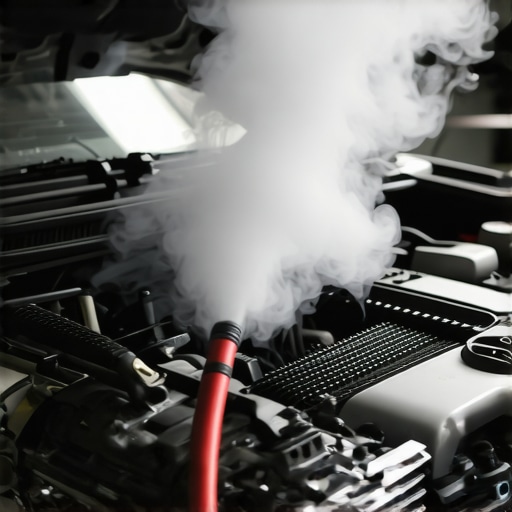
I was sitting in the drive-thru of my favorite burger joint when I first heard it. A faint, airy whistle that seemed to sync perfectly with my gas pedal. I turned the radio down. Is that… a bird? Nope. It was my trusty sedan, sounding more like a haunted flute than a 200-horsepower machine. I made the classic rookie move: I assumed if the Check Engine light wasn’t on, everything was fine. I was wrong. By the time I actually looked into why your car makes a high-pitched whistle when you accelerate, a simple $10 hose had turned into a rough-idling nightmare. Today, I am going to help you identify exactly where that noise is coming from so you do not end up stranded on the shoulder of the highway like I did. We will cover the most common culprits, from vacuum leaks to aging belts, and I will show you how decoding vehicle diagnostics can save your weekend. Have you ever heard your car start whistling and just hoped it would go away if you drove faster?
Stop Panicking and Start Listening to Your Engine
Cars do not just develop new personalities for no reason. When your vehicle starts making a high-pitched sound, it is trying to communicate. Early in my DIY days, I spent three hours replacing an alternator when the real problem was just a loose air intake boot. I felt like a total amateur, but it taught me one vital lesson: diagnostic logic beats guesswork every single time. Modern cars are tightly sealed systems. According to the Car Care Council, neglecting these small audible cues can lead to a 40% drop in fuel efficiency because the engine has to overcompensate for air leaks. By learning how advanced vehicle diagnostics prevent costly breakdowns, you can catch a split vacuum line before it burns out your expensive sensors.
Does a little whistle really mean a big repair bill?
It is the fear that keeps us from opening the hood, is it not? We assume that every new noise is the sound of our bank account draining. But here is the reality: most whistling sounds are caused by air going where it should not, or a belt that has lost its grip. These are often some of the cheapest fixes in the book if you catch them early. We are going to walk through the process of narrowing down the source, so you can walk into a shop—or your own garage—with total confidence.
Track Down the Source with This Systematic Checklist
I remember one Saturday afternoon, armed with nothing but a two-foot length of old garden hose. My neighbor thought I was crazy, holding one end to my ear and waving the other around the running engine like a magic wand. I was hunting a whistle that sounded like a tea kettle every time I tapped the gas. Within five minutes, the hose amplified a tiny “psst” near the intake manifold. It was a cracked rubber elbow. That $3 part had been making my car idle like a lawnmower and whistle like a train. This “stethoscope” method is one of the most effective essential auto repair strategies for frequent drivers because it allows you to isolate sounds that a computer might miss in a crowded engine bay.
Listen for the Snake Hissing Under the Hood
Most high-pitched whistles are actually air leaks. Think of your engine like a giant vacuum cleaner; if there is a hole in the hose, it makes a high-frequency noise as air is sucked through the narrow opening. To find it, move your makeshift stethoscope around the vacuum lines while the engine idles. If the whistle gets louder when you hit the gas, you likely have a leak in the intake boot or a secondary vacuum line. Sometimes, the check engine light code that actually means your air filter is loose can point you toward a poorly sealed air box which creates a sharp whistle as air rushes past the gap in the housing.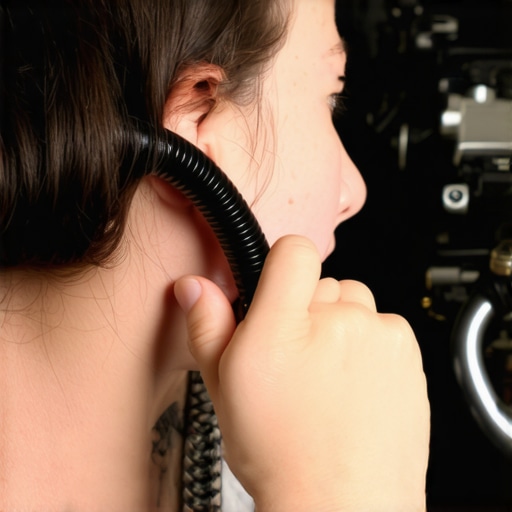
Look for Glazing on Your Serpentine Belt
If the whistle sounds more like a chirping bird or a sharp squeal that increases with engine RPM, it is likely mechanical, not atmospheric. Your serpentine belt lives a hard life, spinning at thousands of revolutions per minute. Over time, the rubber hardens and becomes “glazed”—meaning it gets a shiny, mirror-like finish that lacks grip. When you accelerate, the engine demands more power, the belt slips against the pulleys, and you get that piercing sound. You need to know how to tell if your serpentine belt is about to fail by looking for deep rib cracks or a glossy sheen. While you are there, check the tensioner pulley; if it is vibrating excessively, the lack of tension is likely allowing the belt to slip and scream.
Check Your Brake Booster and Intake Gaskets
Is the whistle happening even when the car is stationary but you are modulating the brakes? If you hear a hiss that changes its pitch specifically when you press the brake pedal, you might need to learn how to tell if your brake booster is leaking air. This is a safety issue, as it uses engine vacuum to provide power assistance for stopping. Additionally, don’t overlook the intake manifold gasket. This seal acts like the gasket on a refrigerator door; if it fails, the engine sucks in “unmetered” air. It’s like trying to drink through a straw with a hole in the side—you get more air than liquid, and it makes a distinct whistling sound. This often triggers a lean-run condition, which you can identify through vehicle diagnostics explained: easy checks before your road trip. Finally, a dirty sensor can cause turbulence that mimics a whistle. Knowing how to clean your mass air flow sensor without ruining it can often eliminate those ghost noises caused by restricted or erratic airflow.While a dirty sensor can cause turbulence, there is a much deeper level to this game that most DIYers miss. The biggest mistake I see is the ‘Parts Cannon’ approach—where someone sees a lean code on a scanner and immediately buys a new mass air flow sensor or fuel pump. In my experience, 90% of the time, the sensor is doing exactly what it is supposed to: reporting a problem elsewhere. By decoding vehicle diagnostics properly, you realize that a whistle is a physical symptom that often contradicts what the computer is screaming at you.
Stop Chasing Codes and Start Finding Causes
Everyone tells you to trust the OBD-II port, but the reality is that the computer is often the last to know the root cause. For instance, a high-pitched whistle can trigger a catalytic converter efficiency code. Before you drop $800 on parts, remember why your scanner says p0420 but the converter is actually fine; an air leak upstream of the sensor can fool the system into thinking the converter is dead. A study by the National Institute for Automotive Service Excellence (ASE) suggests that a significant percentage of component replacements are unnecessary because the technician failed to address the ‘systemic’ issue. If you’re not looking at the big picture, you’re just paying for expensive guesses. 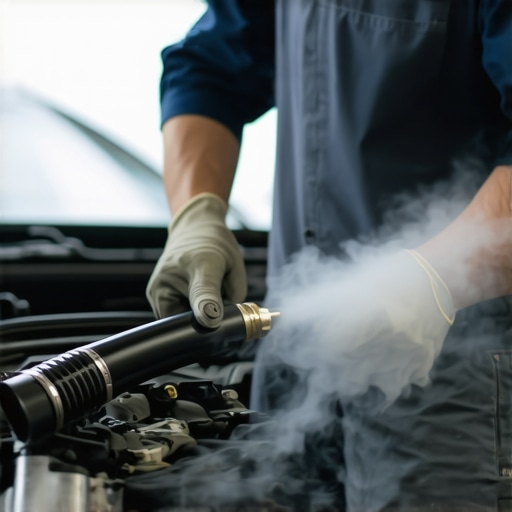
Could Your Engine Whistle Actually Be a Sign of Internal Sludge?
This is the nuance that separates the weekend warriors from the pros. Sometimes a whistle isn’t a vacuum leak at all, but a restricted PCV (Positive Crankcase Ventilation) system. If the internal passages of your engine are gummed up, the hidden sludge building up behind your clean dipstick can create high pressure that forces air out through seals, making a distinct whistling or ‘tea kettle’ sound. This is a trap because you’ll spend weeks looking for a cracked hose when the real fix is a deep engine flush or a new PCV valve.
The Hidden Danger of Over-Tightening Your Belts
Here is an ‘oops’ factor that almost cost me an alternator: when people hear a belt squeal or whistle, their first instinct is to tighten the tensioner as much as possible. This is a recipe for disaster. Over-tightening puts immense lateral load on the bearings of your alternator, water pump, and AC compressor. You might stop the whistle, but you’ll be replacing a $400 alternator next week. Instead of cranking it down, use how advanced vehicle diagnostics prevent costly breakdowns to check the health of the pulleys themselves. Also, if that high-pitched sound only happens when you brake, don’t just assume it’s the pads. Often, brake service myths busted reveal that the noise is actually coming from how to tell if your caliper slide pins are bone dry, causing the pad to vibrate at a high frequency. Have you ever fallen into the ‘it must be the sensor’ trap? Let me know in the comments. Using essential auto repair strategies for frequent drivers will keep you from making these expensive mistakes.
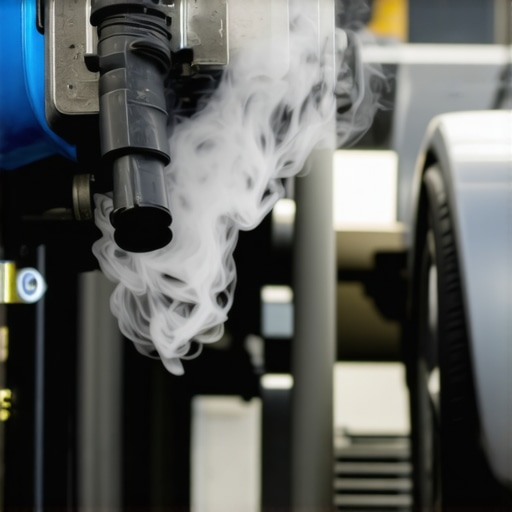
Moving past the ‘parts cannon’ stage requires a shift in tools and mindset. If you are serious about DIY, you need to stop blowing air into hoses and start using a dedicated smoke machine. I spent years squinting at engine bays with a can of brake cleaner, hoping to see a change in idle speed to find a leak. Now, I use a portable EVAP smoke machine because it is the only way to visualize a pinhole leak in a vacuum line that is tucked behind the firewall. By seeing where the smoke escapes, you can utilize how advanced vehicle diagnostics prevent costly breakdowns without spending hours on your back. It turns a guessing game into a surgical strike, ensuring you only replace the part that is actually failing.
How do I keep my engine running quiet for the next decade?
Maintenance is not just about changing fluids; it is about monitoring the health of the rubber and plastic components that heat-cycle every single day. One of the best top auto repair tips to extend your vehicles lifespan is to apply a silicone-based dressing to your vacuum lines and intake boots twice a year. This prevents the rubber from drying out and cracking, which is the primary cause of those annoying whistles. Additionally, keeping up with oil change innovations and technologies that save your engine ensures that your PCV system stays clear of the sludge that causes high internal pressure. If you ignore the internals, no amount of exterior cleaning will save you from a whistling seal.
Get a Multimeter and Stop Guessing
When the whistle is accompanied by a flickering dash light or a weird shifting pattern, you are likely dealing with an electrical ground issue that is causing a sensor to hum or oscillate at a high frequency. I never go under the hood without a high-impedance digital multimeter. Using the $20 tool every driver needs for basic electrical troubleshooting allows you to verify if a sensor is actually receiving the correct voltage before you blame a ‘whistling’ intake. A technical report from SAE International (J1939) highlights how digital communication protocols in modern vehicles are becoming so complex that physical symptoms like whistling are often the only analog clues left for the driver before a system completely fails. Combining physical inspection with electrical verification is the gold standard for long-term reliability.
The Future of Your Cars Internal Voice
We are heading toward an era where AI-driven telematics will predict a vacuum leak before you even hear the first note of that high-pitched whistle. Future onboard diagnostics will likely monitor acoustic frequencies to alert you to a failing bearing or a thinning gasket. For now, we still rely on our ears and smart auto repair hacks to save money without sacrificing quality. Whether you are learning how to save your transmission with a simple fluid exchange or hunting down a ghost in the intake, remember that the most powerful tool you have is your own systematic approach. I strongly encourage you to try the ‘smoke test’ next time you hear a hiss; it is the single most satisfying way to prove you have mastered your machine.
Lessons from the Garage: What That Whistle Taught Me the Hard Way
I learned the hard way that a $10 part can masquerade as a $1,000 disaster if you let your imagination (or a dishonest shop) run wild. The “whistle” is actually your engine’s most honest diagnostic tool—unlike sensors, air leaks don’t lie. Fixing a noise yourself builds a level of trust with your vehicle that no dealership service plan can replicate. Using top auto repair tips to extend your vehicles lifespan taught me that rubber components are the most overlooked maintenance item, yet they are the first to cry out for help. Don’t let the “check engine” light intimidate you; often, the whistle arrives long before the light does, giving you a head start on repairs.
Gear Up for the Hunt: My Go-To Diagnostic Arsenal
Finding a ghost in the machine requires the right gear. I always recommend a high-quality smoke machine because seeing a leak is vastly superior to guessing where it is. For those deep-diving into electrical noises, I swear by the $20 tool every driver needs for basic electrical troubleshooting to rule out oscillating sensors that might be creating high-frequency feedback. Finally, never underestimate a vehicle-specific service manual; it is the roadmap that shows you exactly where every vacuum line is tucked away. Combining these tools with auto repair hacks to save money without sacrificing quality ensures you are working smarter, not harder.
Take Control of Your Drive
The next time you wonder why your car makes a high-pitched whistle when you accelerate, do not just turn up the radio and hope for the best. Grab a makeshift stethoscope, check your belts for glaze, and approach the problem with a logical mind. You have the ability to catch small issues before they become highway breakdowns. By mastering how advanced vehicle diagnostics prevent costly breakdowns, you are not just a driver; you are the guardian of your machine. What is the weirdest noise your car has ever made that turned out to be a shockingly simple fix? Let me know in the comments below!