
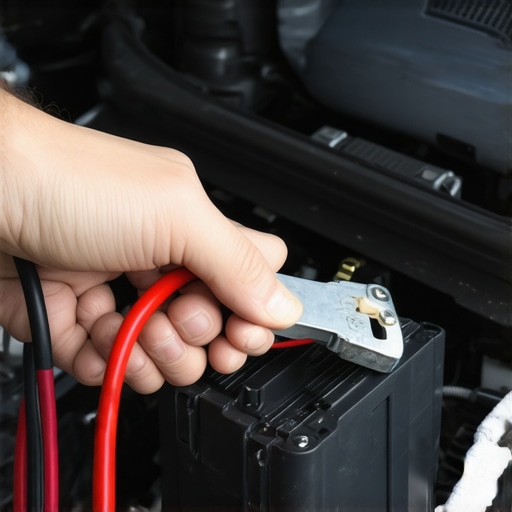
I’ll never forget the smell of ozone and burning plastic on a rainy Tuesday night in my own driveway. I was just trying to be the ‘good neighbor’ for a friend whose battery had died, but I treated her 2023 sedan like it was my old 1985 pickup. I clamped those cables on, saw a tiny spark, and heard a faint pop. Just like that, I had turned a simple dead battery into a $2,400 repair bill for a fried Engine Control Unit. It was a brutal wake-up call that changed how I look at every car that rolls into my garage. Why does this matter right now? Because with the average cost of a vehicle reaching record highs, a simple maintenance error shouldn’t be the reason you’re forced into a new car loan. Modern cars are designed to be efficient, but they aren’t designed to be abused by 1970s repair techniques.
Your Grandpa’s Jump-Starting Method Is Killing Your Car
Modern vehicles aren’t just blocks of iron and gasoline anymore; they are sophisticated networks of sensitive microprocessors. When you hook up jumper cables the old-fashioned way, you risk sending a massive voltage spike through the system that can bypass fuses and head straight for the ‘brains’ of the car. I’ve seen people complain that their car battery dies every time it gets cold outside, and they immediately reach for the cables without realizing the danger. You aren’t just moving juice from one box to another; you’re interfacing with a high-speed data network. Sometimes, what looks like a dead battery is actually the ground wire problem that mimics a bad starter motor, and forcing a jump can do more harm than good. Today, I’m going to walk you through exactly how to avoid my expensive mistake and keep your electronics safe.
Can a Simple Spark Actually Total Your Engine?
It sounds like an exaggeration, doesn’t it? But according to experts at Consumer Reports, a single surge can damage multiple control modules simultaneously. When you see a spark at the battery terminal, that’s a massive rush of current looking for the path of least resistance. In an older car, that surge just goes to the starter. In a modern car, it travels through the CAN-bus network, potentially frying everything from the ABS module to the radio. If you’ve ever had to deal with decoding vehicle diagnostics, you know how finicky these systems are. One wrong move and your dashboard lights up like a Christmas tree, or worse, the car won’t even recognize its own key. Have you ever accidentally sparked a battery and watched your dashboard go haywire? I want to make sure you never have to feel that again. By the time we’re done, you’ll know the ‘ground-first’ safety method and why your owner’s manual probably has a hidden jump-start post you’ve been ignoring. We’re going to dive into the specifics of surge protection and why carrying a 20 dollar tool for basic electrical troubleshooting can save you from a thousand-dollar mistake. [image placeholder]I remember once working on a European SUV where the owner had spent three hours trying to find the battery, only to realize it was tucked under the passenger seat. If they had just looked for the dedicated jump posts under the hood, they would have been back on the road in five minutes.
Connect the Cables Without Blowing the Computer
Before you even touch a clamp, you need to understand the path of the current. In a modern car, the battery isn’t just a reservoir; it’s a stabilizer for the entire electrical system.
Find Your Remote Terminals First
Most manufacturers now tuck the battery away for weight distribution or protection, but they provide remote jump-start posts in the engine bay. These are your best friends. They are designed to handle the initial surge and are usually located far enough away from the most sensitive sensors. If you bypass these and go straight to the battery, you are effectively performing surgery on the car’s nervous system without a sedative.
Why the Order of Operations Saves Your ABS Module
The sequence you connect the cables is the difference between a running engine and a dead dashboard. Always start with the positive (red) cable on the dead car, then the positive on the donor car. Then, connect the negative (black) to the donor car. Here is the part everyone messes up: the last connection. Never attach the final negative clamp to the dead battery’s terminal. Instead, find a solid, unpainted metal part of the engine block or frame. This creates a safe ground and keeps the spark away from the battery, which could be venting flammable gas. If you ignore this, you might find yourself decoding vehicle diagnostics to figure out why your power steering module is suddenly unresponsive. 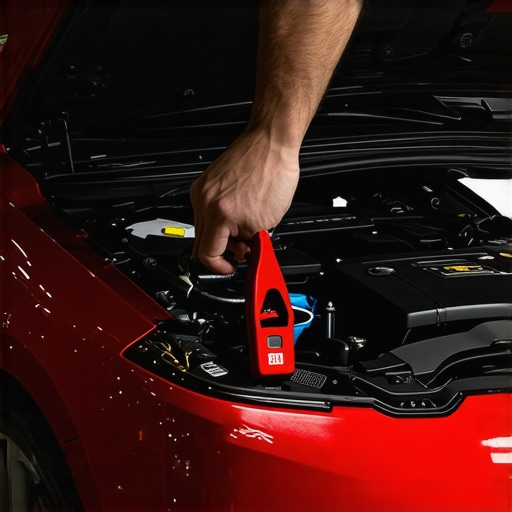
Is Your Battery Really Dead or Is It a Parasitic Drain?
Sometimes the battery isn’t the villain. I’ve seen cases where the car battery dies every time it gets cold outside, not because the cells are bad, but because a stuck relay is pulling power all night. This is where you need to know how to find a parasitic battery drain with a basic multimeter. Using a 20 dollar tool for basic electrical troubleshooting can reveal that a $15 relay is the culprit, rather than a $200 battery. If you jump-start a car with a massive parasitic drain without fixing the root cause, you’ll be stranded again by the next morning.
What to Do When the Jump Fails
If you’ve made the connections correctly and the car still won’t turn over, stop. Continuous cranking can overheat the starter and melt the insulation on your cables. This is often when people realize they have the ground wire problem that mimics a bad starter motor. I once saw a DIYer replace three batteries in a week before realizing the main ground strap to the transmission was frayed and barely touching. No amount of juice from a donor car can jump across a physical gap in the circuit. If you suspect your charging system is at fault, remember that why your new alternator still is not charging the battery could be a software issue or a blown fuse that occurred during a previous, improper jump-start. Modern auto repair tips to extend your vehicles lifespan always emphasize patience over persistence when it comes to electrical issues.Everyone tells you to change your oil every 3,000 miles, but on a modern Gasoline Direct Injection (GDI) engine, doing that without monitoring your fuel dilution levels is just treating the symptom. In my shop, I have seen cars where the oil level actually goes up on the dipstick between services. You might think it is a miracle, but it is actually a warning sign of fuel or coolant contamination. This is why oil change innovations and technologies that save your engine are so critical today—they are designed to handle the higher heat and internal pressures of modern turbochargers. If you ignore why your engine oil level rises between oil changes, you are essentially washing your bearings with gasoline instead of lubricating them. Have you ever fallen into the trap of buying the cheapest sensors to save a buck? I have learned the hard way that the truth about using cheap aftermarket sensors in your engine is usually a tale of ‘buy it twice.’ A budget MAF sensor might report a value that is just close enough to keep the light off, but inaccurate enough to kill your fuel economy. This is where how advanced vehicle diagnostics prevent costly breakdowns by revealing the data pids that a basic scanner misses.
Why does my engine tap only after I change the oil?
It is a heart-sinking moment: you finish your service, start the car, and hear a rhythmic ‘tick-tick-tick’ that was not there before. Most people panic and think they forgot to add oil. Often, it is actually why your engine makes a tapping noise only after an oil change. High-detergent fresh oil can sometimes clear out carbon deposits that were ‘sealing’ a noisy lifter, or you have used the wrong viscosity for the climate. According to a study by the Society of Automotive Engineers (SAE), even a slight deviation in viscosity in variable valve timing (VVT) engines can lead to solenoid lag and audible tapping that mimics a mechanical failure. Then there is the brake ‘oops’ factor. Most DIYers swap pads and rotors but never check how to tell if your caliper slide pins are bone dry. If those pins are stuck, your brand-new pads will wear unevenly in weeks. It is one of the most common brake service myths busted—safety is not just about the friction material; it is about the hardware that moves it.  Have you ever fallen into this trap? Maybe you spent a weekend chasing a ‘bad’ alternator when it was just a loose ground? Let me know in the comments. We are all here to keep our rides on the road without going broke.It drives me crazy when I see people replacing every sensor in sight just because a generic code reader gave them a single error code. Usually, why your scanner says P0420 but the converter is actually fine is down to a simple vacuum leak or a lazy oxygen sensor that hasn’t quite died yet. If you want to stop wasting money, you need to transition from ‘code reading’ to ‘data analysis’. I personally use a bi-directional scan tool because it lets me command the car to perform specific tests, like cycling an ABS pump or testing an EGR valve, without taking anything apart. Without this capability, understanding why your OBD-II scanner can’t find the real electrical ghost becomes an expensive game of keep-away.
How do I keep my car’s electronics healthy for the next decade?
Maintenance in 2024 isn’t just about grease and oil; it’s about software stability and connection integrity. According to technical documentation from Mitchell 1, over 30% of intermittent electrical failures in modern vehicles are caused by ‘micro-corrosion’ at the connector pins. I make it a habit to use electrical contact cleaner and a tiny dab of dielectric grease on high-exposure plugs every two years. This is one of those essential auto repair strategies for frequent drivers that prevents those random ‘limp mode’ events that happen at the worst possible times. 
Stop Firing the Parts Cannon and Start Measuring
Most DIYers fail because they treat symptoms instead of causes. For example, if your windows are sluggish, don’t just buy a new motor. Understanding the real reason your power windows are moving so slowly often reveals it is just a build-up of gunk in the tracks or a high-resistance ground wire. I always keep a high-impedance multimeter in my glovebox. Using a 20 dollar tool for basic electrical troubleshooting allows me to perform a voltage drop test. If I see more than a 0.2V drop across a connection, I know exactly where the ‘leak’ is. This is among the best auto repair hacks to save money without sacrificing quality because it replaces guesswork with physics.
Why Your Cheap Multimeter Might Be Frying Your ECU
Here is a warning I wish someone gave me years ago: never use an old-school test light on a computer-controlled circuit. Those old bulbs draw too much current and can literally melt the internal traces of your car’s ‘brain’. Always use a digital multimeter with at least 10 Megohms of input impedance. As we look toward the future, I predict that DIY repair will shift almost entirely toward authenticated software access. Most manufacturers are moving toward Secure Gateway Modules (SGW), meaning you’ll soon need a digital handshake just to reset a maintenance light. This is why learning how advanced vehicle diagnostics prevent costly breakdowns is the most important skill you can develop today. If you’re ready to get serious, I want you to try one thing this weekend: grab your multimeter and perform a voltage drop test on your main battery-to-chassis ground. It’s the single most effective way to find hidden resistance that a visual inspection will never catch.
The Brutal Truth About Modern Circuit Boards
If there is one thing a decade in the garage has taught me, it is that your ears are just as important as your scan tool. I used to think a computer could tell me everything, but I learned that advanced vehicle diagnostics prevent costly breakdowns by combining digital data with physical inspection. First, never assume a new part is a good part; ‘out of the box’ failures are real, especially with cheap sensors. Second, the battery is the heart of the system, but the ground wire is the soul. A tiny bit of corrosion on a ground strap can make a perfectly healthy car act possessed. Finally, stop fearing the Check Engine light. It is not an eviction notice for your wallet; it is a conversation starter between you and your machine. By using auto repair hacks to save money without sacrificing quality, you can stay ahead of the curve.
Gear That Actually Earns Its Keep in Your Garage
You do not need a $5,000 workstation to be a hero in your own driveway. Start with a high-impedance digital multimeter; it is the only way to safely test sensitive circuits without blowing an ECU. I also highly recommend looking into the ultimate guide to brake service for safety and performance as a baseline for any mechanical work. Another lifesaver is a dedicated battery maintainer for vehicles that sit more than a few days—it prevents the deep-cycle damage that kills modern AGM batteries. Lastly, keep a physical logbook. Documentation is one of the most essential auto repair strategies for frequent drivers because it helps you spot patterns before they become catastrophic failures.
Reclaim Your Confidence Under the Hood
Stepping up your maintenance game is about more than just saving money—it is about the peace of mind that comes from knowing exactly what is happening under your hood. Whether you are performing a simple oil change or diving into brake service, remember that your car is a partner, not a mystery. When you master how advanced vehicle diagnostics prevent costly breakdowns, you shift from being a victim of the dealership to being the master of your machine. Keep your tools clean, your grounds tight, and your curiosity high. Have you ever struggled with a hidden electrical ghost that your scanner simply could not find? Let me know in the comments below!