
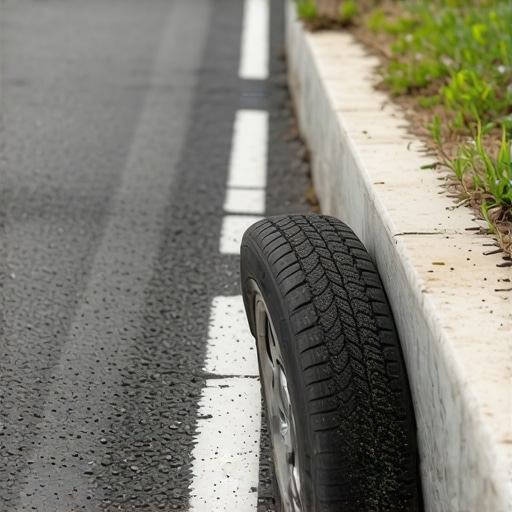
I’ll never forget the cold sweat that broke out on my forehead three years ago when I parked my SUV on my brother’s sloped driveway. I slid the gear selector into ‘P,’ took my foot off the brake, and the whole vehicle jerked forward so hard I thought I’d hit his mailbox. It didn’t just roll an inch; it felt like a small leap. That ‘clunk’ sound echoed in my chest. If you’ve ever felt that unsettling movement, you know exactly what I’m talking about. It’s that split second of panic where you wonder if your car is about to go for a solo trip down the street. I used to think that the mechanical ‘thud’ was just part of a car’s personality. My old sedan would practically jump every time I let off the brake pedal. I ignored it for months, telling myself that it was just an ‘old car thing.’ That was until I learned about the parking pawl—a small metal component that locks the transmission’s output shaft. When your car rolls too much, it means that pawl is struggling or the linkage is stretched. Today, I want to help you understand why that movement happens and, more importantly, how we can stop it before you’re looking at a massive repair bill.
Stop the Lurch Before Your Car Hits the Garage Door
In the early days of my DIY journey, I made the classic rookie mistake of relying entirely on the transmission to hold the car’s weight. I figured, ‘Hey, that’s what Park is for, right?’ Wrong. By ignoring the subtle signs, I ended up needing vehicle diagnostics to figure out why my transmission was acting up. The truth is, that rolling sensation is often a combination of a worn parking pawl and a neglected parking brake system. If you find that your parking brake won’t hold on a steep hill, you’re putting an incredible amount of stress on a tiny metal pin inside your gearbox. This pin, called the parking pawl, is about the size of your thumb. Imagine asking that little piece of metal to hold back 4,000 pounds of steel on a 10-degree incline. It’s a recipe for disaster. I once had a scare where the car moved so far it actually popped out of gear. It was a wake-up call that led me to study essential auto repair strategies for frequent drivers. Using some simple auto repair hacks, I learned how to adjust the tension in the cables myself, which made a world of difference.
Is This Extra Movement Actually Dangerous?
You might be thinking, ‘It only rolls a few inches, I can live with it.’ But here is the kicker: according to data from the National Highway Traffic Safety Administration (NHTSA), vehicle rollaway incidents are a leading cause of non-traffic injuries. It’s not just about convenience; it’s about safety. I used to be skeptical too, until I realized that being proactive saved me thousands compared to a full transmission rebuild. Have you ever felt your car move more than it should after you’ve parked? It’s a common frustration, but one we can definitely tackle together. We are going to dive into the mechanical side of things to see exactly what is stretching or slipping under your chassis. It’s time to get your car back to staying exactly where you put it.
Pull the Slack Out of Your Parking Cables
To stop the roll, we have to address the most common culprit: cable stretch. Think of your parking brake cable like a guitar string; over time, the constant tension causes it to lose its ‘tune’ and go limp. When you pull that lever or mash the pedal, a loose cable won’t pull the brake shoes or pads tight enough against the drums or rotors. I remember sliding under my brother’s rusted-out pickup with a 12mm wrench in hand, determined to fix his ‘rolling stone’ of a truck. The adjuster nut was frozen solid, but I used some auto repair hacks, like soaking the threads in penetrant for twenty minutes, before I even tried to turn it. Once it broke free, I tightened the equalizer nut until the slack vanished. The result? The lever inside the cab clicked with a satisfying authority, and the truck didn’t budge an inch on the test incline. You can usually find this adjustment point midway along the chassis where the single cable from the cab splits into two cables heading toward the rear wheels. It’s a simple mechanical fix that often gets overlooked during a standard brake service for safety and performance. 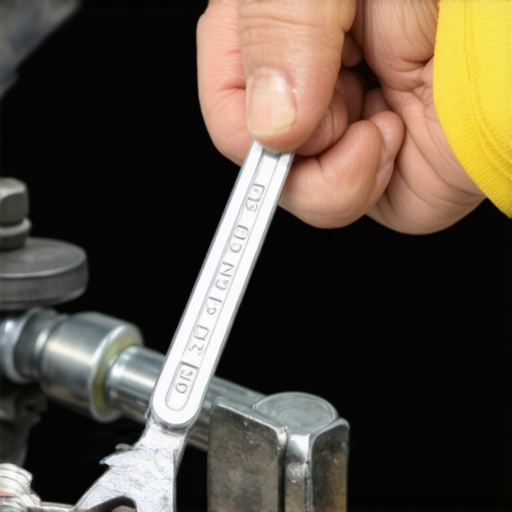
Adopt the Shift Sequence That Saves Your Gearbox
Even if your cables are tight, you might still experience that ‘thud’ if you aren’t parking correctly. Most of us are guilty of slamming the shifter into ‘P’ and jumping out. This forces the tiny parking pawl to catch the entire weight of the vehicle. Instead, try this: come to a complete stop, keep your foot on the brake pedal, engage your parking brake fully, shift to Neutral, and let off the foot brake. You’ll feel the car settle onto the parking brake. Finally, shift into Park. This sequence ensures the heavy lifting is done by the robust brake system rather than the delicate internals of your transmission. If you notice your car still struggles to hold even with this method, it might be time for vehicle diagnostics to see if the rear calipers are seizing or if the shoes are worn down to the metal.
Check Your Fluid and Friction Surfaces
Sometimes the roll isn’t just a cable issue; it’s a friction issue. If oil or grease has leaked onto your brake surfaces, they’ll slide regardless of how hard you pull the handle. I once saw a car that wouldn’t hold because a leaking axle seal had coated the internal drum in gear oil. This is why following top auto repair tips to extend your vehicles lifespan is so critical—catching a small leak early prevents your safety systems from failing. Furthermore, if you feel a shudder when the pawl finally does engage, you might want to look into how to save your transmission with a simple fluid exchange. Fresh fluid won’t fix a broken pawl, but it ensures the linkage moves smoothly and engages without hesitation. Don’t fall for brake service myths that suggest the parking brake is self-adjusting on all models; many require this manual intervention to stay effective and safe on the hills.
Stop Believing That New Pads Fix Every Roll
One of the biggest misconceptions I see in the DIY community is the idea that a standard set of new pads solves everything. Everyone says, ‘My car rolls, I need a brake job,’ but they only look at the friction material. In my experience, you can have brand new pads and still have a vehicle that wanders because the internal drum surface—the part inside the rotor—is glazed or rusted. This is especially true for modern SUVs that use a ‘drum-in-hat’ design. If you ignore the condition of that inner drum, no amount of pad thickness will save you. I’ve seen enthusiasts spend hundreds on performance rotors only to realize they still have a rolling problem because they fell for common brake service myths. They forget that the parking brake is often a secondary, independent system hiding inside the hub of your rear wheels. If that surface isn’t clean and scuffed for grip, your car will keep taking those ‘mini-leaps’ every time you park.
Can You Trust Your Car to Self-Adjust the Brakes?
Many modern vehicles claim to have ‘self-adjusting’ parking brakes that click into place every time you use reverse. However, this is a bit of a half-truth. While the mechanism exists, it frequently fails due to road salt, dust, and simple lack of use. According to the Car Care Council, neglected brake hardware is a primary contributor to system failure, yet most drivers never manually check the star-wheel adjuster. If that adjuster is seized, your ‘self-adjusting’ system is essentially dead weight. This is why I always recommend taking the extra ten minutes during a brake service for safety and performance to manually spin those adjusters and ensure they move freely. If you don’t, you might find your parking brake won’t hold on a steep hill despite having plenty of pad life left. 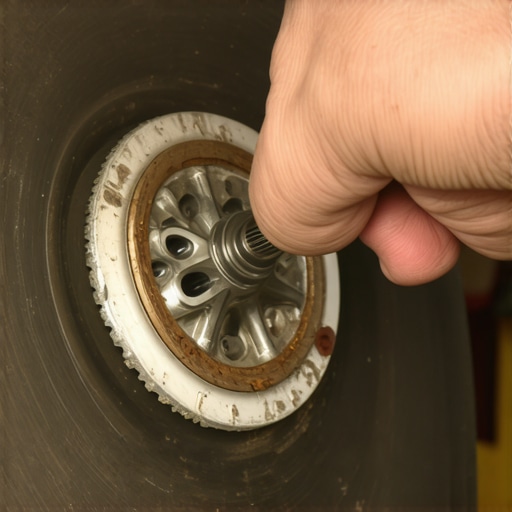
Don’t Crank the Adjuster Nut Too Far
Here is the ‘oops’ factor that ruins many DIY Saturdays: over-tightening the cable to compensate for worn shoes. I once saw a guy tighten his parking brake cable so much that the rear brakes were constantly dragging. Within five miles, his rotors were glowing cherry red and the smell of burning friction material was overwhelming. Over-tightening doesn’t just wear out your parts; it can cause the brake fluid to boil, leading to a terrifying moment where you need to know if your brake booster is leaking air or if your pedal has just gone floor-bound from heat. If you hear a grinding noise in your wheels after an adjustment, stop immediately. You’ve likely over-indexed the tension.
The Hidden Complexity of Advanced Diagnostics
Sometimes the roll isn’t mechanical at all—it’s hydraulic or electronic. On cars with Electronic Parking Brakes (EPB), a simple cable pull won’t help you. You might be dealing with a software glitch or a failing actuator. This is where how advanced vehicle diagnostics prevent costly breakdowns becomes relevant. Without the right scanner, you could be chasing a ‘loose cable’ that doesn’t even exist. Before you start tearing things apart, it’s worth checking if you need the trick to bleeding brakes alone to ensure no air is trapped in the lines, especially if your car uses the primary calipers for the parking function. Have you ever fallen into this ‘tighten-it-until-it-breaks’ trap? Let me know in the comments, and let’s make sure your car stays exactly where you left it.
Invest in a Scanner That Actually Talks Back
I cannot count the number of times I’ve seen people try to force a rear caliper piston back with a C-clamp on a car equipped with an Electronic Parking Brake (EPB), only to hear the expensive ‘crunch’ of a plastic gear breaking. If your car has a button instead of a handle for the brake, you absolutely need a bidirectional scan tool. Personally, I use an Autel MaxiCheck because it allows me to trigger ‘Service Mode,’ which retracts the electronic actuator safely. Relying on how advanced vehicle diagnostics prevent costly breakdowns isn’t just for professionals anymore; it’s a requirement for anyone working on a car made in the last decade. If you’re on a budget, even the $20 tool every driver needs for basic electrical troubleshooting—a simple multimeter—can help you verify if the actuator is getting power before you blame the mechanical parts. This prevents you from replacing a perfectly good motor when the real issue is just a blown fuse or a corroded ground wire. 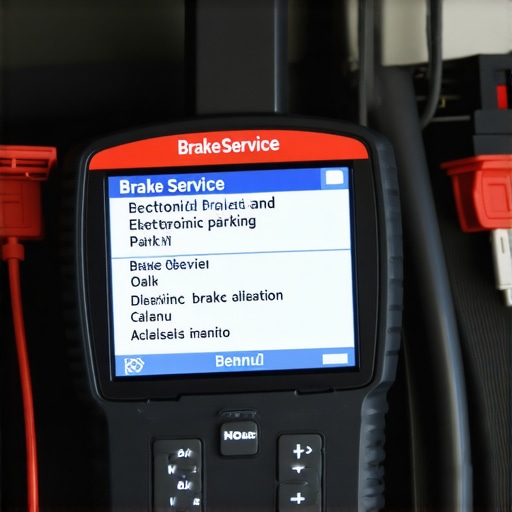
How do I keep my brake system from seizing up over time?
Maintenance isn’t just about the big jobs; it’s about the boring, repetitive stuff. Every time I do a routine service, I make it a point to spray a bit of silicone lubricant on the exposed sections of the parking brake cables and the pivot points of the calipers. According to technical documentation from Bendix, a leading global brake component manufacturer, moisture intrusion is the number one killer of parking brake efficiency. By creating a hydrophobic barrier, you prevent the ‘freeze’ that happens during winter or after a heavy rain. This is one of those top auto repair tips to extend your vehicles lifespan that takes thirty seconds but saves you a $400 caliper replacement later. While you’re under there, check for any ‘oil sweating’ near the seals. While oil change innovations have made modern engines last longer, they haven’t stopped gravity from pulling lubricants into places they shouldn’t be, like your brake shoes or internal drums.
The Physical Cable is Going the Way of the Dodo
Looking ahead, the traditional steel cable is rapidly becoming a relic. We are moving toward a ‘brake-by-wire’ future where the connection between your foot and the wheel is almost entirely digital. This means our DIY diagnostics will continue to shift from adjusting nuts with wrenches to updating firmware and recalibrating sensors. It sounds intimidating, but it actually offers better precision and safety by eliminating human error in cable tensioning. My advice is to get comfortable with software interfaces now. For your next weekend project, I challenge you to go beyond just looking at your pads—actually hook up a scanner and run a self-test on your ABS and EPB systems. You might be surprised at what a few lines of code can tell you about the health of your car before a warning light even flickers on the dash.
The Hard Way I Learned to Trust My Parking Brake
Looking back at that SUV incident on my brother’s driveway, I realized my biggest mistake wasn’t just mechanical—it was mental. I had convinced myself that modern cars were indestructible, but they are actually finely tuned machines that require a little bit of respect. One of the most important auto repair hacks I ever picked up was realizing that the parking brake isn’t just for steep hills; it’s an every-time safety feature. If you let your car ‘bounce’ off the transmission pawl, you’re essentially gambling with the life of your gearbox. I now treat every parking spot like a 45-degree incline, and my car has never felt more solid.
- The ‘Settling’ Myth: Your car shouldn’t ‘settle’ more than an inch. Anything more is a cry for help from your cables or shoes.
- Rust Never Sleeps: Even if you live in a dry climate, those cables can bind from lack of use. Constant engagement is the best medicine.
- Hear the Clicks: Learn the rhythm of your car. If the lever takes more than six clicks to feel firm, you’re overdue for a quick tension adjustment.
Taking the time for a proper brake service for safety and performance isn’t about being paranoid; it’s about being prepared. I’ve found that by following these simple auto repair hacks, I’ve managed to stretch the life of my transmission far beyond what the factory manual predicted.
Tools That Make the Job Feel Like Child’s Play
If you’re going to dive into this project, don’t do it with just a pair of pliers and a prayer. I always keep a dedicated 12mm deep-well socket and a long-reach extension for adjusting cable equalizers from under the chassis. For those of you with modern setups, a bidirectional scan tool is non-negotiable; it’s one of those top auto repair tips to extend your vehicles lifespan because it prevents you from snapping expensive electronic actuators. I also swear by a can of high-quality silicone spray to keep the pivot points from seizing. If you’re ever unsure about how your car is reacting to these changes, performing some vehicle diagnostics can save you from a lot of guesswork and wasted money on parts you don’t need.
Reclaim the Confidence in Your Daily Driver
You don’t need to be a master technician to stop that unsettling roll. You just need to be observant and willing to spend twenty minutes under the dash or the rear hub. When you finally get that parking brake tight and master the Neutral-to-Park shift sequence, you’ll feel a sense of control that makes every drive more enjoyable. No more clunks, no more lunges, and no more cold sweats when you walk away from your car. It’s time to give your car the brake service it deserves so it stays exactly where you put it. Has your car ever given you that ‘mini-heart attack’ roll after you parked? Tell me about your closest call in the comments below!