

I was cruising down a quiet backroad last summer, windows down, thinking about nothing more than what to grill for dinner. Then, a deer hopped out. I stomped on the pedal. Instead of a controlled stop, my steering wheel whipped to the left like a fishing rod with a shark on the line. It is a gut-wrenching feeling that turns a routine drive into a survival situation in half a second. If you are currently white-knuckling the wheel every time you see a red light because your car wants to change lanes without your permission, you are in the right place. Today, we are going to diagnose exactly why your car pulls to the left when you hit the brakes and get your confidence back on the road. [image placeholder]
Stop That Sudden Tug Toward the Oncoming Lane
When your vehicle behaves this way, it is usually the car’s way of shouting that the braking force is uneven. Think of it like a rowing boat; if the person on the left rows harder than the person on the right, you are going in a circle. In car terms, something is grabbing harder on the left or failing to grab on the right. I once spent an entire weekend decoding vehicle diagnostics to find a problem that was staring me in the face. I actually made a pretty embarrassing rookie mistake back then. I assumed it was a simple alignment issue and ignored the brake system entirely. I even tried checking tire wear patterns to prove myself right. I was wrong. It turned out to be a collapsed flexible brake hose that acted like a one-way valve. The pressure would go in, but it would not release, keeping the left brake slightly engaged. It is a classic example of how brake service myths can lead you down the wrong path.
Is This Really Worth the Repair Bill Right Now?
You might be tempted to just steer against it and keep driving, especially if the pull is minor. But here is the cold, hard truth: a car that pulls under braking is a car that is unpredictable in an emergency. According to data from the National Highway Traffic Safety Administration, vehicle components specifically brakes are a factor in a significant portion of crashes caused by mechanical failure. When you need to stop fast, you do not want to be fighting your steering wheel. Whether it is a stuck caliper or you need to learn how to tell if your brake booster is leaking air, ignoring it is a gamble you will not win. Have you ever felt that terrifying yank on the steering wheel when you are just trying to stop at a red light? Let us dive into the nuts and bolts of what is actually happening behind your wheels.
Check Your Tires Before You Tear the Brakes Apart
Most people jump straight to expensive parts, but sometimes the fix is as simple as a gas station air pump. If your left front tire is significantly lower than the right, it has a larger footprint on the road, creating more friction and pulling the car in that direction. Beyond pressure, you should be checking tire wear patterns to see if the rubber is wearing unevenly. If the inside edge is bald, your alignment is fighting your brakes. I remember helping a neighbor who was convinced he needed a new master cylinder; we found out his left front tire was at 18 PSI while the right was at 34. Five minutes of air fixed a ‘major’ mechanical failure. 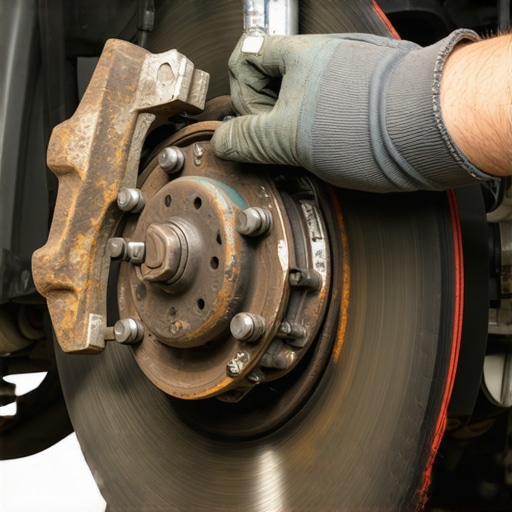
Finding the Stuck Caliper That Is Steering Your Car
If the tires are fine, the most likely culprit is a seized brake caliper. Think of the caliper like a giant C-clamp. When you hit the pedal, hydraulic fluid pushes a piston that squeezes the pads against the rotor. If the slider pins are rusted—a common result of skipping essential brake service—the caliper on the right side might not be squeezing at all. Since only the left side is ‘biting,’ the car pivots toward the left. I once tried to force a stuck piston back in with a massive C-clamp and ended up cracking the housing because I did not realize the internal seals had swelled. It was an expensive lesson in why you should never force a part that is not moving freely. If you find one side is significantly hotter than the other after a short drive, you have found your ghost.
Put Your Suspension to the Test
Sometimes the brakes are doing their job perfectly, but the parts holding the wheel in place are tired. If a control arm bushing or ball joint is worn out, the force of braking shifts the wheel’s position relative to the frame. You can actually perform the tie rod test in your own driveway to see if there is any play in the steering linkage. Similarly, knowing how to spot a bad ball joint using a floor jack can save you from a catastrophic failure at highway speeds. If the suspension moves under load, the car will ‘steer’ itself the moment you apply the anchors.
Does Air in the Lines Cause the Pull?
It absolutely can. If you recently did work and did not use the trick to bleeding brakes alone, you might have an air bubble trapped in the right front line. Since air compresses and fluid does not, the right side will not get full pressure, leaving the left side to do all the heavy lifting. This creates a soft pedal and a sharp tug to the left simultaneously. Always ensure your hydraulic system is a closed loop of solid fluid to keep your stops straight and predictable. To avoid these issues in the future, following top auto repair tips to extend your vehicles lifespan is the best way to catch hardware degradation before it becomes a steering problem.
I see it all the time in DIY forums: someone replaces a caliper, the car still pulls, so they replace the rotor, then the pads, and finally the other caliper. They have spent $400 to fix a $20 problem. Here is the contrarian truth: a pull to the left is frequently caused by the right side failing to engage, but the physical part you see—the caliper—might be perfectly fine. In many cases, the internal liner of the flexible rubber brake hose has collapsed. It looks brand new on the outside, but inside, it is acting like a heart valve with a blockage. This leads to the biggest ‘Oops’ factor I encounter: throwing parts at a problem instead of decoding vehicle diagnostics properly. If you replace a caliper but leave a restricted hose, you will likely burn up the new caliper within a month. It is one of those brake service myths that keeping the old hoses saves money. It does not; it just delays an expensive repeat repair.
The Great Caliper Myth That Costs You Triple
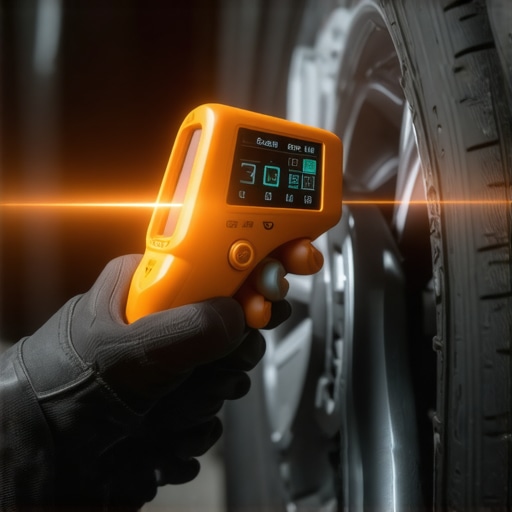
Most beginners assume that if the car pulls left, the left side is ‘broken.’ While a seized left caliper can stay applied, a more common scenario is that the right side is completely dead. This forces the left side to handle 100% of the stopping torque, pivotting the car around that active wheel. Before you buy parts, use an infrared thermometer after a drive. If the left rotor is 300 degrees and the right is 100, the right side is your actual culprit. This nuance is part of the ultimate guide to brake service that many quick-lube shops skip entirely. They see a ‘hot’ brake and replace it, never realizing it was just overworked because its partner was lazy.
Why Does the Pull Disappear After the Brakes Warm Up?
This is a classic head-scratcher for advanced drivers. You pull out of the driveway, hit the brakes, and the car lunges left. Ten minutes later, it stops straight as an arrow. This usually points to moisture contamination in the fluid. Brake fluid is hygroscopic, meaning it absorbs water from the air. According to the Car Care Council, brake fluid can absorb up to 3% of its weight in water in just a year in humid climates. When that water sits in the caliper, it creates initial resistance or ‘stiction.’ Once the friction of driving heats the fluid, that moisture thins out or the metal components expand enough to move freely. If you are seeing this, you do not need a wrench; you need a high-quality fluid flush. This is one of the top auto repair tips to extend your vehicles lifespan that people often ignore because they cannot see the fluid degradation with the naked eye.
Why Your High-Tech Safety Sensors Might Be Lying
We also need to talk about the ‘invisible’ culprit in newer cars. If you have recently had suspension work, you might find that your lane keep assist acts erratic because the computer thinks you are intentionally steering to avoid a crash when you are really just braking. Modern ABS modules and stability control systems are incredibly sensitive to wheel speed differences. Using cheap parts can backfire here too; the truth about using cheap aftermarket sensors is that they often have slightly different resistance values, which can trick the computer into applying uneven hydraulic pressure. Even something as seemingly unrelated as your lubricant matters. While we usually focus on oil change innovations for the engine, the high-temp grease used on brake slide pins is just as vital. If you use a petroleum-based grease on rubber slide boots, they will swell and seize the brakes. Knowing how to tell if your oil filter is actually doing its job is great for the engine, but being able to feel the difference between a mechanical pull and a hydraulic one is what separates a parts-changer from a real mechanic. Have you ever fallen into the trap of replacing the ‘wrong’ side because you followed a generic guide? Let me know in the comments!
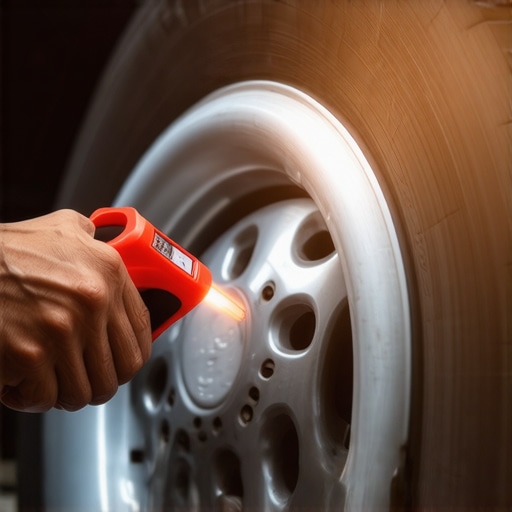
I have spent years under hoods, and if there is one thing I have learned, it is that your eyes can lie to you, but physics never does. When you are trying to figure out why your car is trying to steer itself into the median, you need to stop guessing and start measuring. I never go into a brake job without my infrared thermometer. It is my favorite of the auto repair hacks to save money without sacrificing quality. By pointing it at the rotor after a test drive, I can see exactly which wheel is doing the work and which one is ‘lazy.’ If the left side is 50 degrees hotter than the right, the right side is the one failing to apply pressure. Using actual data is how advanced vehicle diagnostics prevent costly breakdowns by stopping you from replacing parts that are still perfectly functional.
How do I keep my brakes performing perfectly for years?
Maintenance is not just about reacting when things go wrong; it is about preventing the chemistry of failure. Every time I do an oil change with new innovations, I also check my brake fluid’s copper content with a test strip. Most people wait until the fluid looks like maple syrup, but by then, the internal seals are already pitted. For those following essential auto repair strategies for frequent drivers, I recommend a full hydraulic flush every 30,000 miles. This prevents the moisture-related ‘stiction’ that causes one-sided pulling in the first place. As noted in the Bendix Technical Bulletin regarding hydraulic restrictions, even a microscopic piece of rubber from a deteriorating hose can act as a check valve, causing the very pull we are trying to fix. Keeping the system clean is the only way to ensure the ultimate guide to brake service actually results in a car that stops in a straight line.
Looking ahead, the way we fix these issues is changing fast. We are moving toward ‘brake-by-wire’ systems where there is no physical connection between your foot and the caliper. In these cars, a pull to the left might not be a stuck pin, but a calibration error in the electronic control unit. This makes having the 20 tool every driver needs for basic electrical troubleshooting more important than a set of heavy-duty wrenches. If you want to take control of your vehicle’s health, I challenge you to go out today and check your tire pressures with a digital gauge. It is the easiest way to rule out the simplest cause of a steering pull before you ever pick up a wrench. Staying ahead of these small details is what keeps your car out of the shop and your hands firmly, and calmly, on the wheel.
I was cruising down a quiet backroad last summer, windows down, thinking about nothing more than what to grill for dinner. Then, a deer hopped out. I stomped on the pedal. Instead of a controlled stop, my steering wheel whipped to the left like a fishing rod with a shark on the line. It is a gut-wrenching feeling that turns a routine drive into a survival situation in half a second. If you are currently white-knuckling the wheel every time you see a red light because your car wants to change lanes without your permission, you are in the right place. Today, we are going to diagnose exactly why your car pulls to the left when you hit the brakes and get your confidence back on the road. [image placeholder]
Stop That Sudden Tug Toward the Oncoming Lane
When your vehicle behaves this way, it is usually the car’s way of shouting that the braking force is uneven. Think of it like a rowing boat; if the person on the left rows harder than the person on the right, you are going in a circle. In car terms, something is grabbing harder on the left or failing to grab on the right. I once spent an entire weekend decoding vehicle diagnostics to find a problem that was staring me in the face. I actually made a pretty embarrassing rookie mistake back then. I assumed it was a simple alignment issue and ignored the brake system entirely. I even tried checking tire wear patterns to prove myself right. I was wrong. It turned out to be a collapsed flexible brake hose that acted like a one-way valve. The pressure would go in, but it would not release, keeping the left brake slightly engaged. It is a classic example of how brake service myths can lead you down the wrong path.
Is This Really Worth the Repair Bill Right Now?
You might be tempted to just steer against it and keep driving, especially if the pull is minor. But here is the cold, hard truth: a car that pulls under braking is a car that is unpredictable in an emergency. According to data from the National Highway Traffic Safety Administration, vehicle components specifically brakes are a factor in a significant portion of crashes caused by mechanical failure. When you need to stop fast, you do not want to be fighting your steering wheel. Whether it is a stuck caliper or you need to learn how to tell if your brake booster is leaking air, ignoring it is a gamble you will not win. Have you ever felt that terrifying yank on the steering wheel when you are just trying to stop at a red light? Let us dive into the nuts and bolts of what is actually happening behind your wheels.
Check Your Tires Before You Tear the Brakes Apart
Most people jump straight to expensive parts, but sometimes the fix is as simple as a gas station air pump. If your left front tire is significantly lower than the right, it has a larger footprint on the road, creating more friction and pulling the car in that direction. Beyond pressure, you should be checking tire wear patterns to see if the rubber is wearing unevenly. If the inside edge is bald, your alignment is fighting your brakes. I remember helping a neighbor who was convinced he needed a new master cylinder; we found out his left front tire was at 18 PSI while the right was at 34. Five minutes of air fixed a ‘major’ mechanical failure.
Finding the Stuck Caliper That Is Steering Your Car
If the tires are fine, the most likely culprit is a seized brake caliper. Think of the caliper like a giant C-clamp. When you hit the pedal, hydraulic fluid pushes a piston that squeezes the pads against the rotor. If the slider pins are rusted—a common result of skipping essential brake service—the caliper on the right side might not be squeezing at all. Since only the left side is ‘biting,’ the car pivots toward the left. I once tried to force a stuck piston back in with a massive C-clamp and ended up cracking the housing because I did not realize the internal seals had swelled. It was an expensive lesson in why you should never force a part that is not moving freely. If you find one side is significantly hotter than the other after a short drive, you have found your ghost.
Put Your Suspension to the Test
Sometimes the brakes are doing their job perfectly, but the parts holding the wheel in place are tired. If a control arm bushing or ball joint is worn out, the force of braking shifts the wheel’s position relative to the frame. You can actually perform the tie rod test in your own driveway to see if there is any play in the steering linkage. Similarly, knowing how to spot a bad ball joint using a floor jack can save you from a catastrophic failure at highway speeds. If the suspension moves under load, the car will ‘steer’ itself the moment you apply the anchors.
Does Air in the Lines Cause the Pull?
It absolutely can. If you recently did work and did not use the trick to bleeding brakes alone, you might have an air bubble trapped in the right front line. Since air compresses and fluid does not, the right side will not get full pressure, leaving the left side to do all the heavy lifting. This creates a soft pedal and a sharp tug to the left simultaneously. Always ensure your hydraulic system is a closed loop of solid fluid to keep your stops straight and predictable. To avoid these issues in the future, following top auto repair tips to extend your vehicles lifespan is the best way to catch hardware degradation before it becomes a steering problem.
I see it all the time in DIY forums: someone replaces a caliper, the car still pulls, so they replace the rotor, then the pads, and finally the other caliper. They have spent $400 to fix a $20 problem. Here is the contrarian truth: a pull to the left is frequently caused by the right side failing to engage, but the physical part you see—the caliper—might be perfectly fine. In many cases, the internal liner of the flexible rubber brake hose has collapsed. It looks brand new on the outside, but inside, it is acting like a heart valve with a blockage. This leads to the biggest ‘Oops’ factor I encounter: throwing parts at a problem instead of decoding vehicle diagnostics properly. If you replace a caliper but leave a restricted hose, you will likely burn up the new caliper within a month. It is one of those brake service myths that keeping the old hoses saves money. It does not; it just delays an expensive repeat repair.
The Great Caliper Myth That Costs You Triple
Most beginners assume that if the car pulls left, the left side is ‘broken.’ While a seized left caliper can stay applied, a more common scenario is that the right side is completely dead. This forces the left side to handle 100% of the stopping torque, pivotting the car around that active wheel. Before you buy parts, use an infrared thermometer after a drive. If the left rotor is 300 degrees and the right is 100, the right side is your actual culprit. This nuance is part of the ultimate guide to brake service that many quick-lube shops skip entirely. They see a ‘hot’ brake and replace it, never realizing it was just overworked because its partner was lazy.
Why Does the Pull Disappear After the Brakes Warm Up?
This is a classic head-scratcher for advanced drivers. You pull out of the driveway, hit the brakes, and the car lunges left. Ten minutes later, it stops straight as an arrow. This usually points to moisture contamination in the fluid. Brake fluid is hygroscopic, meaning it absorbs water from the air. According to the Car Care Council, brake fluid can absorb up to 3% of its weight in water in just a year in humid climates. When that water sits in the caliper, it creates initial resistance or ‘stiction.’ Once the friction of driving heats the fluid, that moisture thins out or the metal components expand enough to move freely. If you are seeing this, you do not need a wrench; you need a high-quality fluid flush. This is one of the top auto repair tips to extend your vehicles lifespan that people often ignore because they cannot see the fluid degradation with the naked eye.
Why Your High-Tech Safety Sensors Might Be Lying
We also need to talk about the ‘invisible’ culprit in newer cars. If you have recently had suspension work, you might find that your lane keep assist acts erratic because the computer thinks you are intentionally steering to avoid a crash when you are really just braking. Modern ABS modules and stability control systems are incredibly sensitive to wheel speed differences. Using cheap parts can backfire here too; the truth about using cheap aftermarket sensors is that they often have slightly different resistance values, which can trick the computer into applying uneven hydraulic pressure. Even something as seemingly unrelated as your lubricant matters. While we usually focus on oil change innovations for the engine, the high-temp grease used on brake slide pins is just as vital. If you use a petroleum-based grease on rubber slide boots, they will swell and seize the brakes. Knowing how to tell if your oil filter is actually doing its job is great for the engine, but being able to feel the difference between a mechanical pull and a hydraulic one is what separates a parts-changer from a real mechanic. Have you ever fallen into the trap of replacing the ‘wrong’ side because you followed a generic guide? Let me know in the comments!
I have spent years under hoods, and if there is one thing I have learned, it is that your eyes can lie to you, but physics never does. When you are trying to figure out why your car is trying to steer itself into the median, you need to stop guessing and start measuring. I never go into a brake job without my infrared thermometer. It is my favorite of the auto repair hacks to save money without sacrificing quality. By pointing it at the rotor after a test drive, I can see exactly which wheel is doing the work and which one is ‘lazy.’ If the left side is 50 degrees hotter than the right, the right side is the one failing to apply pressure. Using actual data is how advanced vehicle diagnostics prevent costly breakdowns by stopping you from replacing parts that are still perfectly functional.
How do I keep my brakes performing perfectly for years?
Maintenance is not just about reacting when things go wrong; it is about preventing the chemistry of failure. Every time I do an oil change with new innovations, I also check my brake fluid’s copper content with a test strip. Most people wait until the fluid looks like maple syrup, but by then, the internal seals are already pitted. For those following essential auto repair strategies for frequent drivers, I recommend a full hydraulic flush every 30,000 miles. This prevents the moisture-related ‘stiction’ that causes one-sided pulling in the first place. As noted in the Bendix Technical Bulletin regarding hydraulic restrictions, even a microscopic piece of rubber from a deteriorating hose can act as a check valve, causing the very pull we are trying to fix. Keeping the system clean is the only way to ensure the ultimate guide to brake service actually results in a car that stops in a straight line.
Looking ahead, the way we fix these issues is changing fast. We are moving toward ‘brake-by-wire’ systems where there is no physical connection between your foot and the caliper. In these cars, a pull to the left might not be a stuck pin, but a calibration error in the electronic control unit. This makes having the 20 tool every driver needs for basic electrical troubleshooting more important than a set of heavy-duty wrenches. If you want to take control of your vehicle’s health, I challenge you to go out today and check your tire pressures with a digital gauge. It is the easiest way to rule out the simplest cause of a steering pull before you ever pick up a wrench. Staying ahead of these small details is what keeps your car out of the shop and your hands firmly, and calmly, on the wheel.
The Moment I Stopped Guessing and Started Measuring
For years, I approached brake problems with a replace-and-pray mentality. I would see a symptom and immediately buy the most expensive part associated with it. The lightbulb moment came when I realized that logically isolating the failure is the only way to save your sanity. I started using an infrared thermometer to check rotor temps after every test drive. This single habit revealed that a left-side pull was often caused by a right-side failure that didn’t generate heat. Accurate data is the foundation of how advanced vehicle diagnostics prevent costly breakdowns and keep your bank account intact. Reliability isn’t built with new parts alone; it is built with correct answers.
Gear Every Driveway Mechanic Should Own
If you are tired of playing the guessing game, you need a few specific tools in your cabinet. First, a high-quality digital tire pressure gauge is non-negotiable—sometimes the ‘broken brake’ is just a low tire. Second, the 20 tool every driver needs for basic electrical troubleshooting is indispensable for verifying that your ABS sensors aren’t feeding the computer garbage data. Finally, I never perform a hydraulic service without a vacuum pump; it ensures the trick to bleeding brakes alone without a helper actually works every time without leaving air in the lines. These tools pay for themselves the very first time you avoid an unnecessary trip to the dealership.
Stop Fighting the Pull and Start Driving Safely
There is a specific kind of peace that comes from a car that stops exactly where you point it. You should not have to fight your steering wheel just to make a routine stop at a red light. By identifying exactly why your car pulls to the left when you hit the brakes, you are reclaiming your safety and your confidence. Don’t let a minor tug turn into a major collision. Your car is constantly talking to you; it is time to listen, diagnose, and get back to enjoying the drive. Have you ever replaced a part only to find the problem was actually on the opposite side of the car? Let me know your diagnostic stories in the comments below!