
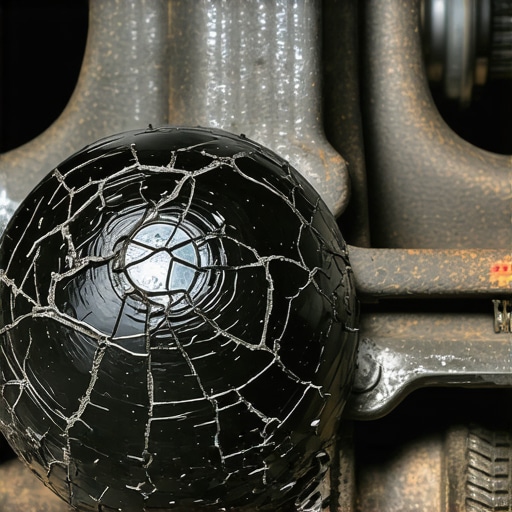
I still remember the rhythmic, metallic thud coming from the front end of my old truck every time I turned into my driveway. It was subtle, almost like a heavy marble rolling around in a tin can. I did what most people do: I turned up the radio and told myself I would look at it next weekend. That weekend never came because, three days later, as I was slowing down for a red light, I heard a sickening *crack*. The front right side of my truck dropped, and I watched my own wheel tilt at a 45-degree angle. I was lucky I was only going 5 mph. If that ball joint had snapped on the interstate, I wouldn’t be sitting here sharing this with you. Today, I want to show you exactly how to spot those warning signs so you never have to experience that heart-stopping moment of losing control.
Why That Tiny Squeak Is a Massive Warning Sign
Most of us are conditioned to ignore small noises, but when it comes to your suspension, a squeak is often a scream for help. Early in my DIY days, I made the mistake of thinking a dry-sounding groan while turning was just a thirsty bushing. I sprayed some lubricant on it and called it a day. That was a huge error in judgment. A ball joint is a literal pivot point; it holds your wheel and tire assembly to the rest of the car. When the internal grease dries out or the boot tears, metal starts grinding against metal. This isn’t just an annoyance; it’s a precursor to a total mechanical failure. According to the Car Care Council, neglecting these minor suspension components can lead to uneven tire wear and severely compromised steering response long before the part actually breaks. If you have noticed why your car’s steering wheel is vibrating at idle or during low-speed maneuvers, you might already be on the clock.
Does This Small Part Really Matter That Much?
You might be skeptical. After all, the car still drives, right? Many drivers assume that if the car isn’t pulling hard to one side, everything is fine. But a worn ball joint creates a ‘loose’ feeling in the steering that creeps up on you so slowly you might not even realize your handling has degraded. It’s the same reason people struggle with a loose steering wheel without checking the joints first. Have you ever felt like your car was ‘wandering’ across the lane, requiring constant tiny corrections just to stay straight? If so, you’ve likely encountered the first stage of ball joint death.
Listen for the Tell-Tale Clunks
The most common symptom is that infamous clunking sound when you go over speed bumps or pull into a parking spot. It sounds like something is hitting the floorboards right under your feet. This happens because the ‘ball’ has too much room inside the ‘socket,’ and every time the weight of the vehicle shifts, it slams against the housing. This is often accompanied by the clunking sound in your floorboards that feels visceral. My goal today is to give you the confidence to diagnose this yourself before you’re stuck with a massive towing bill. Have you ever heard a strange noise and just hoped it would go away on its own, only for it to get louder and more expensive?
Lift Your Vehicle for the 12 and 6 Test
To really see what is happening, you need to get the weight of the vehicle off the wheels. This isn’t just about looking; it is about feeling for play that shouldn’t be there. Once you have the car securely on jack stands—never rely solely on a floor jack—grab the tire at the top and the bottom (the 12 o’clock and 6 o’clock positions). Try to rock the wheel vertically with a firm, handshake-like grip. A healthy ball joint will have zero movement. If you feel a rhythmic click or a shifting sensation, you are feeling the ball move inside its socket. This is very similar to the simple way to check your wheel bearings for play, though bearing play often feels more like a constant wobble rather than a distinct metal-on-metal clunk.
Use a Pry Bar to Find Secret Movement
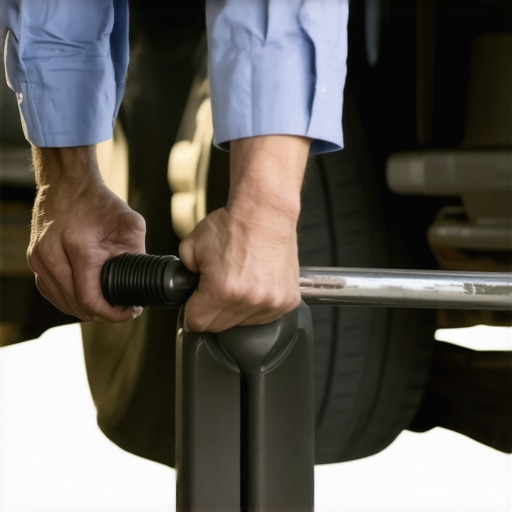
Sometimes, the weight of the control arm or the tension of the springs can hide a failing joint during a hand test. This is where a pry bar becomes your best friend for true mechanical certainty. I remember working on a friend’s SUV that felt solid during the hand test, but he swore it handled like a boat on the highway. I took a small pry bar and wedged it between the control arm and the steering knuckle to mimic road force. With just a little leverage, the joint moved nearly a quarter of an inch. That hidden gap was exactly why your car’s steering feels loose at high speeds. If you can see the joint moving up and down within its housing when you apply pressure, it is time for an immediate replacement. This level of scrutiny is part of how advanced vehicle diagnostics prevent costly breakdowns by catching failures before they become catastrophic on the open road.
Inspect the Rubber Boots Before the Grease Is Gone
The most basic check is often the most overlooked: the visual inspection. Every ball joint is encased in a rubber boot filled with grease, which acts like the cartilage in a human hip. Think of this grease as the lifeblood of the joint. In my early twenties, I ignored a small, greasy tear on my old Honda’s lower ball joint because I didn’t want to spend the money. I figured it was just sweating. Within three weeks, road salt and grit had entered that tear, turning the grease into an abrasive paste that ground the metal down in record time. Using auto repair hacks like simply cleaning the area with a rag and checking for fresh grease leaks can save you hundreds in the long run. If you see a boot that is cracked, collapsed, or leaking thick black grease, the countdown to failure has already started.
Why Consistent Inspections Save You Thousands
For those of us who put a lot of miles on our vehicles, these checks shouldn’t be a once-a-year event reserved for the shop. Adopting essential auto repair strategies for frequent drivers means doing a quick visual check every time you have the wheels off for a tire rotation. If you find yourself frequently dealing with suspension issues, it might be worth looking into how different driving habits impact your components. It is significantly cheaper and safer to replace a forty-dollar part now than to replace the entire steering knuckle, axle, and fender later when the wheel decides to part ways with the car at fifty miles per hour.
Your Scanner Isn’t a Shopping List
I have seen it a thousand times: a DIYer spends two hundred dollars on a high-end scanner, sees a code for a ‘Lean Condition,’ and immediately buys new oxygen sensors. They assume the computer is a magic crystal ball. In reality, the computer is only telling you that the result of a process is wrong, not which part is broken. When you are decoding vehicle diagnostics, you must treat the code as a clue, not a command. Most people get this wrong and end up with a ‘parts cannon’ approach that drains their wallet without fixing the issue. True expertise lies in using that data to find the root cause, which is often a fifty-cent vacuum leak or a loose intake boot. This level of nuance is how advanced vehicle diagnostics prevent costly breakdowns by stopping you from replacing perfectly good sensors.
Stop Tightening Bolts While the Car Is in the Air
Here is the ‘oops’ factor that ruins more professional-grade repairs than almost anything else: tightening suspension bolts while the wheels are hanging. If you replace a ball joint or control arm and torque everything down while the vehicle is on jack stands, you are making a massive mistake. When you finally lower the car, the rubber bushings are forced into a permanent, twisted state of tension. Within months, that brand-new part will fail because the rubber literally tears itself apart. Experts know you must ‘time the suspension’ by lowering the car onto its own weight before the final torque. The National Institute for Automotive Service Excellence (ASE) confirms that improper loading during installation is a leading cause of premature bushing and joint failure in aftermarket parts. Have you ever fallen into this trap? Let me know in the comments.

Does Your Modern Engine Really Need That Specific Synthetic Blend?
Many drivers think they can outsmart the engineers by opting for a cheaper conventional oil, assuming that ‘oil is oil.’ However, oil change innovations have changed the game. Modern engines use oil not just for lubrication, but as a hydraulic fluid for variable valve timing. Using the wrong viscosity or a lower-tier oil can cause ‘phantom’ engine codes and sluggish performance. This is one of the most vital top auto repair tips to extend your vehicles lifespan: the manufacturer’s spec isn’t a suggestion; it’s a requirement for the engine’s internal timing to function.
Why Most Standard Brake Jobs Fail to Stop Squeaks
Everyone says that if your brakes squeak, you just need new pads. But in my experience, the pads are rarely the sole culprit. A truly professional service involves cleaning the hub face and lubricating the slide pins with high-temperature silicone grease. If you skip these steps, you’ll end up with uneven wear and that annoying high-pitched squeal within a week. This is a common theme in brake service myths busted; it isn’t about the brand of the pad, it’s about the quality of the installation. Following the ultimate guide to brake service for safety and performance means looking past the friction material and focusing on the hardware that allows the caliper to move freely.
Invest in a Multimeter Before You Buy More Parts
I have spent thousands on tools over the years, and if I had to start over from scratch, I would buy a high-quality digital multimeter before almost anything else. Why? Because you cannot see electrons, and you certainly cannot see a bad ground with your naked eye. I used to be the guy who would clean every terminal and pray, but now I rely on voltage drop testing. This is the secret to finding a parasitic battery drain with a simple multimeter without pulling every fuse like a madman. When you understand how to read the language of resistance, you stop being a ‘parts swapper’ and start being a diagnostic surgeon. This transition is exactly what separates frustration from a successful afternoon in the driveway.
How do I keep my car running like new for the long haul?
Maintenance is not just about changing fluids; it is about tracking the health of your systems over time. Most people perform an oil change and forget about it, but the pros look at what the oil is telling them. Using oil change innovations like used oil analysis can reveal internal engine wear months before a knock develops. This proactive data collection is the cornerstone of essential auto repair strategies for frequent drivers. I personally keep a digital log of every fuel pressure reading and battery voltage check. According to technical documentation from Robert Bosch GmbH, even a 0.5-bar deviation in fuel system pressure can lead to long-term fuel trim errors that eventually destroy your catalytic converter. By knowing your ‘baseline’ numbers, you can spot when a pump is getting tired long before it leaves you stranded on the shoulder of the highway.

Your Garage is Going Digital
We are rapidly approaching a time where a wrench will be secondary to a tablet. I predict that within the next five years, the most valuable tool for a DIYer will be a bidirectional scan tool capable of performing ‘active tests’—like cycling an ABS pump or testing an injector pulse—right from your phone. This is already a massive part of how advanced vehicle diagnostics prevent costly breakdowns in professional shops. If you want to stay ahead, you need to get comfortable with decoding vehicle diagnostics beyond just reading a P0420 code. You need to look at live data streams to see if your oxygen sensors are actually ‘switching’ or if they are just lazy. This level of detail is one of the top auto repair tips to extend your vehicles lifespan because it allows you to fix the root cause, not just the symptom.
Before your next big outing, take ten minutes to perform some vehicle diagnostics explained easy checks before your road trip. My favorite advanced tip? Perform a ‘Voltage Drop’ test on your main starter cable. If you see more than a 0.5V drop while cranking, your cable is corroded internally, even if the ends look shiny. Try this tonight; it is the single best way to find hidden resistance that a standard battery tester will never catch.
The High Stakes of Selective Hearing in the Garage
If there is one thing a decade under the hood has taught me, it’s that your car never lies; it just whispers before it screams. I used to think I could outrun a failing part by driving ‘carefully,’ but that is a dangerous gamble. One major lightbulb moment for me was realizing that the reason your brake pads are squealing even though they are new often has nothing to do with the pads themselves, but the vibration of a dry slide pin. The same logic applies to your suspension. A ball joint doesn’t just fail; it erodes. If you ignore the signs, you aren’t just saving money; you are deferring a disaster. I’ve learned that the ‘click’ you hear today is the ‘crack’ you feel tomorrow.
- Trust your hands more than your eyes: A part can look brand new but have internal play that only a pry bar will reveal.
- Never skip the details: Cleaning a mounting surface or using a torque wrench isn’t ‘extra’ work; it is the work.
- Data is your shield: Before you dump money into parts, spend ten minutes checking vehicle diagnostics explained easy checks before your road trip to ensure you aren’t chasing a ghost.
The Survival Kit for Modern Road Warriors
You don’t need a professional lift to do professional-grade work, but you do need the right intel. For anyone serious about keeping their car out of the scrap yard, I highly recommend investing in a few specific resources. First, get a factory service manual—not the generic ones from the auto parts store, but the actual manufacturer data. Second, keep a bottle of high-quality lubricant and a multimeter handy; they solve 80% of the mysteries you’ll face. Finally, stop guessing about fluids. Reading up on the truth about oil additives and if they actually save your engine will help you filter out the marketing fluff from real mechanical benefits. I trust these tools because they move you away from ‘hoping’ and toward ‘knowing.’
#IMAGE_PLACEHOLDER_E#
Own the Road with Renewed Confidence
Taking care of your vehicle is about more than just avoiding a breakdown; it is about the peace of mind that comes with knowing every bolt is tight and every joint is solid. When you master the basics of auto repair, you stop being a passenger in your own maintenance journey. You become the expert your car deserves. Don’t let a small squeak intimidate you—grab your tools, follow the steps we discussed, and take control. Your car—and your safety—are worth the effort.
Have you ever had a simple noise turn into a major repair because you waited too long? Let me know your story in the comments below!