

I’ll never forget the day I realized I was literally burning money on the interstate. It was a crisp October morning, and I was cruising along when I noticed a slight vibration through the seat. I ignored it, thinking it was just a rough patch of pavement. Big mistake. By the time I actually bothered to crouch down and look at my front tires a week later, the damage was done. The inner tread was completely bald—smooth as a river stone—while the outside edge still looked brand new. I’d basically set four hundred dollars on fire because I didn’t know how to ‘read’ the rubber. If you have ever wondered why your car feels like it is wandering on the highway, you are not alone, but you definitely shouldn’t wait until you are forced to buy a new set of tires prematurely. Today, I am going to show you exactly how to spot these issues yourself before they drain your bank account.
Stop Ignoring the Secret Language of Your Rubber
Most folks assume an alignment issue is something you only feel through a shaking steering wheel or a constant tug to the side. However, your tires act like a diary of every pothole and curb you’ve encountered. When the geometry of your suspension gets knocked out of whack, the road starts ‘shaving’ your tires in very specific, diagnostic patterns. This isn’t just a matter of keeping the car straight; it is a major safety concern for you and your family. Performing basic vehicle diagnostics at home can catch these wear patterns before they lead to a catastrophic blowout at sixty miles per hour. According to the National Highway Traffic Safety Administration (NHTSA), tire-related issues contribute to approximately 738 fatalities annually in the United States, and many of these stem from neglected maintenance and uneven wear.
Is a professional alignment actually worth the investment?
I get it—every dollar counts, and it is tempting to think, ‘It’s only pulling a little bit, I can handle it.’ I made that same excuse until I realized that bad alignment significantly kills your fuel economy and makes your expensive suspension components work twice as hard. Even if you think you know why your car pulls to the right, seeing the physical proof on the tire tread is the ‘lightbulb moment’ most drivers need to take action. We are going to break down exactly what ‘feathering,’ ‘cupping,’ and ‘camber wear’ look like so you can spot them right in your own driveway. Have you noticed your car drifting lately, or did you find a weird smooth spot on your tires this morning? Let me know if you are seeing these signs right now!
Run Your Hands Across the Tread to Find Hidden Trouble
The most effective way to start your vehicle diagnostics is actually with your sense of touch. I call it the “Glove Test,” though I usually just use my bare palms. When you run your hand across the tread from the inside to the outside, the rubber should feel relatively consistent. If it feels smooth in one direction but as sharp as a saw blade in the other, you’ve found “feathering.” This usually happens when your “toe” alignment is out—basically, your tires are pointed inward or outward like a person who is pigeon-toed. It’s a silent thief that robs you of fuel efficiency and stability.

Identify Feathering Before It Kills Your MPG
I learned this the hard way with an old work truck I bought for cheap. On the drive home, I noticed the steering felt a bit “darty.” I initially thought I needed to know why your car feels like its swaying in high winds, but when I got it onto flat ground and felt the tread, it was like touching a series of ramps. The tires were essentially scrubbing sideways as I drove straight. If you find this, your tie rods might be the culprit, or you might simply need a technician to straighten your “toe” settings. This is often the result of why your steering wheel is off center after hitting a pothole, which shifts the alignment just enough to start the shaving process.
Solve the Mystery of One-Sided Rubber Loss
If you see that only the inner or outer edge of your tire is bald while the rest looks fine, you are looking at a camber issue. Think of camber as the vertical tilt of the wheel. If the top of the tire tilts inward toward the engine, it’s “negative camber,” and it will eat your inner tread alive. While some performance cars use a bit of negative camber for cornering, for the average driver, it’s a sign of sagging springs or bent control arms. I once saw a car where the inner tread was so far gone you could see the metal cords, yet the owner had no idea because the outside of the tire looked perfect from the sidewalk. This is why you must turn your wheels all the way to one side to inspect the entire surface.
Detect the Bumpy Scallops That Signal Bad Shocks
Cupping (or scalloping) is perhaps the most distinctive and annoying wear pattern. It looks like someone took an ice cream scoop and carved out little divots every few inches around the tire. This isn’t usually an alignment problem; it’s a sign that your tire is literally bouncing down the road because your suspension can’t keep it planted. If you hear a rhythmic “thump-thump-thump” that gets faster with speed, you should check how to tell if your shocks are leaking or just dirty. When your shocks or struts fail, they lose the ability to dampen the spring’s energy, turning your tire into a basketball. You should also listen closely for any grinding, as knowing how to diagnose a failing wheel bearing using only your ears can help you distinguish between tire noise and mechanical failure in the hub. Ignoring this doesn’t just ruin the tire; it puts immense stress on your entire front end.
Don’t Trust a Clean Dipstick Alone
Most DIYers think they’ve mastered vehicle diagnostics because they check their oil every Sunday. Here is the hard truth: a clean-looking dipstick is often a liar. While we’re taught that dark oil is “dirty,” the reality is that high-quality detergent oils are designed to hold contaminants in suspension. If your oil stays honey-colored for 5,000 miles, it might not be cleaning your engine at all. In fact, there is a real danger in the hidden sludge building up behind your clean dipstick, especially in modern GDI (Gasoline Direct Injection) engines. I’ve seen engines that looked pristine on the stick but were choked with carbon deposits under the valve cover. A study by SAE International highlights that even oil that appears visually clean on a dipstick can contain microscopic suspended carbon and acid bypass that causes chemical wear to bearing surfaces if the additive package has failed to keep those particles in the fluid stream. This is also why your synthetic oil turns black after just five hundred miles—it is actually doing its job.

The Tiny Washer That Can Ruin Your Driveway
When it comes to an oil change, the “oops” factor usually isn’t a blown engine—it’s a slow, agonizing leak. I see it constantly: people spend fifty bucks on premium synthetic but ignore the fifty-cent crush washer. You might think you can just crank the bolt tighter to stop a drip, but that leads directly to the drain plug crush washer mistake that ruins driveways and eventually strips your oil pan threads. The same logic applies to your wheels. Using an impact wrench without a torque stick is the common mistake that snaps your wheel studs during a tire rotation. It’s these small, “low-consequence” habits that separate a weekend hobbyist from an expert who understands the long-term health of their machine. When you are performing brake service, for instance, forgetting to clean the hub surface before mounting the rotor can cause lateral runout that feels like a warped disc, even if the parts are brand new.
Why does my car still pull even after a fresh alignment?
This is the question that drives most enthusiasts crazy. You just left the shop, the printout says everything is in the “green,” yet the car still drifts. The nuance that most standard shops miss is “loaded vs. unloaded” geometry. For example, why your car drifts to the right only when youre carrying passengers is often due to worn subframe bushings or a suspension that only reveals its flaws under real-world weight. Furthermore, modern safety tech adds a layer of complexity; many drivers don’t realize why your lane keep assist acts erratic after a standard wheel alignment—it’s because the steering angle sensor wasn’t recalibrated to match the new mechanical center. Advanced vehicle diagnostics aren’t just about hardware; they’re about the software talking to that hardware. Have you ever fallen into this trap of fixing one thing only to have a sensor go haywire? Let me know in the comments below!
If you want to move beyond just spotting tread wear and actually fixing the root causes, you need to stop relying on the ‘parts cannon.’ I used to just swap sensors until the light went off, but that’s an expensive way to learn. Now, I swear by my digital multimeter. I truly believe that knowing the $20 tool every driver needs for basic electrical troubleshooting is the difference between a Saturday fix and a Monday morning tow. For instance, when I’m chasing a mystery power loss, I don’t just look at the battery; I use a specific draw test because learning how to find a parasitic battery drain with a basic multimeter is a skill that saves your alternator from early retirement. Too many people assume a dead battery is just an old battery, but often it’s a ‘parasitic ghost’ hiding in your glovebox light or a stuck relay.
Invest in Diagnostics Instead of Just Spare Parts
I always tell my friends that a mid-range OBD-II scanner is the best investment they will ever make, but you have to know its limits. Sometimes why your obd ii scanner cant find the real electrical ghost is simply because the tool isn’t looking at the right modules, like the Body Control Module (BCM). If you are serious about long-term vehicle health, you need to look at ‘live data’ to see how your fuel trims are behaving in real-time. This is how how advanced vehicle diagnostics prevent costly breakdowns by catching a lean condition before it melts a piston. According to the Bosch Automotive Handbook (29th Edition), the precision of modern fuel injection depends entirely on the feedback loop of oxygen sensors; if that loop is sluggish, your engine is essentially flying blind.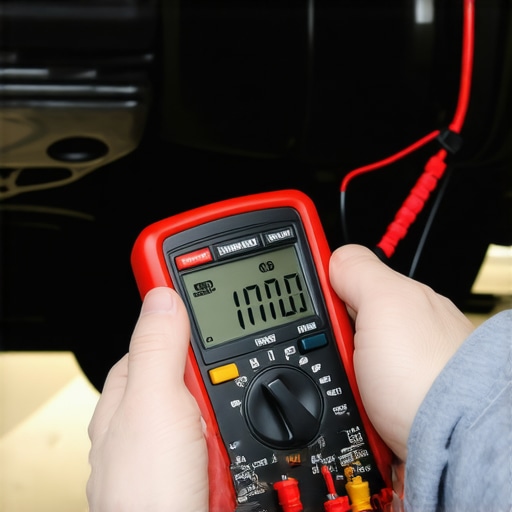
What is the secret to keeping my brakes responsive for a decade?
The biggest mistake I see in DIY brake service is neglecting the fluid. Brake fluid is hygroscopic, meaning it sucks moisture out of the air like a sponge. Over time, that water boils during heavy braking, creating air bubbles that make the pedal feel like a marshmallow. I finally stopped begging my wife to sit in the driver’s seat and pump the pedal once I learned the trick to bleeding brakes alone without a helper using a simple one-way valve bottle. It turned a two-person chore into a ten-minute solo victory. If you find that your levels are dropping but the floor is dry, you need to investigate why your brake fluid is low even though you dont see a leak, as it could be hiding inside the brake booster.
The Future of Your Driveway Is Digital
As we see more electrification and complex ADAS (Advanced Driver Assistance Systems), the ‘wrench’ in your hand will eventually be replaced by a laptop. We are heading toward a world where essential auto repair strategies for frequent drivers will involve 70% software calibration and 30% mechanical work. Even today, many owners are surprised by why your lane keep assist acts erratic after a standard wheel alignment because they didn’t realize the steering angle sensor needed a digital reset. To stay ahead, you need to embrace these oil change innovations and diagnostic tools now. I challenge you this weekend to perform one ‘advanced’ check: grab a multimeter and test your battery’s resting voltage. It’s a simple five-minute task that might just save you from being stranded in a parking lot next month!
The Most Expensive Mistakes I Made So You Don’t Have To
Reflecting on a decade of grease under my fingernails, I’ve realized that auto repair isn’t just about turning a wrench; it’s about shifting your mindset from reactive to proactive. Here are the lightbulb moments that changed how I treat my fleet:
- The ‘Good Enough’ Trap: I used to think ‘tight’ was a measurement. It’s not. Using a torque wrench for every bolt, especially during a brake service, is the only way to prevent warped rotors and snapped studs.
- Listen to the Whisper: Every major breakdown starts as a tiny noise or a slight vibration. If I had listened when my car first felt ‘darty,’ I wouldn’t have replaced a whole steering rack.
- Digital vs. Physical: You need both. A scan tool tells you where to look, but your eyes and hands tell you what’s actually broken. Decoding vehicle diagnostics is a conversation between you and the computer.
Tools That Actually Earn Their Keep in My Toolbox
If you’re serious about mastering your driveway, stop buying cheap ‘kit’ tools and invest in these specific items that have saved my skin more times than I can count:
- A Dedicated Scan Tool with Live Data: Don’t just get a code reader. Get something that shows fuel trims and O2 sensor voltages in real-time. This is the cornerstone of how advanced vehicle diagnostics prevent costly breakdowns.
- Magnetic Bench Trays: It sounds simple, but losing one specialized clip during an oil change can turn a thirty-minute job into a weekend-long nightmare.
- Quality Service Manuals: Whether it’s a digital subscription or a physical book, having the exact wiring diagrams for your specific VIN is better than any generic YouTube video.
#IMAGE_PLACEHOLDER_E#
Your Garage Your Rules
Stepping up to handle your own maintenance can feel intimidating, but remember that every expert was once a beginner staring at a confusing engine bay. By taking charge of your top auto repair tips to extend your vehicles lifespan, you aren’t just saving money—you’re gaining a deep connection with the machine that keeps your life moving. Whether it’s a simple oil change or a complex brake service, the confidence you build with every successful fix is priceless. Don’t be afraid to get your hands dirty and start performing your own vehicle diagnostics today.
Have you ever had a tire wear out in a weird pattern that completely stumped you, or did a ‘simple’ oil change turn into a driveway disaster? Let me know in the comments below!