
I was stuck on the side of the I-77 with a car that sounded like a vacuum cleaner struggling to suck up a stray sock. My foot was flat on the floor, the RPMs were climbing, but the speedometer stayed stubbornly at 35. It was embarrassing, frustrating, and—honestly—a little scary. I remember thinking my transmission was toast. I spent the next weekend frantically swapping out spark plugs and coils because I assumed I had a dead cylinder, but I was just guessing. I was so focused on distinguishing between an electrical misfire and something deeper that I completely ignored the most obvious sign: my engine literally couldn’t exhale. Today, I’m going to show you how to skip the expensive guessing games and figure out if your catalytic converter is actually the culprit or if you’re just dealing with a minor hiccup.
That Sinking Feeling When Your Engine Just Won’t Breathe
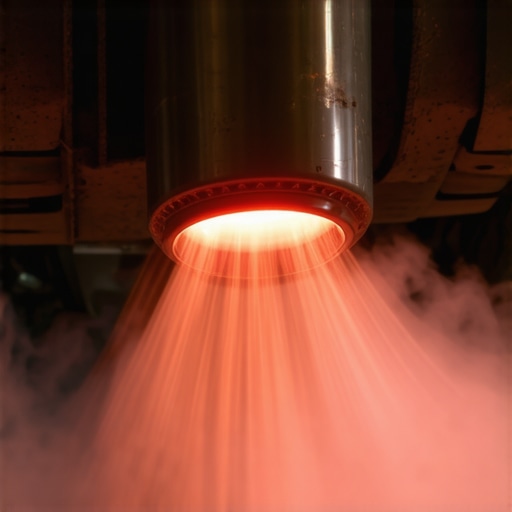
Think of your car’s engine like a marathon runner. If you suddenly force that runner to breathe through a cocktail straw, they aren’t going to make it very far. That is exactly what happens when your catalytic converter—the honeycomb-like filter in your exhaust—gets melted or plugged up. When I made that mistake of replacing my ignition system first, I didn’t realize that decoding what your car is trying to tell you is about listening to the way the power drops. A clogged cat doesn’t just stop the car; it chokes it slowly. You’ll notice the heat rising under the floorboards or a weird sulfur smell that reminds you of rotten eggs. Before you head out on a long drive, it is always smart to run through some basic checks to see if your exhaust flow feels weak at the tailpipe. [image_placeholder_1]
Can You Really Just Ignore a Bad Converter?
You might be tempted to keep driving as long as the car still moves, but the backpressure from a clogged converter can actually blow out seals or damage your engine’s valves. It’s not just a performance issue; it’s a safety and environmental one. According to the Environmental Protection Agency, catalytic converters are essential for converting toxic gases into less harmful ones, and a failed unit can lead to a massive spike in pollutants. Plus, the heat buildup is no joke—I’ve seen clogged converters get hot enough to glow cherry red in the dark. Have you ever felt like your car was dragging an invisible anchor behind it when you try to pass someone on the highway? Tell me about it in the comments, because that’s almost always the first shout for help your exhaust system gives you. Let’s get into the actual tests you can do in your driveway to confirm the blockage.
Check the Heat at Both Ends
One of the most reliable ways to see if your catalytic converter is doing its job involves a simple infrared thermometer. Think of the converter as a chemical furnace; it needs to be hotter on the output side than the input side because it is literally burning off pollutants. If you’ve already ruled out how to tell if your engine misfire is mechanical or electrical, it is time to slide under the car (safely supported on stands, of course). Point your thermometer at the weld where the pipe enters the converter and then at the weld where it exits. On a healthy unit, the rear should be about 20 to 50 degrees hotter. If the front is hotter than the back, the internal honeycomb is likely melted into a solid lump of ceramic, acting like a cork in a wine bottle. I remember doing this on an old truck where the floorboard felt like a pizza oven; the inlet was 500 degrees and the outlet was barely 300. That’s a dead giveaway.
The Vacuum Gauge Doesn’t Lie
If you don’t have a thermometer, a vacuum gauge is your best friend. This is where decoding what your car is trying to tell you becomes a science rather than a guessing game. Hook the gauge up to a direct vacuum port on the intake manifold. At idle, your needle should be steady. Now, hold the engine at a steady 2,500 RPM. If the vacuum needle starts to slowly dip toward zero, the exhaust gases are backing up into the engine because they have nowhere to go. It’s the same principle as how to find a vacuum leak with soapy water and a hand pump, except we are looking for a blockage instead of an opening. I once spent four hours chasing a ‘fuel issue’ only to find a vacuum gauge told me the truth in thirty seconds: my exhaust was suffocating the cylinders. 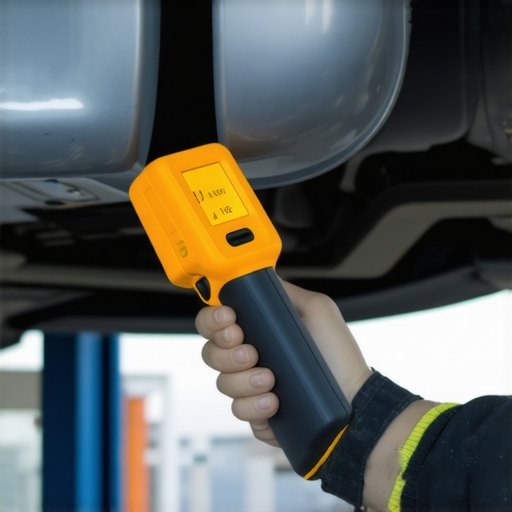
Give the Converter a Quick Thwack
Sometimes the most sophisticated tool is just a rubber mallet. When the ceramic structure inside a converter fails, it doesn’t always melt; sometimes it shatters. If you hear a metallic rattling when you hit the converter casing with a mallet, the internal substrate has broken into pieces. These chunks can rotate and block the exit pipe intermittently, which is why your car might run fine one minute and lose all power the next. This kind of physical failure is often mistaken for the rhythmic ticking that means your exhaust manifold is cracked, but the sound is much ‘thicker’ and less metallic.
Testing the Tailpipe Flow
Before you commit to expensive repairs, try the old-fashioned hand test. Have a friend rev the engine slightly while you hold your hand a few inches from the tailpipe. You should feel a distinct, rhythmic ‘chuff’ of air. If the flow feels weak or extremely hot even at low RPMs, the blockage is confirmed. Understanding how advanced vehicle diagnostics prevent costly breakdowns means knowing when to trust your senses versus when to trust the computer. A clogged cat often won’t throw a specific ‘clogged’ code; it might just give you a generic lean code or an O2 sensor error. Always perform these vehicle diagnostics explained easy checks before your road trip to ensure you aren’t about to get stranded with a glowing red exhaust pipe.Testing is one thing, but interpreting the the live data stream is where the true experts separate themselves from the ‘parts-changers.’ There is a massive misconception in the automotive world that a P0420 efficiency code is an automatic death sentence for the converter itself. Everyone tells you to just swap the part and clear the code, but in my experience, the converter is usually the victim, not the criminal. Decoding what your car is trying to tell you requires looking at the upstream fuel trims before you spend a dime on exhaust parts. If your engine is running slightly rich, it is dumping unburned fuel into that ceramic honeycomb. This creates an ‘afterburner’ effect that can melt the internal structure in minutes. If you don’t fix the fuel delivery issue, you’ll be buying another $1,200 converter next month.
Why is My New Converter Dying Already?
I often see drivers fall into the ‘poisoning’ trap. This is a nuance many beginner mechanics miss. If you have the hidden sludge building up behind your clean dipstick, your engine might be consuming small amounts of oil that don’t even show up as a blue cloud in the exhaust. These oil vapors carry phosphorus and sulfur which coat the precious metal catalysts—platinum and palladium—and essentially ‘blind’ them. According to a technical study by the Manufacturers of Emission Controls Association (MECA), the vast majority of catalytic failures are caused by upstream engine malfunctions such as misfires or oil consumption. This is why how advanced vehicle diagnostics prevent costly breakdowns is so important; you have to find the ‘catalyst killer’ before you install the replacement.  Another common ‘oops’ factor is ignoring the cooling system. If you have a tiny internal head gasket leak, the silicates in the antifreeze will ‘glass over’ the converter substrate, making it useless. It’s much like how brake service myths busted often focus on the pads when the caliper pins are the real issue—car repair is always a system, not a single part. Before you commit to an expensive exhaust job, check your oil change innovations and technologies to see if your seals are holding up. Have you ever fallen into the trap of replacing a part only for the light to come back on a week later? Let me know in the comments, because we have all been there at least once. Identifying the root cause is the only way to keep your car off the lift and on the road.When I’m deep in the weeds with a stubborn P0420 code, I don’t reach for a basic code reader. Those things are basically just digital ‘check engine light’ off-switches that don’t tell you the ‘why’ behind the failure. To really see what’s happening, I rely on a bidirectional scan tool. If you’ve been following my journey, you know how advanced vehicle diagnostics prevent costly breakdowns by letting you command the car to perform specific tests. For instance, I’ll force the car into a lean-test mode to see how quickly the downstream O2 sensor reacts. If it’s lazy, the sensor is the problem; if it mimics the upstream sensor perfectly, the converter is toast. For those just starting out, the $20 tool every driver needs for basic electrical troubleshooting—a solid digital multimeter—can also help you check if your O2 sensor heaters are drawing the right amperage before you blame the exhaust hardware.
Stop Buying Parts and Start Buying Data
According to the Society of Automotive Engineers (SAE) J1979 standard, the Mode $06 data is where the real gold is buried. This data shows you the ‘test results’ for non-continuous monitors—like the catalytic converter efficiency—long before they even trigger a dashboard light. This is how I catch a failing unit weeks before a road trip. In the future, I suspect we’re going to see even more ‘smart’ converters with internal temperature sensors that communicate directly via the vehicle’s CAN bus. This shift toward tighter monitoring means that decoding what your car is trying to tell you will become more about software literacy than just turning a wrench. If you can read a live data graph, you can save yourself thousands in misdiagnosed parts.
How do I keep my exhaust system clean for the long haul?
The best way to maintain your converter is actually to ignore the exhaust pipe and look at the oil pan. Oil change innovations and technologies have introduced low-SAPS (Sulfated Ash, Phosphorus, and Sulfur) oils specifically designed to protect these expensive filters from chemical poisoning. If you are a high-mileage driver, following essential auto repair strategies for frequent drivers means never skipping an air filter change. A dirty air filter creates a rich fuel mixture, and that extra fuel is the primary ‘cat-killer.’ I also recommend a high-quality fuel system cleaner every 10,000 miles to keep the fuel atomization sharp, which is one of the most effective top auto repair tips to extend your vehicles lifespan. If you’ve ever dealt with the hidden sludge building up behind your clean dipstick, you know that internal engine cleanliness is the only way to avoid a $2,000 exhaust bill later. If your car feels even slightly sluggish when pulling onto the highway, don’t just wait for a light to pop up. Perform the vacuum gauge test I mentioned earlier this weekend—it only takes ten minutes and it gives you a definitive answer on whether your engine can actually breathe.
The Hardest Lesson I Learned About Choking My Own Engine
After years of turning wrenches, I’ve realized that the catalytic converter is almost always a ‘mercy killing.’ It dies because something else is wrong. One of the biggest lightbulb moments for me was realizing that ignoring a simple stutter can lead to a four-figure repair bill. If you find the trick to identifying which ignition coil is actually failing, you can stop the raw fuel from melting your converter before it even starts. Also, never underestimate the power of a clean intake; sometimes the hidden filter that blocks your fuel flow and kills power mimics exhaust backpressure so perfectly you will swear the cat is clogged when it is actually just starving for air. Finally, remember that your car is a feedback loop—if you fix the effect without the cause, you are just throwing money into the tailpipe.
My Go-To Diagnostics Kit for Exhaust Gremlins
You do not need a professional shop to get professional answers. Here are the tools I always keep in my top drawer to avoid unnecessary part-swapping. First, a reliable vacuum gauge is the most underrated tool in automotive history; it gives you a direct window into the engine’s lungs. Second, an infrared temp gun is essential for checking the temperature differential across the converter—it is the fastest way to confirm a ‘dead’ unit. Third, I use the $20 tool every driver needs for basic electrical troubleshooting to verify O2 sensor signals before I condemn the expensive hardware. [image_placeholder_final] Finally, even a basic OBD-II scanner helps, but understanding how advanced vehicle diagnostics prevent costly breakdowns is really about looking at the live data, not just the codes.
Stop Guessing and Start Listening to Your Machine
At the end of the day, your car isn’t trying to hide its problems from you—it is shouting them through heat, smells, and performance dips. Taking the time to learn these diagnostic steps isn’t just about saving money, though finding auto repair hacks that save money without sacrificing quality is a great bonus. It is about the peace of mind that comes from knowing exactly what is happening under the hood. Don’t let a sluggish engine ruin your next trip; grab your tools and give that catalytic converter a real check-up this weekend. You might just save your engine’s life. Have you ever had a catalytic converter fail because of a simple maintenance item you missed? Let me know in the comments below!