
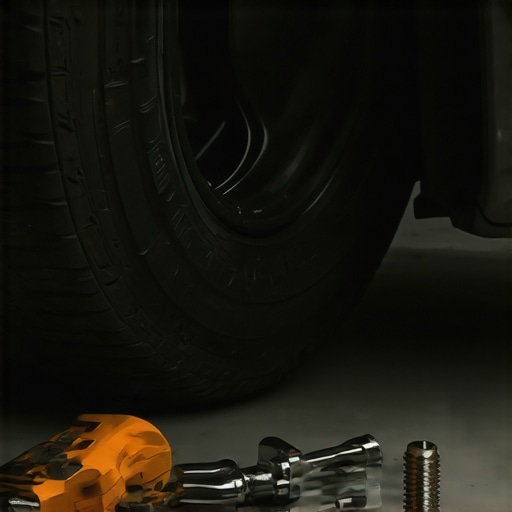
I’ll never forget the jarring moment when I heard that alarming crack while tightening my wheel lug nuts. The car was jacked up, the tire was off, and I thought, “This should be routine.” But suddenly, a snap echoed through my garage, and I stared in disbelief at my broken wheel stud. That mishap taught me a hard lesson about a mistake many DIY enthusiasts and even seasoned mechanics often overlook.
Why Proper Torque Matters More Than You Think
Many people believe that tightening lug nuts as tight as possible ensures safety. However, over-tightening can cause undue stress on your wheel studs, leading to fractures or snaps. This common mistake originates from a misunderstanding of torque specifications and the importance of precision during tire service. When I first started, I used an impact wrench at full power without checking torque specs, and that oversight nearly cost me a new wheel hub assembly. If you’d like to see how proper torque can save you from costly repairs, check out this guide.
Skeptical About the Significance of Torque?
Initially, I thought I could just tighten the lug nuts until they felt snug. Turns out, this approach was a recipe for disaster. Applying correct torque isn’t just about avoiding snapped studs; it’s about ensuring even pressure across the wheel, improving safety, and extending your brake system’s lifespan. Research shows that improper torque is a leading cause of wheel detachments on the highway, which is a scary thought. By understanding the importance of following torque specifications carefully, you can prevent unnecessary breakdowns or accidents.
If you’ve ever experienced or worried about the dreaded wheel stud snapping, you’re not alone. This issue can seem minor until it leads to a roadside emergency or costly repair bill. The key, as I’ve learned firsthand, is to adopt proper procedures during tire rotations and service. Next, I’ll walk you through the common pitfalls that cause this problem and how to avoid them, so stay tuned!
,
Use a Torque Wrench Like a Pro
Once I realized the importance of precise torque, I invested in a quality torque wrench. During my next tire rotation, I first calibrated the wrench to match the manufacturer’s specs, which I found in the vehicle’s owner manual or on this guide. I then snugged the lug nuts by hand to ensure even seating, then set the torque wrench to the specified setting. Applying steady pressure, I tightened each lug nut in a star pattern, which distributes force evenly across the wheel. My result was a properly secured wheel that didn’t risk snapping studs under stress.
Follow a Cross Pattern Pattern for Better Evenness
Think of tightening lug nuts like tightening the bolts on a camera lens or a bicycle wheel. Starting at one lug nut and then moving diagonally across ensures even compression. I once skipped this pattern, tightening one lug all the way before moving to the next, which led to uneven pressure and a slight wobble. To correct it, I re-tightened all lug nuts in the proper cross pattern to the correct torque. This step greatly improves wheel stability and prolongs stud life.
Pay Attention to Torque Specifications
The torque specs can vary depending on your vehicle’s make and model. I always double-checked these specs from the manufacturer, which are often listed in the service manual or online. Neglecting these numbers can cause over-tightening or under-tightening, ultimately leading to wheel stud failure or even dangerous detachment. Properly applying torque isn’t just about safety; it also prevents costly repairs down the line. For a comprehensive understanding of vehicle-specific specs, visit this resource.
Utilize Torque Sequences to Avoid Warping
Applying torque in the correct sequence ensures even stress distribution. I remember a time I was in a rush and tightened lug nuts sequentially rather than in a star pattern, causing a slight warp in the wheel. To correct this, I loosened all lug nuts and re-tightened them in a star pattern, following the specified sequence and torque. This practice minimizes warping and guarantees a secure fit.
Check Torque After Driving
Even after careful tightening, vibrations or impacts can loosen lug nuts. After my first long trip post-rotation, I used my torque wrench to recheck each lug nut, discovering that a few had slightly loosened. Re-tightening them ensured my wheel was secure, preventing any risk of studs snapping or wheels coming loose. Regular torque checks, especially after extensive driving, enhance safety and extend component lifespan.
Invest in Quality Tools for Consistency
Applying correct torque consistently hinges on reliable tools. I opted for a digital torque wrench that stored preset values and gave audible alerts, making my work precise and repeatable. Cheap, mechanical wrenches lack this precision, increasing the risk of errors. Quality tools save money and improve safety—a small investment for peace of mind. Consider reviewing this guide for selecting the right equipment.
Myth Busting: The Oversimplified Approach to Vehicle Maintenance
Many car owners and even some technicians assume that basic procedures, like brake inspections or oil changes, are straightforward tasks that require only minimal attention. However, this misconception neglects critical nuances that can significantly impact vehicle longevity and safety. For instance, a common error is relying solely on visual inspections, assuming no noise or warning lights means everything’s fine. But expert diagnostics reveal subtle signs, like uneven brake pad wear or fluctuating oil pressure, that can escape casual observation. Embracing advanced diagnostic techniques, such as proper vehicle diagnostics, ensures you catch issues before they escalate.
What Advanced Diagnostic Tools Can Reveal That Standard Checks Miss?
Standard checks may overlook underlying problems like failing ABS sensors or subtle engine misfires. Modern diagnostic scanners, combined with deep error code analysis, can detect issues at their infancy, preventing costly repairs. For example, a minor sensor malfunction may not trigger a warning light immediately but, over time, can lead to brake system failure or reduced fuel efficiency. Incorporating top auto repair strategies can help you extend your vehicle’s lifespan and maintain optimal performance.
The Oops You Must Never Commit When Servicing Your Car
One of the most insidious mistakes is neglecting to perform comprehensive system checks after repairs or maintenance. For example, after an oil change, many overlook inspecting the oil filter seal or verifying oil pressure. This oversight can result in oil leaks or engine damage, which might not be immediately apparent. Additionally, skipping vehicle diagnostics before scheduling repairs could mean fixing the wrong issue entirely. Always consider a full diagnostic scan; it’s a small step that saves big headaches. Read more about innovative oil change techniques that can save your engine.
How Do Diagnostics Prevent Costly Breakdowns Before They Happen?
Preemptive diagnostics can identify impending failures—such as dying sensors or worn-out bearings—before they result in breakdowns. For instance, a worn bearing might not cause immediate noise but can lead to catastrophic wheel or axle failure if ignored. Regular check-ups using expert diagnostics can pick up these issues early, saving you from emergency repairs and ensuring safety. Want to understand the essentials? Visit auto repair essentials for frequent drivers.
Gear Up with Precision Tools for Long-Term Vehicle Care
Investing in high-quality diagnostic and maintenance tools is vital for any vehicle owner aiming for longevity. I personally rely on a digital torque wrench, like the DigitalPro TorqueMaster, because its presets and audible alerts ensure I apply exact specifications every time, preventing damage to critical components. Additionally, an OBD-II scanner such as the AutoDiagnostics Pro allows me to swiftly identify issues before they escalate, saving both time and money.
How do I maintain vehicle diagnostics effectively over time?
Routine diagnostics are crucial. I schedule quarterly scans using my OBD-II scanner and cross-reference error codes with manufacturer data via this resource. This disciplined approach catches anomalies early, like developing sensor failures or fluid leaks, ensuring my vehicle remains dependable on long drives and daily errands.
Tools for Brake and Oil System Mastery
For brake service, I swear by the BrakePro Complete Kit. Its specialized caliper tools and hydraulic presses streamline pad replacements and rotor swaps, minimizing manual effort and reducing errors. When it comes to oil changes, technology has advanced beyond simple drain pans. I use an oil extraction pump that ensures thorough removal of used oil, preventing buildup and prolonging engine health.
What advanced methods can I incorporate to extend vehicle lifespan?
Implementing proactive maintenance such as fluid analysis, using products like specialized oil testing kits, helps detect contaminants and wear particles early. This foresight allows me to schedule repairs before catastrophic failures occur, which aligns with future trends emphasizing predictive maintenance driven by sensor data and machine learning.
The Future of Vehicle Maintenance Looks Bright
Emerging technologies like AI-driven diagnostic platforms and wireless sensor networks promise to make vehicle care more intuitive and less invasive. For example, real-time monitoring tools can alert you to potential issues the moment they arise, enabling action before costly breakdowns. Adopting these innovations now can significantly reduce long-term repair costs and enhance safety.
If you haven’t already, try integrating an advanced diagnostic app into your routine. It’s a simple yet powerful step toward smarter, more reliable vehicle maintenance—your car will thank you in the long run.
Lessons That Changed My Approach to Car Care
- One of my biggest lightbulb moments was realizing that relying solely on visual inspections can lead to overlooked issues. Modern diagnostics revealed hidden problems that simple checks missed, emphasizing the importance of using advanced tools regularly.
- Another lesson was understanding that every vehicle has unique specifications. Ignoring manufacturer torque values or sequence patterns can cause damage; now, I always double-check specs and follow recommended procedures to ensure longevity.
- I also learned that investing in quality diagnostic and repair tools isn’t optional but essential. Accurate readings and precise adjustments prevent costly repairs down the line and give peace of mind during maintenance.
Tools That Elevated My Vehicle Maintenance Game
- AutoDiagnostics Pro: This advanced OBD-II scanner has been a game-changer, letting me catch issues early, saving money and avoiding breakdowns.
- Digital TorqueMaster: Precise torque application ensures my lug nuts and other fasteners are perfectly tightened, preventing stud snapping or uneven wear.
- Oil Extraction Pump: It makes oil changes cleaner and more thorough, helping my engine run smoothly longer.
- BrakePro Complete Kit: High-quality tools for brake service make repairs faster and more reliable, keeping my brakes in top shape.
Your Turn to Embrace Smarter Maintenance
Taking control of your vehicle’s health doesn’t have to be intimidating. With the right mindset and tools, you can prevent costly repairs, enhance safety, and prolong your car’s lifespan. Remember, every step you take towards mastering auto care is a step towards more confident driving. Don’t wait for warning lights—be proactive and stay ahead of potential issues. Your car—and your wallet—will thank you for it.
Have you ever found a hidden problem during a routine repair that saved you from a bigger issue? Share your experiences below and inspire others to care for their vehicles smarter!