
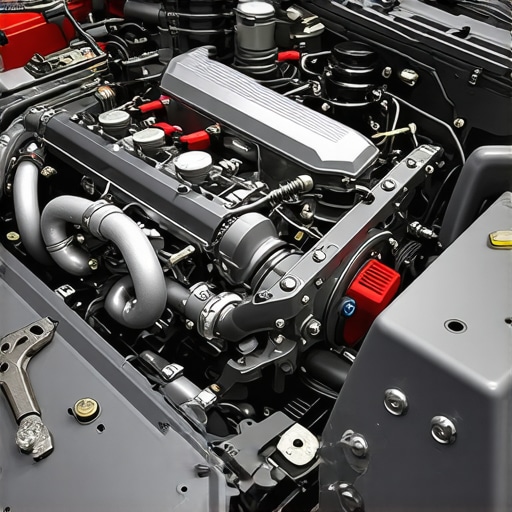
The Hidden Reason Your Truck’s EGR Valve Keeps Sticking After a Cleaning
You’ve been there before. Your diesel truck starts idling rough, your fuel economy plummets, and that dreaded “Check Engine” light illuminates your dashboard. You pull the codes, and it’s the usual suspect: an Exhaust Gas Recirculation (EGR) valve circuit performance or flow code. Like many diligent truck owners, you spend your Saturday afternoon removing the valve, soaking it in solvent, and scrubbing away the thick, black carbon deposits until the pintle moves freely and the metal shines like new. You reinstall it, clear the codes, and head out for a test drive, feeling confident. Then, fifty miles down the road, the light pops back on. The valve is sticking again.
As someone who has spent decades diagnosing complex failures in heavy trucks and trailers, I can tell you that this is one of the most frustrating cycles for any owner-operator or DIY mechanic. When you are searching for auto repair near me, you are often looking for a quick fix to a visible problem. However, the EGR system is a master of deception. While carbon is the visible enemy, the true reasons for recurring sticking are often hidden deep within the mechanical tolerances of the valve housing or the electronic logic of the Engine Control Unit (ECU). A clean-looking part is not always a functioning part, and understanding why is the key to breaking the cycle of repetitive repairs.
Why Cleaning Doesn’t Always Equal Fixing
The fundamental misunderstanding about EGR valves is that carbon buildup is the *only* cause of failure. In reality, carbon is often a symptom or a secondary contributor to a mechanical breakdown. When you are vetting Car repair shops near me, you want technicians who understand that the EGR valve operates in one of the most hostile environments in your entire engine. It is subjected to extreme thermal cycling – moving from ambient temperatures to over 1,000 degrees Fahrenheit in a matter of minutes.
The core of the issue often lies in the pintle shaft and its guide bushings. Over hundreds of thousands of miles, the constant reciprocating motion of the valve wears down the internal seals and bushings. Carbon doesn’t just sit on the surface of the valve; it becomes pressurized and infiltrates the microscopic gaps between the shaft and the guide. Once inside, this carbon acts as an abrasive, “lapping” the metal and creating tiny grooves or egg-shaped wear patterns in the bushing.
When you clean the valve on your workbench, the metal is cool. The tolerances are loose enough that the valve moves freely. However, once that valve is back on the engine and reaches operating temperature, thermal expansion takes over. The metal shaft expands, and because of the internal wear and the microscopic carbon particles still trapped inside the bushing, the valve binds. Furthermore, many DIYers try to “improve the spring action” by stretching the internal return spring. While this might provide a temporary mechanical advantage, it doesn’t account for the fact that the spring’s metallurgical integrity has been compromised by thousands of heat cycles. A weakened spring cannot overcome even a minor amount of friction, leading to the valve failing to seat fully, which triggers a “flow during non-regeneration” code.
The “Hidden” Reason: Actuator Fatigue and Electronic Calibration
If you’ve cleaned your valve and it still fails, the problem likely isn’t mechanical – it’s electronic. Modern diesel engines don’t just “turn on” the EGR valve; they use sophisticated stepper motors or Pulse Width Modulated (PWM) actuators to position the valve with millimeter precision. If you are looking for a Mechanic Shop Near Me, ensure they have the diagnostic tools to look at EGR “commanded” vs. “actual” positions.
The “hidden” reason for recurring sticking is often ECU Adaptive Learning. Your truck’s computer is smart. As the EGR valve slowly gets dirty over thousands of miles, the ECU notices that it requires more voltage or a higher duty cycle to move the valve to the desired position. The ECU “learns” this and creates a compensation map. When you remove the valve and clean it, you have suddenly changed the physical resistance of the component, but the ECU is still using the old, high-load compensation map.
In engines like the Paccar MX13 or the Cummins 6.7L, this can cause the actuator to “over-shoot” its target. The ECU sends a burst of power expecting a heavy, sticky valve, but finds a light, clean one instead. The valve slams open or closed, often hitting the mechanical stops with enough force to cause the electronic sensor to register a “performance” fault. To fix this, a simple cleaning isn’t enough; you must perform an EGR Relearn Procedure using a professional scan tool. This resets the adaptive values to zero, allowing the ECU to calibrate to the valve’s new, clean state. Without this step, the computer may think the valve is still sticking simply because the movement doesn’t match its outdated expectations.
The Role of Actuator Fatigue
Furthermore, the actuator itself – the motor that moves the valve – can suffer from internal fatigue. The gears inside these actuators are often made of high-temp plastics or sintered metals. Over time, these gears can develop “flat spots.” When the valve is dirty, the motor works harder, accelerating this wear. Even after the valve is cleaned, the motor may slip or bind on these worn gear teeth, leading to a “sticking” condition that has nothing to do with carbon and everything to do with a tired motor.
Systemic Culprits: VGT and Backpressure Issues
One of the most overlooked aspects of EGR diagnostic work is the realization that the EGR valve does not operate in a vacuum. It is part of a delicate pressure balance between the intake and exhaust manifolds. If you’ve been searching for a diesel repair shop because of recurring EGR issues, a master tech will tell you to look at the turbocharger first.
Most modern diesel trucks utilize a Variable Geometry Turbo (VGT). The VGT uses sliding vanes or a nozzle ring to vary exhaust backpressure, which is what actually “drives” the exhaust gases through the EGR cooler and into the intake. If your VGT is sticking or if your Exhaust Back Pressure (EBP) sensor is soot-clogged and reporting false data, the pressure differential across the EGR valve will be incorrect.
- Excessive Backpressure: If the VGT vanes are stuck in a closed position, the exhaust backpressure can become so high that it physically forces the EGR valve off its seat, even when the ECU is commanding it to stay closed. This results in “EGR flow in a non-commanded state” codes.
- Insufficient Backpressure: Conversely, if the VGT is stuck open, there isn’t enough pressure to push the exhaust gas through. The ECU sees the lack of flow and commands the EGR valve to open further and further. When the flow still doesn’t increase, the ECU assumes the valve is stuck shut.
In many Paccar engines, the Back Pressure Valve Actuator can fail in a way that mimics a sticking EGR valve perfectly. If you are struggling with these issues, finding a diesel mechanic near me who understands the relationship between the VGT and EGR is essential. You can clean the EGR valve every week, but if the turbo is creating a pressure imbalance, the system will never function correctly.
Brand-Specific Red Flags: Powerstroke, Cummins, and Paccar
Every engine manufacturer has its own “Achilles heel” when it comes to the EGR system. When you need a truck repair near me, knowing these brand-specific quirks can save you thousands in unnecessary parts replacements.
Powerstroke 6.0L and 6.4L
In the older Ford Powerstroke engines, a sticking EGR valve is often the first sign of a failing EGR cooler or an oil cooler issue. If the oil cooler becomes clogged, the coolant flow to the EGR cooler drops, causing the exhaust gases to stay much hotter than intended. This extreme heat literally “bakes” the soot onto the EGR valve, turning it into a hard, ceramic-like substance that no amount of cleaning can fully remove from the internal bushings. If you see “wet” soot on a Powerstroke EGR, you likely have a coolant leak inside the cooler, which will ruin a new valve in days.
Cummins 6.7L (Dodge Ram and Chassis Cab)
Cummins engines are notorious for “startup sticking.” You might clean the valve and find it works perfectly while driving, but after the truck sits overnight, it throws a code on the first key cycle. This is often due to moisture in the exhaust gas condensing on the valve shaft as it cools, causing a “flash rust” or a sticky film. Cummins has released several ECU updates to “cycle” the valve multiple times upon key-on to “scrub” this film off. If your cleaned valve is still sticking, you might just need a software update rather than more scrubbing.
Paccar MX-13
For Paccar owners, the EGR valve is often blamed for what is actually a VGT failure. The Paccar ECU is extremely sensitive to the “delta pressure” (the difference between intake and exhaust pressure). Because the EGR valve and the VGT work so closely together to manage this delta, a small error in the VGT vane position can manifest as an EGR “performance” code. Always check the VGT actuator’s health before condemning a clean EGR valve on an MX-13.
When to Stop Cleaning and Start Replacing
There is a point of diminishing returns with any mechanical component. While we all want to save money, reinstalling a compromised EGR valve can lead to more expensive failures down the road, such as a clogged Diesel Particulate Filter (DPF) due to improper combustion. If you are in auto repair the valley, the extreme desert heat makes this decision even more critical, as high ambient temperatures will quickly push a marginal component over the edge.
Use this checklist to determine if your EGR valve is “beyond cleaning”:
- Lateral Play: Hold the valve and try to wiggle the pintle shaft side-to-side. Any noticeable play means the internal bushings are ovalized. Cleaning won’t fix this; the valve will bind as soon as it gets hot.
- Electrical Connector Corrosion: Look closely at the pins on the valve’s electrical connector. If you see green “crust” or pitting, moisture has entered the sealed electronic portion of the valve. The internal circuitry is likely compromised.
- Pitting on the Seat: If the area where the valve meets the housing is pitted or eroded, it will never create a perfect seal. This allows exhaust to leak into the intake at idle, causing “hunting” idles and poor take-off performance.
- Failed Relearn: If you have access to a scan tool and the valve fails the “EGR Calibration” or “Relearn” procedure after cleaning, the internal potentiometer (which tells the ECU where the valve is) has a “dead spot.”
In the harsh environment of the Southwest, specifically for those seeking auto repair the valley, the heat-soak after you shut your engine off is what finally kills these valves. The electronics inside the actuator can reach temperatures of 250+ degrees after the engine is shut down and coolant stops flowing. This “cooks” the circuit boards, leading to intermittent signal loss that feels like a mechanical stick.
Conclusion: Professional Diagnostics vs. DIY Scrubbing
Cleaning an EGR valve is a valid first step, but it is rarely a permanent solution for a high-mileage truck. The “hidden” reasons for recurring failure – internal bushing wear, ECU adaptive learning maps, and VGT backpressure imbalances – require a deeper level of diagnostic expertise. As a Master’s degree holder in Diesel Engine and Electrical systems, I have seen countless owners waste hundreds of dollars on cleaning supplies and “magic” additives, only to eventually need a professional intervention.
If your “Check Engine” light is back on after a cleaning, don’t just scrub harder. It’s time to look at the system as a whole. Ensure your ECU is calibrated, your turbo is providing the correct backpressure, and your valve’s internal bushings are still within tolerance. Sometimes, the most “expert” thing you can do is recognize when a part has reached the end of its service life. For a complete system diagnostic and to ensure your fleet or personal rig is running at peak efficiency, visit a professional who understands the “why” behind the “what.”
For more insights into diesel maintenance, check out our guides on Essential Auto Repair Strategies for Frequent Drivers or learn Vehicle Diagnostics Explained: Easy Checks Before Your Road Trip. If you’re experiencing power loss, you might want to read about the real reason your diesel engine loses power on steep grades to see if your EGR issues are part of a larger performance problem.