

I was three hours into a road trip to the mountains when I first heard it. A low, rhythmic drone that seemed to vibrate right through the floorboards of my car. I did what most of us do at first: I turned the radio up. But by the time I hit 65 mph, the persistent ‘wub-wub-wub’ was louder than my favorite playlist. I spent the rest of the drive convinced my front left wheel was about to fly off and send me into the guardrail. It is an incredibly unsettling feeling, isn’t it? That constant hum that changes pitch every time you touch the accelerator. Today, I am going to help you pinpoint exactly what that noise is so you can stop guessing and start fixing.
Stop Panicking and Start Listening to Your Tires
That sound is your car’s way of talking to you, even if it feels like it is shouting. Early in my DIY days, I made the expensive mistake of assuming a loud highway hum meant a failing wheel bearing. I spent a whole Saturday and a few hundred bucks replacing a perfectly good part, only to find the noise stayed exactly the same once I got back on the road. It turns out, I had just skipped too many tire rotations, and the rubber had ‘feathered.’ If you have ever felt the vibration at 65 mph that feels like an earthquake, you know how stressful it can be to diagnose a phantom sound. We are going to figure out if you are dealing with ‘cupping,’ uneven wear, or an actual mechanical failure before you spend a dime at a shop.
Could this humming noise lead to a flat in the fast lane?
It is the fear we all have when the car starts making strange noises at high speeds. Is my tire literally disintegrating beneath me? According to data from the National Highway Traffic Safety Administration (NHTSA), tire-related crashes often stem from long-term neglect of tread wear and pressure rather than sudden, random failure. While a hum usually won’t cause an immediate blowout, it is a loud warning sign that your tires are being chewed up by your suspension or the tire rotation mistake that ruins your tread in months. Have you noticed the sound getting louder specifically when you veer slightly to the left or right?
Why Your Highway Drive Suddenly Sounds Like a Construction Zone
Most of the time, the culprit is ‘chopped’ or ‘feathered’ tread. This happens when the tires do not hit the pavement evenly across their entire surface. It is often a result of the tire wear pattern that means your alignment is perfect but your shocks are dead. When your shocks are worn out, the tire actually bounces slightly as you drive, creating tiny high and low spots on the rubber that sing when they hit the asphalt at high speeds. Before you head out on your next trip, it is worth doing some vehicle diagnostics and easy checks to see if you can feel these flat spots by running your hand over the tread. Trust me, catching this early saves you from buying a whole new set of rubber prematurely. Let’s look at the simple ‘hand-rub’ test you can do in your driveway right now to find the source of that drone.
Shift the Weight to Expose the Culprit
The first move is a simple load test on the road. Find a safe, wide stretch of pavement where you can gently move the steering wheel back and forth. This shifts the car’s weight from one side to the other. If the hum grows louder when you steer left, you are putting more pressure on the right-side wheel bearings. If the noise disappears, the bearing is likely resting. Think of it like a seesaw—the more weight you put on the broken side, the louder it complains. I used this exact method last October on a friend’s SUV. We were convinced it was a tire issue until the swerve test made the noise vanish every time we veered right. That confirmed it was a hub assembly, not the rubber. This is one of the most effective auto repair hacks to save money without sacrificing quality because it identifies the specific part before you start turning wrenches.
Listen for Pitch Shifts Above 60 MPH
If the sound stays constant regardless of which way you turn, the focus shifts back to your tires. A mechanical bearing usually changes pitch with weight, while a tire hum is more consistent with speed. If you are already dealing with the vibration at 65 mph that feels like an earthquake, pay attention to the floorboards. A tire drone often vibrates the steering wheel, while a drivetrain or bearing issue might vibrate the whole cabin.
Read Your Tread Like a Road Map
Once you are back in the driveway, it is time for the tactile check. Run your palm across the surface of the tire tread, moving it both clockwise and counter-clockwise. You are looking for ‘feathering’—where one side of the tread block feels sharp while the other feels smooth. It is like stroking a cat the wrong way; if you feel that ‘catch’ in the rubber, your alignment is dragging the tire sideways as you drive. 
Identify the Dips and Hills of Tire Cupping
If your hand feels like it is riding a tiny roller coaster of high and low spots, you have cupping. This is almost always the tire wear pattern that means your alignment is perfect but your shocks are dead. Worn-out shocks fail to keep the tire firmly planted, allowing it to bounce at high frequencies. Each bounce ‘scoops’ a bit of rubber off, creating a scalloped surface. I once saw a set of tires ruined in just 3,000 miles because the owner thought a little bouncing was just ‘character’ in an old truck. Before you decide to buy new tires, perform some vehicle diagnostics and easy checks by looking for oil leaks on the shock bodies themselves. If they are wet, they are dead.
Check for Mechanical Play in the Hub
Finally, lift the corner of the car you suspect is the culprit. Grab the tire at the 12 and 6 o’clock positions and try to rock it. Any clicking or movement usually points to a failing hub or ball joint. If the hum is joined by a clicking sound during tight turns in a parking lot, you should learn how to identify a bad CV joint before it leaves you stranded. These mechanical failures are often mistaken for simple tire noise, but they carry a much higher risk of leaving you on the shoulder of the highway. Check the inner boot of the CV axle for tears; if grease is spraying everywhere, the hum is the least of your problems.Most ‘experts’ will tell you that if a sound changes with vehicle speed, it is 100% a tire issue. I have found that is dangerously oversimplified. In my years under the hood, I have seen dozens of DIYers and even some junior techs fall for the ‘speed-equals-tread’ trap. While tires are the usual suspects, certain internal mechanical failures produce a frequency so similar to rubber-on-asphalt that you cannot tell them apart by ear alone. If you have been decoding vehicle diagnostics and what your car is trying to tell you, you need to understand that the drivetrain can throw its voice like a ventriloquist.
Don’t Blame the Rubber for Every Roadside Racket
The common belief is that a tire hum always has a ‘rhythm,’ while a bearing or transmission whine is a ‘constant’ tone. In reality, a pitted wheel bearing can produce a rhythmic thrum that perfectly matches the rotation of the wheel, tricking you into buying a new set of Michelins when you really needed a $60 hub assembly. This is where how advanced vehicle diagnostics prevent costly breakdowns by looking at the data rather than just listening to the noise. A study published by the Society of Automotive Engineers (SAE) indicates that secondary harmonic vibrations from drivetrain components can closely mimic tire tread frequencies, leading to frequent misdiagnosis even among seasoned pros. If you just replaced your tires and the noise is still there, you have officially met the ‘ghost in the machine.’
How do you separate a failing pinion bearing from simple tire noise?
This is the question that separates the driveway hobbyists from the master techs. A pinion bearing inside your differential will often howl under acceleration but go silent the moment you lift your foot off the gas. Tires do not do that. If your hum is tied to the throttle position, stop looking at the tread. You are likely dealing with a gearing or differential issue. This nuance is often missed in basic ultimate guide to brake service for safety and performance checks because the focus is on the wheels, not the pumpkin in the middle of the axle. 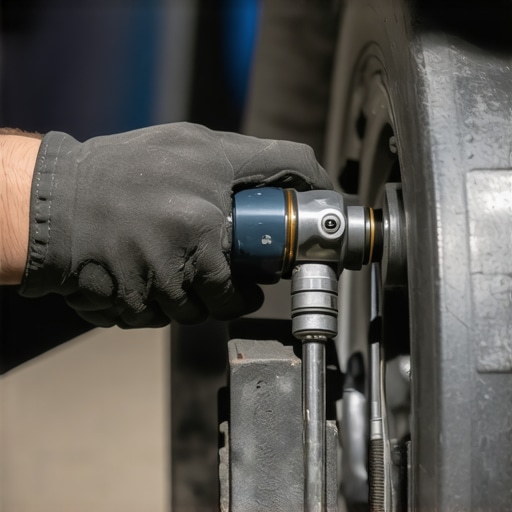
The Hidden Trap of the ‘Easy’ Fix
One of the biggest ‘oops’ moments I see involves torque. When replacing a hub or even working on your brakes, many people think ‘tight is tight.’ However, over-torquing a spindle nut can crush the new bearing you just installed, causing it to fail—and start humming—within weeks. It is one of those brake service myths busted that ‘more pressure is better.’ Always use a calibrated torque wrench. Furthermore, do not assume that ‘high mileage’ means you must switch to expensive additives; often, the synthetic oil myth that costs you fifty dollars every visit distracts you from the real mechanical wear happening in your hubs. Have you ever fallen into this trap and replaced a part that was perfectly fine? Let me know in the comments.I have learned over thousands of miles that the loudest noises usually come from the smallest oversights. If you have already ruled out the ‘ghost in the machine’ we talked about earlier, it is time to build a defense system in your garage. I do not just mean buying more tools; I mean using them to stop a $500 problem while it is still a $5 vibration. In my personal toolkit, the MVP isn’t a fancy impact wrench—it is a $20 automotive stethoscope. I use it because it allows me to hear the specific ‘crunch’ of a failing bearing vs. the smooth hum of a healthy one while the car is safely on jack stands. Relying on your gut leads to errors, but how advanced vehicle diagnostics prevent costly breakdowns is all about having empirical evidence before you buy a single part.
Why My $40 Stethoscope Outperforms Your Gut Feeling
When you are under the car, a stethoscope lets you listen to the heart of the machine. I recently worked on a sedan that had a ‘mystery’ hum that three different shops couldn’t find. By placing the probe on the steering knuckle while spinning the wheel by hand, I heard the tell-tale grinding that only happens when the inner race of a bearing is pitted. Without that tool, I would have been guessing. This level of precision is why I advocate for auto repair hacks to save money without sacrificing quality; you aren’t being cheap, you are being surgical. 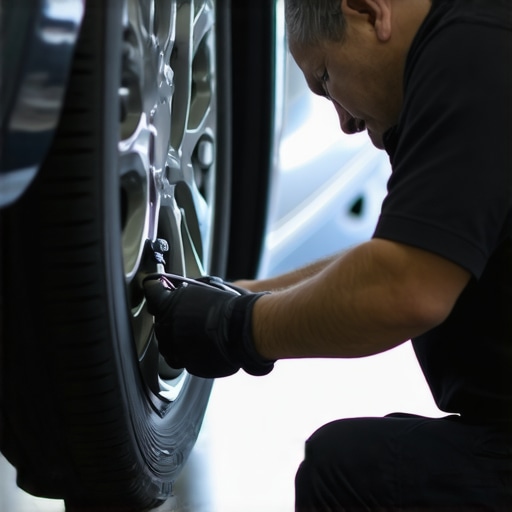
How do I maintain my car’s wheel and tire health over time?
Consistency is the only way to win the war against road noise. You have to commit to a schedule that matches your driving style. According to the Tire Industry Association (TIA), following the ‘RIST’ procedure (Remove, Inspect, Snug, and Torque) is the gold standard for wheel safety. If you are a high-mileage driver, you cannot wait for the dealership to tell you your tires are wearing thin. I suggest checking your own tread every time you perform an oil change. Since oil change innovations and technologies that save your engine have extended our intervals, you might go 7,500 miles without looking at your tires—and that is exactly the tire rotation mistake that ruins your tread in months.
Consistency Wins the War Against Premature Wear
Moving forward, we are seeing a shift toward ‘smart tires’ equipped with internal sensors that detect uneven wear patterns before your hand ever feels a cup or a feather. Until those are standard on every car, your best bet is a digital micrometer to measure tread depth in three spots across the tire: inner, center, and outer. If the numbers don’t match, your alignment is crying for help. I’ve found that documenting these numbers helps you see the long-term results of your top auto repair tips to extend your vehicles lifespan. If you want to keep your ride silent for the next 100,000 miles, stop guessing. Grab a torque wrench and a stethoscope this weekend. My advanced tip for you? Perform the ‘load test’ I mentioned earlier on a fresh stretch of asphalt, then immediately check your hub temperatures with an infrared thermometer; a hot hub is a dying hub.
What My Most Expensive Mistake Taught Me About Drivetrain Phantoms
I once spent nearly $500 on high-end wheel hubs because I was convinced the rhythmic drone at 70 mph was a mechanical failure. It turns out, I was just ignoring a slightly loose plastic splash shield that caught the wind like a reed in a woodwind instrument. This taught me that the loudest noises often have the most trivial origins. Before you tear into your suspension, embrace the art of decoding vehicle diagnostics and what your car is trying to tell you by checking the simple stuff first. Remember that harmonics can travel through the frame, making a rear-end vibration feel like it is right under your seat. Never trust your ears alone; use the load-shift test to move the weight of the car and listen for changes in pitch. This is one of the most effective auto repair hacks to save money without sacrificing quality because it forces the car to reveal its secrets without a single bolt being turned.
The Essential Arsenal for Silent High-Speed Cruising
To stop guessing and start fixing, you need a few specialized items in your garage. I personally swear by a digital tread depth gauge; it provides the empirical data you need to spot the tire rotation mistake that ruins your tread in months before the damage becomes audible. Another favorite is the infrared thermometer gun. After a highway run, point it at your wheel hubs. If one is 30 degrees hotter than the others, you’ve found your bad bearing. Finally, I highly recommend keeping a dedicated maintenance log as part of your top auto repair tips to extend your vehicles lifespan. Tracking when a noise starts—and what the weather was like—can help you find patterns that lead straight to the culprit. #IMAGE_PLACEHOLDER_E#
Reclaim the Quiet on Your Next Open Road Adventure
You don’t have to live with a cabin that sounds like a construction site. By combining tactile checks, load testing, and the right diagnostic tools, you can pinpoint whether you are dealing with a simple tire issue or a deeper mechanical failure. Mastering how advanced vehicle diagnostics prevent costly breakdowns isn’t just about saving money; it is about the peace of mind that comes with knowing your vehicle is solid at any speed. Now that you know the difference between a tire ‘cup’ and a bearing ‘grind,’ you are ready to hit the pavement with confidence. Have you ever had a mystery noise that completely disappeared after a simple tire rotation? Let me know in the comments below.