
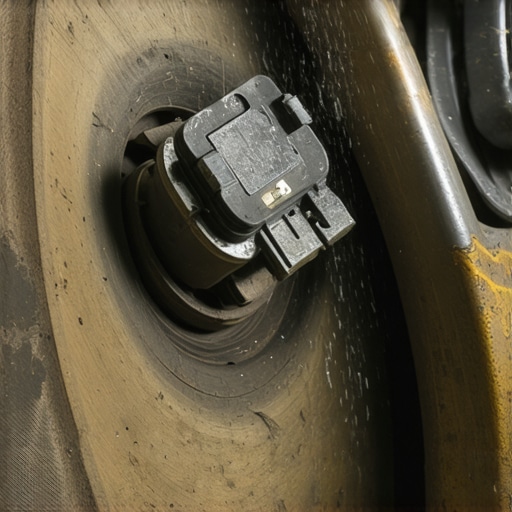
I remember the exact moment my heart skipped a beat: cruising down a perfectly dry, flat road at 45 miles per hour, only to have that glowing amber ‘ABS’ light stare me down from the dashboard. My first instinct? Total panic. I assumed my entire braking system was seconds away from a catastrophic meltdown. I’ve spent many Saturday mornings under a chassis, and I can tell you that few things are as frustrating as a car that tells you something is broken when everything feels perfectly fine. But here is the thing I’ve learned after years of getting my hands greasy: more often than not, your car is crying wolf because of a tiny, disgruntled sensor. We’re going to dive into exactly why this happens and how you can stop the phantom warnings without draining your bank account.
Your Car is Crying Wolf and Here is Why
I’ll be the first to admit it—I’ve made the expensive mistakes so you don’t have to. Early in my DIY journey, I saw that light and immediately ordered a brand-new ABS control module. It was a $400 ‘guess’ that didn’t fix a single thing. It turns out, I just had a bit of road grime and a loose wire near the wheel hub. If you’ve ever wondered why your ABS light comes on every time you hit a pothole, you already know how sensitive these components can be. A simple brake service check often reveals that the hardware is fine; it’s the communication that’s broken. According to data from the National Highway Traffic Safety Administration (NHTSA), while ABS systems are incredibly reliable, wheel speed sensor debris is one of the leading causes of non-mechanical system faults. These sensors live in a harsh environment, constantly bombarded by brake dust, road salt, and water. When they get dirty, they stop sending a clean signal to your car’s brain. Before you assume the worst, decoding vehicle diagnostics can help you narrow down which wheel is actually complaining.
Does a glowing light mean a total brake failure?
This is the big fear that keeps most of my neighbors up at night. You think you’re going to lose all stopping power the moment you hit the pedal. The reality is that your standard hydraulic brakes will almost always still work perfectly fine, but you’ll lose that pulse-action anti-lock feature during an emergency stop. It’s annoying and potentially risky in the rain, but it’s rarely a tow-it-immediately emergency like the dangerous truth about ignoring a grinding noise in your wheels. Before you commit to a shop, doing some basic vehicle diagnostics can save you a massive headache. Have you ever had a light pop on for absolutely no reason, only to have it vanish the next morning? Drop a comment and tell me your weirdest ‘ghost in the machine’ story. We’re going to get to the bottom of this together by looking at the wiring next.
Get Down to the Hub and Look for Gunk
Before you start ordering parts, you need to see what the car sees. The sensor is essentially the eyes of your braking system. If you’ve ever worn glasses during a rainstorm, you know how hard it is to focus when your lenses are smeared. Your wheel speed sensor sits right behind the rotor, and it is constantly battling a slurry of road salt, metallic dust from your pads, and general road debris. I like to start by jacking up the car and removing the wheel—safety first, so always use jack stands. Once you’re in there, look for a small plastic component with a wire running to it, bolted right into the steering knuckle or the hub assembly.
The Magic of a Quick Wipe and Some Compressed Air
I remember a specific Saturday afternoon working on a buddy’s old Ford that had been through a particularly nasty winter. He was convinced his ABS pump had failed. We pulled the sensors, and they were buried under a thick, crusty layer of magnetic sludge. I used a soft rag and some specialized cleaner to gently wipe the tip. It’s a delicate dance; you don’t want to use a wire brush or anything abrasive that could score the sensor face. After we put it back together, the light didn’t just go out—the car felt smoother during slow stops. It is one of those auto repair hacks that feels like a miracle but is actually just basic maintenance. If you’re already doing a brake service, taking five extra minutes to clean these sensors is a no-brainer.
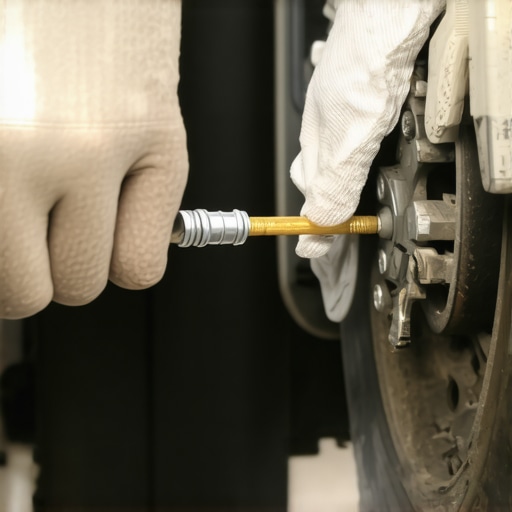
Don’t Ignore the Wires Tucked Behind the Strut
Sometimes the sensor itself is as clean as a whistle, but the message isn’t reaching the computer. Think of the wiring harness like a telephone wire. If there is a kink or a fray, the signal gets garbled. Because these wires move every time you turn the steering wheel or hit a bump, they are prone to internal breaks. I’ve seen cases where the outer insulation looks perfect, but the copper inside has snapped from years of vibration. You can test this by using a multimeter to check for continuity while someone gently wiggles the wire. It is very similar to the trick to identifying which ignition coil is actually failing; you’re looking for that one break in the chain. If you find a spot that’s brittle or cracked, you’ve likely found your ‘ghost’.
What to Do When the Scanner Stays Silent
We’ve all been there: you plug in a cheap OBD-II tool, and it tells you absolutely nothing, yet that amber light is still mocking you. This is because standard scanners often only talk to the engine computer, not the ABS module. This is a common frustration when vehicle diagnostics get a bit more technical. You might need a tool that can read manufacturer-specific chassis codes. If you’re still coming up empty, it could be a ground wire problem hiding in the engine bay or near the strut tower. Don’t let the technology intimidate you. Often, why your OBD-II scanner can’t find the real electrical ghost is simply down to the software’s limitations, not a lack of effort on your part. Stay patient, keep your eyes on the physical connections, and don’t be afraid to get a little dirty checking those hidden ground points.
Let’s dig deeper because, in my experience, the most frustrating repairs are the ones where you do everything right and the light stays on anyway. The biggest lie in the auto repair world is the ‘parts cannon’ approach—the idea that a specific error code always dictates a specific part replacement. We’ve been conditioned to think that if a code points to a sensor, the sensor is dead. However, a brand-new component is often just a band-aid on a deeper wound. For instance, you can swap out a wheel speed sensor three times, but if the magnetic tone ring on the axle is missing a tooth or is caked in rust, the computer will still trigger a fault. It’s a classic scenario where how advanced vehicle diagnostics prevent costly breakdowns by analyzing the live data stream rather than just reading a static code. According to a study by SAE International, nearly 20% of ‘failed’ electronic components returned to manufacturers are actually fully functional, meaning the fault lied in the wiring or the mechanical environment.
The New Part Myth that Costs You Hundreds
Some of the most common brake service myths busted by seasoned mechanics involve the assumption that new means perfect. If you don’t check the air gap—the tiny space between the sensor tip and the tone ring—your new part will fail to communicate. Even a slightly bent bracket can throw the timing off by milliseconds, which is enough to confuse a modern ABS module. This level of precision is why top auto repair tips to extend your vehicles lifespan often prioritize inspection over immediate replacement. 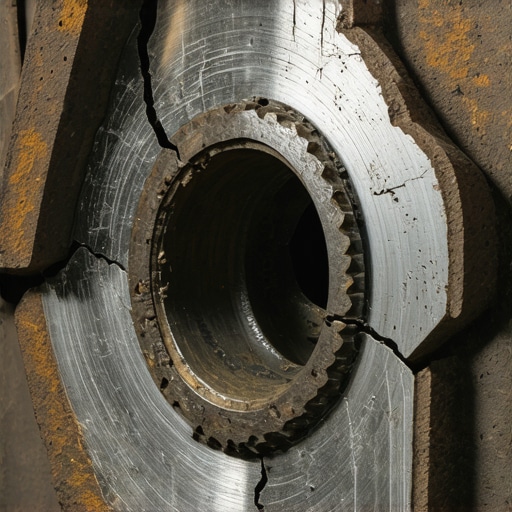
Why did my ABS light stay on after I replaced the sensor?
This is the question that haunts every DIYer. Usually, it’s because the system requires a specific drive cycle to recalibrate. Unlike an engine light that might clear after a few starts, many ABS systems need to see a consistent signal from all four wheels at speeds above 15-20 MPH before they ‘trust’ the repair. If you’ve just finished the job and the light is still there, take a slow drive around the block before you start tearing things apart again. Also, consider the material of your hardware; if you’ve recently upgraded, you might find the specific reason your ceramic pads are louder is the same resonance that occasionally interferes with older, sensitive sensor housings.
Stop Swelling Your Seals with the Wrong Grease
Here is the ‘oops’ factor that ruins many amateur brake jobs: using petroleum-based grease on slide pins. Petroleum causes the rubber boots to swell and seize the caliper, which is exactly how to tell if your caliper slide pins are bone dry or physically stuck. Always use high-temperature silicone-based lubricant to ensure the mechanical side of the brakes can keep up with the electronic side. Have you ever fallen into this trap or spent money on a part that didn’t fix the problem? Let me know in the comments below.I’ve realized that the difference between a frustrated weekend warrior and a confident DIYer usually comes down to the gear you keep in your toolbox. While the $20 tool every driver needs for basic electrical troubleshooting is a great starting point for checking fuses and continuity, it won’t give you the full story on a complex braking system. To truly stop the guesswork, I eventually bit the bullet and invested in a bi-directional scan tool. This allows me to perform an ‘ABS bleed’ or manually trigger the pump to see if it’s actually firing. It is the gold standard for how advanced vehicle diagnostics prevent costly breakdowns because you aren’t just reading history; you are testing components in real-time.
Stop Guessing and Use a Real Scanner
Using a scanner that can see ‘Live Data’ is my favorite way to diagnose a bad sensor without ever taking the wheel off. I’ll set the tool to graph all four wheel speeds and take a slow drive down my driveway. If three lines are smooth and one is jagged or dropping to zero, I’ve found my culprit instantly. This is how decoding vehicle diagnostics goes from a mystery to a science. Technical documentation from companies like Robert Bosch GmbH, who pioneered modern ABS, emphasizes that the air gap and the magnetic integrity of the tone ring are just as vital as the sensor itself. If your scanner shows a ‘choppy’ signal, don’t just replace the sensor—inspect the ring for missing teeth or heavy rust. 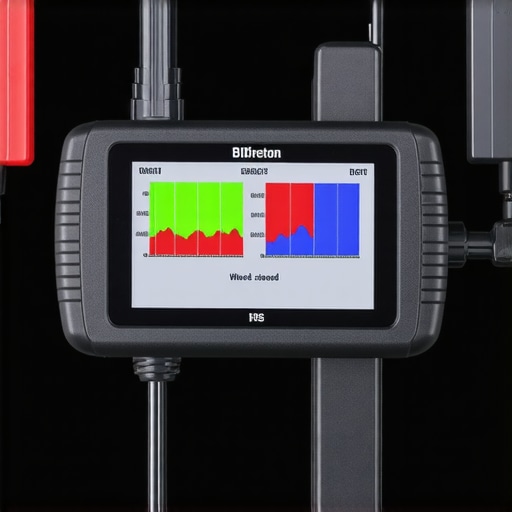
The Secret to Making These Systems Last for Decades
Long-term reliability isn’t just about fixing what breaks; it’s about preventing the environmental decay that kills electronics. Whenever I’m doing a brake service, I make it a habit to use a bit of dielectric grease on the electrical connectors. This seals out the moisture and road salt that leads to the ‘phantom’ lights we all hate. These small habits are among the top auto repair tips to extend your vehicles lifespan because they stop corrosion before it can start. Looking forward, I expect we will see more AI-integrated diagnostics that can predict a sensor failure weeks before the light even hits your dashboard by analyzing micro-fluctuations in the voltage.
How do I keep my ABS sensors healthy long-term?
The best thing you can do is keep your wheel wells clean, especially after driving through mud or snow. High-pressure washes can help, but be careful not to blast the sensors directly. Additionally, regular brake fluid flushes are essential; old, moisture-laden fluid can cause internal corrosion in the ABS actuator, a far more expensive fix than a simple sensor. If you’ve been hesitant to dive into your own repairs, I challenge you to try the ‘Live Data’ trick next time a light pops up. It’s a total game-changer for your confidence under the hood.
The Hardest Lessons I Learned While Chasing Brake Ghosts
After years of wrestling with stubborn warning lights, I’ve realized that the most expensive part of any repair is often the time spent guessing. One major lightbulb moment for me was realizing that a fault code is a starting line, not a finish line. I once spent an entire weekend replacing parts when the real issue was a slightly loose hub bearing that allowed the sensor to vibrate just enough to lose track of the tone ring. These auto repair hacks often boil down to physical inspection rather than digital reliance. I’ve also learned that patience is a tool; some systems won’t reset until you’ve performed a specific drive cycle. By falling for common brake service myths busted by experience, I eventually learned that keeping things clean is 90% of the battle. If you want to save your wallet, always start with a rag and a can of electrical contact cleaner before you reach for your credit card. This simple approach is one of the best auto repair hacks for any DIYer.
The Toolbox Essentials That Saved My Sanity
If you’re serious about maintaining your own vehicle, you need more than just a set of wrenches. I personally trust a few specific items to keep my braking system in top shape. First, a dedicated silicone lubricant for your slide pins is non-negotiable—never use regular chassis grease here. Second, while the $20 tool every driver needs for basic electrical troubleshooting is perfect for checking fuses, I highly recommend getting a scanner that specifically accesses the ABS and SRS modules. This allows you to see individual wheel speeds in real-time, which is the only way to catch a failing sensor before it completely dies. Finally, I keep a tube of dielectric grease in my drawer at all times to seal every connector I touch. These habits ensure your brake service results last for years rather than months.
Take Control of Your Dashboard Today
Don’t let a glowing amber light make you feel like you’ve lost control of your vehicle’s maintenance. Most of these issues are well within your reach to fix, provided you approach them with a methodical mindset. Modern cars are complex, but they are also incredibly communicative if you know how to listen. Integrating top auto repair tips to extend your vehicles lifespan into your routine—like cleaning your sensors during every tire rotation—will keep you ahead of the curve. You have the tools and the knowledge to handle this; now you just need to get out there and do it. Have you ever replaced an ABS sensor only to have the light stay on for another week? Let me know your story in the comments below!