
Ever been stranded because your car refused to start on a chilly morning? I know that frustrating feeling all too well. One winter, my vehicle’s sluggish start was a wake-up call—I had ignored a small, corroded battery terminal for too long. That lightbulb moment made me realize how such a tiny issue could cause major headaches down the road. Fortunately, I discovered that you don’t need fancy gadgets or expensive cleaners to fix this common problem.
Why Cleaning Battery Terminals Matters More Than You Think
Your car’s battery terminals play a crucial role in transmitting power from the battery to your engine. Over time, corrosion—those greenish or white deposits—can build up, hampering the flow of electricity and causing unpredictable starts. Ignoring this buildup isn’t just a minor annoyance; it can lead to complete electrical failure, leaving you stranded just when you least expect it. Regular maintenance is simple, effective, and saves you money in the long run. In fact, according to automotive experts, neglecting battery corrosion can reduce your vehicle’s battery life by up to 50%. It’s a small detail that makes a big difference in your car’s overall health.
Is a DIY Clean Really Worth the Hype?
Early on in my auto repair journey, I tried using store-bought sprays and brushes that promised to make battery terminals shine. Most of these products were expensive and often ineffective—plus, they contained harsh chemicals I was hesitant to put near my vehicle’s sensitive components. I made the mistake of relying solely on those gimmicks, and my battery issues persisted. It wasn’t until I returned to basic household items that I found a quick, cheap, and reliable method. Trust me, you don’t need to be a mechanic or own specialist tools to keep your battery terminals clean. Sometimes, simplicity beats sophistication. Want to see how I do it? Keep reading, and I’ll walk you through the process with just a few items you probably already have at home.
Then, we’ll dive into a straightforward technique that’s saved me dozens of times—no fancy tools required. If you’ve faced stubborn corrosion or are tired of expensive trips to the shop for minor battery fixes, this trick could become your new best friend. Ready to get your car starting smoothly again? Let’s start with the essentials and keep your vehicle running like a champ.
Gather Needed Supplies and Prepare Your Workspace
Start by collecting basic items: baking soda, distilled water, a wire brush or old toothbrush, protective gloves, and safety goggles. Park your car on a level surface, turn off the engine, and ensure the parking brake is engaged. Open the hood and locate the battery, familiarizing yourself with the positive (+) and negative (−) terminals.
Disconnect the Battery for Safety
Using a wrench, loosen the nut on the negative terminal first to prevent short circuits. Carefully remove the cable from the terminal and tuck it aside, ensuring it doesn’t touch any metal parts. Repeat the process for the positive terminal. Remember, disconnecting the negative side first is crucial to avoid electrical sparks or shocks—much like disconnecting the black wire before the red in electronics repair.
Inspect and Remove Corrosion
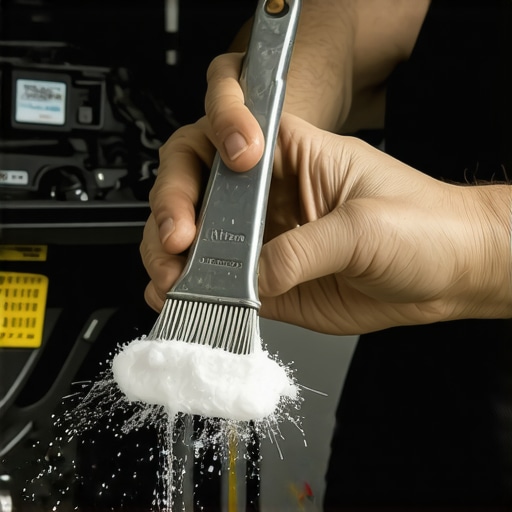
Examine the terminals; if you notice white, green, or blueish deposits, that’s corrosion. Apply a mixture of baking soda and water directly onto the terminals and connection points. Let it sit for about 5 minutes; this neutralizes acids and breaks down corrosion. Use the wire brush to scrub away the gunk, working thoroughly around the terminals and cable ends, much like cleaning rust off a bike chain to restore smooth movement.
Rinse and Dry the Connections
After scrubbing, pour distilled water over the terminals to wash away residual debris and baking soda. Wipe everything dry with a clean cloth or paper towels. Ensure no moisture remains before reconnecting, as water can cause electrical shorts—think of it like drying electronics before plugging in a device.
Reconnect the Battery Terminals
Attach the positive cable first, tightening the nut securely. Then, connect the negative cable in the same manner. Ensure connections are snug but avoid over-tightening, which can damage the terminals—similar to tightening lug nuts on wheels, where proper torque is key to safety.
Optional: Apply Protective Products
Consider applying a thin layer of petroleum jelly or specialized battery terminal protectant to the terminals. This acts as a barrier against future corrosion, extending the clean look and function of your battery connections—much like using anti-seize compound on spark plugs.
Test Your Work and Close Up
Start your car to confirm a smooth engine turn-over. Check that the terminals remain clean and tight. Close the hood securely. Regularly inspecting and cleaning your battery terminals can prevent unexpected stalls, saving you money and hassle. If you’re unsure about any step, or if the corrosion seems severe, consult a professional or visit this contact page for assistance.
Dispelling the Biggest Auto Repair Misconceptions
Many car owners operate under misconceptions that hinder proper maintenance and can lead to expensive repairs. For example, a widespread belief is that oil changes are only necessary when the engine starts to show warning signs, but experts emphasize adhering to manufacturer-recommended intervals for optimal engine longevity. Relying solely on mileage or time-based schedules, without understanding the latest advances in oil change technology, can be a costly mistake.
Why Neglecting Brake System Nuances Is Dangerous
Many drivers think that simply replacing brake pads solves the problem entirely, yet the brake system comprises several components that require attention. Overlooking issues like caliper sticking or rotor warping, especially when these wear unevenly, can compromise safety. A common myth is that brake fluid doesn’t need changing unless brakes feel spongy, but brake fluid degradation can occur silently, leading to brake failure if ignored. Regular diagnostics, as explained in vehicle diagnostics, are vital.
Advanced Mistakes in Diagnosing Vehicle Issues
Many enthusiasts and even technicians rely on basic symptom observation, but sophisticated diagnostic tools reveal hidden problems that aren’t immediately apparent. For example, a car’s engine misfire might be misattributed to spark plug wear, but underlying issues like maladaptive sensors or wiring faults often go unnoticed. Failing to perform comprehensive diagnostics can prolong minor issues until they escalate into major failures. Knowing when and how to interpret advanced diagnostic data distinguishes a knowledgeable mechanic from a novice.
Ever Wonder Why Your Car Acts Up Without Clear Symptoms?
Complex interactions within automotive systems mean that sometimes, symptoms are misleading or concealed. An engine hesitation, for instance, could be related to fuel delivery, ignition, or even transmission issues. Experts recommend regular advanced diagnostics to proactively address these subtleties. Overlooking these nuances might lead to unnecessary part replacements or overlooked safety risks. Have you ever fallen into this trap? Let me know in the comments.
Keeping Things Running Smoothly with the Right Tools
Maintaining your vehicle over time requires more than just routine checks; it demands precision tools that can diagnose issues early and allow for effective repairs. Personally, I rely on a high-quality scan tool like the Autel MaxiScan MS301 because of its compact design and comprehensive code-reading capabilities. It helps me quickly identify underlying problems without the need for expensive diagnostic services, which aligns well with the advice in vehicle diagnostics.
Why I Prefer a Digital Torque Wrench Over Manual
Using a digital torque wrench such as the GEARWRENCH 85077 ensures that parts like wheel lug nuts or drain plugs are tightened accurately, preventing over-tightening or under-tightening—both of which can lead to costly repairs. This tool’s precision is vital for tasks like replacing brake rotors or adjusting suspension components, where proper torque levels are critical for safety and longevity. Investing in such a device can save you from the hazards of improper assembly, as discussed in auto repair strategies.
Stay Ahead With Preventive Maintenance
Alongside advanced tools, employing a thorough maintenance routine is essential. I schedule oil changes based on manufacturer recommendations but also monitor for signs of wear using a borescope camera like the DEPSTECH Micro-Camera. This allows me to inspect internal engine components without costly disassembly. Regular diagnostics are also crucial; for example, using an OBD-II scanner regularly can prevent issues like misfires or sensor failures, which might otherwise go unnoticed until they cause significant damage. Remember, the future of auto care is heading toward integrated diagnostic solutions that combine sensor data and real-time alerts.
How do I Maintain Vehicle Diagnostics Over Time?
Consistency is key. Routinely connect your OBD-II scanner, like the BlueDriver Bluetooth Scanner, to run quick health checks. Keep your software updated to access the latest diagnostic protocols and avoid missing newer sensor alerts. Establish a habit of recording error codes and their patterns to better understand your vehicle’s evolving needs. As diagnostics evolve with innovations such as cloud data analysis, staying updated will become even more critical for proactive maintenance.
To maximize your vehicle’s lifespan, consider integrating these tools into your regular maintenance schedule and referring to trusted sources like top auto repair tips. For instance, a simple yet advanced tip is calibrating your tire pressure sensors periodically, which can prevent uneven tire wear and improve fuel efficiency. Give it a try today—your car will thank you in the long run!
Over the years, I’ve learned that the smallest details often make the biggest difference in auto maintenance. One of the most overlooked yet impactful aspects is keeping your battery terminals clean. A simple habit of inspecting and cleaning can save you from frustrating breakdowns, especially during harsh weather conditions. Trust me, investing a few minutes to maintain this critical component pays off immensely in the long run.
Lessons Only A Veteran Auto Enthusiast Can Share
- Don’t Ignore the Greenish Glow: That verdant film on your battery terminals isn’t just unsightly—it’s a sign of corrosion that hampers electrical flow. Regular cleaning with household items like baking soda and water keeps this at bay and ensures reliable starts every time.
- Neglect Costs You More: I used to think replacing batteries was the only fix for starting issues. Now, I realize that maintaining clean terminals extends battery life significantly, sometimes by double, saving hundreds on replacements.
- DIY Is More Than Easy—It’s Empowering: Using simple tools and cheap supplies, I mastered a quick cleanup routine. No need for expensive sprays or professional help unless corrosion is severe. This knowledge has been a game-changer for my reliability on the road.
- Prevention Over Panic: Making a habit of inspecting terminals not only avoids emergencies but also allows early detection of potential problems, like frayed cables or leaks, before they cause expensive repairs.
My Toolkit for Auto Success
- Baking Soda & Distilled Water: Safe, cheap, and effective for neutralizing and removing corrosion. Always trust the tried-and-true home remedy in my auto toolbox.
- Wire Brush or Old Toothbrush: Gentle but thorough enough to scrub away deposits without damaging terminals. I prefer a sturdy brush for stubborn buildup.
- Protective Gear: Gloves and safety goggles are essential. Safety first when working with electrical components to prevent accidental injuries.
- Protectant Products: I swear by petroleum jelly or specialized terminal protectants to shield against future corrosion, ensuring my fixes last longer.
Take Charge and Keep Your Vehicle Happy
Maintaining your car’s battery isn’t just a chore—it’s a proactive step towards vehicle longevity and peace of mind. Regular inspections and quick cleanings can prevent you from being stranded on cold mornings or during road trips. Remember, a little effort today can save you from costly repairs tomorrow. So, are you ready to give your battery terminals the attention they deserve? Let’s keep those cars starting smoothly!
Have you ever struggled with stubborn corrosion or wondered how often to clean your battery terminals? Share your experiences below—I’d love to hear your stories and tips!