

I’ll never forget the rainy Tuesday I nearly spilled a scalding coffee all over my lap because my trusty sedan decided to buck like a bronco the second I eased off the accelerator. It wasn’t a subtle vibration; it was a rhythmic, mechanical jerk that felt like someone was tapping the brakes for me when I least expected it. If you’ve ever felt that stomach-dropping sensation of your car losing its smooth rhythm when you’re just trying to coast, I know exactly where your head is at. You’re probably thinking your transmission is about to drop out onto the pavement, and you’re already calculating how many paychecks it will take to fix it.
That Jarring Lurch When You Lift Off the Gas
For most of us, our cars are like family members—slightly temperamental, but usually reliable. When that reliability slips, it is stressful. I’ve spent more weekends than I care to admit under a hood with a grease-stained manual, trying to figure out why a vehicle acts out. This specific ‘lift-off jerk’ is a classic puzzle that often points to a breakdown in communication between your engine and the drivetrain. Usually, it boils down to how your engine handles the sudden change in air and fuel when you close the throttle. Before you start searching for vehicle diagnostics explained in a panic, let me tell you that the fix is often much simpler than a total transmission rebuild. We are going to look at everything from dirty sensors to worn-out mounts to get your ride back to its buttery-smooth self. Have you ever felt like your car was literally fighting your foot the moment you stopped accelerating?
Is This Just Old Car Charm or a Looming Repair Bill?
It is incredibly easy to ignore small quirks until they become big, expensive headaches. According to data from the 2023 CarMD Vehicle Health Index, oxygen sensor and mass airflow sensor issues remain among the top reasons for engine performance hiccups, often causing the very instability we are talking about. I have seen folks assume their automatic transmission hesitates because the gears are physically failing, when in reality, the engine is just struggling to find a steady idle after the throttle closes.
My $400 Lesson in Over-Diagnosing Simple Problems
Years ago, I made a massive rookie mistake that still makes me cringe. My old truck was jerking every time I let off the gas. I was convinced the fuel pump was dying. I spent over $400 and a whole Saturday replacing it, only to realize I had accidentally cracked a tiny vacuum line while doing a routine oil change the week before. That $15 piece of plastic was the actual culprit. It taught me that the common sensor that makes your engine idle rough or a simple vacuum leak is usually the better place to start your investigation. Today, we are going to use that logic to save you time and money, starting with the easiest checks you can perform right in your own driveway.
Clear the Gunk from Your Throttle Body
Imagine trying to breathe through a straw that has a bit of dried gum stuck inside. That is essentially what your engine is doing when the throttle body gets coated in carbon. When you lift your foot, the butterfly valve is supposed to close smoothly to a specific idle position. If there is sticky residue, it might snap shut or get stuck for a millisecond, causing that violent lurch. I remember working on an old Honda where the throttle plate was so black it looked like it had been dipped in tar. A five-minute scrub with a cheap can of cleaner completely cured the ‘bronco buck’ it had been doing for months. If you have noticed the reason your gas pedal feels sticky in the morning, this is your first and most likely suspect. 
Hunt for the Hissing Vacuum Leak
Your engine is basically a giant vacuum pump. When you close the throttle, the vacuum inside the intake manifold spikes. If there is a tiny crack in a hose, air rushes in where it should not, confusing the computer and causing a sudden drop or surge in RPM. You can often find these by listening closely while the car idles. Use a piece of garden hose as a makeshift stethoscope to track down what that whistling sound under your hood actually means. If the jerk happens only when the engine is transitioning back to idle, a leaking brake booster hose is a common culprit. Before you assume you need a full brake service for safety and performance, check those rubber lines for dry rot or small pinholes.
Why Worn Engine Mounts Feel Like a Transmission Kick
Sometimes the jerk is not an engine stumble at all, but the engine physically bouncing in the engine bay. Your engine and transmission are held in place by rubber-insulated mounts. When these wear out, the engine can rock back and forth. When you let off the gas, the torque stops, and the engine slams back into its neutral position. It feels exactly like a transmission shift gone wrong. This is also a primary suspect if the reason your steering wheel is vibrating at low speeds has been bothering you lately. You can test this by having a friend watch the engine while you shift from Drive to Reverse with your foot firmly on the brake; if the engine tilts more than an inch, your mounts are likely the culprit.
Verify Your Sensors Before Buying New Parts
Modern cars rely heavily on the Throttle Position Sensor (TPS) and the Mass Airflow sensor to calculate fuel. If the TPS has a dead spot right at the tip-in point, the computer essentially loses its place when you let off the gas, leading to a momentary fuel shut-off that feels like a hit. Do not just throw parts at it, though. I have seen people waste hundreds because they fell for the truth about using cheap aftermarket sensors in your engine which often fail right out of the box. Instead, use a basic OBD-II scanner to watch the live data for the TPS percentage. It should move linearly from zero to one hundred without any jagged jumps. This kind of vehicle diagnostics explained in simple terms can save you from a massive repair bill by pinpointing a single sensor instead of a mechanical failure.It’s a common sight in driveways across the country: a frustrated owner surrounded by half a dozen boxes for new sensors, wondering why the car is still acting like a mule. We’ve been conditioned to believe that the car’s computer is an all-knowing oracle, but here is the expert truth: a trouble code is a starting point, not a final diagnosis. For instance, the sheer number of people who replace a catalytic converter because of a single code is staggering. In reality, why your scanner says p0420 but the converter is actually fine often comes down to a tiny exhaust leak or an upstream oxygen sensor lag that the computer misinterprets. Throwing a $600 part at a $20 problem isn’t just a mistake; it’s a failure of logic that ignores the nuance of how these systems interact.
Why Does Live Data Look Perfect When the Car Still Stumbles?
You might have a scan tool that shows ‘Green’ across the board, yet that rhythmic jerk persists when you lift off the gas. This is where advanced vehicle diagnostics explained in professional circles moves beyond the code and into the concept of ‘sensor latency.’ Sensors can get ‘lazy’ long before they actually fail and trigger a light. A study by the Car Care Council notes that nearly 70% of vehicles on the road have at least one unperformed maintenance task that affects sensor accuracy. If your throttle sensor responds just a few milliseconds too slow, the computer won’t trigger a fault, but you will certainly feel the physical lurch. It’s like a conversation where one person is half a second behind; the rhythm is just off. 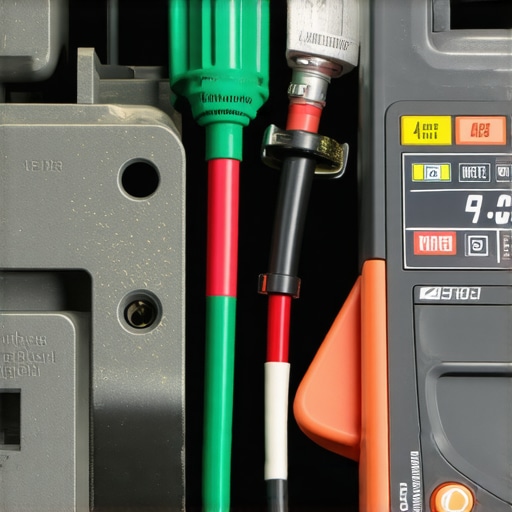 One of the biggest ‘oops’ factors I see—and one I’ve been guilty of—is ignoring the electrical foundation. You can buy the most expensive OEM sensor in the world, but if your engine’s ground strap is corroded, that sensor is sending garbage signals back to the computer. This is the ground wire problem that mimics a bad starter motor or a failing fuel system. Before you dive into complex auto repair hacks to save money, take a wire brush to your battery terminals and chassis grounds. It’s free, it takes ten minutes, and it solves more ‘ghost’ problems than a trunk full of new parts ever will. Even when it comes to mechanical safety, we often focus on the wrong components. Many drivers think new pads are the end-all-be-all of a brake job, but brake service myths busted reveal that seized slide pins or a failing booster are more likely to cause that ‘jerk’ on deceleration than the pads themselves. If you are unsure, learning how to tell if your brake booster is leaking air can differentiate between an engine vacuum issue and a physical braking fault. I’ve seen so many people fall into the trap of ‘The Computer Said So’ only to spend thousands needlessly. Have you ever replaced a part that the scanner pointed to, only for the problem to stay exactly the same? Let me know in the comments—I want to hear about your most frustrating ‘ghost’ in the machine.If you want to stop the guessing game, you need to stop relying solely on what the dashboard tells you. I used to be terrified of electrical work until I realized that most ‘computer’ problems are actually physical connection problems. My secret weapon? A decent digital multimeter. It is easily the $20 tool every driver needs for basic electrical troubleshooting because it allows you to verify if a sensor is actually getting the 5-volt reference it needs to function. Without that, you are just a parts-changer, not a mechanic. I have seen people use auto repair hacks to save money that ended up frying their engine control unit because they did not test for continuity first. Don’t be that person.
How do I keep my engine from stumbling as it gets older?
Consistency beats intensity every single time. You do not need to be a master mechanic to follow top auto repair tips to extend your vehicles lifespan; you just need a calendar and a bit of discipline. Beyond the basics, I am a huge advocate for keeping a digital log of every oil change and fluid swap. We are seeing incredible advancements in lubricants, but they only work if they are fresh. I personally check my brake fluid copper content every two years to prevent internal corrosion. It is a small step, but it is part of the ultimate guide to brake service for safety and performance that prevents your ABS module from failing prematurely. #IMAGE_PLACE_HOLDER_D#
The One Software Tool That Pro Mechanics Hide from You
One thing most DIYers miss is the power of specific bidirectional scan software. If you drive a modern vehicle, tools like FORScan or VCDS are not just scanners; they are keys to the kingdom. They let you perform ‘active tests’—like forcing a fuel pump to turn on or cycling an ABS pump—which is how advanced vehicle diagnostics prevent costly breakdowns by letting you test components in isolation. According to the SAE J1979 standard, which governs how OBD-II data is transmitted, there are hundreds of data points called PIDs that your basic $30 scanner simply ignores. Accessing these deeper layers is the difference between finding a failing coil pack in five minutes versus five days of frustration. I truly believe we are heading toward a future where AI-driven predictive maintenance becomes the norm, where your car analyzes its own vibrations to predict a bearing failure. But until your car can fix itself, you need to be its best advocate. My challenge for you this weekend: don’t just look for a check engine light. Pop the hood, grab a rag, and look for one tiny thing that isn’t quite right—a frayed wire or a weeping hose. Catching that one ‘ghost’ today is what keeps you safely on the road tomorrow.
What I Learned the Hard Way About Ghost Vibrations
It took me years of grease-stained knuckles to realize that the most violent-feeling jerks usually come from the smallest failures. My biggest takeaway is that we often treat the symptom, not the source. For example, I once saw a driver spend thousands on a transmission rebuild only to find out they had the ground wire problem that mimics a bad starter motor and a failing throttle sensor. Always verify the physical path of the signal—clean the battery contacts, check the rubber hoses for dry rot, and never assume a ‘big’ jerk means a ‘big’ bill. It is not about how much you spend; it is about how carefully you look at the tiny details that others overlook.
My Personal Stack for Hunting Drivability Gremlins
If you are serious about DIY and want to stop the guessing game, you need to build a small but effective diagnostic arsenal. I personally swear by these three things: a simple vacuum gauge to find those hidden manifold leaks, a can of dedicated sensor cleaner, and the $20 tool every driver needs for basic electrical troubleshooting—the digital multimeter. When you combine these with the knowledge of how advanced vehicle diagnostics prevent costly breakdowns, you stop being a ‘parts-changer’ and start being a true mechanic. These tools provide the data you need to prove a part is bad before you ever crack open your wallet.
#IMAGE_PLACEHOLDER_E#
Reclaiming the Joy of a Smooth Drive
Taking care of your car is an investment in your daily peace of mind. By following top auto repair tips to extend your vehicles lifespan, you are ensuring that your car responds to your inputs with grace rather than a kick. You have the knowledge now to separate the myths from the reality of your car’s behavior. Go ahead and apply these auto repair hacks to save money while keeping your vehicle in peak condition. Whether you are performing the ultimate guide to brake service for safety and performance or just cleaning out a throttle body, remember that a smooth-running car is within your reach. Have you ever replaced a major part only to find out a tiny $5 vacuum hose was the real culprit? Let me know your most frustrating ‘ghost’ story in the comments below!