
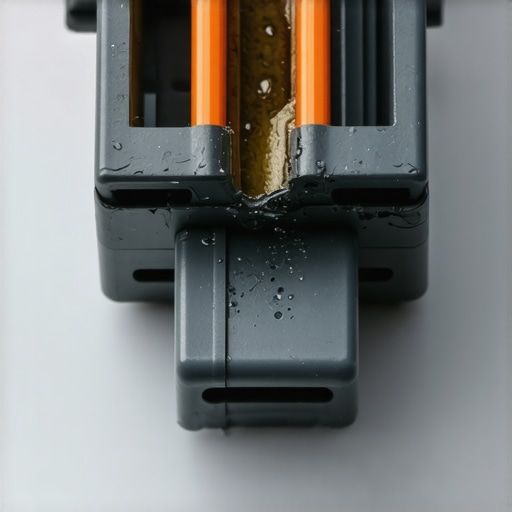
I stood in my driveway at 6 AM, the morning frost biting through my jacket, while my SUV coughed like a heavy smoker trying to run a marathon. Just the day before, I’d felt pretty smug. I’d replaced a failing mass airflow sensor with a part I found on a discount site for less than the price of a decent pizza. I thought I was winning the game of car maintenance. Instead, I was staring at a tow truck bill that would eventually cost five times what I’d “saved.” It was a humbling moment that taught me a hard lesson: your engine’s brain doesn’t like cheap data.
Why Your Wallet Might Regret That Bargain Sensor
When we look at auto repair hacks, we all want to find that magical middle ground where we save money without sacrificing the health of our ride. But sensors are different from brake pads or floor mats. They are the nervous system of your vehicle. I learned this the hard way when I tried to fix the common sensor that makes your engine idle rough in the morning. I thought a hall-effect sensor was just a magnet and some wire. How could they mess that up? Well, it turns out they can mess it up in about a dozen ways, from poor heat shielding to incorrect resistance values.
When I eventually cracked open that failed cheap sensor, the internal soldering looked like it was done by a distracted toddler. High-quality sensors use specialized alloys and potting compounds to survive the vibrating, 200-degree environment under your hood. The cheap ones? They use standard plastics that become brittle within weeks. I’ve seen enthusiasts try every top auto repair tip in the book, only to be defeated by a $20 part that was effectively dead on arrival. It is a frustrating cycle that makes you doubt your own mechanical skills when the part was the problem all along.
Does a lower price always mean lower quality?
You might be skeptical. After all, OEM parts often come with a massive markup just for the logo on the box. I used to think that too. But after decoding vehicle diagnostics on hundreds of cars, I’ve seen a recurring pattern. Cheap aftermarket sensors often lack the precise “map” that the Engine Control Unit (ECU) expects. According to technical data from the Automotive Aftermarket Suppliers Association, precision-manufactured sensors must maintain a signal accuracy within 1-2% across extreme temperature ranges to function correctly, a feat that budget manufacturers rarely achieve. If that signal is off by even a fraction, your car might run, but it won’t run right.
Have you ever installed a new part only to have a different warning light pop up ten miles later? It’s a common headache I want to help you avoid. Today, I’m going to show you why these bargain parts often lead to vehicle diagnostics explained nightmares and which components you should absolutely never go cheap on. We are going to look at the real-world consequences of poor sensor data, from ruined fuel economy to seeing why your scanner says p0420 but the converter is actually fine when the real culprit is just a lazy, low-quality sensor. Let’s get into the nitty-gritty of why your engine’s computer is so picky.
Stop Guessing and Start Testing Before You Buy
The biggest mistake I see—and one I’ve made plenty of times—is ‘parts cannoning.’ That’s when you just start throwing new parts at a problem hoping one of them sticks. Instead, you need to verify the failure. Think of your car’s sensors like a weather station; if the thermometer is broken, it’s not the clouds’ fault. I always reach for the $20 tool every driver needs for basic electrical troubleshooting first. A simple multimeter can tell you if a sensor is getting the 5-volt reference signal it needs from the Engine Control Unit (ECU). If the power isn’t there, a $200 OEM sensor won’t fix a thing.
Check the Ground Before You Blame the Sensor
Electricity is lazy; it always wants the easiest path home. If a sensor’s ground wire is corroded, the signal gets ‘noisy,’ and the ECU freaks out. I remember a customer who almost replaced an entire transmission because of a shifting glitch. It turned out to be a loose chassis ground hidden behind the battery tray. This is very similar to the ground wire problem that mimics a bad starter motor. Take a wire brush to those contact points and ensure you have metal-on-metal contact. It costs zero dollars and often clears up phantom codes that look like sensor failures.

The Cleaning Hack That Actually Works
Before you toss a Mass Airflow (MAF) sensor, try cleaning it. These sensors use a tiny heated wire to measure air; a single speck of dust or oil film can insulate that wire, making it report the wrong data. I’ve used auto repair hacks like specialized MAF cleaner spray to save dozens of sensors from the landfill. Just don’t touch the wire with your fingers—the oils from your skin are like acid to those delicate components. If cleaning doesn’t fix the rough idle, then you move to replacement.
How to Pick a Sensor That Won’t Die in a Week
When you finally determine that the hardware is toast, don’t just buy the first result on an auction site. Look for ‘Tier 1’ suppliers. These are the companies like Bosch, Denso, or Delphi that actually build the parts for the car manufacturers. You get the same quality without the 300% dealership markup. While decoding vehicle diagnostics, I’ve noticed that these high-end sensors have much better shielding against electromagnetic interference. Cheap sensors are like a radio that only picks up static when the microwave is on; they can’t handle the ‘noise’ of a running engine.
Identify the Real Failure with Precision
I once spent a whole Saturday chasing a cylinder three misfire on a high-mileage sedan. I swapped the spark plugs, but the shake remained. I almost bought a whole set of injectors until I used the trick to identifying which ignition coil is actually failing by swapping the coils between cylinders. The misfire moved with the coil. By isolating the component, I saved hundreds of dollars. This methodical approach is the difference between a successful DIYer and someone who ends up at the mechanic with a trunk full of half-installed parts. You want to be the one who knows exactly why the part is in the trash, not the one guessing with your credit card.
One of the biggest myths I hear in the shop is that oil changes are just about “slippery stuff.” People think if the level is high, they are safe. But here is the kicker: sometimes a high oil level is actually a warning sign of an impending disaster. In my experience, if you aren’t checking for dilution, you are missing half the story.
Why does your oil level actually go up between changes?
It sounds impossible, right? But why your engine oil level rises between oil changes is often due to unburned fuel leaking past the piston rings. This “fuel dilution” thins out the oil, stripping away its ability to protect those expensive bearings. I’ve seen enthusiasts brag about their engine not “consuming” a drop, only to find out their oil was 15% gasoline. According to a report by AAA, synthetic oils provide significantly better protection against engine wear than conventional oils in modern turbocharged engines, yet no oil can survive being turned into a fuel-solvent cocktail.  Another trap is the mistake of using the wrong oil viscosity in cold weather. Modern engines use oil pressure to time their valves; if the oil is too thick because you thought “thicker is better for old engines,” you’ll end up with a sluggish response and a check engine light that makes no sense. While you are at it, stop assuming every filter is the same. Learning how to tell if your oil filter is actually doing its job can save you from circulating metal shavings through your turbocharger. We see the same thing with brakes. People focus on the pads but ignore the fluid. I’ve written about brake service myths busted what really matters for safety because the real killer is moisture in the lines, not just thin pads. It’s these hidden nuances that separate a car that lasts 300,000 miles from one that ends up in a scrap heap at 120,000. Have you ever fallen into this trap of ignoring the “hidden” side of maintenance? Let me know in the comments below. If you’re still chasing ghosts, how advanced vehicle diagnostics prevent costly breakdowns is the next step in your education.I’ve realized that the difference between a ‘parts changer’ and a real technician is the depth of their toolbox—specifically the digital one. While I still swear by the $20 tool every driver needs for basic electrical troubleshooting, there comes a point where you need to see what the car’s computer is actually thinking in real-time. I finally invested in a bi-directional scanner that lets me “command” the car to do things, like purging the ABS pump or testing an EGR valve without taking it off the engine. If you’re serious about longevity, you have to look at how advanced vehicle diagnostics prevent costly breakdowns. It’s not just about reading codes; it’s about watching “live data” streams. For example, the Ross-Tech VCDS technical documentation highlights how monitoring fuel trims can reveal a tiny vacuum leak weeks before it triggers a check engine light. This kind of “early warning system” is how I’ve kept my daily driver on the road for over 250,000 miles.
How do I keep my car out of the shop for good?
The secret isn’t just fixing things when they break; it’s about staying ahead of the wear curve. I’m a huge advocate for how to save your transmission with a simple fluid exchange every 40,000 miles, regardless of what the “lifetime fluid” stickers say. Fluid doesn’t last forever; it shears and oxidizes. I also keep a close eye on oil change innovations and technologies that save your engine, such as magnetic drain plugs and high-efficiency bypass filters. These small upgrades act like a dialysis machine for your motor, pulling out microscopic iron filings that a standard paper filter might miss.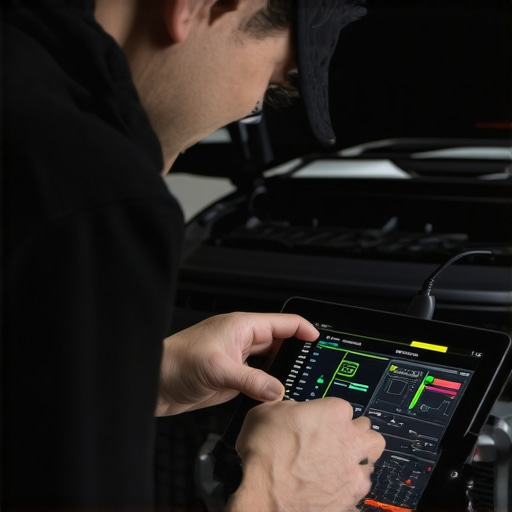 Looking ahead, the way we work on cars is shifting toward a hybrid model of grease and glass. With the rise of software-defined vehicles, we’ll see more “over-the-air” fixes for what feel like mechanical problems, but the hardware still needs a human touch. Even as electric motors replace pistons, the need for brake service myths busted what really matters for safety remains relevant because those heavy battery packs put immense stress on your stopping power. Whether you’re following essential auto repair strategies for frequent drivers or just doing a Saturday morning check, the mechanical fundamentals—heat, friction, and lubrication—remain the same. I’ve started using a borescope—a tiny camera on a wire—to look inside cylinders through the spark plug hole. It’s a game-changer. Instead of guessing if my valves are carbon-coated, I can see it on my phone screen in HD. I want you to try one thing this weekend: don’t just change your oil, actually look at it under a bright light. Smell it for gas, look for shiny flakes, and check out these top auto repair tips to extend your vehicles lifespan. If you find something weird early, you’ve just saved yourself thousands in future repairs.
What 20 Years of Grease Taught Me About Cheap Sensors
The hardest lesson I ever learned wasn’t about how to turn a wrench, but how to interpret the silence between the clicks. I used to think a sensor was either ‘good’ or ‘bad.’ Now I know that a sensor can be ‘mostly good’—reporting data just slightly outside the specified parameters—which is actually worse because it confuses the ECU without throwing a code. This is exactly how the sensor fault that turns on your abs light for no reason often manifests. Another lightbulb moment? Don’t blame the part until you’ve tested the path; half of my sensor ‘failures’ were actually resolved by fixing the ground wire problem that mimics a bad starter motor. Finally, remember that your ears are your best diagnostic tool. I’ve saved thousands by learning how to diagnose a failing wheel bearing using only your ears before it damaged the hub.
The Only Gear You Actually Need for Precision Repairs
You don’t need a professional garage to get professional results, but you do need the right data. I trust my the $20 tool every driver needs for basic electrical troubleshooting more than any fancy chrome-plated wrench set. For those deeper dives, moving into how advanced vehicle diagnostics prevent costly breakdowns requires a decent OBD-II scanner that shows live data streams. Beyond tools, I only buy ‘Tier 1’ sensors—Bosch, Denso, and Delphi—because they are the same parts the manufacturers use, just in a different box. Using these along with proven auto repair hacks ensures you aren’t just saving money today, but preventing a tow truck call tomorrow.
Take the Keys Back from the Dealership Service Desk
Working on your own vehicle is about more than just saving a buck; it’s about the peace of mind that comes from knowing the job was done right. #IMAGE_PLACEHOLDER_E# By implementing top auto repair tips to extend your vehicles lifespan, you transition from a reactive driver to a proactive owner. Whether you are following essential auto repair strategies for frequent drivers or just doing your own oil changes, you are building a relationship with your machine. Don’t be intimidated by the wires and the software; beneath it all, it’s still just physics and logic. You have the tools, the knowledge, and the strategy to keep your ride running until the odometer runs out of digits. What was the most frustrating ‘phantom code’ or mystery noise you ever had to track down? Let me know in the comments below!