
There I was, standing in the rain outside a local grocery store, staring at my dashboard like it was written in ancient Greek. My car had been acting up for weeks—stalling at lights, losing power on hills—but I kept telling myself it was just bad gas. Then, the inevitable happened. It just died. Total silence. I’ll never forget the time I spent three hours waiting for a tow truck because I didn’t know how to perform a simple diagnostic check right there in the parking lot. It turns out, I could have known the truth in about sixty seconds if I had just used my ears and a bit of common sense. Today, I am going to save you that tow bill by showing you exactly how to verify a failing pump before you spend a dime on a mechanic.
How a Quiet Drive Turned Into a Tow Truck Nightmare
We’ve all been there, right? That sinking feeling when the engine cranks but refuses to catch. You start wondering about how to tell if your fuel pump is dying before it actually strands you, but usually, we ask that question when it’s already too late. Most of us assume the worst and start calculating the cost of a rental car. But here is the secret: your car is constantly talking to you. You just need to know how to listen to the vehicle diagnostics that don’t require a fancy computer or a degree in engineering.
Is a DIY test really as accurate as a shop’s diagnostic tool?
I get it. You’re worried that you might misdiagnose the problem and end up replacing parts you don’t need. I’ve been there. In my early days, I once replaced an entire fuel tank because I was convinced the pump had seized, only to discover later that a simple ground wire problem was the real culprit. It was a $400 mistake for a $5 fix. Have you ever felt like you were just throwing parts at a problem hoping something would stick? That’s exactly why I want to show you the ‘Listen and Prime’ method. It’s the same logic professional mechanics use to narrow down the search before they even open their toolboxes.
Listen for the Hum Before You Reach for Your Wallet
When you turn your key to the ‘On’ position, your car should perform a brief rehearsal. The fuel pump should prime, sending a burst of pressure to the injectors. According to the National Institute for Automotive Service Excellence (ASE), fuel system issues are among the top causes for ‘crank-no-start’ conditions, yet they are often the easiest to verify with a simple auditory check. Have you ever noticed a faint buzzing sound from the back of your car when you first turn the key? If not, you might be looking at a dead pump or a blown fuse. Have you ever felt that sudden loss of power, like your car is struggling to climb a hill? That’s often the first warning shot. Let’s dive into how you can verify this without getting your hands greasy.
Listen for the Hum Near the Gas Tank
The first thing you need to do doesn’t require a single tool. Think of your fuel pump like a waiter at a busy restaurant; before it brings you the food, it has to get to the table. When you turn your key, the pump ‘primes’ the system to build pressure. To test this, find a quiet spot and have a friend turn the ignition to the ‘On’ position—don’t crank the engine—while you stand by the rear wheel where the gas cap is located. You should hear a distinct two-second hum or whir. If you hear nothing but silence, the ‘waiter’ never left the kitchen. This is one of those easy checks before your road trip that can prevent a massive headache later. If you hear the hum but the car still won’t start, the pump might be spinning but failing to build actual pressure.
Check the Fuse Before You Yank the Tank
I remember a cold Tuesday when I was certain my fuel pump had given up the ghost. I had already priced out the part and was ready to spend all afternoon dropping the fuel tank. Just as I was about to start, I grabbed a test light—part of the $20 tool kit every driver needs—and checked the fuel pump fuse in the engine bay. It was blown. A ten-cent piece of plastic saved me four hours of back-breaking labor. Always locate your fuse box, usually under the hood or the dash, and verify that the circuit is intact. If the fuse is fine, swap the fuel pump relay with an identical one from a less critical system, like the horn. If the car suddenly starts, you’ve found your culprit without spending a dime on major auto repair.
Feed the Engine to Confirm Fuel Starvation
If you have spark and the engine cranks but won’t catch, you need to prove it is a fuel delivery issue. This is where starting fluid becomes your best friend. Spray a small, two-second burst into the air intake (after the air filter) while a buddy cranks the car. If the engine roars to life for a moment and then dies, you have confirmed that your ignition system is working and your engine is simply starving for gas. It is the automotive equivalent of giving a runner a sip of water; if they start running again, you know dehydration was the problem. This test bypasses the pump and tells you exactly what is wrong, much like how advanced vehicle diagnostics prevent costly breakdowns by isolating the variables. Without this step, you are just guessing and wasting money.
The Hammer Trick That Might Get You Home
If you are stranded and the ‘listen test’ yields nothing but silence, there is a gritty, old-school move that sometimes works. It is called ‘thumping the tank.’ While someone else cranks the engine, take a rubber mallet or even the heel of your shoe and give the bottom of the fuel tank a firm whack. This vibration can sometimes jar a stuck pump motor back into life for just long enough to get you to a safe location. I once used this trick in a grocery store parking lot, banging on my old sedan’s tank with a heavy flashlight. It sputtered to life, and I drove straight to my garage. It is a classic example of auto repair hacks that prioritize getting you off the shoulder of the road. However, remember that if your car makes a clicking noise instead of humming, you might be dealing with a battery or starter issue rather than the fuel system. Using these essential auto repair strategies allows you to rule out the simple stuff before calling for an expensive tow.
Most DIYers believe that as long as the pump is spinning, the problem lies elsewhere. However, in my experience, a pump that hums isn’t always a pump that works. I’ve seen countless units that sound perfectly healthy but simply can’t move enough volume to sustain a load. It’s like trying to run a marathon while breathing through a straw; you might be fine standing still, but as soon as you hit a hill, the system collapses. This is often why the reason your car loses power when climbing hills remains a mystery to many—the pump works, but it is failing to deliver the necessary flow. This is a nuance often missed during basic decoding vehicle diagnostics, where we tend to look for ‘on or off’ failures rather than partial performance drops.
Why does your fuel pressure vanish the second you turn the key off?
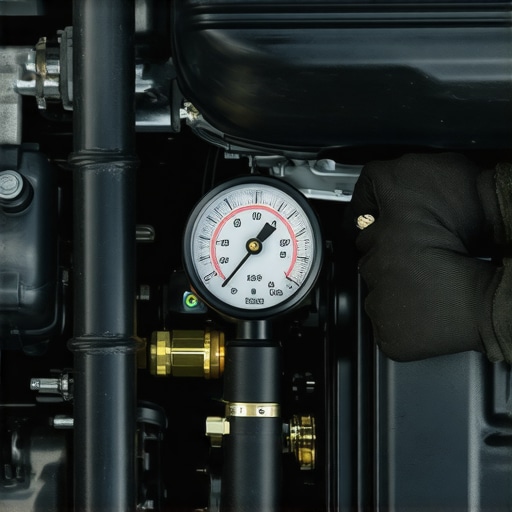
If your car starts fine after sitting for five minutes but struggles after an hour, you likely have a failing check valve inside the pump assembly. This tiny component is supposed to hold pressure in the lines so the fuel doesn’t drain back into the tank. According to technical data from Robert Bosch GmbH, a global leader in fuel system manufacturing, a healthy fuel system must maintain a specific ‘rest pressure’ for at least 20 minutes after the engine is shut down. If that pressure drops to zero instantly, your pump is bleeding out internally. You can’t hear this, and a fuse check won’t help. You need a dedicated pressure gauge to see the truth. Have you ever spent money on a new battery only to realize it was a fuel pressure leak all along?
Avoid the expensive trap of the contaminated gas tank
One of the most common mistakes is ignoring the environment inside your gas tank. I once saw a driver replace three pumps in a single month because they didn’t realize the tank was contaminated with sediment. They were essentially feeding their new pumps liquid sandpaper. Before you drop that new unit in, take a high-powered flashlight and look at the floor of the tank. If you see anything resembling ‘coffee grounds,’ your new pump is on a suicide mission. This level of attention to detail is what separates a permanent fix from auto repair hacks that only work for a few days. Furthermore, be wary of the truth about using cheap aftermarket sensors in your engine. A generic fuel pressure sensor or a budget pump from a ‘no-name’ online store can give you false readings or fail within weeks. When it comes to the actual installation, don’t overlook the small hardware. Much like how why you should never skip the crush washer on your drain plug applies to oil changes, ensuring every O-ring in the fuel assembly is lubricated and seated perfectly is non-negotiable. A pinched seal is a silent killer of fuel pressure. Have you ever fallen into this trap and had to do the job twice? Let me know in the comments.To truly master the health of your fuel system, you need to graduate from the ‘thump the tank’ method to data-driven decisions. I personally never touch a fuel line without my OTC 5630 pressure test kit. Why this specific one? Because generic kits often leak at the Schrader valve, giving you a false ‘low pressure’ reading that sends you on a wild goose chase. By using a professional gauge, you can see if your system is holding the ‘rest pressure’ required by manufacturers. This is the heart of how advanced vehicle diagnostics prevent costly breakdowns; you aren’t just looking for a heartbeat, you’re checking the blood pressure of the engine. When you combine this with the $20 tool kit every driver needs, you effectively become your own master technician. If you see the pressure drop instantly after the engine stops, you’ve confirmed that check valve failure we discussed earlier, without ever getting your hands covered in gasoline.
How do I keep my fuel system healthy over time?
Maintaining your fuel system is about more than just the pump; it’s about the entire ecosystem of your vehicle. First, stop treating your quarter-tank mark as ’empty.’ The fuel in your tank actually acts as a coolant for the submerged pump. When you consistently run it low, the motor overheats, drastically shortening its life. Incorporating this into your top auto repair tips to extend your vehicles lifespan can save you thousands in labor costs over the life of your car. Secondly, I always recommend a high-quality fuel system cleaner every 5,000 miles to keep the injectors from clogging. Think of it as a specialized version of oil change innovations technologies that save your engine—you are keeping the internal pathways clear of carbon and varnish before they can cause a performance dip or a lean-run condition. Keeping the tank at least half-full during extreme summer heat is a pro-tip that few people follow, but it is essential for pump longevity. Looking ahead, I predict we are moving away from purely mechanical fuel failures toward integrated digital monitoring. According to the SAE International J2044 standard for liquid fuel systems, the integrity of quick-connect couplings is already making systems more robust, but the next step is built-in sensors that alert your phone the moment your fuel pressure drops by even 2 PSI. This proactive approach will mirror essential auto repair strategies for frequent drivers, where the car tells you it’s sick before you even notice a sputter. For now, remember the truth about using cheap aftermarket sensors: they are the weak link in an otherwise smart system. My final piece of advice? Go rent that pressure gauge today and test your car while it’s running perfectly. Knowing what ‘normal’ looks like is the only way to spot ‘broken’ before the tow truck arrives. Don’t wait for the rain and the grocery store parking lot to find out you’re in trouble.
The lessons I have learned while grease-stained and frustrated on a garage floor are often more valuable than any textbook. Over the years, I have realized that car repair is 80% observation and 20% turning wrenches. When you start to apply these diagnostic principles, you stop being a victim of your vehicle’s whims and start being its master.
Hard-Won Truths from My Years Under the Hood
I once chased a phantom fuel issue for three days only to realize the electrical connector was simply loose and corroded. It taught me that how to tell if your fuel pump is dying often starts with the wiring, not the motor itself. Don’t assume the most expensive part is the failure point; the smallest wire can ground out an entire system. Always check for green crusty buildup on your connectors before you condemn a perfectly good pump.
Another lightbulb moment came when I realized how much fuel quality impacts pump health. I have seen pumps ‘die’ because a local gas station had water infiltration in their underground tanks. A quick jar test—pulling a small fuel sample and letting it sit to see if water separates at the bottom—can save you hours of diagnostic misery. Learning this specific form of decoding vehicle diagnostics is free and incredibly effective.
Finally, listen for the pitch of the pump. A healthy pump hums a steady, consistent tune. A dying one often oscillates in pitch or sounds like a grinding coffee maker. If your car starts behaving differently, trust your ears; they are often more sensitive than the sensors on your dashboard.
My Go-To Gear for Fuel System Diagnostics
The OTC 5630 Pressure Test Kit is my gold standard because it actually fits most modern fuel rails without leaking, which is a common problem with cheaper sets. If you are serious about DIY, investing in a reliable gauge is one of those essential auto repair strategies for frequent drivers that pays for itself after just one successful diagnosis. It takes the guesswork out of the equation entirely.
A high-quality digital multimeter is also non-negotiable. I use mine to verify that the pump is getting at least 12 volts; anything less and the motor will struggle, mimicking a mechanical failure. This allows you to differentiate between an electrical bottleneck and a mechanical seizure. I also highly recommend keeping a dedicated notebook for your car. Recording ‘normal’ pressure readings while the car is healthy makes it much easier to identify ‘abnormal’ when things go wrong, which is a core part of top auto repair tips to extend your vehicles lifespan.
Take Charge Before the Sputter Starts
Knowing how to verify a failing fuel pump gives you the ultimate peace of mind when you are miles away from home. You do not have to be a master technician to save yourself from a costly roadside breakdown; you just need to be observant and willing to try these auto repair hacks before calling for help. Every time you fix a small issue yourself, you build the confidence to tackle the big ones. Have you ever successfully diagnosed a fuel problem using just your ears or a simple hammer? Let me know about your ‘aha!’ moment in the comments below!