
I remember the Saturday morning I spent three hours in my driveway swapping out the pads on my daily driver. I was proud. I wiped the grease off my hands, hopped in, and backed out of the driveway, only to be met with a high-pitched “REEEEEE” that echoed off my neighbor’s garage. My heart sank. I had just spent eighty dollars and a whole morning on what I thought was a perfect job, yet my car sounded like a haunted tea kettle. It is a special kind of madness when you do everything by the book and the results still mock you. If you are sitting there wondering why your brand-new investment is screaming every time you hit a stop sign, I have been in your shoes, and I promise we can fix this without you losing your mind.
Why Your New Brakes Still Sound Like a Dying Banshee
The truth is that brake noise is rarely about the pads being worn out when they are brand new; it is about the vibrations you cannot see. When I first started working on my own vehicles, I made the classic rookie mistake of thinking that as long as the pads were thick, the noise would vanish. I ignored the shims, skipped the lubricant, and even left the old rotors on because they looked “fine enough.” I learned the hard way that how you install the parts matters just as much as the parts themselves. If you are struggling with this, you might need to look at how to stop your brakes from squealing without a mechanic by focusing on the hardware rather than just the friction material. We are going to dive into why those tiny vibrations turn into ear-piercing squeals and how you can silence them for good. Have you ever finished a repair only to have the noise get even louder than before? Tell me about your most frustrating driveway fail in the comments; I’ve likely done the same thing.
Is it just my luck or are new parts junk?
It is easy to blame the manufacturer when things go south, but the reality is often more technical. According to the Friction Material Standards Institute (FMSI), brake squeal is technically a high-frequency vibration—often exceeding 5,000 Hz—caused by the interaction between the pad, the caliper, and the rotor. If there is even a millimeter of play or a lack of damping material, that vibration amplifies through the wheel well. This is why brake service myths often lead people to buy the most expensive pads thinking they’ll be silent, while ignoring the crusty old clips that are actually causing the rattle. Before you go tearing everything apart again, you need to understand that silence comes from a system, not just a single part. Following the ultimate guide to brake service means looking at the rotors, the slide pins, and even the type of grease you used on the back of the pads. Setting the stage for a quiet ride requires a bit of patience and a few tricks I’ve picked up over years of trial and error.
Stop the Vibration Before You Bolt the Wheel On
The most common reason for that ear-piercing squeal on brand-new parts is actually the simplest: residual oil or grease on the rotor surface. When new rotors ship, they are often coated in a thin layer of oil to prevent rusting while sitting in a warehouse. If you do not scrub that off with a dedicated brake cleaner, it embeds into your new pads, glazes over, and turns your braking surface into a skating rink. Think of your brake pad like a dry sponge; once it soaks up oil, it loses its effectiveness and begins to protest with noise. I once rushed a job on a rainy Tuesday and forgot to spray down the passenger side rotor. By Friday, why your car pulls to the left when you hit the brakes became my new reality because one side was grabbing properly and the other was sliding over that invisible film. Scrub those rotors until the paper towel comes away white, or you are just setting yourself up for a noisy weekend.
Lubricate the Slide Pins and Pad Backing
Silence in a braking system is all about damping. You need to apply a high-temperature ceramic solids lubricant to the areas where metal touches metal—but never where the pad touches the rotor. Focus on the “ears” of the brake pads and the back of the shim. These contact points are where the piston or the caliper bracket pushes against the pad. Without grease, the pad acts like a violin bow against the caliper, creating that high-pitched scream. I used to be stingy with grease until I realized that a dry slide pin is the fastest way to uneven wear and constant rattling. If your pins are stuck or dry, the ultimate guide to brake service reminds us that the caliper cannot center itself, leading to constant friction and localized heat. 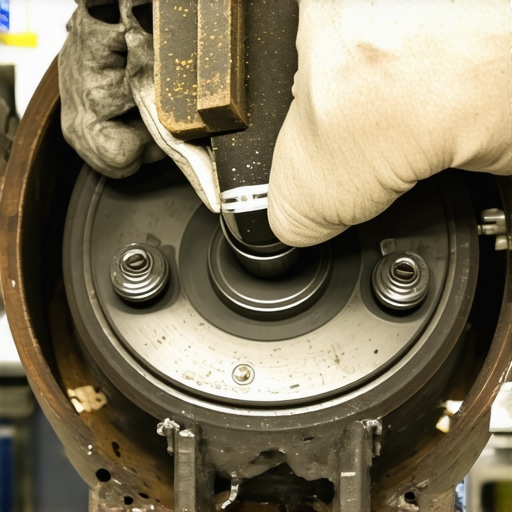
New Clips Are Non-Negotiable
Those little stainless steel clips that come in the box are not “optional accessories.” They are designed to keep the pads under tension so they do not vibrate loosely within the bracket. Over thousands of miles, old clips lose their spring tension and get coated in hardened brake dust. If you reuse them, the pads will have enough play to vibrate at high frequencies, which your ears translate as a squeak. I remember a specific job on an old Jeep where I thought the old hardware looked “clean enough.” Two days later, I was back under the car because the rattle was so loud it sounded like a box of loose bolts. If you are noticing that why your brake pedal vibrates when you stop on a hill is happening even with new parts, check the seating of those clips. Also, while you are in there, check your fluid; seeing the brake fluid color that means you need a flush immediately is a clear sign that your internal hydraulics are as tired as your old hardware. Replace the hardware, grease the contact points, and clean the surfaces—this is the trinity of a silent brake job.I have seen it a thousand times: someone buys the most expensive ceramic pads on the market, expecting library-level silence, only to end up with a squeal that is louder than the old metallic ones. The contrarian truth is that ‘premium’ does not always mean ‘silent.’ For a daily driver, ultra-hard ceramic pads can actually be too abrasive for standard rotors, leading to glazing. This happens when the friction material does not transfer properly to the disc, creating a glass-like surface that vibrates at high frequencies. If you are chasing a ghost in your front end, brake service myths what really matters for safety often points us back to matching your pad compound to your driving style rather than just the price tag.
Why did my high-end ceramic pads make the noise worse?
It usually comes down to the ‘transfer layer.’ According to research by the Society of Automotive Engineers (SAE), consistent braking performance and noise reduction depend on a microscopic layer of pad material being evenly distributed onto the rotor surface through a process called burnishing. If you skip this step, the layer is uneven, and you get ‘slip-stick’ vibration. This is the same reason why the synthetic oil myth that costs you fifty dollars every visit persists; people buy into marketing but ignore the specific application requirements of their engine and the way the parts interact as a unit. 
The Diagnostic Trap Most DIYers Fall Into
We have entered an era where we trust the screen more than the machine. I once watched a friend replace three different sensors because his OBD-II scanner kept throwing ‘lean’ codes, only to realize decoding vehicle diagnostics what your car is trying to tell you requires looking at the vacuum lines first. He spent four hundred dollars to fix a five-dollar crack in a rubber hose. This is the ultimate ‘Oops’ factor: assuming the computer is telling you which part is broken, rather than which system is struggling. Before you pull the trigger on a big purchase, remember that how advanced vehicle diagnostics prevent costly breakdowns is about finding the root cause, not just treating the symptom. Even something as simple as the oil filter brand that causes low oil pressure lights can mimic a massive mechanical failure. Don’t let a twenty-dollar part trick you into a two-thousand-dollar rebuild. Have you ever fallen into this trap of replacing parts that weren’t actually broken? Let me know in the comments; I’ve definitely paid my ‘tuition’ to the school of hard knocks more than once. When you are deep in a repair and things go south, like when a bolt snaps, knowing how to remove a broken bolt without losing your mind is what separates the experts from the folks who give up and call a tow truck.If you want to move beyond just swapping parts until the light goes out, you need to change your toolkit. I used to rely on a twenty-dollar code reader that gave me generic P-codes, but that’s like trying to diagnose a fever with only a ‘yes/no’ thermometer. These days, I don’t touch a project without a bi-directional scanner. Why? Because it lets me command the car to perform tests—like firing a fuel pump or cycling an ABS solenoid—without having to take anything apart. Using how advanced vehicle diagnostics prevent costly breakdowns is the difference between a guess and a guarantee. The same goes for your oil changes. I’ve seen people use the cheapest filters they can find, but as I’ve learned, the internal bypass valve in a low-quality filter can fail, leading to unfiltered oil cycling through your engine. It is one of those auto repair hacks save money without sacrificing quality to actually spend the extra five dollars on a high-micron synthetic filter rather than the bargain-bin option.
Stop Guessing and Start Reading the Data
I’ve realized that most DIYers stop at the ‘error code’ but true masters look at the ‘live data.’ When I’m chasing a rough idle, I’m not looking for a broken part; I’m looking for a number that’s out of place. This is where essential auto repair strategies for frequent drivers come into play. By monitoring your fuel trims, you can catch a failing fuel injector or a vacuum leak weeks before it leaves you stranded. It’s about building a relationship with the machine. I’ve seen oil change innovations technologies that save your engine, but none of them replace the value of a technician who knows how to read the pulse of the engine through a diagnostic port.
How can I keep my car running smoothly for another decade?
The secret isn’t just fixing what breaks; it’s monitoring the health of the systems before they fail. I’ve started keeping a digital log of ‘live data’ from my scanner. By recording my short-term and long-term fuel trims every six months, I can see a vacuum leak or a failing sensor developing long before a check engine light ever hits the dash. This proactive approach is part of the top auto repair tips to extend your vehicles lifespan that most people ignore until they are staring at a four-figure repair bill. Looking ahead, I predict that we are moving toward a ‘predictive maintenance’ era where AI-integrated OBD-II dongles will analyze your driving patterns and sound profiles to tell you exactly when a bearing is about to go. We’re already seeing hints of this in technical documentation from the Society of Automotive Engineers (SAE), specifically regarding the J1979-2 standards which provide even deeper access to real-time engine telemetry.  Before you go on your next big trip, do a quick run-through of vehicle diagnostics explained easy checks before your road trip to ensure your software and hardware are in sync. My advanced tip for you this week: the next time you have your scanner plugged in, look at your ‘oxygen sensor switching rate’ while at a steady idle. If it’s sluggish, your fuel economy is already suffering, even if the car feels fine. Try it out and see what your car is really trying to hide from you.
What I Finally Realized After Years of Squealing Brakes
After a decade of bruised knuckles and echoing driveway squeals, the biggest lightbulb moment I had was realizing that cleanliness is more important than the parts themselves. If your hands are greasy when you touch the pad surface, you’ve already failed. I also learned that the “free” hardware included with budget pads is often the source of the very noise you’re trying to fix. Another hard truth is that your car’s computer isn’t a crystal ball; it only points to the room where the fire is, not the specific candle that started it. Most importantly, I realized that the truth about using cheap aftermarket sensors in your engine is that they often create more ghosts in the machine than they solve.
Gear That Keeps Me Out of the Repair Shop
If you want to move from being a parts-swapper to a real diagnostic pro, you need to curate a specific toolkit. I never start a job without a high-quality silicone lubricant for my slide pins, as it’s the only way to ensure the caliper doesn’t bind and cause that rhythmic chirping. For data, I rely on the Society of Automotive Engineers technical papers to understand the latest J1979-2 standards, which allow me to see deeper into the engine’s health. I also recommend checking out top auto repair tips to extend your vehicles lifespan to ensure your maintenance schedule matches your driving habits. Having these resources at hand turns a stressful Saturday into a rewarding afternoon of precision work.
Don’t Be Afraid to Get Your Hands Greasy
There is a profound sense of pride that comes from backing your car out of the driveway and hearing absolutely nothing but the engine. It’s about taking control of your machine and refusing to be intimidated by a piece of software or a stubborn bolt. By applying auto repair hacks save money without sacrificing quality, you can keep your vehicle on the road for hundreds of thousands of miles without breaking the bank. Mastering your own brake service is just the beginning of a larger journey toward mechanical independence. You have the steps, the warnings, and the tools—now it’s time to get out there and finish the job right. Have you ever spent hours on a repair only to have the same noise come back the next day? Let me know your most frustrating “back to the drawing board” moment in the comments below!