
It was 2:00 AM on a humid Tuesday, and I was stuck on the shoulder of the highway with nothing but the smell of damp asphalt and a dead engine to keep me company. I had just finished a double shift, and all I wanted was my pillow. Instead, I got a $200 tow bill and a week of riding the bus. I kept turning the key, hearing that pathetic crank-crank-crank, but there was no roar, no life—just silence. Looking back, the signs were there for weeks, but I was too busy trying to squeeze every last mile out of my commute to listen. I made the classic mistake of thinking that if the car was still moving, everything was fine. Don’t be like me. Today, I am going to share exactly how you can detect a failing fuel pump before it turns your evening into a nightmare. We are going to look at the sounds, the stumbles, and the subtle hints your car is dropping. Have you ever felt that tiny hesitation when you merge onto the highway and wondered if it was just a bad tank of gas?
Stop Ignoring the High-Pitched Whine from Your Back Seat
Your fuel pump isn’t supposed to be a soloist. When it starts making a loud, high-pitched whining sound, it is basically screaming for help. I remember hearing a weird hum coming from the back of my old sedan and just turning up the radio. I told myself it was just road noise or maybe a weird wind gust. Big mistake. That whine is often the sound of the pump motor struggling to push fuel through a clogged filter or just wearing out its bearings. By the time I actually looked into decoding what my car was saying, the damage was done. If you hear that sound, especially after driving for an hour or so, your pump is likely overheating. According to the Car Care Council, nearly 80% of motorists neglect simple maintenance signs, which eventually leads to massive repair bills that could have been avoided with a little intuition. If you act when the whining starts, you save your wallet and your sanity.
Can I Trust My Car to Tell Me Something is Wrong?
Many of us assume that if there is a major problem, the Check Engine light will pop up like a concerned parent. But here is the kicker: a fuel pump can be 90% dead and never trigger a single code. I once spent a small fortune on a new battery and an alternator because I was convinced my starting issues were electrical. I was chasing ghosts because I didn’t know the simple test for a failing fuel pump that could have saved me three days of troubleshooting. Modern cars are smart, but they aren’t psychic. Sometimes, you have to rely on your gut and your ears rather than just a digital readout. If you are feeling a loss of power under load or noticing that your car takes a few extra seconds to fire up in the morning, you are already in the danger zone. Learning these auto repair hacks early on is the difference between a quick fix and a total breakdown. Let’s dive into the specific physical symptoms that mean your pump is on its last legs.
Feel the Stumble When You Hit the Gas
Think of your fuel pump like the heart of your car; it has to maintain a steady beat and a specific pressure to keep everything moving. When you accelerate, your engine’s demand for fuel spikes instantly. If the pump is weak, it simply can’t keep up, and you’ll feel a momentary “hiccup.” I remember one time I was trying to merge onto a busy highway in my old pickup. I stepped on the gas, and the truck just… gasped. It felt like the engine was trying to breathe through a cocktail straw. That is a classic sign of why your engine hesitates when you press the gas pedal. If you feel that hesitation followed by a sudden surge of power once the pump catches up, you aren’t dealing with a bad spark plug—you are dealing with a delivery issue.
Hook Up a Pressure Gauge to Find the Real Culprit
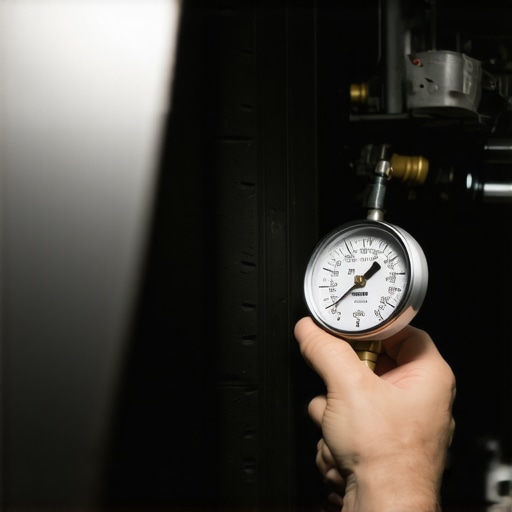
Most people just start swapping parts when they feel a stumble, but that is a fast way to go broke. Instead, you need to use a fuel pressure gauge. It is a simple tool that screws onto a service port on your fuel rail, which usually looks exactly like a tire valve. Once it is hooked up, you want to see if the needle stays steady or bounces like a caffeinated toddler. If your manual says you should have 45 PSI and you are only seeing 30, you’ve found your ghost. This is one of the most essential auto repair strategies for frequent drivers because it gives you hard data instead of guesses. 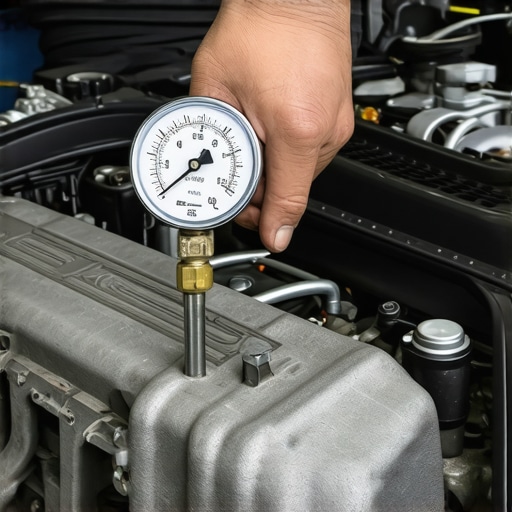 I once spent four hours tearing apart my back seat to access a pump only to realize later that the pressure was low because of a $10 filter I hadn’t changed in three years. I was covered in grease, smelled like a gas station, and had achieved absolutely nothing. Always check the pressure first at the rail.
Use the Priming Trick for Stubborn Hot Starts
Does your car start perfectly in the morning but take five or six tries after you’ve been running errands? This is the “hot start” symptom. It happens because the internal check valve in the pump is failing, allowing fuel to bleed back into the tank once the engine is off. To test this without tools, try the priming trick: turn your key to the “On” position (but don’t crank) for three seconds. Turn it off. Repeat this three times. This forces the pump to build pressure in the lines. If the car fires up instantly after the third prime, your pump’s internal valve is toast. Learning the simple test for a failing fuel pump like this saves you from burning out your starter by cranking for minutes at a time.
Don’t Let a Clogged Filter Fool You Into a Big Repair
Before you commit to a $500 pump replacement, you have to rule out the filter. A clogged filter creates backpressure that makes a healthy pump sound like it is dying. It is like trying to run a marathon while wearing a mask made of duct tape. When I finally learned how advanced vehicle diagnostics prevent costly breakdowns, I realized that many “failed” pumps are just victims of neglect. If your filter is external, swap it out first. If the whining noise stops and your power returns, you just saved several hundred dollars. This is part of the top auto repair tips to extend your vehicles lifespan that most shops won’t tell you because they’d rather sell you the big-ticket item. Watch for those tiny metal flakes in the fuel you pour out of the old filter; if you see them, the pump is actually grinding itself apart internally and needs to be replaced immediately.
Everyone tells you to keep your tank at least half full to keep the pump cool, but let’s be real—the mechanical design of modern pumps is far more resilient than people give them credit for. While running on fumes isn’t great, the true silent killer isn’t just the occasional low-fuel light; it is the electrical resistance building up in your wiring harness. I have seen enthusiasts spend hundreds on high-performance parts, only to realize that a corroded ground wire was the real culprit. This is where how advanced vehicle diagnostics prevent costly breakdowns by looking beyond the mechanical components and into the electrical health of the system. If you’re only checking the pump, you’re missing half the story.
The Half-Tank Legend Won’t Save Your Pump from Neglect
The common belief is that the fuel acts as a coolant, and while true, a pump submerged in a quarter-tank is still plenty cool. The real ‘oops’ factor I see most often is owners ignoring the quality of the fuel itself or using a cheap, no-name filter that restricts flow. According to a report by the American Automobile Association (AAA), fuel system issues are among the top causes of unexpected engine stalls, yet many of these could be avoided by sticking to high-quality components. I’ve learned the hard way that the truth about using cheap aftermarket sensors in your engine applies to fuel pumps too. A bargain-bin pump might save you fifty dollars today, but if it lacks the internal check valves of an OEM part, you’ll be doing the job again in six months.
Is Your Electrical System Mimic-ing a Dead Fuel Pump?
Here is an advanced nuance: sometimes the pump is perfectly fine, but the relay or the connector is failing under load. I once spent an entire Saturday replacing a pump on a customer’s truck only to find out the fuel pump relay was overheating and cutting power after twenty minutes of driving. It felt exactly like a dying pump. This is why testing pressure at idle isn’t enough; you need to see how the system behaves when the engine is actually working. Learning these auto repair hacks can save you from a weekend of wasted labor. Always check the voltage at the pump connector while the engine is running to ensure you are getting a full 13.5 to 14 volts. If you are seeing 11 volts, your pump isn’t dying—it’s starving for electricity.
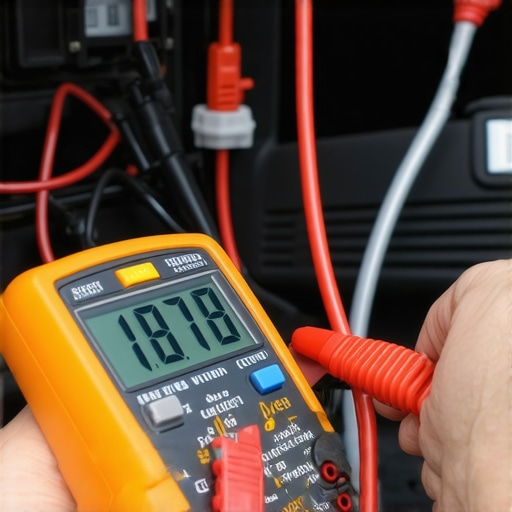
If you have already started hearing that whine we talked about earlier, don’t just hope it goes away. You need to verify if the sound changes with engine load. A pump that gets louder when you accelerate is a red flag that the internal motor is drawing too much current. Before you commit to the teardown, check your fuel trims with a basic OBD-II scanner. If your ‘Long Term Fuel Trim’ is consistently above 10%, your car is compensating for a lack of fuel, which is one of the most reliable ways to confirm how to tell if your fuel pump is dying before it leaves you stranded. Have you ever fallen into this trap of replacing a part only to find out a simple wire was the problem? Let me know in the comments—I’d love to hear your troubleshooting horror stories and help you avoid the next one.
The Diagnostic Kit I Swear By for Fuel Gremlins
I don’t just rely on a cheap $20 code reader when my engine starts acting up; I go for the heavy hitters like a professional-grade Autel scanner or a high-end Fluke multimeter. Why? Because for fuel delivery, the ‘Check Engine’ light is often the last one to the party. I specifically look for the ‘Fuel Pump Duty Cycle’ in the live data stream. In many modern vehicles, the computer pulses the pump rather than giving it a steady stream of power. If I see that duty cycle hovering at 80% or 90% just to maintain a steady idle, I know that pump is struggling against internal resistance and is ready to quit. This level of detail is exactly how advanced vehicle diagnostics prevent costly breakdowns. I also use a low-amp current clamp to see how many amps the pump is drawing. According to a technical service bulletin from Delphi Technologies, a healthy pump should typically draw between 4 and 6 amps. If I see a spike to 10 or 12 amps, I know the motor is shorting out internally, even if the car still starts and runs fine for now.
Stop Guessing and Start Measuring with an Amp Clamp
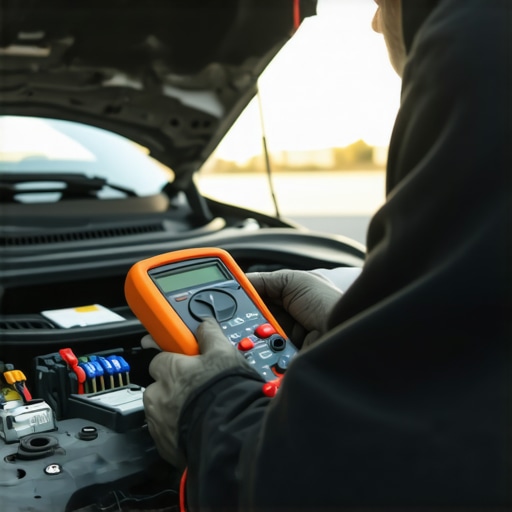
Using a current clamp is one of the most underrated auto repair hacks to save money without sacrificing quality because it tells you the health of the pump without you having to drop the fuel tank. If you see ‘ringing’ or erratic spikes on an oscilloscope while the pump is running, you are looking at dirty commutator bars or worn-out brushes. I’ve seen enthusiasts waste hundreds on high-pressure rails and injectors when the real problem was just a $5 relay with pitted contacts that was dropping the voltage just enough to weaken the pump’s output. Looking toward the future, we are seeing more ‘brushless’ fuel pumps controlled by dedicated modules. This means the old-school trick of banging on the tank with a rubber mallet to ‘wake up’ a dead pump is going the way of the dodo. You’ll need digital tools to talk to the fuel pump control module (FPCM) to even diagnose a failure in the next generation of vehicles. This shift makes essential auto repair strategies for frequent drivers even more important to master.
How do I maintain my fuel system’s health over time?
Maintenance isn’t just about the fuel itself; it’s about the environment the fuel lives in. I always tell people that keeping up with oil change innovations and technologies that save your engine is part of a larger ecosystem of care. A smooth-running engine creates less heat and vibration, which reduces the harmonic stress on the entire fuel delivery line. You should also be proactive about your electrical system. A failing alternator can cause ‘dirty’ electricity that wreaks havoc on sensitive fuel pump electronics. Use the simple test to see if your alternator is killing your battery every six months to ensure your pump is getting a clean, stable 14-volt supply. Finally, don’t ignore your filters. Using high-quality parts is vital, and I’ve shared the truth about using cheap aftermarket sensors in your engine—the same logic applies to fuel filters. A cheap, restrictive filter is the fastest way to burn out a $400 pump. If you want to stay ahead of the curve, I challenge you to try the priming trick I mentioned earlier next time you head out to your car. It’s the easiest way to check your check-valve health without getting your hands dirty.
What Years of Greasy Knuckles Taught Me About Fuel Systems
Looking back at that 2:00 AM breakdown, I realize that most fuel pump failures aren’t sudden—they are the result of tiny, ignored warnings. One of the biggest ‘lightbulb moments’ for me was realizing that the fuel pump relay often fails slowly, mimicking pump symptoms by cutting voltage intermittently. I also learned that using the simple test for a failing fuel pump can prevent you from replacing parts that are still perfectly healthy. Another hard truth? If you find yourself frequently dealing with why your engine makes a tapping noise only at startup, you might be neglecting the overall lubrication and electrical health that keeps your pump running cool. Lastly, never underestimate the power of a clean ground wire; half of the ‘dead’ pumps I have seen just needed a better electrical connection.
Gear and Wisdom I Reach for Every Saturday
If you want to move beyond guesswork, you need tools that provide hard data. I personally swear by the Autel MaxiCOM scanner because it allows me to see the fuel pump duty cycle in real-time, helping me catch a struggling motor before it dies. For electrical testing, I never leave home without my Fluke 87V multimeter; it is the gold standard for checking if your alternator is overcharging the battery and burning out your sensitive electronics. I also highly recommend keeping a dedicated fuel pressure tester kit in your trunk. It is one of those essential auto repair strategies for frequent drivers that turns a potential nightmare into a simple fifteen-minute check. Finally, always consult a specific repair manual like Haynes or AllData to know the exact fuel pressure specifications for your unique make and model.
Take Control Before the Tow Truck Does
You don’t have to be a master mechanic to listen to what your car is saying. By paying attention to the high-pitched whines and subtle hesitations, you are already ahead of 90% of the drivers on the road. Implementing top auto repair tips to extend your vehicles lifespan is the best way to ensure that your next late-night drive ends in your own driveway rather than on a highway shoulder. Don’t be afraid to get your hands a little dirty—the confidence you gain from fixing it yourself is worth every bit of grease. Have you ever been stranded by a ‘mystery’ engine stall that turned out to be the fuel pump? Drop your story below—I respond to every single comment!