
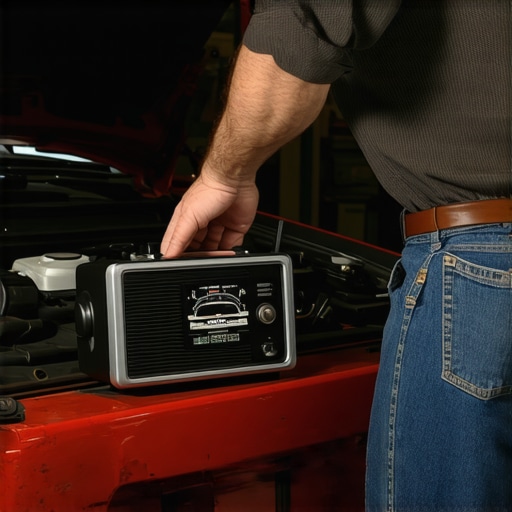
It was a cold, foggy morning when my car refused to start. The dashboard was lit up like a Christmas tree, and I felt that sinking feeling in my gut—my vehicle’s charging system had failed again. Frustration mixed with worry because, honestly, I didn’t want to shell out for yet another costly repair. Then I remembered a quirky trick I learned years ago: using a simple AM radio to diagnose my alternator. That lightbulb moment changed how I approach car troubles, making me more confident and saving me money.
A Quick, No-Tools Trick to Check Your Alternator
Ever since that morning, I’ve been on a mission to share this straightforward method with fellow drivers. No fancy diagnostic tools, no expensive mechanic visits—just an old radio and a bit of know-how. If you’re tired of being left in the dark about your vehicle’s health, stick around. Today, we’ll uncover how to detect if your alternator is on its last legs with a simple AM radio test everyone can do.
Is It Really Worth the Hype? Common Skepticism and My Mistake
I admit, when I first heard about this trick, I was skeptical. I thought, “How can a radio tell me anything about a car’s electrical system?” My early mistake was assuming this was just a myth. But after several personal experiments and reading automotive forums, I realized there’s real science behind it. The trick is to listen carefully for radio static, which indicates fluctuating electrical activity. Misdiagnosing or ignoring these symptoms can lead to unexpected breakdowns—something I learned the hard way. To build trust, I recommend reading about *vehicle diagnostics* and how early detection can save you money, like in this comprehensive guide to simple checks before your next road trip.
Outside of personal experience, automotive experts have shown that electrical noise on AM radios can reveal alternator problems, making this a practical, low-cost diagnostic method that growers and everyday drivers alike can master. It’s a handy skill that turns an ordinary radio into a makeshift diagnostic tool, giving you peace of mind during daily drives or long journeys.
So, if you’ve ever wondered, “Is my alternator failing?” or found yourself stranded unexpectedly, you’re in the right place. Next, we’ll dive into how to perform this test step-by-step, what signals to look for, and how to interpret them. Ready to become your own mechanic? Let’s get started.
Get Ready to Test Your Alternator
Begin by parking your car in a safe, quiet area and turning off all electrical accessories, such as headlights, radio, and air conditioning. This reduces background noise, making it easier to detect radio static. Remember, safety first—engage the parking brake and ensure the engine is completely off before starting.
Start Your Engine and Tune the Radio
Start your vehicle and set your AM radio to a station with minimal static. Slightly tune the station across the dial until you find a clear signal. This is crucial because a steady, clear station helps you distinguish between normal noise and any irregular electrical activity caused by the alternator. I recall a morning when I started my car, and the static intensified unexpectedly—signaling trouble ahead.
Listen for Changes in Radio Static
With the engine running, pay close attention to the radio static. A stable, minimal static level is normal, but fluctuations, crackles, or a sudden increase in noise suggest your alternator may be losing its ability to generate a steady electrical current. Think of it as a heartbeat irregularity; continuous irregularities hint at underlying issues. When I performed this test on my car, I noticed the static became increasingly jagged, which prompted me to get my alternator checked before a breakdown.
Interpreting the Signals
If the static remains steady and minimal, chances are your alternator is functioning properly. However, if it varies with engine speed—becoming louder or more erratic when revving—it indicates your alternator might be struggling to keep up. A helpful analogy is likening it to a garden hose with inconsistent water flow—a turbulent pattern spilling out when the pressure fluctuates. To verify further, consider checking the battery voltage with a multimeter or consulting [vehicle diagnostics](https://repairmycarpro.com/decoding-vehicle-diagnostics-what-your-car-is-trying-to-tell-you) for a comprehensive assessment.
Performing a Controlled Test
While the engine is running, carefully rev the engine slightly—just enough to observe whether the static pattern changes. An increase in noise at higher RPMs may signal a failing alternator. Be cautious not to over-rev; gentle increases mimic normal engine behavior. Once done, turn off the engine and listen to the radio again. Any persistent irregular static after turning off indicates residual electrical issues, potentially requiring professional inspection.
Additional Tips and Precautions
Remember, ambient electrical interference from power lines or electronic devices can affect your readings. Conduct the test in a location away from strong electronic emissions for more accurate results. Also, if your vehicle exhibits abnormal electrical behavior – dimming lights, warning symbols, or dead batteries – it’s wise to navigate to [essential auto repair strategies](https://repairmycarpro.com/essential-auto-repair-strategies-for-frequent-drivers) or contact a professional for further diagnostics.
Using this simple radio test provides a quick and effective way to gauge your alternator’s health without costly tools. It’s a valuable skill, especially in situations where a mechanic isn’t immediately available. Just remember: consistent listening and cautious interpretation are key to making this trick work for you.
When it comes to auto repairs, many drivers operate under misconceptions that can cost them time and money. A prevalent myth is that all oil changes are created equal; however, recent studies highlight that using the wrong oil type or neglecting modern oil change innovations can accelerate engine wear. For example, synthetic oils and advanced formulations like those discussed in [oil change innovations](https://repairmycarpro.com/oil-change-innovations-technologies-that-save-your-engine) provide better protection, but only if applied correctly.
Another misconception surrounds vehicle diagnostics. Numerous car owners believe that DIY checks are sufficient, yet advanced diagnostics involve complex sensors and algorithms. Knowledge of intricacies, such as interpreting signals from electronic control units, can prevent costly breakdowns, a topic thoroughly covered in [decoding vehicle diagnostics](https://repairmycarpro.com/decoding-vehicle-diagnostics-what-your-car-is-trying-to-tell-you). Falling for simple, superficial tests may lead to missed issues, especially with brake systems.
In brake service, many think that replacing pads alone guarantees safety. Still, as explained in [brake service myths busted](https://repairmycarpro.com/brake-service-myths-busted-what-really-matters-for-safety), ignoring underlying issues like warped rotors or failing calipers is a dangerous oversight. It’s a common trap to replace parts without addressing root causes, compromising vehicle performance.
A secret is that regular maintenance isn’t just about ticking boxes. The real nuance lies in understanding the interaction of components. For instance, neglecting small issues like a tiny pebble in your brake dust shield can escalate into significant problems, which is why having a detailed approach is essential.
Advanced drivers ask: How does one distinguish between a minor noise and a serious fault? This question hints at the importance of skillful troubleshooting. For example, a squealing belt might seem trivial, but as with [the squeaky belt fix](https://repairmycarpro.com/how-to-fix-a-squealing-belt-without-replacing-the-tensioner), ignoring it can lead to engine overheating or breakdown.
A critical mistake many make is trusting outdated advice or generic solutions. Modern vehicles incorporate sophisticated sensors and control systems, demanding updated knowledge and tools. Relying solely on intuition, without leveraging diagnostic data, can result in overlooked issues. As outlined in [advanced vehicle diagnostics](https://repairmycarpro.com/how-advanced-vehicle-diagnostics-prevent-costly-breakdowns), precision matters.
So, what common repair myths have you encountered? Have you ever fallen into this trap? Let me know in the comments and share your experiences. Staying informed and questioning assumptions can save you time and money, making you a smarter car owner.Maintaining your vehicle’s health over time requires more than just regular check-ups; it involves investing in reliable tools and applying proven methods. One tool I personally swear by is a high-quality digital multimeter, like the Fluke 115. It provides precise voltage readings, allowing me to monitor battery health and electrical systems without guesswork. Using a multimeter regularly helps catch issues early, such as low charging voltage, preventing costly repairs. For diagnostics, I recommend OBD-II scanners like the BlueDriver Bluetooth, which pairs seamlessly with my smartphone. It offers detailed codes and live data, enabling me to interpret engine performance and identify problems swiftly. This proactive approach aligns with the insights found in [decoding vehicle diagnostics](https://repairmycarpro.com/decoding-vehicle-diagnostics-what-your-car-is-trying-to-tell-you), emphasizing the importance of accurate data in extending vehicle lifespan.
Lessons From the Road That Changed My Approach to Auto Repairs
Over the years, I’ve learned that the most effective auto diagnostics often come from keen observation and unconventional methods. One of my biggest lightbulb moments was realizing that a simple AM radio could reveal a failing alternator, transforming how I handle car troubles. This simple trick taught me the importance of trusting basic tools and paying attention to subtle signals, which can save significant money and prevent breakdowns. The realization that listening closely to radio static could diagnose electrical issues underscored that sometimes, the simplest solutions are the most powerful, especially when backed by personal experience and a curiosity to learn more.
Check Your Car’s Heartbeat: Practical Tools That Truly Help
Beyond the radio trick, investing in a good digital multimeter like the Fluke 115 has been a game-changer in monitoring my vehicle’s health. It allows me to catch issues like low voltage early, preventing expensive repairs. Additionally, using an OBD-II scanner such as the BlueDriver Bluetooth provides detailed insights into engine performance directly from my smartphone. These tools have empowered me to perform proactive maintenance, aligning with expert advice found in resources like decoding vehicle diagnostics. Trusting these reliable instruments is a testament to the importance of quality gear in confidently managing car health and avoiding unnecessary trips to the mechanic.
Take Action Now – Your Vehicle’s Future Is in Your Hands
Remember, becoming familiar with simple diagnostic techniques and trusted tools can drastically improve your driving experience. Whether it’s performing a quick radio test or regularly checking your battery voltage, your proactive efforts will lead to safer, more reliable trips. Don’t wait for your car to give up; instead, listen to the signals and act early. Your vehicle’s well-being is an ongoing journey, and with these insights, you’re better equipped to navigate it. Now, I challenge you—have you ever tested your alternator with a radio? Share your experiences below and let’s learn together from each other’s journeys.