
I remember standing in my driveway last February, breath frosting in the air, clicking my key fob like a madman. Silence. My old sedan had finally given up the ghost. I limped it to the local shop because they advertised a “free” battery check on a big neon sign out front. Forty-five minutes later, I was staring at a $60 bill for “comprehensive electrical diagnostics.” It felt like a gut punch. They didn’t even replace the battery; they just charged me to tell me it was dead. Have you ever been blindsided by a “diagnostic fee” for something that was supposed to be free? It’s a frustrating rite of passage for many drivers, but it doesn’t have to be yours. Today, I am going to show you how to dodge these sneaky shop fees and take control of your car’s power supply. This isn’t just about saving a few bucks; it’s about not being the person who gets taken advantage of because they didn’t know which questions to ask. [image_placeholder_1]
Stop Letting Shops Charge You for a “Free” Battery Test
That experience in the cold was a major lightbulb moment for me. I realized that shops often use “free” as a hook to get you in the door, then find ways to bill you for the technician’s “labor time” or shop supplies. When I first started tinkering under the hood, I made the classic rookie mistake of assuming every “check” required a professional. I once spent a whole afternoon waiting for a shop to tell me a terminal was just loose—a [simple test for a failing fuel pump](https://repairmycarpro.com/the-simple-test-for-a-failing-fuel-pump) or battery would have saved me half a day and a lot of embarrassment. The truth is, most big-box auto parts stores will test your battery for actually zero dollars because they want to sell you the replacement part, not the labor. If you are paying a repair shop for [basic vehicle diagnostics](https://repairmycarpro.com/decoding-vehicle-diagnostics-what-your-car-is-trying-to-tell-you), you are essentially paying for a service that’s available for free right down the street. According to data from Consumer Reports, car batteries typically last three to five years, and knowing how to monitor that window yourself is the best way to avoid an emergency.
Can a Regular Driver Really Trust a DIY Battery Check?
You might be skeptical. After all, cars are basically rolling computers now, right? It’s easy to feel like you’ll mess something up. I used to worry that I’d accidentally fry my ECU or cause the [check engine light to turn off on its own](https://repairmycarpro.com/why-your-check-engine-light-turns-off-on-its-own) by touching the wrong thing. But testing a battery is one of the safest and most straightforward tasks you can do. It’s significantly easier than a full [brake service](https://repairmycarpro.com/the-ultimate-guide-to-brake-service-for-safety-and-performance) and requires almost no heavy tools. By learning a few simple tricks, like how to use a $20 multimeter, you can diagnose [why your car battery dies every time it gets cold](https://repairmycarpro.com/why-your-car-battery-dies-every-time-it-gets-cold-outside) before a shop tries to upsell you on a $600 alternator you don’t even need. Stick with me, and I’ll walk you through the steps to keep your money in your pocket where it belongs.
The first thing you need to do is stop looking at your battery as a black box of mystery and start seeing it as a simple reservoir. If the reservoir is leaking or the pipes are clogged, you are going to have problems. Most people assume that if the car won’t start, the battery is automatically junk. I fell into this trap myself about three years ago with my wife’s SUV. I was convinced the battery was toast because it was four years old, so I bought a brand new one for $180, installed it, and… nothing. The car still wouldn’t crank. It turned out to be a $5 fuse. I felt like a total amateur because I skipped the basic vehicle diagnostics that would have taken me five minutes.
Scrub Those Terminals and Save Your Starter
Before you even pull out a tool, look for the ‘blue fuzz.’ That crusty oxidation on your battery terminals acts like an electrical insulator. Imagine trying to drink a thick milkshake through a straw that someone is pinching shut—that is exactly what your starter is going through when your terminals are dirty. I once spent twenty minutes cleaning a neighbor’s terminals with a mixture of baking soda and water, and the car fired right up. They were ready to call a tow truck for a complex basic vehicle diagnostic, but a simple scrub saved them a $100 shop visit. If your terminals are tight and clean but the car still struggles, you need to move to the voltage test.
The 12.6-Volt Rule You Should Never Ignore
Grab a digital multimeter—you can find them for less than the price of a takeout pizza. Set it to DC voltage and touch the probes to the battery terminals. A healthy battery should read 12.6 volts when the car is off. If you are seeing 12.2 volts, your battery is only at 50% charge. This is often why your car battery dies every three days; it simply isn’t holding enough of a ‘head’ of energy to overcome the initial resistance of the starter motor. 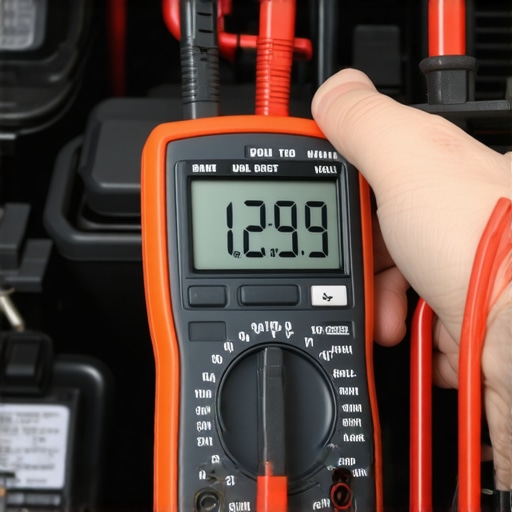 If you see anything below 10 volts, you likely have a dead cell, and no amount of jumping it will bring it back to life for long. Using auto repair hacks like this keeps you from guessing and spending money on parts that are actually still good.
Check the Alternator Before You Replace a Good Battery
This is where the ‘pros’ often get people. They replace the battery, but the real issue is the charging system. To test this, keep your multimeter connected and start the engine. The voltage should jump from 12.6 to somewhere between 13.5 and 14.5 volts. If the number stays the same or drops while the engine is running, your alternator is retired. This is the simple test to see if your alternator is killing your battery. Performing this check ensures you aren’t putting a brand-new battery into a car that is just going to drain it again in twenty miles. It’s a vital part of top auto repair tips to extend your vehicles lifespan because it prevents the unnecessary stress of deep-cycling a battery that wasn’t designed for it.
Let’s dig deeper into where most drivers go wrong once they get past the battery basics. I’ve seen guys spend hundreds on premium synthetic oil only to buy the cheapest filter on the rack. It’s a massive mistake. The oil filter brand that causes low oil pressure lights is a real threat; some budget filters have such poor flow rates that they trigger engine sensors, making you think you have a mechanical failure when it’s just a $4 part. A study by AAA found that synthetic oils offer 47% more protection than conventional oils, but that benefit is neutralized if your filter bypasses or clogs. This is the ‘oops’ factor that turns a simple maintenance task into a headache. You also need to watch out for the mistake of using the wrong oil viscosity in cold weather, which can starve your top-end of lubrication during those critical first seconds of a cold start. 
How Much Can You Really Trust Your OBD2 Scanner?
Many people think that once they buy a $30 code reader, they’ve mastered how advanced vehicle diagnostics prevent costly breakdowns. But a code is just a starting point, not a diagnosis. For instance, a lean condition code doesn’t always mean you need a new sensor; it could be a vacuum leak or a failing fuel pump. If you just swap parts based on the code, you’re ‘parts cannoning’ your car and wasting money. Real expertise comes from looking at the live data stream. I’ve seen people get stuck in a loop of brake service myths busted, thinking they need new rotors when they really just have a stuck caliper slide pin. If you want to use auto repair hacks effectively, you have to look at the system as a whole. When it comes to stopping power, most drivers think more expensive pads always equals better stopping. That’s not always true. High-performance ceramic pads might actually perform worse than basic semi-metallic ones if they never reach their optimal operating temperature in daily city driving. This is a nuance often missed in the ultimate guide to brake service. Also, beware of the truth about using cheap aftermarket sensors in your engine. Your car’s computer is programmed for specific electrical resistances; an off-brand sensor might be close enough to turn off the light but far enough off to ruin your fuel economy and cause rough idling. Have you ever fallen into the ‘cheap part’ trap only to have it fail a month later? Let me know in the comments below. Staying ahead of these nuances is the key to modern oil change innovations and long-term vehicle health.
If you’re ready to stop guessing and start knowing, you need to invest in a specific set of investigative tools. I’m not talking about a thousand-dollar professional chest. I’m talking about a decent OBD2 Bluetooth dongle. I personally use a BlueDriver because it doesn’t just give you a code; it gives you a list of most likely fixes based on actual repair data. This is exactly how advanced vehicle diagnostics prevent costly breakdowns for people who don’t want to spend their weekends in a shop waiting room. Having the right data in your palm means you can spot the 10 dollar sensor that causes your car to stumble during acceleration before it leaves you stranded on the highway. I also keep a pair of digital calipers in my glovebox to measure pad thickness during every tire rotation—it’s the only way to ignore the noise and follow the ultimate guide to brake service with precision.
How do I maintain my car’s electrical health over time?
Consistency is the name of the game here. Every time I do an oil change, I make it a habit to check the battery’s resting voltage. If you notice it slowly creeping down toward 12.3V over several months, your battery is telling you it’s tired. This proactive approach is one of those top auto repair tips to extend your vehicles lifespan. I also recommend performing a parasitic draw test once a year. This involves using your multimeter to see if something like a stuck relay is sucking power while the car is off. It’s often the secret reason why your car battery dies every three days even after you’ve replaced the alternator.
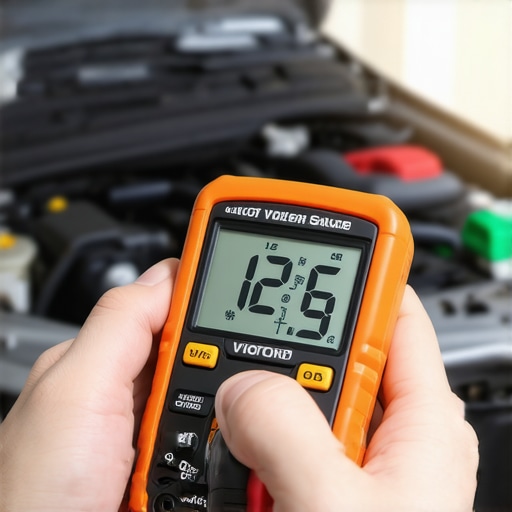
Looking ahead, the DIY scene is changing rapidly. As we move toward more hybrid and electric platforms, being a mechanic will feel more like being a software engineer. We’re seeing a shift where technical documentation, like the SAE J1979 standard for diagnostic communication, is becoming the gatekeeper for basic repairs. In the next decade, I predict we’ll see affordable augmented reality (AR) apps that project torque specs and wiring diagrams directly onto your engine through your phone’s camera. This level of vehicle diagnostics explained will make even the most complex jobs accessible to anyone with a smartphone. If you want to stay ahead of the curve, start by performing that parasitic draw test this weekend. Grab your multimeter and see if your car is leaking electricity while it sleeps—it’s one of the most empowering essential auto repair strategies for frequent drivers who want total control over their vehicle.
The Hardest Lesson I Learned About Chasing Electrical Shadows
If there is one thing that years of DIY repair have taught me, it is that your car is constantly trying to talk to you. The problem is, most of us don’t speak the language until we’ve already been burned by a high repair bill. I’ve realized that vehicle diagnostics aren’t nearly as intimidating as shops want you to think. For instance, I used to assume a dimming dashboard meant I needed a new alternator immediately, but often it’s just why your headlights dim when you use the power windows—a classic sign of a struggling ground connection or an old battery. My biggest lightbulb moment? Realizing that 80% of electrical issues are caused by the 20% of components you can actually see and clean yourself. Don’t let a mechanic convince you that a simple volt test is a ‘proprietary diagnostic.’ It’s your car, and you have every right to know exactly what’s happening before you hand over your credit card.
The Small Toolkit That Saves Me Thousands Every Year
You don’t need a professional-grade garage to keep your car in top shape. I’ve found that three specific items make all the difference in staying independent. First, a quality digital multimeter is non-negotiable for anyone following vehicle diagnostics explained for beginners. Second, I swear by the BlueDriver Bluetooth scanner because it translates those cryptic codes into plain English, showing you exactly how advanced vehicle diagnostics prevent costly breakdowns by spotting trends before they become failures. Lastly, never underestimate a simple brass-wire brush. Most ‘dead’ batteries are actually just victims of poor contact. These tools are the backbone of my essential auto repair strategies for frequent drivers who want to avoid the tow truck.
Claim Your Independence from the Repair Shop Waiting Room
Stepping up and doing your own checks isn’t just about the money—though the savings are incredible. It’s about the peace of mind that comes from knowing you aren’t being taken for a ride. When you master decoding vehicle diagnostics, you transform from a target into an informed owner. You’ll find that once you stop fearing the ‘black box’ of your car’s electrical system, you’ll start enjoying the drive much more. Don’t wait for the next cold snap to test your battery; go out there this weekend and see what your multimeter has to tell you. Have you ever been blindsided by a ‘diagnostic fee’ for something that turned out to be a simple fix? Let me know your story in the comments below!