

I stood there in my driveway, breath fogging up in the 6 AM air, staring at a dashboard that refused to glow. This was the third time in a week. I had just replaced the battery on Tuesday, yet here I was on Friday, listening to that pathetic clicking noise again. It is absolutely infuriating. You feel betrayed by your own machine, especially when you have places to be. I will be honest with you: early in my DIY journey, I made the expensive mistake of just throwing parts at the problem. I bought three different batteries in a single month because I was convinced the auto parts store was selling me duds. They weren’t the problem; my lack of a real plan was. I was treating the symptom, not the disease.
Stop the Cycle of Jump-Starts and Morning Frustration
If you are reading this, you are likely stuck in that same exhausting loop. You jump the car, it runs fine for forty-eight hours, and then—boom—dead silence on the third morning. We are not just going to talk about “cleaning your terminals” or “tightening the cables” today. We are diving into the real, sneaky reasons your vehicle is bleeding power while it sits in your garage. We are going to find that hidden energy thief and stop it for good. Whether you are dealing with a parasitic battery drain or a charging system that is playing tricks on you, I am going to help you pin it down using simple steps I wish someone had told me years ago.
Is my car just too old to hold a charge anymore?
A lot of folks get hit with the fear that a car over five or six years old is just destined to have “electrical gremlins” that can never be fixed. That is a total myth that keeps people trapped in unnecessary car payments. Most of the time, it is not a haunted electrical system; it is a single ten-dollar relay that is stuck on or a glovebox light that refuses to quit. According to data from AAA, battery-related failures consistently rank as the top reason for roadside assistance calls, yet a huge percentage of those batteries are actually healthy but victims of external drain. Have you ever felt like your car was personally trying to sabotage your career? Reach out and contact us if you are at your wit’s end, because I have been in those greasy shoes. Sometimes, the issue is as weird as a new alternator overcharging and cooking your battery from the inside out. Let’s look at why this is happening before you spend another dime on a tow truck.
Check your ground connections first
Before you tear into the fuse box or spend another hundred dollars on a part, you have to look at the ground. Your vehicle’s electrical system is a loop, and that loop is only as strong as its return path to the frame. Think of it like a plumbing system where the drain is half-clogged; the pump can push all it wants, but the water has nowhere to go. I once spent three days chasing a ‘dead’ battery on an old truck where the cables looked perfect from the top. When I finally crawled underneath, I found the main ground wire was so corroded it felt like a dry twig in my hand. This is the ground wire problem that mimics a bad starter motor. Take a wire brush and scrub every contact point until you see bare, shiny metal. If that connection is weak, your battery will never reach full capacity, and you will be stuck in a permanent state of under-charging.
Stop the silent power leak with a multimeter
If your connections are pristine but the battery still goes flat overnight, you are likely dealing with a parasitic drain—a hidden component that refuses to turn off. To find it, you need to perform vehicle diagnostics explained for someone who does not want to spend a fortune at the dealer. You will need a basic multimeter. Switch the meter to the 10A (Amps) setting and move the red lead to the corresponding port. Disconnect your negative battery cable and place the meter in ‘series’—one probe on the battery post and the other on the cable end. 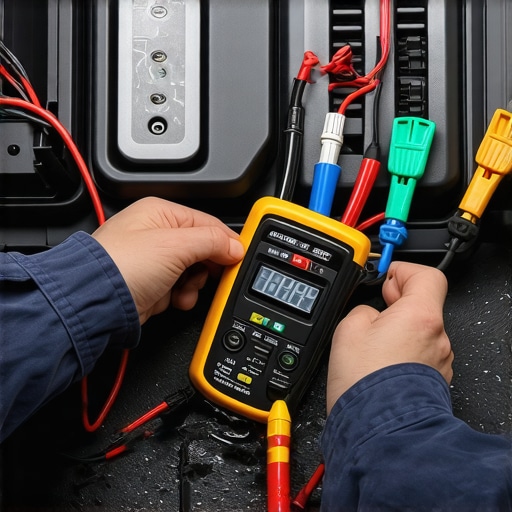 Modern cars are like computers; they take time to fall asleep. Wait about thirty minutes with the doors closed and the hood latch tripped so the car thinks it is sealed. If the meter shows more than 0.05 amps, something is stealing juice. I remember a case where a simple stuck relay in the door lock was pulling enough power to drain a brand-new battery in six hours. Using these auto repair hacks to narrow down the circuit by pulling fuses one at a time will save you from the expensive ‘parts cannon’ approach.
Is your alternator killing your new battery?
Sometimes the problem is not a leak, but a flood. If your alternator’s voltage regulator fails, it might start pumping out 16 or 17 volts. This is essentially boiling the acid inside your battery. If you notice a distinct smell of rotten eggs or see a white, powdery crust around the battery vents, you need to know how to tell if your car alternator is overcharging the battery. On the other hand, if the alternator has a blown diode, it can actually act as a drain itself, sucking power back out of the battery the moment you turn the key off. This often explains why your car battery dies every time it gets cold outside, as the cold already reduces chemical efficiency, and the diode leak finishes the job. Understanding how to find a parasitic battery drain with a basic multimeter is the only way to stop guessing and start fixing.
Most people think if the battery tester at the local shop says ‘Good,’ then the battery is definitely not the problem. I am here to tell you that is a dangerous assumption. Those handheld testers often use conductance to estimate health, which can be fooled by a surface charge. I have seen batteries pass a quick shop test only to fail miserably under a true carbon pile load test. If you have ever replaced a part and still had the same issue, you have likely experienced the frustration of how how advanced vehicle diagnostics prevent costly breakdowns when performed with the right methodology. We have to look past the ‘Pass/Fail’ screen and understand the internal resistance of the cells.
Stop trusting the handheld tester blindly
The real nuance here is that modern electronics are incredibly sensitive to voltage drops that a human wouldn’t even notice. A battery might have enough juice to turn the lights on, but if the voltage dips below 9.6 volts during the cranking phase, the Engine Control Unit (ECU) might simply refuse to fire the injectors. It is a protective measure that feels like a breakdown. This is often why your new alternator still is not charging the battery correctly; the computer is seeing a ‘noisy’ signal and shutting down the charging circuit to protect the rest of the car. According to a study by the Car Care Council, nearly 80% of vehicles on the road require at least one maintenance service that the owner is unaware of, often because these digital ‘handshakes’ between components are failing.
Can your car’s computer actually sabotage a new battery?
In many vehicles built in the last decade, you cannot just swap the battery and walk away. You have to perform a process called battery registration. If you skip this, the car’s charging logic will continue to treat the new battery as if it were the old, degraded one, pumping in high-amperage current that will cook it within a year. This is one of the most common the mistake people make when jump starting a modern car or replacing parts without the proper scan tool. You aren’t just a mechanic anymore; you are a systems administrator for a rolling computer. 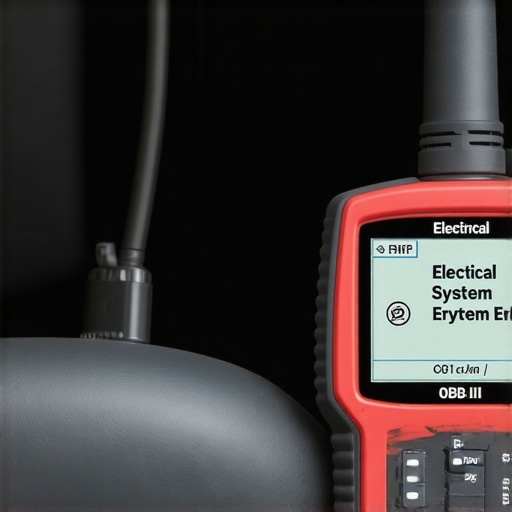
The hidden danger of ignoring the small stuff
I see this all the time with sensors too. People try to save twenty bucks by getting a generic part, but the truth about using cheap aftermarket sensors in your engine is that their resistance values are often just slightly out of spec. The car stays in ‘limp mode,’ and you think you have a major mechanical failure when you really just have a parts-quality issue. This ‘oops’ factor extends to basic maintenance too. For instance, why you should never skip the crush washer on your drain plug seems like a minor detail until a slow leak drains your pan on a long trip. Similarly, ignoring the brake fluid color that means you need a flush immediately can lead to moisture buildup that rots your ABS valves from the inside out. Have you ever fallen into this trap where a ‘new’ part or a simple oversight didn’t fix the problem? Let me know in the comments, and if you are still stuck, feel free to contact us so we can help you stop the guesswork.
I realized early on that if I wanted to stop being a victim of my own dashboard, I had to stop buying the cheapest tools available at the checkout counter. For years, I relied on a twenty-dollar code reader that did nothing but spit out cryptic numbers like P0300. It told me I had a misfire, but it never told me why. To truly master your machine, you need to step up to bidirectional control. This is the game-changer. When you are decoding vehicle diagnostics, a bidirectional scanner allows you to actually talk back to the car. You can command the radiator fan to turn on or pulse an individual fuel injector to see if it is physically clicking. It transforms you from a parts-changer into a diagnostic surgeon.
Upgrade your toolbox with a bidirectional scanner
The difference between a basic scanner and a professional-grade unit is like the difference between a flashlight and an X-ray machine. Professional technicians rely on these tools because how advanced vehicle diagnostics prevent costly breakdowns is all about seeing the data in real-time before the metal actually breaks. According to technical documentation from SAE International regarding the J2534 standard, the complexity of vehicle communication networks (CAN bus) has increased so much that simple ‘read-only’ tools often miss intermittent signal drops that occur in milliseconds. I personally use an Autel unit because it lets me bleed ABS pumps and reset steering angle sensors—things that used to require a trip to the dealer. 
How do I keep these complex systems healthy for the long haul?
Maintenance is not just about the big repairs; it is about the digital and fluid hygiene of the vehicle. You should be looking at top auto repair tips to extend your vehicles lifespan as a holistic checklist. This means staying ahead of your the ultimate guide to brake service for safety and performance by checking for moisture in the lines long before the pedal feels soft. I also keep a close eye on oil change innovations, specifically moving toward high-quality full synthetics that contain better detergents for variable valve timing solenoids. These tiny screens in your engine can clog with the tiniest bit of sludge, leading to thousands of dollars in timing chain repairs. By using essential auto repair strategies for frequent drivers, like performing a battery health check every six months, you can prevent the low-voltage ripples that cause those annoying ghost codes in the first place.
Software is the new wrench in your garage
Looking ahead, the trend is moving toward ‘Software-Defined Vehicles.’ In the next five to ten years, your car will likely receive over-the-air updates that could change how your engine idles or how your regenerative braking feels. The DIYer of the future will need to be as comfortable with a laptop as they are with a socket set. We are already seeing this with Tesla and Ford’s newer electric platforms. If you want to stay ahead of the curve, I want you to try this specific tip: the next time your Check Engine light pops up, don’t just read the code and clear it. Go into the ‘Live Data’ menu on your scanner and watch your Short Term Fuel Trims while you blip the throttle. If those numbers jump higher than 10%, you have found a vacuum leak before it even had the chance to stall your engine. It is about being proactive, not reactive. If you are struggling to make sense of the data your car is screaming at you, do not hesitate to contact us and we can walk you through the specifics of your make and model.
Lessons from the Driveway that Saved My Sanity
After years of wrestling with electrical gremlins, I realized that parts-swapping is the most expensive way to learn mechanics. I once replaced a starter three times because of the simple reason your car wont start after a short trip—which turned out to be a heat-soaked relay, not the motor itself. Here are the lightbulb moments that changed everything for me:
- Don’t trust the box: Just because a part is “new” doesn’t mean it works. Always test a new alternator or battery before you leave the shop parking lot if you can.
- Listen to the ghosts: If you hear the clicking sound under your dash that drives you crazy, it’s usually a failing blend door actuator or a relay that’s stuck on, slowly eating your battery.
- Voltage isn’t capacity: A battery can show 12.6 volts but have zero “punch” to actually move the pistons. A load test is the only truth.
Tools That Turn Guesswork Into Certainty
You don’t need a professional garage, but you do need a few specific items to stop the “throwing money at it” phase. I swear by a high-quality digital multimeter with a min/max capture feature; it helps you catch those millisecond voltage drops. I also recommend keeping a copy of your vehicle’s specific wiring diagram nearby. Using auto repair hacks like looking up TSBs (Technical Service Bulletins) before you start can save you hours of searching for a wire that isn’t even there. Finally, a basic bidirectional scanner is your best friend for vehicle diagnostics explained in a way that actually makes sense for a DIYer.
Your Path to Automotive Independence
The first time you successfully find a parasitic drain or fix a grounding issue yourself, your relationship with your car changes. You no longer fear the unknown or feel at the mercy of a service writer’s quote. By applying top auto repair tips to extend your vehicles lifespan, you aren’t just saving money—you are gaining a rare kind of self-reliance. Mastering vehicle diagnostics is a journey, but every “click” you investigate brings you closer to being the expert your car needs. If you ever feel stuck or overwhelmed by a complex electrical layout, remember that we are here to help; just contact us and let’s get that machine back on the road. Have you ever replaced a battery only to have it die again the very next morning? Let me know your most frustrating electrical stories in the comments below!