

I was standing at the pump, sweat dripping down my neck, as the guy in the lifted truck behind me started laying on his horn. I had just finished filling up my old sedan, and when I turned the key, the engine just coughed and wheezed like it had run a marathon through a dust storm. It was humiliating. I spent forty-five minutes in that busy parking lot, letting the car ‘rest,’ eventually getting it to limp home while the engine stumbled every time I let off the gas. I was certain I was looking at a massive bill. In fact, I went ahead and tried to identify a bad fuel pump before it leaves you stranded because I was so sure the pump was dead. I spent an entire Saturday and several hundred dollars replacing a perfectly good part. It turns out, I was dead wrong. I was ignoring a much smaller, much cheaper problem. Today, I’m going to help you avoid that same expensive mistake. We’re going to walk through why your car effectively ‘chokes’ on its own fumes the moment you fill the tank, and how you can fix it for less than the cost of a decent steak dinner.
The Gas Station Stutter Is More Than Just Bad Luck
It is a specific, frustrating phenomenon: the car runs perfectly until the very moment you put fresh gas in it. You might think you got ‘water in the gas’ or a bad batch of fuel from a shady station, but in my experience, the fuel is almost never the issue. Usually, your car is actually drowning. When you fill up, the vapors in your gas tank need somewhere to go. If your EVAP system—the system responsible for catching those vapors—is not working right, it dumps all that raw gas vapor into the engine intake all at once. It is like trying to breathe while someone is holding a wet cloth over your face. This is where vehicle diagnostics explained becomes your best friend, because knowing what to look for keeps you from guessing and wasting money.
Is a tiny plastic valve actually worth the hype?
You might be skeptical that a small plastic component could cause such a massive headache. I certainly was. I thought there was no way a little purge valve was the reason I was stuck at a station at 6 PM on a Friday. But the data does not lie. According to the Car Care Council, neglected maintenance on the EVAP system is one of the top reasons vehicles fail emissions tests and experience driveability issues. If that valve is stuck open, it acts like a giant vacuum leak filled with gas fumes. It is not just a nuisance; it is actively killing your fuel economy and making your car work twice as hard to stay alive. Have you ever found yourself pumping the gas pedal just to get your engine to fire up after a trip to the station?
Stop Throwing Money at Symptoms Instead of the Source
My early mistake cost me a fortune because I did not understand essential auto repair strategies for troubleshooting the easy stuff first. I assumed ‘no start’ meant ‘no fuel,’ but in this case, it actually meant ‘too much fuel vapor.’ If your car stumbles or hesitates right after a fill-up, do not rush out to buy a new battery or a starter. It is much more likely that you are dealing with the 20 dollar part that usually fixes an evap system leak. Even if it is not that specific valve, checking for the 10 dollar sensor that causes your car to stumble during acceleration can save you from a mechanic’s diagnostic fee. We are going to look at the simple steps to confirm this is your problem before you spend a dime on parts you do not need.
Stop the Flood by Pinpointing the Purge Valve
The most likely culprit for your post-refuel struggle is the EVAP purge valve. Think of this valve as a security guard for gas fumes. Its only job is to wait until you are cruising down the highway to open up and let stored fuel vapors into the engine to be burned. When this valve fails, it usually gets stuck wide open. This means while you are at the pump, the vacuum of the engine intake is pulling in raw gas vapors that have no business being there yet. This is why how advanced vehicle diagnostics prevent costly breakdowns is so important; it helps you see the logic behind the failure. If the guard is asleep at the gate, the engine gets flooded with ‘fuel air’ instead of ‘clean air,’ and it essentially chokes. 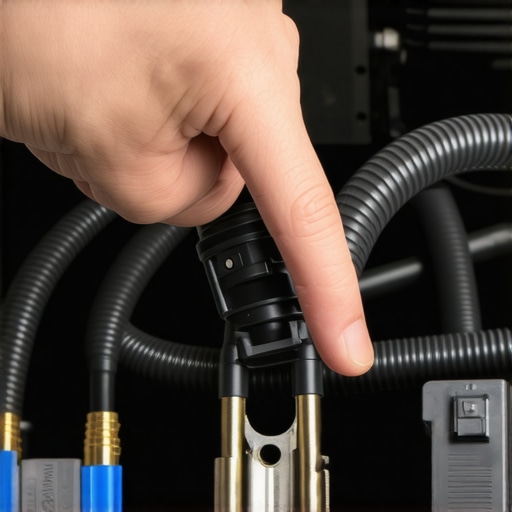
The Five Minute Test That Saves a Hundred Dollars
I remember the first time I tried to test this. I was in my driveway with a handful of mismatched tools, looking like a mad scientist. I pulled the valve off, wiped the grease on my jeans, and realized I could just use my own lungs to check it. To do this, locate the valve—usually a small black cylinder near the intake manifold with two hoses and one electrical plug. Unplug the hoses and the connector. Now, try to blow through the valve. If air passes through, it is dead. A functioning valve should be airtight when it has no power. If you can blow air through it, you have found the 20 dollar part that usually fixes an evap system leak detected warning. It is a simple binary test that beats paying a shop sixty bucks just to look at it. If you are struggling to find other air-related issues, learning how to find a vacuum leak with a cigar and a piece of hose can be another game-changer for your DIY arsenal.
Quit Topping Off Your Tank Before You Drown the Charcoal
We have all done it. The pump clicks off, but we want to round it up to the nearest dollar, so we squeeze the handle a few more times. Stop doing that. Your EVAP system uses a charcoal canister to trap vapors, not liquid. When you overfill, you are literally sloshing liquid gasoline into a system designed for air. This is one of those auto repair hacks save money without sacrificing quality that is actually just about changing a habit. Once that charcoal gets soaked in liquid gas, it is ruined, and it will keep sending that liquid toward your engine, causing that same stumbling or a ‘rough idle’ feeling. In some cases, this liquid can even fool other sensors, making you think you need the 10 dollar sensor that causes your car to stumble during acceleration when the real issue is just a flooded canister.
Essential Tools for a Successful Swap
If the blow test confirmed your valve is bad, the swap is straightforward. Most of the time, all you need is a pair of pliers to move the spring clamps on the hoses and a 10mm socket or a screwdriver to unmount the bracket. It is one of the most accessible essential auto repair strategies for frequent drivers because it requires zero specialized knowledge. Just make sure the engine is cool before you start poking around the fuel lines. I once tried to swap a valve on a hot engine and ended up with a nasty singular blister on my thumb that lasted three weeks. Take your time, match the direction of the arrow on the new valve to the old one, and you will be back to smooth starts in no time.Most DIYers—and even some pros—automatically assume that an EVAP code means there’s a literal hole in a rubber line somewhere. In my experience, that’s rarely the case on modern cars. We’re often dealing with electronic ‘laziness’ rather than a physical breach. Modern engine control modules (ECMs) are incredibly sensitive. If your purge valve takes 50 milliseconds too long to react, the computer throws a tantrum. This is where how advanced vehicle diagnostics prevent costly breakdowns really matters; it’s about watching the data stream, not just reading the code. If you just swap parts based on a generic scan, you’re playing a very expensive game of ‘Guess Who.’
Why does the car run fine once you finally get it started?
This is the advanced nuance that trips people up. If the valve is stuck open, the engine is flooded during the refueling process. But once you’ve cranked it enough to burn off that excess vapor, the engine’s ‘Long Term Fuel Trim’ starts to compensate. The computer realizes it’s getting too much fuel and starts cutting back the injector pulse. It masks the problem until the next time you open that gas cap. This ‘masking’ is why decoding vehicle diagnostics is so vital. You might think the problem ‘fixed itself,’ but you’re actually running a lean condition that’s eating your gas mileage and heating up your valves. The biggest trap I see is the ‘Parts Cannon’ approach. People see an EVAP code and buy a new gas cap, a purge valve, and a charcoal canister all at once. According to ASE-certified master technicians, over 30% of replaced EVAP components are actually functional; the real issue is often a corroded wire or a loose ground near the fuel tank. Before you spend a dime, use essential auto repair strategies like a simple visual inspection of the wiring harness. I’ve seen people spend $400 on a canister when a five-cent repair on a frayed wire would have solved it. 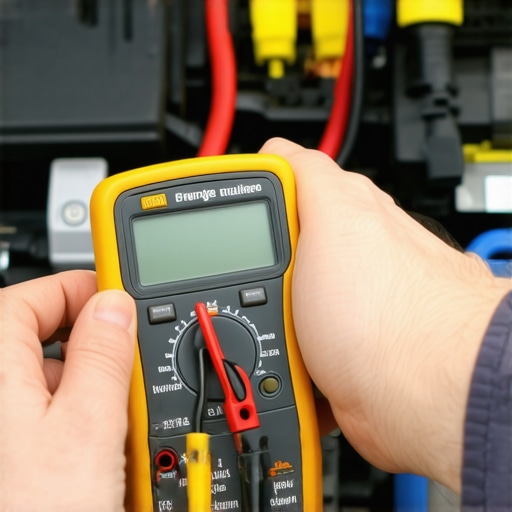 One ‘Oops’ factor that almost cost me a catalytic converter was using a ‘no-name’ budget valve from a random online marketplace. These cheap solenoids often have the wrong internal resistance. The computer sees the ‘wrong’ electrical load and thinks the circuit is failing, even if the valve is moving. When it comes to sensors and solenoids, stick to OEM or reputable brands. It’s similar to how the oil filter brand that causes low oil pressure lights can ruin an engine—saving five bucks on the part can cost you five thousand in the long run. Have you ever fallen into this trap? Let me know in the comments.I’ve realized over the years that the difference between a frustrated driveway mechanic and a confident one usually boils down to the data they’re looking at. If you’re still relying on a twenty-dollar code reader that just spits out a generic “P0442” code, you’re only getting half the story. To truly master how advanced vehicle diagnostics prevent costly breakdowns, you need a tool that handles “Live Data.” I personally use a bidirectional scan tool because it allows me to manually command the purge valve to open and close while the car is idling. This saves hours of manual labor because you aren’t guessing if the signal is reaching the part; you can literally hear the solenoid click or see the engine RPMs dip in real-time. This level of control is exactly what separates a ‘part swapper’ from a true technician.
How do I maintain my fuel and emissions systems for the long haul?
Keeping these systems happy isn’t just about what you do when they break; it’s about the small, consistent habits that prevent carbon buildup and vacuum issues. First, stop buying the cheapest gas at the station that looks like it hasn’t been painted since the eighties. Tier One fuels have specific detergents that prevent the “stickiness” in valves that causes these headaches. Second, don’t ignore your routine filters. We often talk about how how a dirty engine air filter ruins your fuel economy, but a clogged filter also changes the vacuum pressure in the intake, which can put unnecessary stress on your EVAP solenoids. Third, keep an eye on your oil health. With modern oil change innovations technologies that save your engine, your oil actually helps manage internal pressures that can impact how these sensors read. #IMAGE_PLACE_HOLDER_D#
Precision Tools Beat the Guessing Game Every Time
Beyond the fuel system, this data-first approach should apply to everything you do, including your brake maintenance. Many people get scared of modern ABS systems, but learning brake service myths busted helps you realize that a scan tool can even help you bleed brakes or diagnose a bad wheel speed sensor without guessing. According to technical documentation from Delphi Technologies, even a microscopic leak in the fuel system—as small as 0.020 inches—can trigger a full-system shutdown of certain convenience features like remote start on newer vehicles. This is why I recommend keeping a log of your “Long Term Fuel Trim” numbers. If they start creeping above ten percent, you’ve got a problem brewing long before the light comes on. Looking ahead, I predict that car manufacturers will eventually move toward “self-healing” EVAP systems that use internal pressure pumps to verify integrity every time the car is turned off, making the common “gas cap leak” a thing of the past. For now, we have to stay diligent. Use top auto repair tips to extend your vehicles lifespan by performing a “system health check” every time you rotate your tires. My big advice? Go grab a Bluetooth OBD-II dongle today—it’s the single best thirty dollars you will ever spend on your car. It turns your smartphone into a window into the engine’s soul, and it prevents you from being the person stuck at the pump with a car that won’t start. Decoding vehicle diagnostics is a superpower once you have the right screen in front of you.
What My Empty Wallet Taught Me About DIY Diagnostics
I learned the hard way that throwing parts at a problem is the quickest path to burnout and a drained bank account. My biggest lightbulb moment was realizing that how advanced vehicle diagnostics prevent costly breakdowns isn’t about owning the most expensive computer—it’s about patience and logic. I once spent three hundred dollars on a fuel pump when a twenty-minute visual inspection of a wiring harness would have shown me a frayed wire. Always verify the ‘why’ before you buy your first part.
Don’t let a generic code scare you into a major overhaul. Most of the time, essential auto repair strategies like checking for loose vacuum hoses or corroded grounds will fix ‘major’ symptoms for literal pennies. If your car only struggles specifically after a fill-up, that is a physical clue that narrows your search down to the EVAP system immediately, regardless of what the broader codes might suggest. Trust the timing of the failure as much as the electronics.
The Gear That Actually Lives in My Trunk
If you want to stop guessing and start fixing, you need a few staples in your mobile toolkit. First, a Bluetooth OBD-II adapter is non-negotiable for the modern driver. It turns your smartphone into a diagnostic powerhouse, making decoding vehicle diagnostics something you can do while sitting in the driver’s seat at the gas station. I also keep a simple set of 10mm sockets and spring-clamp pliers; these two tools alone handle about 80% of the sensor and valve swaps we have discussed today.
For deep-dive knowledge, I always recommend looking at factory service manuals over generic forums. Understanding top auto repair tips to extend your vehicles lifespan starts with knowing exactly how your specific model was engineered to behave. When you know the standard, the deviations become obvious.
Take Control of Your Commute Again
Getting your car to start smoothly every time doesn’t require a degree in mechanical engineering. It just requires a shift in how you approach the machine under the hood. By applying a few auto repair hacks save money without sacrificing quality, you can keep your vehicle running like new without the stress of the dealership waiting room. Remember, every time you fix a small issue like a purge valve, you’re also protecting bigger components from secondary damage, much like how oil change innovations technologies that save your engine prevent internal wear before it starts. Don’t be afraid to get your hands a little dirty to save a lot of money. Have you ever replaced a major part only to realize the problem was something much simpler? Let me know in the comments below!