
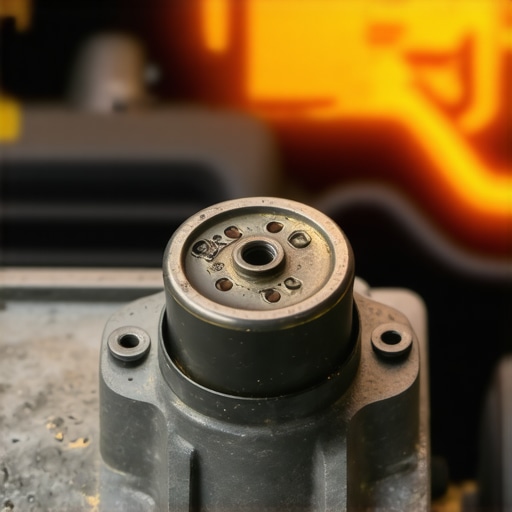
There I was, merging onto the I-77, heart pounding as my SUV decided 30 miles per hour was its new top speed. The engine screamed, the Check Engine light winked at me mockingly, and I felt that dreaded shudder through the floorboards. It’s called limp mode, and if you’ve ever felt your car suddenly lose its will to live while surrounded by semi-trucks, you know the pure, unadulterated panic it causes. For years, I assumed this meant my transmission was a pile of molten scrap metal, but a very expensive mistake taught me otherwise. I once spent nearly three grand on a full rebuild only to find out later that a single, sticky shift solenoid—a part that fits in the palm of your hand and costs less than a tank of gas—was the real culprit. Today, I am going to show you exactly how to identify this failure so you do not get taken for a ride by a repair shop.
Stop Panicking When Your Dashboard Lights Up
Most of us see that Limp Home notification and assume the worst for our bank accounts. In reality, your car’s computer is just being a protective parent. It detects a weird pressure reading or an electrical hiccup from a solenoid and restricts your gear range to prevent you from actually grinding the internal clutches into dust. It’s frustrating, sure, but it’s a safety net designed to keep a small problem from becoming a total engine failure. I’ve learned the hard way that decoding vehicle diagnostics is the first step toward keeping your sanity when the dash starts glowing. If I had known how to save your transmission with a simple fluid exchange back then, I might have prevented the sludge and metallic debris that eventually clogged my shift solenoid.
Is a fifty dollar part really worth the risk?
You might be skeptical. Can a tiny electrical magnet really be the difference between a smooth drive and a four-thousand-dollar repair bill? Absolutely. According to the technical experts at the National Institute for Automotive Service Excellence (ASE), a significant portion of transmission driveability issues are actually rooted in the electrical control circuits rather than the mechanical gears themselves. [image] But here is the kicker: I once tried to save money by using a no-name solenoid I found on a clearance site, which taught me the truth about using cheap aftermarket sensors in your engine—they often fail or send the wrong voltage within weeks. Today, we are going to look at why these solenoids fail and how advanced vehicle diagnostics prevent costly breakdowns by catching these gremlins before they strand you in second gear. Have you ever experienced your car suddenly losing power on the highway? Let me know, because that initial symptom is the key to knowing if your solenoids are to blame.
Grab a Scanner Before You Touch a Wrench
The very first thing you need to do is stop guessing. When your car enters limp mode, it records a specific code. Think of your car’s computer like a black box on an airplane; it knows exactly what went wrong ten seconds before the panic set in. I used to think these tools were only for professionals, but decoding vehicle diagnostics is now something anyone can do with a twenty-dollar dongle from the internet. When you plug it in, you are looking for codes in the P0700 range. If you see P0750 to P0770, you’ve likely found your culprit: a shift solenoid. These solenoids act like tiny gatekeepers or light switches; they open and close to allow pressurized fluid to move the gears. If the switch is stuck, the gate stays closed, and your car refuses to shift. This is one of those auto-repair hacks that save money without sacrificing quality because it prevents you from replacing the entire transmission when only one ‘switch’ is broken. 
The Fluid Check That Saves You Thousands
Before you start tearing out wires, pull the dipstick if your car still has one. If not, you’ll need to know how to check your transmission fluid without a dipstick through the standpipe. Transmission fluid should be a bright, translucent red. If it looks like muddy coffee or smells like burnt toast, your solenoid hasn’t just failed electrically; it’s likely physically clogged with debris. This debris often causes the shudder when shifting that feels like a rumble strip. I once worked on a neighbor’s truck that wouldn’t move past second gear. He was convinced the ‘gears were stripped.’ We drained the fluid and found it was so thick it looked like molasses. A simple flush and a new solenoid brought that truck back to life for less than two hundred dollars. It’s a prime example of how advanced vehicle diagnostics prevent costly breakdowns by pointing you toward the fluid health before you commit to a mechanical rebuild.
How I Found a Clogged Screen in My Own Driveway
A few years ago, my own sedan started acting up, specifically showing why your automatic transmission hesitates to engage drive after sitting overnight. I pulled the solenoid pack and discovered the tiny mesh screens were packed with fine metallic silt. It wasn’t a total failure, but it was enough to slow down the fluid pressure. Instead of buying a new unit immediately, I cleaned the screens with some brake cleaner and re-installed them. It worked perfectly for another two years. However, if the solenoid’s internal coil has burnt out, no amount of cleaning will help. You can test this with a multimeter by checking the resistance (ohms) across the pins. If it reads ‘OL’ or ‘Open Link,’ the internal wire is snapped, and the part is officially junk. Just remember, when you go to buy the replacement, avoid the bargain-bin specials; I’ve already shared the truth about using cheap aftermarket sensors in your engine and how they can lead to even more ghost codes and frustration. Fix it once, fix it right, and keep that SUV on the road.We’ve talked about the physical hardware, but let’s look at the logic that controls it. Most DIYers treat a diagnostic code like a ‘replace this part’ command, but that is a dangerous way to approach a repair. One of the biggest myths I see in the community is that a P0420 always means a dead exhaust component. In reality, why your scanner says p0420 but the converter is actually fine is often a matter of a tiny exhaust leak or a lazy sensor that hasn’t completely failed yet. The same nuance applies to your transmission.
Can a weak battery actually trigger transmission limp mode?
In my experience, yes. This is the ‘advanced’ trap that many professional shops even fall into. Modern Transmission Control Modules (TCMs) are incredibly sensitive to voltage fluctuations. According to research from the Society of Automotive Engineers (SAE), electronic control modules can exhibit erratic behavior and throw false failure codes if voltage drops even slightly below 12.6V during a high-load event like a gear engagement. I’ve seen people spend thousands replacing perfectly good solenoid packs because they didn’t realize why your car battery dies every time it gets cold outside can lead to these low-voltage ‘ghost codes.’ 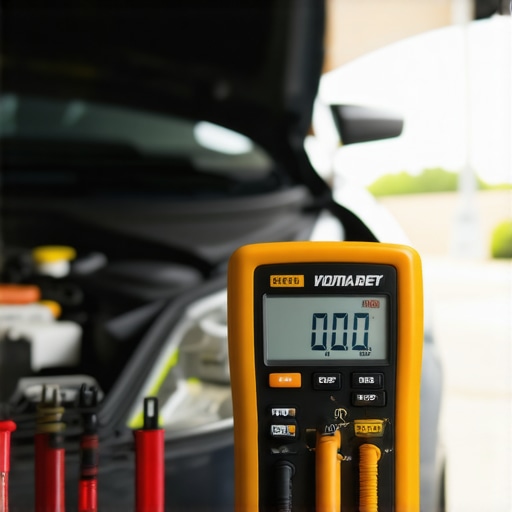 Before you drop the transmission pan, check your ground wires. The ground wire problem that mimics a bad starter motor can also starve your TCM of power, making the computer think a solenoid has failed when it’s actually just a bad connection. The biggest ‘oops’ factor I see is the urge to clear codes immediately to see if the light stays off. When you do that, you erase the ‘Freeze Frame Data’—the precise snapshot of RPM, temperature, and load at the moment of failure. Without that data, understanding how advanced vehicle diagnostics prevent costly breakdowns becomes impossible because you’ve deleted the only evidence of the intermittent glitch. Have you ever fallen into the trap of clearing a code only to have the problem return even worse a week later? Let me know in the comments. This level of detail extends to every part of your car; for instance, the ultimate guide to brake service for safety and performance isn’t just about pads, it’s about the health of your slide pins. Similarly, knowing how to tell if your oil filter is actually doing its job is more important than just following a mileage sticker. Staying ahead means looking past the dashboard and understanding the electrical system that powers it all. Utilizing oil change innovations and technologies won’t help much if you’re ignoring a simple sensor fault.I’ve spent a lot of time under hoods, and if there’s one thing I’ve learned, it’s that a tool is only as good as the data it provides. This is why I eventually upgraded to a bi-directional scan tool. While a basic dongle is great for reading a code, a bi-directional tool allows you to actually talk back to the car. If you suspect a shift solenoid is stuck, you can tell the computer to ‘fire’ that specific solenoid while the engine is off. If you hear a clear click, you know the wiring and the solenoid’s coil are likely fine, and the issue might be a physical blockage or a hydraulic pressure problem. It is easily one of the 20 tool every driver needs for basic electrical troubleshooting if you want to stop being a ‘parts-changer’ and start being a true technician of your own vehicle.

How do I keep my car in peak condition for the long haul?
Maintenance isn’t just about reacting to lights on the dash; it is about staying ahead of the wear cycles before they begin. I follow a strict ‘severe duty’ schedule regardless of what the dealership manual says, especially for fluid changes. If you are a commuter in heavy traffic or deal with extreme temperatures, your car is not living an easy life. Integrating essential auto repair strategies for frequent drivers into your routine means changing your transmission fluid every 30,000 miles instead of waiting for the 100,000-mile ‘lifetime’ mark that many manufacturers suggest. This proactive approach prevents the metallic silt I mentioned earlier from ever building up and clogging those sensitive solenoids. The same logic applies to your stopping power. I’ve seen enough brake service myths busted to know that high-quality ceramic pads and synthetic brake fluid are worth every extra penny. According to the Bosch Automotive Handbook, the technical standard for many modern braking systems requires fluid with an exceptionally high boiling point to prevent vapor lock during emergency maneuvers—something cheap, generic fluids just cannot guarantee. Coupling this with the top auto repair tips to extend your vehicles lifespan, such as cleaning your battery terminals and inspecting ground points annually, ensures your electronics do not have to fight for power. I truly believe we are entering an era of predictive diagnostics. In the next few years, I predict we will see more consumer-grade tools that use machine learning to analyze your engine’s ‘harmonic signature’ through a simple smartphone app. It will eventually be able to tell you a bearing is failing weeks before you can actually hear it with your own ears. Until then, we must rely on the fundamentals and the latest oil change innovations and technologies to keep our engines running smoothly. Don’t just wait for the light to tell you something is wrong; before your next long trip, grab your multimeter and perform a voltage drop test on your main battery cables. It is a simple, five-minute check that could save you from a ‘phantom’ limp mode diagnosis later this year.
Hard Truths from the Grease-Stained Trenches
After years of wrestling with stubborn gearboxes, I’ve realized that the most expensive mistake you can make is trusting a trouble code blindly. A P0750 code tells you there is a circuit fault, not necessarily that the solenoid itself is dead. Sometimes, it is just a loose pin, a frayed wire, or a bit of corrosion hiding in the connector. Secondly, I cannot stress enough that clean fluid is cheaper than a new car. Even if your manual claims ‘lifetime’ fluid, those tiny solenoid screens act like magnets for metallic silt that can jam the mechanism. Finally, remember that your transmission is part of an ecosystem; if your engine is running poorly or your battery is weak, your transmission will feel the pain first and might throw a ‘phantom’ code to protect itself. [image]
The Gear That Stays in My Toolbox
If you want to move beyond guessing and start fixing, I recommend three specific resources. First, a bi-directional scan tool is worth its weight in gold because it allows you to ‘command’ a shift while the car is parked, letting you hear the solenoid click. Second, never underestimate the 20 tool every driver needs for basic electrical troubleshooting—a reliable digital multimeter. It’s the only way to verify if a solenoid is actually getting the voltage it needs to function. Lastly, I always keep a subscription to professional service manuals like Alldata or ATSG; they provide the specific ‘ohm’ resistance specs you need to tell a good part from a bad one without spending a dime on replacements.
Take Back Control of Your Driveway
Limp mode feels like a death sentence for your car, but it is often just a cry for help from a simple electrical component. By applying essential auto repair strategies for frequent drivers, you can demystify the complex sensors under your hood and save thousands in labor. Don’t let a flashing light intimidate you into a four-figure repair bill at a dealership. Start with the basics: check your grounds, verify your fluid levels by learning how to check your transmission fluid without a dipstick, and use your scanner to listen to what the car is actually saying. Following top auto repair tips to extend your vehicles lifespan isn’t just about saving money; it’s about the confidence of knowing exactly what is happening under your floorboards every time you turn the key. Have you ever had a shop tell you that you needed a whole new transmission, only to find out it was something much smaller like a sensor or a fuse? Let me know in the comments below!