
I was cruising down the interstate last July when I noticed it. A faint, rhythmic vibration through the seat of my pants. I figured I just needed a quick oil change and a tire rotation. But then, I looked at my front passenger tire. The inner edge was chewed up like a dog’s toy. I’d made the classic rookie mistake: I paid for a cheap alignment without checking the suspension hardware first. That was $100 down the drain. [image placeholder]
The Red Flag Your Tires Are Trying to Wave
I used to think tire wear was just about pressure or balancing. It’s not. When you see “feathering” or a weird diagonal bald patch, your car is shouting at you. If you’ve ever wondered why your car wanders across the lane on the highway, you might be looking at a bent control arm rather than just a bad road surface. Today, we’re going to pinpoint that one specific wear pattern that tells you a piece of steel under your car is literally bent out of shape.
Is a Bent Control Arm Really Worth the Worry?
You might think, “It’s just a little bit of metal, how bad can it be?” Actually, it’s pretty bad. A report by the National Highway Traffic Safety Administration (NHTSA) suggests that steering and suspension failures contribute significantly to vehicle-related accidents. A bent arm changes your car’s geometry in ways your computer can’t always compensate for. It’s not just about how to tell if your car is out of alignment by looking at your tires; it’s about making sure your car actually goes where you point it when you need to swerve. Have you ever felt that terrifying “clunk” over a pothole only to find your steering wheel off-center afterward? Drop a comment below—I’d love to know if I’m the only one who’s white-knuckled it home after a bad bump. Knowing how to engage in decoding vehicle diagnostics through your own eyes can save you thousands and keep you off the side of the road.
Grab a Tape Measure for a Backyard Geometry Check
When I whacked a curb during a snowy January morning a few years back, I didn’t think much of it. The car drove straight-ish, but the steering wheel was tilted about ten degrees to the left. Instead of heading straight to a shop, I grabbed a standard tape measure. This is the quickest way to see if your control arm has been pushed back. Park on level ground with the wheels perfectly straight. Measure the distance from the center of your front wheel hub to the edge of the fender, then compare it to the other side. If one wheel is sitting further back in the wheel well than the other, your control arm is likely bent. It’s a simple game of ‘one of these things is not like the other’ that forms the basis of decoding vehicle diagnostics without a fancy computer.
How to Spot a Bad Ball Joint with a Floor Jack
Once you suspect a bend, you need to get the weight off the suspension to see what’s actually moving. If you know how to spot a bad ball joint using a floor jack, you’re already halfway there. Jack up the front end and secure it on jack stands. Grab the tire at the 12 and 6 o’clock positions and shake it hard. Then do the same at 3 and 9 o’clock. Any clunking or ‘play’ indicates that your control arm bushings or ball joints are shot. A bent arm often puts extreme lateral pressure on these rubber bushings, causing them to tear prematurely. I remember doing this on my old project truck; the passenger side wheel moved nearly half an inch because the arm was so warped it had literally chewed through the rubber bushing. 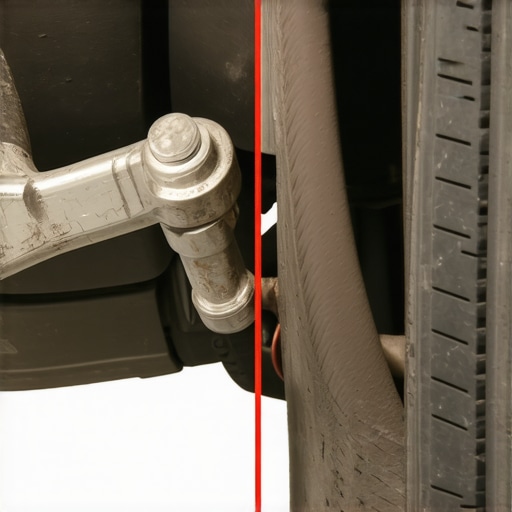
Listen for the Squeaks that Give It Away
Your ears are just as important as your eyes when it comes to essential auto repair strategies for frequent drivers. A bent control arm doesn’t just sit there; it changes the angle at which every other component moves. This often leads to a situation where why your suspension squeaks like a rusty gate over speed bumps becomes your daily soundtrack. That noise is usually the sound of metal-on-metal friction or a bushing being twisted into a shape it wasn’t designed to handle. If you hear a sharp ‘snap’ when you hit the brakes or a dull ‘thud’ when you accelerate, the control arm is shifting in its mounts because the geometry is compromised.
The Visual Proof Hidden Under Your Car
Finally, get under there with a high-lumen flashlight. You’re looking for ‘clean’ spots on a dirty frame. If you see a patch of metal that is shiny or scraped, it means a suspension component is making contact where it shouldn’t. A bent arm will often force the tire or the arm itself to rub against the frame or the inner wheel well during tight turns. This physical interference is a primary reason for how to stop your car from pulling to the right while cruising; if the arm is bent, the car is effectively trying to turn itself because the wheels are no longer parallel. Look closely at the ‘ears’ of the control arm where it bolts to the frame; any ripples in the metal or cracked paint are clear indicators of a structural failure from a heavy impact.A common myth I hear all the time is that a standard alignment rack can ‘fix’ a car that pulls to one side after a curb hit. It cannot. In fact, one of the biggest traps you can fall into is paying for a four-wheel alignment when you actually have structural damage. Most shops will perform what we call a ‘toe-and-go’ where they just get the numbers into the green as best they can, but if that control arm is tweaked, those tires will start scrubbing again the moment you leave the lot. According to a study by the Car Care Council, nearly 80 percent of vehicles on the road require some form of service or part replacement, often because drivers misinterpret the true source of a vibration or pull. 
Can a Computer Really Detect a Mechanical Bend?
While modern shops use laser-guided systems for how advanced vehicle diagnostics prevent costly breakdowns, these machines have a significant blind spot. They measure where the wheel is positioned, not why it is sitting there. If your technician isn’t specifically looking for ‘setback’—a measurement showing if one wheel is physically further back in the chassis than the other—they might miss a bent arm entirely. This is why decoding vehicle diagnostics requires a human eye that knows how to spot ripples in the metal that a sensor simply cannot see.
Stop Chasing Ghost Codes with Cheap Parts
If you are trying to resolve a steering angle error or a weird engine stumble, do not take the bait of those deep-discount parts you find on auction sites. The truth about using cheap aftermarket sensors in your engine is that they often possess different internal resistance values than original equipment. I have seen ‘brand new’ sensors cause more complex error codes than the failed ones they replaced. It follows the same logic as the ultimate guide to brake service for safety and performance: if the physical hardware is low-quality, the car’s computer can never properly calibrate the safety systems.
The Tiny Gasket That Ruins Your Driveway
We often focus on the big components, but the smallest nuances cause the most headache. Take the oil pan, for instance; why you should never skip the crush washer on your drain plug is a lesson usually learned after a slow drip turns into a seized engine. It is a fifty-cent part that prevents a multi-thousand-dollar disaster. Whether you are knee-deep in brake service myths busted what really matters for safety or just doing a Saturday morning oil change, paying attention to these structural details is what separates a long-lasting vehicle from a money pit. Have you ever fallen into this trap of fixing the symptom instead of the root cause? Let me know in the comments below—I have definitely been there myself and would love to hear your stories.When I am not just eyeballing parts, I rely on a few specific tools that have saved me from unnecessary head-scratching. First, I never start a complex job without a high-end bi-directional scan tool. Unlike those cheap dongles that just clear codes, a bi-directional tool lets me command the car’s computer to activate specific components, which is vital for how advanced vehicle diagnostics prevent costly breakdowns. If I suspect a wheel bearing is going but cannot hear it yet, I will pull up the live data and watch the wheel speed sensors in real-time while I spin the wheel. It is that level of precision that keeps me from throwing parts at a problem and wasting money.
How do I keep my car’s geometry perfect over time?
Maintaining your car’s alignment and suspension is not a one-and-done task. I make it a habit to check my suspension torque every time I perform a seasonal tire swap or a deep the ultimate guide to brake service for safety and performance. According to technical documentation from Delphi Technologies, many modern suspension bolts are torque-to-yield (TTY). This means the bolt is designed to stretch slightly when tightened to its final specification. If you reuse an old TTY bolt after a repair, it will not hold the same tension, leading to those mysterious clunks and wanders we talked about earlier. This is one of those essential auto repair strategies for frequent drivers that often gets overlooked by even seasoned DIYers.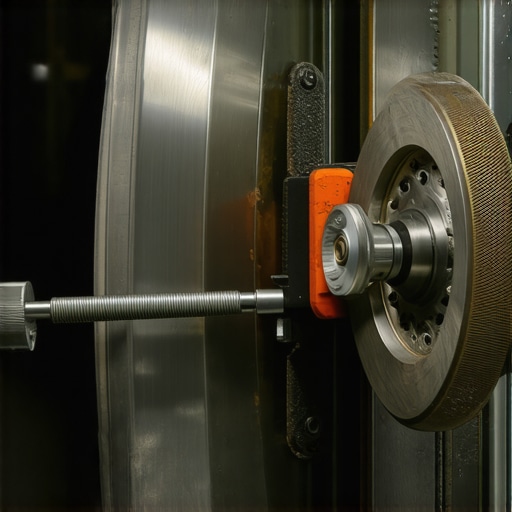
Stop Guessing and Start Measuring with a Dial Indicator
If you have ever felt a vibration even after a fresh brake job, the culprit is likely lateral runout. I use a magnetic-base dial indicator to measure exactly how much a hub or rotor wobbles as it spins. Even a few thousandths of an inch—thinner than a human hair—can cause a pedal pulsation that feels like a jackhammer. By measuring first, you can determine if you need to clean the hub surface or replace the hub itself, rather than just blaming a warped rotor. It is one of my favorite auto repair hacks to save money without sacrificing quality because it prevents the warped rotor myth from costing you a second set of parts. I suspect the future of this niche lies in predictive maintenance sensors. We are already seeing high-end vehicles that can detect suspension wear through ride-height sensors and alert the driver before a tire even starts to feather. Until that is standard on every car, though, you have to be the sensor. My challenge for you: next time you have your wheels off, do not just look at the pads—grab a torque wrench and check the mounting bolts for your control arms to ensure everything is still seated perfectly.
Lessons Bought with a Thick Stack of Repair Receipts
After years of chasing vibrations and burning through sets of tires, I have realized that a ‘green’ alignment sheet is not a clean bill of health. Many technicians simply adjust the toe and ignore the fact that your wheel is sitting an inch further back than it should be. Always ask for the ‘caster’ and ‘setback’ readings; if those are out of range, no amount of adjustment can fix a bent control arm. Another hard-earned lesson is that suspension damage is often cumulative. That small curb tap in the winter weakens the arm, and a summer pothole finally finishes the job. I also learned that you should always perform the tie rod test you can perform in your own driveway whenever you are checking control arms, as these components often fail as a pair. Finally, never underestimate the power of a fresh set of eyes; if you cannot find the bend, have a friend turn the steering wheel while you watch the bushings for excessive deflection. [image placeholder]
The Diagnostic Tools I Won’t Turn a Wrench Without
To keep my fleet running without constant shop visits, I rely on a few non-negotiable items. First is a professional-grade pry bar. You cannot check bushing health with your bare hands; you need the leverage of a pry bar to see if the rubber is truly separated from the metal sleeve. Second, I highly recommend a magnetic dial indicator to check for hub runout, which is one of the best auto repair hacks to save money without sacrificing quality. It prevents you from replacing expensive rotors when the hub itself is the culprit. Third, always have a manufacturer-specific service manual. Relying on generic torque specs for critical suspension bolts is a recipe for a part backing out at 70 mph. I trust these tools because they remove the guesswork and provide objective data that a ‘feeling’ just cannot match.
Take Back the Reins of Your Driving Experience
Your car should be a source of freedom, not a source of anxiety every time you hit a bump. By taking the time to physically inspect and measure your suspension, you are moving beyond basic maintenance into the realm of true vehicle mastery. Implementing these top auto repair tips to extend your vehicles lifespan ensures that you are not just a passenger in your own car’s decline. When you understand the geometry of your vehicle, you can drive with the confidence that your car will respond exactly how you expect in an emergency. Don’t let a mystery clunk ruin your next road trip—get under there, start measuring, and stay safe on the road. Have you ever replaced an alignment part only to find the car still pulled to one side? Let me know in the comments below.