
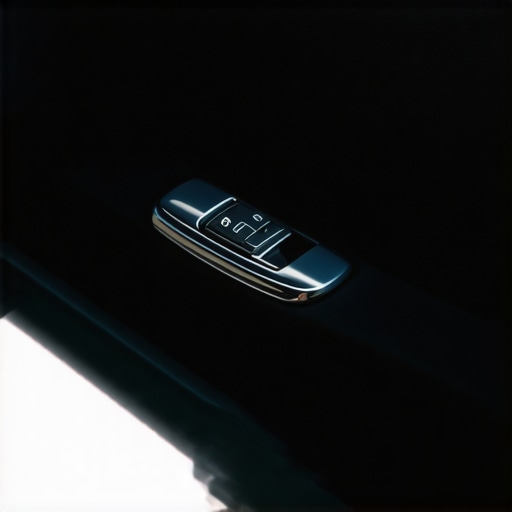
I was standing in the pouring rain, groceries in both hands, when my car decided to play a game of ‘keep away.’ Every time I reached for the handle, the locks would cycle with a frantic, metallic chatter—click-clack-click-clack—as if the car were possessed by a very caffeinated ghost. I ended up standing there for three minutes, looking like a total amateur, until the system finally gave up and stayed unlocked. It’s one of those moments where you realize that while we love modern convenience, we are entirely at the mercy of tiny copper wires and plastic gears. If your car is currently locking and unlocking itself at stoplights or refusing to let you out after a long commute, you aren’t alone. Today, we are diving into the ‘why’ behind this mechanical haunting and getting your peace of mind back. Have you ever been trapped outside your own vehicle while it chirped at you like a sentient robot? Let me know in the comments because I need to know I’m not the only one who has considered an exorcism for their sedan.
Why Your Car Door Locks Have a Mind of Their Own
When this first happened to me, I made the classic rookie mistake of assuming the most expensive part was broken. I went out and bought a brand-new master control switch before I even bothered to look at the wiring boot. It was a total waste of eighty bucks and two hours of my Saturday. Real vehicle diagnostics explained that most of the time, the ghost in the machine is actually a physical break in the circuit. Often, the wires that run through the flexible rubber boot between your door and the frame get brittle. Every time you open that door, you’re flexing those wires until, eventually, they snap or short out against each other. This is especially common if you notice other weird issues, such as why your cars mirrors wont adjust anymore or windows that only go up halfway. According to data from the National Highway Traffic Safety Administration (NHTSA), electrical shorts in door harnesses are a frequent cause of ‘unintended locking behavior,’ which can be a massive safety risk in an emergency.
Is this ghostly behavior going to cost me a fortune?
It is the question everyone asks when their car starts acting up. We immediately envision a $1,200 bill from the dealership for a new Body Control Module (BCM). While the BCM can fail, it’s rarely the first thing that goes. Before you panic, you might find that you just need the simple fix for a rattling door panel or a quick cleaning of the lock actuator. We’re going to walk through the logical steps to find the culprit so you don’t end up throwing parts at a problem like I did. We’ll look at the fobs, the wiring, and the actuators themselves to see which one is the real poltergeist.
Start with the Low-Hanging Fruit: The Key Fob Test
Before you start tearing your dashboard apart, you need to rule out the simplest culprit: your pocket. I once spent forty-five minutes trying to figure out why my trunk kept popping open, only to realize my house keys were pressing against the fob button in my tightest jeans. If your car is locking and unlocking itself, the first step is to take the battery out of your fobs. If the behavior stops, you’ve found the problem. It could be a stuck button or a failing circuit board inside the remote. If the phantom clicking continues even when the fobs are dead, it’s time for some real work. Think of your car’s electrical system like a nervous system; if the brain (the computer) gets fuzzy signals because of low voltage, it starts twitching. This is why you should perform the simple test to see if your battery is actually dead or just low enough to confuse the locking module.
The Door Jam Inspection That Saves Hundreds
Most people assume a computer failure, but the most common hardware failure is actually the wiring harness located in the driver’s door hinge. Think of these wires like a garden hose that gets kinked and straightened ten times a day for a decade. Eventually, the copper inside the plastic insulation snaps. I remember working on an old SUV where the locks would cycle every time I hit a pothole. I pulled back the black rubber boot between the door and the frame—it looks like a flexible accordion—and found three wires that had snapped completely. One was occasionally touching the metal frame, sending a ‘lock’ signal every time the car vibrated. 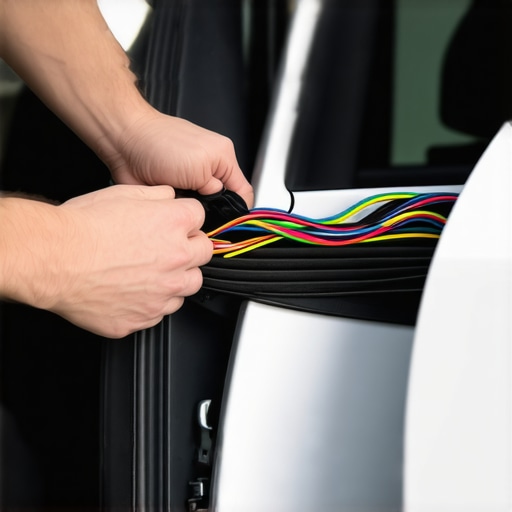 By using a few auto-repair hacks save money without sacrificing quality, like soldering in a small jumper wire rather than replacing the whole harness, I fixed the ‘haunted’ car for about three cents worth of solder and some heat-shrink tubing. If you see exposed copper or frayed insulation in that boot, you’ve found your poltergeist.
Check for Electrical Gremlins at the Source
If the wires look pristine, the issue might be deeper in the logic of the car. Modern vehicles use a Body Control Module (BCM) to manage things like interior lights and door locks. When these modules start to fail, they don’t always just die; they act out. This is where decoding vehicle diagnostics what your car is trying to tell you becomes vital. If your locks are cycling, it can actually drain your battery overnight because the car never truly ‘goes to sleep.’ You can use the secret to finding a parasitic battery drain with a simple multimeter to see if the lock circuit is pulling power when the car is off. If you see a constant spike in amperage every time that ‘click’ happens, you’ve narrowed it down to a specific relay or the lock actuator itself. A failing actuator is like a tired bouncer at a club; it might try to pull the lock down, fail halfway, and then the system tries again and again, creating that frantic cycling sound.Most people treat an OBD-II scanner like a crystal ball. They plug it in, see a code for an Oxygen sensor, and immediately buy a new one. But here is the hard truth: the computer is often just reporting a symptom, not the cause. For example, decoding vehicle diagnostics what your car is trying to tell you requires understanding that a ‘lean’ code might be a five-dollar vacuum leak, not a two-hundred-dollar sensor. According to data from the National Institute for Automotive Service Excellence (ASE), a significant percentage of parts replaced by DIYers are actually functional components that were simply misdiagnosed. This is known as the ‘parts cannon’ approach, and it is a fast way to empty your wallet while the actual problem remains. Real expertise means looking at the data stream, not just the code. Knowing how advanced vehicle diagnostics prevent costly breakdowns involves verifying the circuit before condemning the part.
Why does my scan tool point to a sensor that isn’t actually broken?
The computer in your car only knows what it receives. If a wire is frayed—much like the door lock wires we discussed—the sensor sends a ‘garbage’ signal. The computer assumes the sensor has failed and triggers a warning. If you want to level up your repair game, you need to stop checking for ‘continuity’ and start checking for ‘voltage drop.’ A wire can have a single strand of copper left and still show continuity on a cheap multimeter, but it won’t have the physical capacity to carry the current needed to move an actuator or signal a control module. Have you ever fallen into this trap and replaced a part only for the light to come back on ten minutes later? Let me know in the comments because we have all been there. 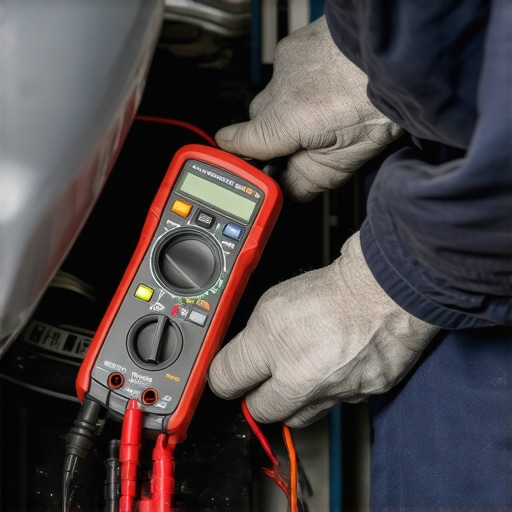 This same logic applies to mechanical systems. In the world of brake service myths busted what really matters for safety, many owners swap pads to stop a squeal when the real culprit is a frozen caliper slide pin. Similarly, the debate regarding the truth about synthetic oil vs conventional in older high mileage cars often misses the point of seal conditioning and shear stability. By adopting essential auto repair strategies for frequent drivers, you learn to look past the dashboard light and investigate the root physical cause. Whether it is a ghost in your locks or a stumble in your engine, the goal is to fix the source, not the messenger.If you really want to stop guessing and start fixing, you need to graduate from the basic multimeter to a tool that actually interacts with the car. For me, that tool is a bidirectional scan tool. Most people do not realize that their car’s computer can be ‘forced’ to perform actions. Instead of waiting for the door lock to act up at a grocery store, I use the scanner to command the Body Control Module (BCM) to pulse the locks. If the command works via the scanner but not the button, I have just saved three hours of teardown by proving the actuator is fine and the switch is the liar. This is exactly how advanced vehicle diagnostics prevent costly breakdowns. Another non-negotiable in my drawer is the Power Probe. Unlike a static meter, it lets you apply 12V or ground directly to a component. When I am chasing that metallic chatter in a door, I use the probe to bypass the car’s wiring entirely. If the lock flips perfectly when I give it direct juice, I know for a fact the actuator is healthy. As the Robert Bosch Automotive Handbook notes in its section on electromagnetic compatibility, signal integrity is often compromised not by component failure, but by transient resistance in connectors. This is why cleaning your grounds is often more effective than buying new sensors.

How Do I Keep These Complex Electronics Working for Decades?
Maintaining a modern car is not just about the oily bits; it is about protecting the ‘veins’ of the vehicle. I make it a habit to use a silicone-based dielectric grease on every electrical connector I touch. It keeps moisture out and prevents the pin corrosion that leads to those ‘ghost’ signals. For the mechanical side, I follow top auto repair tips to extend your vehicles lifespan, which includes keeping the door hinges and lock cylinders lubricated with a dry graphite spray. I avoid using WD-40 on locks because it attracts dust like a magnet and eventually gums up the tumblers. We are moving toward a world where ‘wrenching’ looks more like ‘coding.’ Within the next decade, we will see consumer-grade tools that can sniff out a failing wire via AI-driven impedance testing before the wire even breaks. This level of oil change innovations technologies that save your engine and electrical monitoring will make the ‘haunted’ car a thing of the past. For now, your best defense is a proactive approach. Try this: Next time you are under the hood, do not just look for leaks. Use the simple way to check your serpentine belt for wear and then take five minutes to inspect the wiring looms near high-heat areas like the exhaust manifold. Catching a brittle wire before it shorts out is the ultimate auto-repair hacks save money without sacrificing quality move.
The Most Expensive Lesson I Learned from Haunted Electronics
One thing no one tells you is that a ‘phantom’ lock issue is often just a cry for help from your battery. If the voltage dips too low during cranking, the Body Control Module can glitch out and start cycling relays. Always check your battery health first because it’s the foundation of every electronic system. Also, stop slamming your doors. It sounds simple, but the physical shock over time is what eventually snaps those brittle wires in the hinge boot. I’ve seen more ‘broken’ actuators that were actually just disconnected or rattled loose by a decade of aggressive door closing than I care to count. Realizing that the hardware is usually fine but the connection is failing will save you hundreds on unnecessary parts.
Gear That Belongs in Your Diagnostic Arsenal
If you are serious about DIY, you need a few key items that move beyond the basic wrench set. First, grab a digital multimeter; it’s the only way to perform the secret to finding a parasitic battery drain with a simple multimeter when your locks won’t stop clicking at night. Second, invest in a repair manual specific to your VIN; wiring colors change year to year, and guessing which wire is ‘ground’ is how you fry an expensive computer. Third, keep a tube of dielectric grease in your toolbox. Applying it to connectors is one of the best top auto repair tips to extend your vehicles lifespan because it prevents the green corrosion that causes signal interference. Finally, check out vehicle diagnostics explained for a better understanding of how your car’s modules communicate before you start pulling fuses.
Stop the Clicking and Drive with Confidence
You don’t need to be a master technician to solve these complex electrical issues. By following logical auto-repair hacks save money without sacrificing quality and staying patient during the teardown, you can silence those phantom clicks for good. Your car isn’t haunted; it’s just a machine waiting for the right fix. Mastering how advanced vehicle diagnostics prevent costly breakdowns gives you the power to keep your car on the road and your sanity intact. Don’t let a small wire ruin your driving experience. Have you ever had a car problem that felt like a total mystery until you found one tiny broken wire or a loose ground? Let me know in the comments below!