
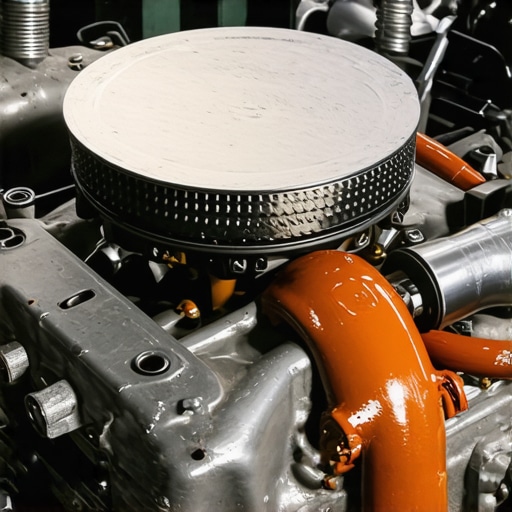
I remember standing in my driveway at 6 AM, staring at a shimmering black puddle under my old 2004 truck and feeling like a total failure. I had just treated it to a premium full-synthetic change, convinced I was extending its life, only to find out that my upgrade was literally leaking through the old, brittle gaskets. It felt like I was pouring money directly onto the pavement. We have all been told that synthetic is the holy grail of engine protection, but when your odometer is creeping past 150,000 miles, the rules of the game change. Today, I am going to settle the debate so you do not end up with a stained driveway and a lighter wallet like I did.
Why My High-Mileage Engine Hated That Fancy Synthetic Oil
Back when I was first learning the ropes of DIY maintenance, I fell for the synthetic oil myth that costs you fifty dollars every visit. I thought that more expensive always meant better. What I did not realize is that synthetic molecules are smaller and more uniform, which is great for performance, but they are also experts at finding the tiniest gaps in worn-out seals. If your car is already prone to consuming oil without a visible leak, switching to a high-flow synthetic might just accelerate the problem. I made the mistake of not performing simple vehicle diagnostics before making the switch, and it cost me a set of gaskets. Have you ever noticed your car acting up right after you tried to do something nice for it?
Is high-priced synthetic actually worth the hype for an old clunker?
Many of my neighbors ask me if they are just being upsold at the quick-lube shop. It is a fair question. While it is true that oil change innovations have made modern lubricants incredible, an old engine has different needs. According to the AAA, synthetic oil actually offers 47 percent more protection against engine deposits and wear compared to conventional oil in long-term testing. But for a car that has seen decades of use, the real secret is not just the oil type—it is the additives. We are going to look at why a high-mileage blend might be the middle ground you actually need to stop those pesky leaks and keep your engine humming without breaking the bank.
Stop the Gasket Leak Before It Starts
Before you even touch your oil pan, you need to understand the ‘Sponge Analogy.’ Think of your old engine seals like a dried-out kitchen sponge. If you pour thin, high-flow synthetic oil over it, the liquid passes right through the cracks. High-mileage oil blends contain seal conditioners that act like a moisturizer, helping those brittle gaskets swell up and reclaim their shape. Start by performing a deep visual inspection. I cannot stress enough how often people ignore decoding vehicle diagnostics provided by their own eyes. Look for ‘wet’ spots around the valve cover and oil pan. If it is already damp, switching to a full synthetic without a high-mileage additive will likely turn that dampness into a steady drip.
The Right Way to Swap from Conventional to High-Mileage
Do not just do a 100% swap if you are nervous about your seals. For my high-mileage truck, I started with a 50/50 mix of conventional and high-mileage synthetic blend. This ‘stair-step’ approach allows the seal conditioners to work slowly without overwhelming the system with high-detergent synthetic oil. While you are under there, pay attention to the hardware. I once ignored a slightly flattened gasket and ended up with a mess; this is exactly why you should never skip the crush washer on your drain plug. That tiny piece of copper or aluminum is what actually creates the liquid-tight seal, not the bolt itself. Over-tightening a bolt to stop a leak will only strip your oil pan threads, turning a five-dollar fix into a five-hundred-dollar nightmare.
Don’t Sabotage Your Engine with a Cheap Filter
The oil is only as good as the gatekeeper it flows through. I learned this the hard way when I tried to save five bucks by using a generic, ‘no-name’ filter on my old Jeep. Two days later, I had a terrifying rhythmic tapping from the valvetrain. It turned out the oil filter brand that causes low oil pressure lights was the culprit. The internal bypass valve was so poorly made it couldn’t handle the flow of the new oil. Always check how to tell if your oil filter is actually doing its job by looking for a heavy, sturdy casing and a silicone anti-drainback valve. These components ensure that when you start your car, the top of the engine isn’t running dry for those first few critical seconds.
The 24-Hour Cardboard Test for Stealthy Leaks
Once your new oil is in, the work isn’t done. Use the cardboard trick to find a tiny oil leak overnight. Slide a clean, flattened shipping box directly under the engine block after your first drive. This is one of those essential auto repair strategies for frequent drivers that prevents a small seep from becoming a highway breakdown. If you wake up to clear spots, you are golden. If you see dark amber circles, you need to re-torque your bolts or check if your oil level is actually fluctuating. Interestingly, if you find the opposite happening, you should investigate why your engine oil level rises between oil changes, which often points to fuel dilution or coolant leaks rather than external gasket failures. Consistently monitoring the driveway is the best diagnostic tool you own.While the cardboard test identifies where the drip lands, it does not tell you why the pressure is high enough to force oil past a seal in the first place. This leads us to the most common ‘trap’ in high-mileage maintenance: the PCV (Positive Crankcase Ventilation) valve. I have seen enthusiasts spend thousands on rear main seal repairs when the real culprit was a fifteen-dollar plastic valve that was stuck shut. When the PCV fails, pressure builds inside the crankcase, looking for the weakest point to escape—usually your gaskets. This is why how advanced vehicle diagnostics prevent costly breakdowns is about more than just reading codes; it is about understanding the physics of your engine.
The Thicker Oil Fallacy and Why it Damages Engines
A common piece of old-school advice is to just use a thicker viscosity, like 20W-50, to stop leaks in a high-mileage car. In my experience, this is a recipe for disaster, especially in modern engines with tight tolerances. While it might slow a leak, it also takes longer to reach the top of the engine during those first few seconds of operation. If you start hearing why your engine makes a tapping noise only at startup, you are literally listening to your metal components grinding against each other without lubrication. I always recommend sticking to the manufacturer-recommended weight but opting for a high-mileage formulation that uses chemical ‘swelling agents’ rather than physical thickness. I have found that utilizing auto repair hacks save money without sacrificing quality by focusing on these chemical solutions instead of heavy-weight shortcuts.
Can you safely switch back to conventional after trying synthetic?
One of the most persistent myths is that once you go synthetic, you can never go back. This simply is not true. Modern lubricants are fully miscible, meaning they can mix without causing a chemical reaction or sludging up. If you tried a full synthetic and your car started leaking significantly, you can absolutely return to a conventional or a high-mileage synthetic blend at your next interval. However, the leak will not magically disappear; it just will not be quite as aggressive. To truly protect your investment, you should look into top auto repair tips to extend your vehicles lifespan which emphasize consistency over radical changes.
Evidence That High-Mileage Oil is Not Just Marketing
According to a study by SAE International, high-mileage engine oils are specifically formulated with extra anti-wear additives like Zinc (ZDDP) and specialized detergents to handle the increased blow-by gases found in older cylinders. They are not just the same oil in a different bottle. Using the wrong additives or even the truth about using cheap aftermarket sensors in your engine can further complicate how your car manages these lubricants. Have you ever fallen into this trap of over-tightening a plug or using the wrong viscosity for your climate? Let me know in the comments below, and let us keep those old engines running strong.I used to think my ears were the best diagnostic tool in my arsenal, but modern vehicles are far too quiet and complex for that old-school approach. Now, I rely heavily on a quality OBD2 scanner—specifically one that supports ‘Mode $06’ data. This isn’t just about clearing a ‘Check Engine’ light; it’s about seeing misfire counts and oxygen sensor performance before they even trigger a dashboard warning. This level of insight is how advanced vehicle diagnostics prevent costly breakdowns. I personally use a mid-range Autel unit because it accesses manufacturer-specific modules like the ABS and transmission, which the $20 generic scanners simply cannot see. If you want to dive deep into decoding vehicle diagnostics, having a tool that provides real-time data graphing is a game changer for spotting intermittent electrical gremlins.
Don’t Wait for the Squeal to Check Your Brakes
While we often obsess over the golden honey of fresh oil, we frequently ignore the other vital fluid in our systems: the brake fluid. Following the ultimate guide to brake service for safety and performance is about more than just changing pads. Brake fluid is hygroscopic, meaning it actively pulls moisture out of the air. Over time, that water content can corrode your brake lines from the inside out or cause the fluid to boil during heavy braking, leading to a terrifyingly soft pedal. I use a digital moisture tester—a tool that costs less than twenty dollars—to check the health of my fluid every other oil change. This is one of those auto repair hacks save money without sacrificing quality by preventing expensive caliper seizures down the road.
How can I actually stay ahead of the repair curve?
Consistency and documentation are the most powerful tools you own. I keep a dedicated physical logbook in my glovebox for every vehicle I own. While there are plenty of apps, a logbook never suffers from a dead battery or a cloud sync error. According to the Society of Automotive Engineers (SAE) technical standard J1979, the democratization of diagnostic data has made it possible for any enthusiast to perform professional-level monitoring. Looking ahead, I predict a shift toward consumer-level telematics where your car will automatically alert your phone when a sensor’s voltage begins to drift out of range. For now, the best of the essential auto repair strategies for frequent drivers is to spend one Saturday every quarter doing a thorough ‘health check’ of all major systems. These top auto repair tips to extend your vehicles lifespan are about being proactive rather than reactive. I challenge you to try using the ‘Mode $06’ diagnostic feature on your OBD2 scanner this weekend to see if any cylinders are beginning to misfire before a light ever appears on your dash.
Hard Lessons I Paid for in Quarts of Oil
Looking back at my years under the hood, I realized that the oil was rarely the only problem. First, I learned that a clean engine is a diagnostic engine; if you do not degrease your block, you are playing a guessing game with every new drip. Second, I finally accepted that preventative maintenance is always cheaper than corrective repairs. Waiting for a noise to become a failure is why most people think older cars are money pits. Lastly, I discovered that brake service myths busted over the years have taught me that safety is not just about stopping, but about the reliability of every component working in harmony before you even leave the driveway.
The Tools That Stopped My Driveway from Looking Like an Oil Slick
If you want to move beyond basic maintenance, you need a few specific items in your personal arsenal. I never go under a car without a high-lumen LED work light, because you simply cannot fix what you cannot see. I also swear by using a dedicated digital moisture tester for your fluids, which is one of the most effective auto repair hacks save money without sacrificing quality by preventing internal corrosion. For those serious about decoding vehicle diagnostics, a scanner that supports live data streaming is non-negotiable for catching intermittent sensor glitches. Finally, I always recommend keeping a physical service logbook; it provides a level of historical data that apps often lose during updates. #IMAGE_PLACE_HOLDER_E#
Take Charge of Your Car’s Health Today
You do not need to be a certified master technician to keep your high-mileage vehicle on the road for another decade. It starts with the simple things: checking your dipstick regularly, listening to the engine during cold starts, and staying consistent with your oil change intervals. Every time you open the hood, you are building a relationship with your machine and ensuring its longevity. Following the ultimate guide to brake service for safety and performance alongside your engine care will keep your ride smooth and secure. Have you ever had a ‘miracle’ fix by just switching to a high-mileage oil blend or performing a simple sensor swap? Let me know your best high-mileage success stories in the comments below!