

There I was, three winters ago, standing in my driveway with a lukewarm coffee in one hand and a dead key fob in the other. Well, the fob was fine, but the car was dead. Stone cold dead. I did what most people do: I panicked, called a tow, and dropped nearly two hundred bucks on a new battery. The kicker? The “dead” battery was actually perfectly fine; my terminals were just covered in a thin, invisible layer of oxidation. I felt like a total amateur. It’s a sinking feeling that I don’t want you to experience. We’ve all been there—late for work, kids in the back, and the engine just gives you that pathetic, rhythmic “click-click-click” instead of a roar. Most of us just assume the chemical heart of the car has finally stopped beating, but that is a very expensive assumption to make without proof.
Stop throwing money at a perfectly good battery
I’ve spent more hours than I’d like to admit staring under the hoods of cars that wouldn’t budge, only to realize I was overcomplicating the simplest of fixes. Before you start looking into top auto repair tips to extend your vehicles lifespan, you need to know if you’re actually dealing with a dead battery or just a symptom of something else. It might be the simple test to see if your alternator is killing your battery that you actually need. I once replaced a battery twice in one month before I realized my alternator was the real villain in the story. It was an embarrassing and costly lesson that taught me the value of real diagnostics over guesswork.
The truth is, many batteries are discarded when they still have years of life left in them. Have you ever felt like your mechanic was just guessing with your wallet? It happens more often than you’d think. According to data from AAA, battery-related issues are one of the top reasons for roadside assistance calls, yet a significant portion of those batteries could have been saved with simple maintenance or a quick terminal cleaning. We are going to stop that cycle of waste right now by learning how to read the signs properly. You might even find the secret to getting another year out of your car battery just by performing a few basic checks.
Does this simple test actually work for everyone?
I know what you’re thinking. “If it’s that easy, why isn’t everyone doing it?” The skepticism is healthy. People often fear that DIY diagnostics might lead to more damage, or they worry they need a degree in electrical engineering to understand voltage. You don’t. You just need to know what to look for before the tow truck arrives. Whether you are wondering why your car battery dies every three days or if your headlights are just playing tricks on you, the answer is usually hiding in plain sight. I want to help you avoid the mistake I made: spending $150 on a part I didn’t need because I was too intimidated to spend five minutes testing it myself. Today, I’m going to walk you through a specific test and a simple load check that will tell you immediately if your battery is truly dead or just resting. Have you ever had a shop tell you that you needed a new battery, only to find the problem persisted a week later? Tell me about it in the comments below, because that’s exactly the kind of headache we’re going to prevent today.
Grab a multimeter and find the truth
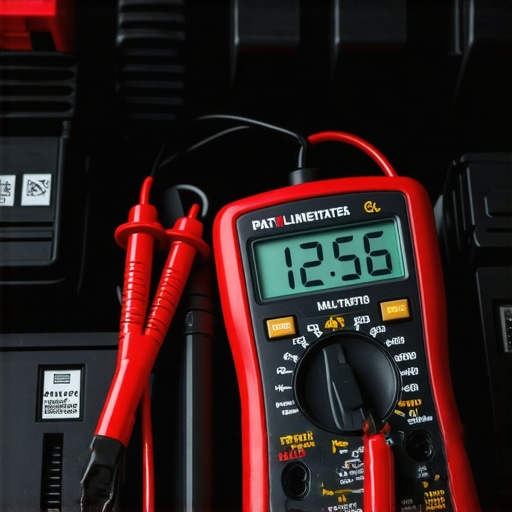
Think of a digital multimeter as a stethoscope for your car’s heart. You do not need a professional-grade unit; even a basic tool from the local hardware store will save you from the metallic click you hear every time you turn the key. To start, set your dial to 20V DC. With the engine off, touch the red probe to the positive terminal and the black probe to the negative. A healthy, fully charged battery should read exactly 12.6 volts. If you are seeing 12.2 volts, your battery is only at about a 50% charge. If it reads 11.9 volts or lower, it is effectively discharged. I once spent twenty minutes trying to jump-start a friend’s SUV in a grocery store parking lot. The cables were getting hot to the touch, but the engine would not even budge. I finally pulled out my multimeter and saw the reading was a measly 10.2 volts—one of the internal cells had physically collapsed. No amount of jumping was going to save that lead-acid brick. That is when I realized that decoding vehicle diagnostics always starts with having the right data before you reach for the jumper cables.
The magic number during a cold crank
Static voltage only tells you how the battery feels while it is resting. The real test happens when you demand work from it. This is where you can truly determine why your car makes a clicking noise when you try to start it. Have a friend turn the ignition while you keep your eyes glued to the multimeter display. If the voltage drops below 9.6 volts during the crank, the battery’s internal chemistry is failing. It is like a marathon runner who looks perfectly fit standing at the starting line but collapses the moment the race begins. However, if the voltage stays above 10 volts but the engine still struggles to turn over, your battery is actually doing its job, and the culprit is likely a dragging starter motor or a corroded ground wire. This distinction is vital; it is the difference between a $150 battery and a $300 starter repair.
Scrub away the invisible power killers
Before you commit to a purchase, you must inspect the physical connections. I once witnessed a guy “fix” a stranded car by pouring a warm bottle of cola over the battery terminals—the carbonation and acid ate through the white crusty oxidation just enough to get the car started. While I do not recommend soda as a long-term maintenance strategy, it highlights how simple blockages stop electricity. High resistance at the terminals mimics a dead battery perfectly. Use a dedicated wire brush and a paste of baking soda and water to get those lead posts shining. This is one of the most effective auto repair hacks to save money without sacrificing quality. You would be amazed at how many people stop letting shops charge you for a free battery test only to find out that a five-minute cleaning was the only actual repair necessary to restore full power.
The headlamp trick for instant results
If you do not have a meter handy, you can perform a quick-and-dirty load test using your headlights. Turn them on with the engine off and watch their reflection against a wall or garage door. Try to start the car. If the lights dim to a dull orange glow or vanish entirely, the battery lacks the “CCA” or Cold Cranking Amps to move the pistons. If the lights stay bright and crisp but the car refuses to turn, you should shift your focus away from the battery. Sometimes, the simple test to see if your alternator is killing your battery is the logical next step. By ruling out the battery with these physical and electrical checks, you ensure you are not just throwing parts at a problem that lies deeper in the charging system.
However, even after you’ve verified the voltage, there is a deeper layer of frustration that most people encounter: the ghost in the machine. You might have a great battery, a solid alternator, and yet your dashboard still looks like a Christmas tree. This is where most DIYers—and even some ‘pro’ shops—fall into the trap of over-reliance on technology. We have been conditioned to believe that if a computer says ‘Oxygen Sensor,’ we must replace the oxygen sensor. But decoding vehicle diagnostics is about understanding the why, not just the what. I once saw a guy spend $400 on sensors only to realize he had a $5 vacuum leak. In my experience, a scanner is a compass, not a map. It tells you the direction, but it doesn’t walk the path for you.
Can a tiny electrical leak actually kill a brand-new battery overnight?
This brings me to the ‘parasitic drain’ myth. Most people think that once they turn the key off, the car stops using power. That is flat-out wrong. Modern cars are always ‘awake’ to some degree, but if a module fails to go to sleep, it will eat your battery from the inside out. According to data from the Car Care Council, a huge percentage of recurring battery failures are actually caused by these hidden electrical leaks rather than a faulty lead-acid cell. If you’ve ever wondered why your car battery dies every three days, you are likely dealing with a computer that refuses to take a nap. This is the sophisticated nuance that separates a parts-swapper from a true technician.
Stop wasting money on unnecessary fluid swaps
The same logic applies to other maintenance areas where ‘conventional wisdom’ is actually just a marketing tactic. Take the synthetic oil myth that costs you fifty dollars every visit. Many shops will tell you that you *must* use high-mileage synthetic oil the moment you hit a certain odometer reading. It’s often unnecessary and based on outdated fears. Similarly, don’t let a squeak convince you that you need a massive rotor job. There are plenty of brake service myths busted by simply looking at the wear indicators. I’ve investigated why your brand new brake pads are already squealing, and more often than not, it is just a lack of anti-seize lubricant on the clips, not a mechanical failure of the parts themselves.
The hidden ground strap that ruins your day
One advanced nuance that many overlook is the condition of the engine ground strap. This is the invisible cable that completes the electrical circuit back to the chassis. If this strap is frayed, it creates resistance that mimics a weak battery or a bad starter. I once worked on a car where the owner was convinced the transmission was dying because it shifted hard when cold. After realizing that certain issues like a steering rack failure can feel exactly like a bad alignment, we applied that same logic to the electrical system and found a loose ground bolt. Total repair cost? Zero dollars. This is why you must look for the simplest physical connection before trusting a digital readout.
The tiny mistake that ruins your engine
If you are a DIY enthusiast, the biggest ‘oops’ factor isn’t usually the big stuff; it’s the details. Have you ever noticed a slow drip after a fresh oil change? It might be the real reason your engine oil is disappearing without a leak, or it could be as simple as a forgotten seal. You would be shocked how many people should never skip the crush washer on your drain plug. That tiny piece of metal is the only thing keeping your oil pan from weeping onto your driveway. Have you ever fallen into this trap or been misled by a code scanner? Let me know in the comments below, because I’ve definitely learned these lessons the hard way more than once.
If you want to move from guessing to knowing, you need to upgrade your diagnostic kit. I finally bit the bullet and bought a bi-directional scanner last year, and it changed everything. Unlike a standard reader that only listens to the car’s complaints, a bi-directional tool talks back. I can command the fuel pump to cycle or tell the ABS module to purge air without even touching a wrench. This level of how advanced vehicle diagnostics prevent costly breakdowns is what separates the pros from the people who just keep swapping sensors until the light goes out. It is the very core of essential auto repair strategies for frequent drivers who cannot afford a single day of downtime. According to the Bosch Automotive Handbook, modern vehicle Electronic Control Units (ECUs) manage over 2,000 separate functions simultaneously, making it nearly impossible to diagnose complex issues with just a pair of pliers and a prayer.
How do I keep my car’s performance from degrading over time?
The secret isn’t just performing the work; it is the precision and consistency with which you do it. I use a dedicated digital logbook to track every vibration, weird smell, or cold-start hesitation. By the time I see oil change innovations and technologies that save your engine, I have already monitored my consumption for months to catch internal wear before it becomes a catastrophe. You should also treat the ultimate guide to brake service for safety and performance as a proactive inspection schedule rather than a reactive chore. I have seen too many owners ignore the subtle signs only to end up with a massive bill. I predict that the future of DIY repair will shift heavily toward predictive maintenance apps and AI-integrated health reports, so getting comfortable with vehicle diagnostics explained with easy checks before your road trip right now will save you from being at the mercy of expensive dealership software fees later.
Precision is the ultimate money-saving repair hack
The most valuable tool in my drawer isn’t my heavy-duty impact gun; it is my calibrated torque wrench. I spent years snugging bolts by feel until I snapped a critical valve cover bolt at 11 PM on a Sunday night. That taught me that following manufacturer specs is one of those auto repair hacks to save money without sacrificing quality that actually works. Over-tightening causes as many failures as loose parts do. For instance, skipping a small detail or using the wrong torque is exactly why you should never skip the crush washer on your drain plug. These tiny, boring details are what determine if your car lasts 100,000 miles or 300,000 miles. My specific challenge for you this weekend: Don’t just look at your fluids; actually check the condition. Compare your current reservoir to the brake fluid color that means you need a flush immediately. It is a five-minute check that could prevent a massive master cylinder failure down the road.
The Hardest Lesson I Learned While Chasing Ghost Problems
One thing that took me years to truly accept is that your car’s computer can be a bit of a liar. It doesn’t lie maliciously, but it can only report what its sensors see. If a sensor is blinded by grease or a wire is frayed, the fault it reports is just a symptom. I’ve learned that the most expensive mistake you can make is throwing the parts cannon at a problem—replacing components one by one hoping the light goes out. Real decoding vehicle diagnostics requires you to look at the whole system, not just the code. Another lightbulb moment was realizing that cleanliness is a mechanical requirement, not just an aesthetic one. A dirty battery terminal or a clogged sensor port can mimic a total mechanical failure, leading you to spend hundreds on parts you don’t need.
The Gear That Stops Me From Making Costly Mistakes
You don’t need a professional shop to handle the basics, but you do need a few reliable companions. I always recommend a decent digital multimeter—it’s the only way to know if your battery is truly resting or dying. For anyone serious about top auto repair tips to extend your vehicles lifespan, a high-quality torque wrench is non-negotiable. It prevents those oops moments where a simple bolt snap turns into an all-day drilling nightmare. I also suggest keeping a dedicated notebook for your car; tracking patterns is often more effective than any single test. If you’re looking for essential auto repair strategies for frequent drivers, start with these three and you’ll already be ahead of 90% of the people on the road.
Your Journey to Becoming a Confident Owner
Don’t let the complexity of modern engines intimidate you. Every professional mechanic started exactly where you are: staring at an engine bay and wondering what that weird clicking noise meant. By learning vehicle diagnostics explained with easy checks before your road trip, you are reclaiming your time and your wallet. You don’t have to fix everything yourself, but knowing what’s wrong gives you the power to have honest conversations with your mechanic. Start with the small stuff, trust your data, and remember that maintenance is always cheaper than a repair. Have you ever been told you needed a major repair, only to find out it was something tiny like a loose wire? Let’s swap stories in the comments below!