
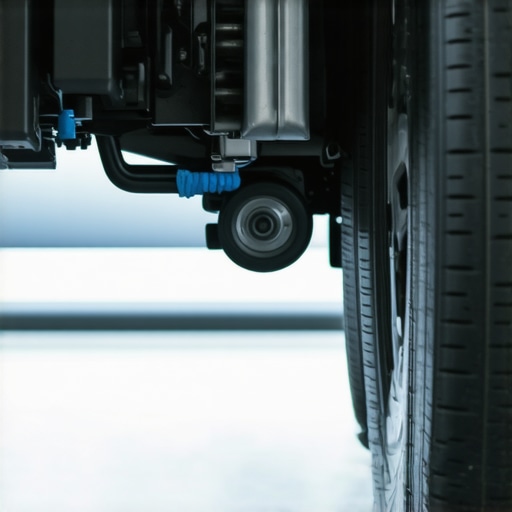
I remember white-knuckling my old sedan down the highway, constantly nudging the wheel to the left just to stay in my lane. My shoulders were tight, my palms were sweaty, and I was convinced my tires were just poorly aligned. I’d already paid for two alignments in three months, and both times the shop told me everything was ‘in the green.’ Yet, the second I pulled out of the parking lot, that ghostly pull returned. It’s a maddening, expensive loop to get stuck in because a failing steering rack is an absolute master of disguise, often mimicking a simple tire issue right up until the moment it fails completely. Today, we are going to stop the guesswork and identify whether your car needs a simple adjustment or a major component overhaul.
Stop Paying for Alignments That Do Not Fix the Drift
The biggest mistake I made early in my DIY days was assuming that if a car pulls, the solution is always an alignment rack. I once spent nearly two hundred dollars on specialized ‘thrust-angle’ alignments only to realize the internal seals of my steering rack were bypassing fluid, creating an uneven pressure that felt exactly like a bad pull. If you have been searching for how to stop your car from pulling to the right while cruising and nothing seems to work, you are likely looking at a mechanical failure inside the rack and pinion system itself. When those internal valves wear out, the power assist starts working against you, even when you are trying to drive straight. According to reports from the National Highway Traffic Safety Administration (NHTSA), steering system malfunctions are a leading cause of mechanical-related accidents, often preceded by subtle handling changes that drivers ignore as ‘normal’ wear.
Is a Steering Rack Replacement Really Worth the Cost?
I get it—the price tag for a new rack can be a gut punch. You might be wondering if you can just ‘live with’ a little bit of play in the wheel or a slight wander. But here is the reality: steering rack failure is a progressive nightmare. It starts as a minor drift and ends with you losing power assist in the middle of a turn. Before you jump to conclusions, it is worth decoding vehicle diagnostics to see if there are any underlying hydraulic or electronic codes. Have you ever felt like your steering wheel was fighting you, or have you noticed the steering wheel vibrating at low speeds despite having balanced tires? If so, you aren’t alone, and it’s time to look deeper than the tread on your tires. If you are struggling with a car that won’t stay straight, reach out and contact us so we can help you figure out the next step before you spend another dime on an alignment that won’t stick.
How to Run a Diagnostic Without Stepping Under the Car
Before you commit to a full-day teardown, you can perform a quick diagnostic right in your driveway. Think of your steering rack as a high-pressure hydraulic syringe. When you turn the wheel, fluid should move smoothly to assist that motion. If the internal seals have failed, the fluid leaks past the piston inside the rack, causing a ‘dead spot’ or a sudden surge of resistance. I remember a specific 2008 pickup I worked on that would steer like a dream to the left but felt like I was trying to turn a boat through molasses when going right. I initially thought the pump was dying, but decoding vehicle diagnostics revealed that the electronic sensors were actually fighting against a mechanical bypass in the rack’s valving. To test this, start your engine and slowly turn the wheel from lock to lock. If you feel any notches or ‘lumpy’ resistance, your rack is likely bypassing fluid internally.
The Simple Fluid Bypass Test
If your car feels heavy one moment and light the next, you are likely dealing with air in the system or a failing rack-and-pinion seal. Check your reservoir; if the fluid looks like a frothy strawberry milkshake, air is getting sucked in somewhere. This often happens because the boots on the end of the rack are torn, allowing debris to chew up the internal seals. While you are at it, check if your power steering gets heavy when it rains, as this often points to a slipping belt or a failing harmonic balancer rather than the rack itself. However, if the fluid is clean and full but the steering is still erratic, the mechanical components inside the rack have likely reached the end of their lifespan.

Identify Ghost Pulls and Steering Wandering
A ‘ghost pull’ is when the car drifts toward the ditch even after a perfect alignment. One of the most overlooked causes is ‘memory steer.’ This happens when a steering component—like a ball joint or a tie rod—is partially seized. After you complete a turn, the part doesn’t fully return to center, keeping the wheels slightly angled. I once spent an entire Saturday morning chasing a pull on a customer’s SUV, thinking it was a bent frame. It turned out to be a seized upper strut mount. Before you blame the rack, you should learn how to spot a bad ball joint using a floor jack to rule out these simpler mechanical binds. If your suspension is tight and the car still wanders, the internal ‘play’ or lash in the rack gears is the culprit.
The Tire Wear Pattern Evidence
Your tires are the ultimate snitches; they will tell you exactly what’s wrong with your steering geometry if you know how to read them. While a rack failure causes wandering, a bent component causes specific scrubbing. By checking the tire wear pattern that reveals a bent control arm, you can differentiate between a steering system that is ‘loose’ and a suspension system that is physically out of square. If you notice feathered edges on the tread, your toe-in is changing as you drive, which is a classic sign of worn-out inner tie rods—the arms that live inside the steering rack boots. When these joints develop play, the wheels ‘dance’ back and forth while you’re cruising, which explains why the steering wheel is vibrating at low speeds. Do not just keep balancing the tires; check the rack’s mounting bushings too. If the entire rack is shifting an inch to the left every time you turn, no amount of wheel weights will fix that vibration.
Beyond the steering rack, the most common ‘nuisance’ I see is the obsession with brake pads while ignoring the entire hydraulic system. Most drivers assume that a screeching sound is a simple sign of a worn-out pad, but I have seen brand new sets ruined in a week because the caliper slide pins were seized. This is a classic case of why brake service myths busted matter for your wallet; if you do not grease those sliders, the pad stays pressed against the rotor, glazing the surface and causing a permanent squeal. It is not just about the friction material; it is about the mechanical movement. Even worse is the ‘spongy’ pedal that won’t go away. Many DIYers bleed their brakes and still have issues because they ignored the brake fluid color that means you need a flush immediately. Brake fluid is hygroscopic, meaning it absorbs water from the air over time. According to the Car Care Council, neglected brake fluid can lead to internal corrosion in your ABS module—a repair that costs ten times more than a simple bottle of DOT 4 fluid.

Does Synthetic Oil Actually Last 10,000 Miles?
Then there is the great oil debate that keeps people overpaying at the pump. I have seen enthusiasts spend a fortune because of the synthetic oil myth that costs you fifty dollars every visit. While many modern synthetics are rated for high mileage, the real ‘trap’ isn’t the interval—it is the viscosity and the environment. I have diagnosed dozens of ‘engine ticks’ that were actually just the mistake of using the wrong oil viscosity in cold weather. When the oil is too thick for the ambient temperature, it cannot reach the top of the engine fast enough during a cold start, leading to metal-on-metal contact. AAA research confirms that while synthetic oil offers 47 percent better protection than conventional oil, the ‘one size fits all’ approach to oil changes often ignores the specific demands of stop-and-go traffic.
The biggest mistake modern drivers make is relying on a cheap code reader to provide an ‘answer’ rather than a ‘symptom.’ When you are decoding vehicle diagnostics, remember that a code for a ‘Lean Condition’ does not necessarily mean you need a new oxygen sensor; it often means you have a five-dollar vacuum leak upstream. We often throw the ‘parts cannon’ at a problem when a little bit of analytical thinking would save hundreds. Have you ever fallen into this trap of replacing a sensor only to have the light pop back on two days later? Let me know in the comments.
I’ve spent thousands on tools over the years, and if I could go back, I’d tell my younger self to stop buying basic code readers and start investing in professional-grade diagnostic equipment. Beyond the simple code reader, the one tool that completely changed how I approach repairs is the bi-directional scan tool. While standard readers only show you what the computer is reporting, a bi-directional tool allows you to talk back to the car. If I suspect a steering angle sensor is misaligned or a brake solenoid is sticking, I can command those components to activate directly from the tablet. This is the gold standard of how advanced vehicle diagnostics prevent costly breakdowns because it eliminates the guesswork of whether a part is receiving a signal or is physically broken.

Looking ahead, the shift toward predictive maintenance is the next major trend in the DIY world. We are moving away from reactive repairs and toward ‘predictive telematics.’ Soon, your vehicle won’t just alert you to a failure; it will use real-time data to warn you that your steering rack seals are likely to fail based on your specific driving habits and environmental conditions. For now, we rely on essential auto repair strategies for frequent drivers to stay ahead of these mechanical curveballs. By analyzing live data streams during your weekend drives, you can spot a ‘lazy’ sensor before it ever triggers a check engine light.
How do I keep my steering and brakes sharp for years?
The secret to extreme longevity isn’t just fixing what breaks; it is strictly managing chemical hygiene. I make it a point to flush my power steering and brake fluids every two years, regardless of my mileage. This isn’t just an old-school habit; it is a technical necessity. According to the Society of Automotive Engineers (SAE) Standard J1703, brake fluid must maintain a high boiling point to prevent vapor lock, but even the highest quality fluid degrades as it absorbs moisture from the atmosphere. When you allow contaminated fluid to cycle through your rack and pinion or ABS module, you are essentially circulating sandpaper. Don’t be the driver who ignores top auto repair tips to extend your vehicles lifespan only to be met with a massive bill for a corroded hydraulic system later.
One hard lesson I’ve learned is that you should never trust a bargain-bin sensor when your car’s brain is on the line. I have seen countless DIYers get stuck in a loop of ‘ghost codes’ because they bought an unbranded component from a random website. You really need to understand the truth about using cheap aftermarket sensors in your engine before you risk your timing or fuel trim on a part with no quality control. A high-quality sensor might cost twice as much, but it won’t leave you stranded on the shoulder of the highway. If you want to start being proactive today, I highly recommend you try the cardboard trick to find a tiny oil leak overnight. It is the single most effective way to catch a weeping steering rack or a slow oil leak before it turns into a catastrophic failure on your next road trip.
Hard Truths from a Decade Under the Chassis
Over the years, I have learned that a car is a complex ecosystem where one worn bushing can easily masquerade as a massive mechanical failure. First, never assume a pull is just an alignment issue; internal steering rack bypass is a silent thief of precision that no alignment machine can fix. Second, I have realized that being cheap with fluids is the most expensive mistake you can make. Clean hydraulic fluid is significantly cheaper than a new rack and pinion assembly every single time. Third, the parts cannon is a hobby, not a professional repair strategy; if you have not physically tested the component or used a bi-directional tool to verify failure, do not replace it. Finally, trust your hands through the wheel—if the car feels off after a professional service, it likely is, and you should not be afraid to advocate for a deeper diagnostic.
The Tools That Saved My Sanity
If you want to stop guessing and start fixing, you need to upgrade your diagnostic arsenal. I personally swear by a bi-directional scan tool because it allows you to command the vehicle to reveal its secrets, which is a massive part of how advanced vehicle diagnostics prevent costly breakdowns. I also never perform a steering or suspension job without a high-quality set of jack stands and a reliable torque wrench; safety and precision are the foundations of every successful DIY project. For anyone serious about their own maintenance, I recommend sourcing a factory service manual for your specific year and model to avoid the generic advice found in basic retail manuals. These auto repair hacks save money without sacrificing quality and transform a frustrating weekend into a win for your garage.
Mastering Your Machine One Repair at a Time
Stepping into the world of complex steering rack repairs can feel daunting, but every master mechanic started with a single wrench and a healthy dose of curiosity. By taking control of your own vehicle maintenance, you are doing more than just saving money; you are ensuring the long-term safety and reliability of your daily driver. Consistent care is the most effective way to implement top auto repair tips to extend your vehicles lifespan. Don’t be afraid to get your hands dirty—the satisfaction of a car that tracks perfectly straight down the highway is worth every drop of sweat. If you want to keep that momentum going, check out the ultimate guide to brake service for safety and performance to round out your mechanical knowledge. Have you ever paid for a professional alignment only to have the car still pull to one side? Let me know your experience in the comments below!