
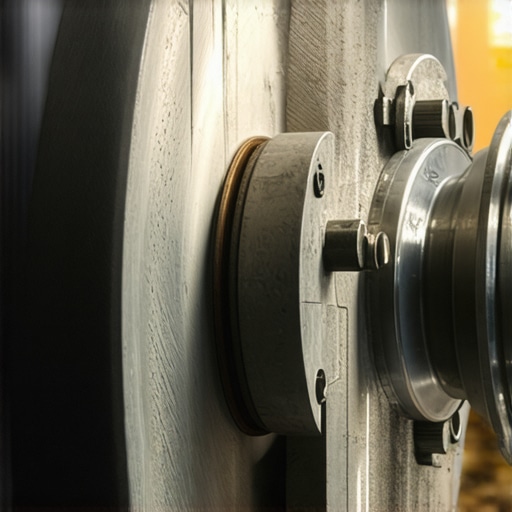
There is a specific kind of sinking feeling that hits you when you spend a Saturday afternoon covered in grease, only for your car to sound worse than it did before. I have been there, believe me. I remember swapping out a set of ceramic pads on my old sedan, thinking I was the king of the garage. I even torqued every bolt to spec. But the second I backed out of the driveway? SCREEEEEECH. It was loud enough to make my neighbor’s dog howl. I was embarrassed, frustrated, and certain I had bought defective parts. But here is the truth: it usually isn’t the pads’ fault. Today, we are going to silence that racket and get your car back to that factory-quiet stop you were expecting. [image placeholder]
That High-Pitched Scream Is Not What You Paid For
When you invest in a fresh set of brakes, you expect smooth, effortless stopping power. Instead, you get a sound that makes every pedestrian at the crosswalk look at you like your car is falling apart. It is incredibly common to wonder why your brakes squeal even after you replaced the pads, and the answer usually lies in the tiny vibrations between the metal components. I used to think that as long as the pads were thick, they should be quiet. I was wrong. Modern brake systems are high-precision machines, and even a microscopic gap can turn your wheel well into a violin bow.
Is it even possible to get a silent stop anymore?
Many drivers worry that modern semi-metallic or ceramic pads are just naturally noisy. They fear they have to choose between high-performance stopping power and a quiet ride. That is a myth. While it is true that some high-performance materials are louder, the vast majority of street pads should be silent if installed with the right attention to detail. You do not have to live with the noise just to stay safe.
The Greasy Mistake I Made So You Do Not Have To
Early in my DIY journey, I made a classic blunder: I forgot the brake lubricant on the back of the pads. I thought grease was only for the slide pins. According to a technical study by the Society of Automotive Engineers (SAE), brake squeal is actually a high-frequency vibration—essentially the pad vibrating against the caliper at thousands of times per second. By skipping that thin layer of high-temp grease on the contact points, I was allowing that vibration to ring out like a bell. Once I learned how to stop your brakes from squealing without a mechanic, I realized that 90% of the battle is simply managing those friction points where metal meets metal. Have you ever finished a repair only to have a brand-new noise start immediately? It is a special kind of headache, but we are going to walk through the exact steps to ensure your brake service for safety and performance actually results in the quiet ride you deserve.
Scrub Away the Scars of the Road
Before you even think about sliding those new pads into place, you have to address the debris hiding on your wheel assembly. Think of your brake rotor like a vinyl record; even a tiny piece of grit can cause a skip or a screech. I remember working on an old SUV where the owner swore the brakes were defective. When I pulled the wheel off, the caliper bracket was so caked in rust and old, hardened grease that the pads were literally stuck in a half-engaged position. I spent twenty minutes with a stiff wire brush and some brake cleaner, scrubbing every contact point until the bare metal shone. This is one of those top auto repair tips to extend your vehicles lifespan that people often overlook because it is messy and tedious. If the pads cannot move freely, they will vibrate, and vibration is the mother of all squeals.
Grease the Ears and Backing Plates
Once the surfaces are clean, you need to apply high-temperature brake lubricant, but you have to be surgical about it. This is where most people go wrong. You are not painting a fence; you are dampening a musical instrument. Apply a thin layer of grease to the ‘ears’ of the pads—the small metal tabs that slide into the bracket—and a light coating on the back of the pad where the caliper piston makes contact. 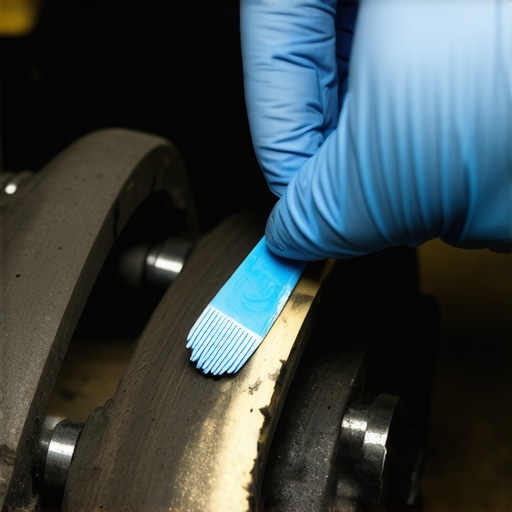 I once helped a friend who had slathered grease everywhere, including the friction material itself. We spent the next hour cleaning up a mess that could have caused a total brake failure. The goal is to create a buffer that absorbs the high-frequency vibrations before they turn into noise. While you are in there, it is the perfect time to check your fluids, as the brake fluid color that means you need a flush immediately is a clear indicator of how well your entire hydraulic system is holding up.
Fresh Clips Are Non-Negotiable
Most high-quality pad sets come with new stainless steel hardware for a reason. Do not be tempted to reuse those old, flimsy clips just to save three minutes. Those clips act as springs, keeping the pads tensioned so they do not rattle around like loose change in a dryer. One of the biggest brake service myths busted – what really matters for safety is the idea that old hardware is ‘fine if it is not broken.’ In reality, heat cycles weaken the metal, causing it to lose its spring tension. When I started replacing hardware every single time, my ‘comeback’ rate for noisy brakes dropped to zero.
Teach Your Pads How to Grip
The final, and perhaps most critical, step is the bedding-in process. This is the ritual where you transfer a thin, even layer of pad material onto the rotor. If you just drive off and stop normally, you might create ‘hot spots’ that lead to future vibrations. Find a safe, empty road and perform a series of controlled decelerations from 45 mph down to 10 mph—never coming to a complete stop until the pads have cooled. This ensures the surfaces are perfectly mated. While you are focused on the mechanical side, remember that the trick for a perfect brake bleed every single time is the cherry on top for a firm, responsive pedal that feels as good as it sounds.
Your Scanner is Not an Oracle
I’ve seen it a thousand times: a DIYer pulls a code for an O2 sensor, swaps the part, and the light returns two days later. The common belief is that the OBD-II port is a magic oracle that points directly to the broken component. In reality, it is more like a smoke detector; it tells you there is smoke, but it doesn’t tell you if it’s a grease fire or just a burnt piece of toast. When you start decoding vehicle diagnostics what your car is trying to tell you, you realize the code is just the starting line. If you don’t look at the ‘freeze frame’ data to see exactly what the engine was doing when the fault occurred—like RPM, engine load, and coolant temp—you are just guessing with your wallet. This is why understanding how advanced vehicle diagnostics prevent costly breakdowns is less about the tool and more about the logic you apply to the data.
The Hidden Trap of Aftermarket Sensors
Here is an ‘oops’ factor that bites even seasoned mechanics: the lure of the $20 aftermarket sensor. Everyone wants to save money, but modern Engine Control Units (ECUs) are calibrated for specific electrical resistance ranges. I once spent three days chasing a rough idle on a European sedan only to find out the ‘new’ mass airflow sensor was off by just a few millivolts. The truth about using cheap aftermarket sensors in your engine is that they often lack the high-speed processing or precise thermal resistance of OEM parts. For critical engine management, ‘cheap’ often means ‘twice as expensive’ because you’ll end up buying the real part eventually. 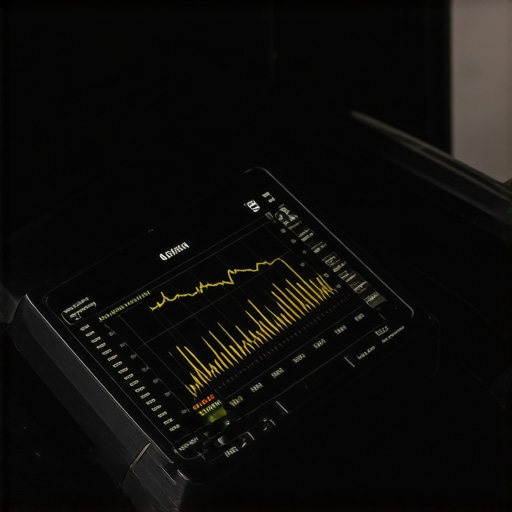
Why does your brand new sensor keep throwing the same error code?
This is the ultimate advanced reader question. Usually, it’s because the sensor was never the problem; it was the circuit or the environment. A lean code (P0171) rarely means a bad sensor; it usually means an intake leak or a clogged fuel injector. A study by the Car Care Council suggests that neglect of these diagnostic nuances results in over $2 billion in wasted consumer spending annually on unnecessary parts. Before you ‘hang’ a new part, you must verify the ‘three-legged stool’ of engine health: air, fuel, and spark.
The Oil Level Mystery No One Explains
Let’s talk about a nuance that scares people: finding more oil in your engine than you started with. Most people think more oil is a good thing, but why your engine oil level rises between oil changes is often due to fuel dilution—unburnt gasoline seeping past the piston rings. This is a massive mistake to ignore. It thins out your lubrication and can lead to catastrophic bearing failure. While we are on the subject, don’t buy into the synthetic oil myth that costs you fifty dollars every visit; the secret isn’t just the oil type, but the frequency of changes relative to your driving habits. Have you ever fallen into the ‘parts cannon’ trap where you kept replacing things only for the problem to stay? Let me know in the comments.If you want to stop firing the ‘parts cannon’ at your car, you need to stop using a basic $20 code reader. I eventually upgraded to a bidirectional scan tool, and it changed my life. Most people do not realize that these auto repair hacks save money without sacrificing quality because they let you actually talk to the car. Instead of guessing if a cooling fan is broken, I can literally press a button on my tablet and tell the car: ‘Turn on the fan.’ If it spins, the motor is fine, and I just saved $150 on a part I did not need. This level of control is one of the essential auto repair strategies for frequent drivers who cannot afford downtime. 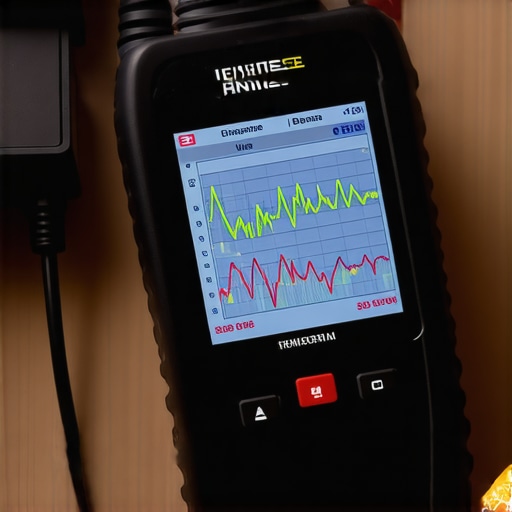
Stop Guessing and Start Commanding Your Car
I am also a huge advocate for niche software like FORScan for Fords or VCDS for VWs. These are not just for professionals; they are for anyone who wants to avoid the ‘dealership tax.’ These tools allow you to perform ‘service resets’ that a standard shop usually charges an hour of labor for. For example, on many modern vehicles with electronic parking brakes, you cannot even change your pads without the software telling the internal motor to retract. That is the new reality of the modern driveway mechanic.
How can you keep a high-mileage engine healthy forever?
The secret is not just changing the oil; it is knowing exactly what is happening inside the block. I started sending my oil samples to Blackstone Laboratories for spectral analysis. For about thirty dollars, they send you a report showing the levels of wear metals like lead, copper, and iron. This is how I caught a failing rod bearing six months before it could have exploded through my engine block. Staying ahead of the curve with oil change innovations and technologies that save your engine is the difference between a car that hits 300,000 miles and one that ends up in a scrapyard at 120,000. These are the top auto repair tips to extend your vehicles lifespan that the quick-lube chains will never mention.
What the Future of Your Garage Looks Like
I predict that in the next few years, we will see DIY tools that use AI to listen to engine frequencies through your smartphone. You will hold your phone near the belt drive, and an app will tell you which specific pulley is chirping based on a database of millions of recordings. Before you head out on your next trip, doing these vehicle diagnostics explained as easy checks before your road trip will become as common as checking your tire pressure. When you scale your maintenance from just fixing things to predicting failures, you enter a different league of ownership. I have seen owners save thousands by simply performing a transmission flush when the fluid first starts to darken, rather than waiting for the shudder to begin. I want you to try this: the next time you get a Check Engine light, do not just clear the code. Use your scanner to look at the ‘Live Data’ and check your ‘Short Term Fuel Trim.’ If it is over 10%, you have a vacuum leak, not a bad sensor. Taking that one extra step can save you hours of frustration and hundreds of dollars.
Hard Lessons from a Dirty Garage Floor
My biggest breakthrough didn’t come from a manual; it came after wasting three hundred dollars on sensors I didn’t need. I realized that the best auto repair hacks save money without sacrificing quality by focusing on cleaning first. Often, a ‘failed’ part is just a dirty one. I also learned that patience during a brake service for safety and performance is the only way to avoid the embarrassment of squealing wheels at every stoplight. If you rush the cleaning or the bedding-in process, you are essentially asking for a redo. Finally, I stopped looking at my dashboard as a nuisance and started seeing it as a conversation. When you begin decoding vehicle diagnostics what your car is trying to tell you, the fear of the unknown disappears. #IMAGE_PLACEHOLDER_E#
Gear That Actually Pays for Itself
You don’t need a professional shop to get professional results, but you do need the right data. I swear by my bidirectional scan tool because it takes the guesswork out of the equation; seeing how advanced vehicle diagnostics prevent costly breakdowns firsthand is a game-changer for your wallet. I also recommend keeping a dedicated ‘brake kit’ that includes a high-quality wire brush and ceramic-based lubricant. For those looking for long-term reliability, following top auto repair tips to extend your vehicles lifespan often involves using resources like oil analysis to see the invisible wear inside your engine.
Take Control of Your Machine
The modern car can feel like a black box designed to keep you out, but with the right approach, you can maintain it better than any cut-rate shop. These essential auto repair strategies for frequent drivers are about more than just keeping the wheels turning; they are about the pride of knowing your vehicle is safe because you did the work yourself. Don’t be afraid to get your hands dirty and dig into the data. Your car, and your bank account, will thank you. What was the most frustrating ‘phantom noise’ or mystery code you ever had to track down? Drop a comment and let’s figure it out.