
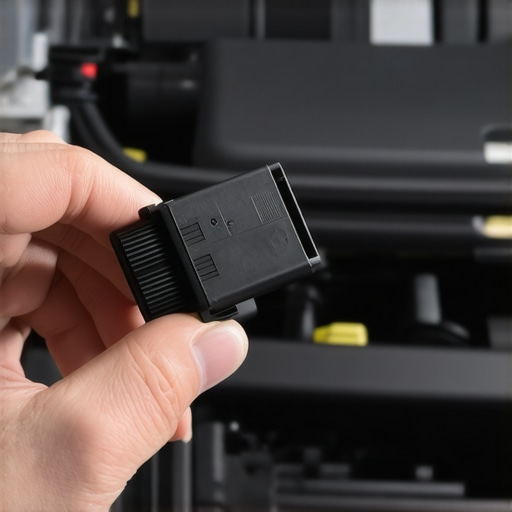
I remember sitting at a busy intersection in my old sedan, the engine idling as smooth as butter. The light turned green, I pressed the gas pedal, and instead of moving, my car bucked like a startled mule. My heart was in my throat as I watched the car behind me swerve to avoid a collision. It was visceral and frightening. I spent weeks convinced my transmission was failing or that I was looking at a massive engine overhaul. I was even looking into essential brake service just in case the calipers were sticking. But here is the reality: it was a tiny, plastic sensor that cost less than a burger and fries. Today, I am going to show you how to identify this culprit before you spend a fortune on unnecessary repairs.
My $300 Mistake and the $10 Solution
Most of us go into a panic when our car starts acting up. We immediately think of the worst-case scenario. In my early days, I made a massive mistake: I replaced an entire fuel pump because I assumed the engine was starving for gas. That was a $300 part and a whole Saturday wasted. If I had just looked into basic vehicle diagnostics first, I would have found the Manifold Absolute Pressure (MAP) sensor was simply dirty. This little component is responsible for telling your car’s computer how much air is entering the engine. When it fails, your car hesitates when you press the gas pedal, mimicking a blown motor or a dying transmission. It is one of those auto repair hacks that can save you a mountain of stress.
Could a tiny piece of plastic really be the culprit?
It seems impossible that something so small and cheap could cripple a 3,000-pound machine, but modern cars are essentially computers on wheels. If the data is wrong, the performance is gone. According to the automotive data experts at CarMD, sensor-related issues like the MAP or Mass Air Flow sensor are consistently in the top five reasons for engine performance complaints and check engine lights. If yours is failing, you might also notice your car jerks when you take your foot off the gas. Have you ever experienced that terrifying moment where you hit the throttle and nothing happens? Let me know in the comments because I want to make sure you aren’t being talked into a repair you don’t need.
Stop Guessing and Let the Computer Talk
Before you start tearing parts off your engine, you need to listen to what the car is saying. Think of an OBD-II scanner as a translator for your vehicle’s internal language. You can buy a basic Bluetooth dongle for less than twenty bucks, plug it into the port under your steering wheel, and read the ‘P-codes’ on your phone. This is exactly how decoding vehicle diagnostics works—it takes the mystery out of the flashing yellow light on your dash. I once spent two hours checking spark plugs when the computer could have told me in ten seconds that the issue was a circuit fault. Having that data in your hand stops you from throwing money at parts that aren’t broken.
Locate Your MAP Sensor Without a Map
The Manifold Absolute Pressure sensor usually sits right on top of the engine or on the intake manifold. It’s about the size of a matchbox and has a small electrical plug and sometimes a vacuum hose. If your car stalls when you come to a stop sign, this little guy is the first place I check. I remember the first time I tried to find mine; I was looking near the radiator like an idiot until I realized it was tucked neatly under the plastic engine cover. Be careful with those plastic clips—they get brittle with heat and will snap faster than a dry twig. Once you find it, gently unplug the wiring harness and look for any green or white corrosion on the pins. Corroded pins are like a bad phone connection; the message just doesn’t get through.
The Cleaning Secret That Saves Your Wallet
Most people don’t realize you can actually clean these sensors. Carbon buildup and oil vapor can coat the sensing element, making it ‘blind.’ Pick up a can of specialized mass air flow or electronic cleaner—never use WD-40 or carb cleaner, or you’ll melt the delicate internals. One time, I tried to ‘clean’ a sensor with brake parts cleaner because I was impatient. It worked for five minutes, then the sensor completely shorted out, and I had to buy a new one anyway. It was a classic example of why auto repair hacks require the right tools. Just a few quick bursts of spray onto the sensing element and letting it air dry can restore the signal and smooth out your idle instantly. #IMAGE_PLACE_HOLDER_B#
Distinguish a Sensor Flaw from a Vacuum Leak
Sometimes the sensor is fine, but the information it’s getting is wrong because of a hole in a rubber hose. This is why basic vehicle diagnostics are so vital. If you hear a high-pitched whistling or hissing, the sensor might just be reporting the air leak it sees. If your car hesitates when you press the gas pedal, try spraying a little soapy water on the vacuum lines while the engine is running. If the bubbles get sucked in or the engine idle changes, you’ve found a leak that’s mimicking a bad sensor. It’s much cheaper to replace a two-inch piece of rubber hose than a $100 electronics module.
Know When to Give Up and Buy New
If cleaning doesn’t work and the wiring looks solid, it’s time to swap the part. While I’m all for saving money, you should be wary of using cheap aftermarket sensors. I once bought a ‘no-name’ brand from a discount site to save $40. The car ran great for a week, then the sensor failed while I was merging onto a highway, leaving me in a dangerous ‘limp mode.’ Stick to OEM or high-quality brands for electronics; your safety is worth the extra few dollars. After swapping the part, make sure to clear the old codes so your car’s computer can start learning the new, clean data immediately.However, even with a new sensor, you aren’t out of the woods if you’re falling for the ‘Parts Cannon’ trap. Everyone says the code tells you exactly what to buy, but in my experience, the code is just the car shouting about a symptom, not the disease. For instance, a lean code might point to a sensor, but it’s often a pinhole leak in a hose or a corroded ground wire. This is where understanding how advanced vehicle diagnostics prevent costly breakdowns becomes your greatest asset. According to the National Institute for Automotive Service Excellence (ASE), nearly 70% of diagnostic failures stem from skipping the visual inspection and electrical testing in favor of just replacing the part the scanner mentions. Have you ever fallen into this trap? Let me know in the comments.
Stop Treating Your Scan Tool Like a Shopping List
The biggest nuance that separates a DIYer from a pro is the ‘circuit’ mindset. If the computer throws a code for a bad sensor, it doesn’t always mean the sensor is toast. It means the computer isn’t getting the signal it expects. It could be a frayed wire, a loose connector, or even a blown fuse. Before you buy another part, you must verify the ‘Three Pillars’: Power, Ground, and Signal. I’ve seen people perform a full essential brake service because they thought a sensor was causing a drag, only to find out a simple ground wire was loose. #IMAGE_PLACE_HOLDER_C#
Why Your Engine Oil Might Actually Increase Over Time
Here is a weird one that trips up even seasoned gearheads: finding more oil on the dipstick than when you started. You might think you’re getting a free refill, but it’s a dangerous warning sign. This is usually ‘fuel dilution,’ where unburnt gasoline leaks past the piston rings and into the oil pan. If you see this, you need to understand why your engine oil level rises between oil changes before your oil loses its ability to lubricate. It’s one of those brake service myths and engine misconceptions that can lead to a seized motor.
Can Your Choice of Oil Viscosity Actually Cause a Misfire?
In modern cars with variable valve timing (VVT), the answer is a resounding yes. These systems rely on oil pressure to move small mechanical phasers. If the oil is too thick, the timing won’t advance properly, and the computer will throw a misfire code. I’ve seen people spend hundreds on coils and plugs when the real issue was the mistake of using the wrong oil viscosity in cold weather. Don’t let the synthetic oil myth that costs you fifty dollars every visit distract you from the fact that the weight of the oil matters more than the brand. Use exactly what’s on the cap, or you’re just asking for a flashing yellow light.If you really want to graduate from a parts swapper to a diagnostic master, you need a tool that doesn’t just read data but actually talks back to the car. This is known as bi-directional control. While decoding vehicle diagnostics is a great first step, being able to command a fuel pump to turn on or a cooling fan to spin at 50% speed from your tablet is where the magic happens. I personally use a mid-range tablet-based scanner because it allows me to isolate components without turning a single wrench. For instance, if you suspect a bad relay, you can trigger it through the software; if it clicks, the wiring and the relay are fine, and your problem lies elsewhere. This is the foundation of how advanced vehicle diagnostics prevent costly breakdowns by narrowing the search area in seconds.
Why I Swear by the Digital Multimeter
Beyond the scanner, the digital multimeter is my most trusted ally. A scan tool tells you what the computer thinks is happening, but a multimeter tells you what is actually happening in the copper. I’ve seen sensors report low voltage because of a slightly corroded pin, not a failed component. If you aren’t checking for voltage drops across your battery terminals or ground points, you are essentially guessing. This is especially true if your car battery dies every time it gets cold outside. Using a multimeter to find a parasitic draw is one of those auto repair hacks that turns a weekend of frustration into a ten-minute fix. According to the SAE International J1979 standard, which defines the communication protocols for OBD-II, there are hundreds of data parameters available, but none are more reliable than a direct physical measurement of electrical resistance. #IMAGE_PLACE_HOLDER_D#
How do I keep my car healthy for the next 100,000 miles?
Maintenance is no longer just about changing fluids; it is about managing the ecosystem of your vehicle. To hit that 200k or 300k mile mark, you have to stay ahead of the ‘silent failures.’ This means looking into oil change innovations like magnetic drain plugs or bypass filters that catch the microscopic particles standard filters miss. It also means following top auto repair tips to extend your vehicles lifespan, such as cleaning your throttle body every two years to prevent the carbon buildup that eventually kills sensors. Don’t forget the physical components either; a yearly flush of your system—guided by the ultimate guide to brake service for safety and performance—prevents internal corrosion in your ABS module, a part that can cost upwards of $1,000 to replace.
The Future is Connected and Complicated
Looking ahead, the DIY landscape is shifting toward telematics and ‘walled garden’ software. Within the next decade, many manufacturers will likely move toward over-the-air (OTA) updates that could lock out third-party scanners. This is why learning the fundamentals of electrical testing now is so vital. Data might become harder to access, but a wire will always be a wire. We are also seeing a rise in predictive maintenance where your car will alert you to a failing water pump before it even begins to leak. This shift makes essential auto repair strategies for frequent drivers even more important to master today. My advice? Grab a multimeter this weekend and test your battery’s resting voltage. It’s the simplest way to start taking control of your car’s health.
Hard Truths from a Decade Under the Hood
After years of turning wrenches and occasional swearing at rusted bolts, I’ve realized that the biggest barrier to a successful repair isn’t a lack of skill—it’s a lack of patience. We often want the quick fix, but jumping straight to the checkout counter for new parts is a recipe for a light wallet. I once saw a friend replace an entire radiator when a five-dollar hose clamp was the real culprit. This is why I always emphasize how advanced vehicle diagnostics prevent costly breakdowns by forcing you to look at the ‘why’ instead of just the ‘what.’ Don’t be afraid to walk away from the car for ten minutes if you’re feeling frustrated; a clear head finds the broken wire that a stressed mind misses. Also, pay attention when things seem to fix themselves; knowing why your check engine light turns off on its own can give you a clue about intermittent electrical issues before they leave you stranded.
Tools That Earned a Permanent Spot in My Garage
If you want to move beyond basic oil changes, you need a few reliable companions. First, a dedicated digital multimeter is non-negotiable for testing circuits. Second, a decent OBD-II scanner that provides live data will change how you view your engine’s health. I also recommend keeping a physical or digital copy of your car’s specific factory service manual. Relying on vehicle diagnostics explained easy checks before your road trip is a great way to build a routine that catches problems early. Finally, never underestimate the power of a simple charging system check; using the simple test to see if your alternator is killing your battery can save you from being ‘that guy’ with the jumper cables in a grocery store parking lot. These tools are the backbone of smart auto repair hacks that keep your car out of the scrap yard.
Your Journey Toward Mechanical Confidence Starts Now
Taking the leap into DIY repair can feel intimidating, but remember that every master mechanic started with their first loose bolt. You are now armed with the knowledge to look past the scary warning lights and see the machine for what it is—a logical system that you can master. By applying top auto repair tips to extend your vehicles lifespan and staying curious about how your car functions, you’re not just saving money; you’re gaining independence. Don’t let a tiny sensor or a confusing code stop you from enjoying the drive. Have you ever spent a fortune on a part only to find out it was a five-minute wiring fix? Let me know your biggest ‘diagnostic facepalm’ moment in the comments below!