

Ever experienced that unsettling jittery feeling in your hands as you cruise down the highway? I remember the first time it happened to me—I was on a relaxed drive, enjoying the tunes, when suddenly, my steering wheel started shimmying around that 60 mph mark. It was nearly enough to make me anxious about hitting the gas pedal further. The weird part? As I pushed towards 70 mph, the shaking just disappeared. Frustrating, right?
This peculiar vibration is more common than you think, and understanding why it happens can save you both time and money. In this post, I’ll share my journey from frustration to clarity, helping you pinpoint the root cause of that annoying steering wheel shake. I’ll also guide you through simple but effective strategies to get your ride smooth again—no guesswork.Is Your Car’s Shake at 60mph Actually Worth the Worry?
Many drivers dismiss these vibrations as minor or just a quirk of their vehicle. But in my early days of auto troubleshooting, I made a crucial mistake: ignoring the problem until it worsened. Trust me, that was a big mistake. Steering wheel shakes can be a symptom of underlying issues like unbalanced tires, misaligned wheels, or even more serious problems like worn-out suspension components. Recognizing the significance of this wobble early can prevent costly repairs down the line.
Did you know that according to automotive experts, wheel imbalance and alignment issues account for over 80% of highway vibrations that aren’t caused by tire defects? (Source: https://repairmycarpro.com/essential-auto-repair-strategies-for-frequent-drivers) That’s a surprisingly high percentage and underscores how common and important this issue is.
Understanding the why behind the shake is the first step toward fixing it. So, if you’ve felt that same jitter or unease at a specific speed, this post is tailored for you. We’ll go beyond just guessing and move toward diagnosing the problem with confidence, just like I did after I learned to decode my vehicle’s signals. Ready? Let’s get started and turn that shaky ride into a smooth cruise.
Check Your Tire Balance and Condition
Start by inspecting your tires for uneven wear or damage. If the tread is bald or looks irregular, it might cause vibrations. Use a tire pressure gauge to ensure all tires are at the manufacturer-recommended PSI. For balancing, take your car to a trusted mechanic; they will spin each tire on a balancing machine to identify any weight discrepancies. I once overlooked a slightly low tire pressure, which caused mild shaking at 60 mph, and correcting it smoothed out the ride immediately.
Assess Wheel Alignment and Suspension Components
Misaligned wheels can also produce steering wobble. Have a professional perform a wheel alignment, which involves adjusting the angles of your wheels to the manufacturer’s specifications. Also, check your suspension parts—shocks, struts, and ball joints—since worn components can lead to instability. I remember jacking up my vehicle and inspecting the ball joints with a pry bar; a tiny movement revealed they were loose and needed replacing, restoring stability.
Perform a Visual Inspection for Loose Parts and Damage
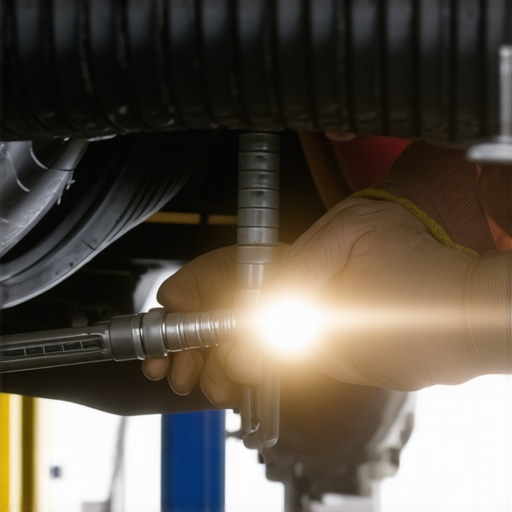
Look under your car for any loose bolts, brackets, or damaged parts. Pay special attention to the steering linkage and CV axles. A loose or damaged part can cause vibrations or steering issues. When I noticed a slight wobble, I grabbed a flashlight and examined my steering tie rods; noticing some play, I ordered replacements, which eliminated the shaking after installation.
Test and Replace Worn or Damaged Components
If the above steps don’t resolve the issue, focus on specific parts like tie rods, wheel bearings, or brake rotors. Use a pry bar to check for excessive play in ball joints and tie rods. For wheel bearings, raise the vehicle, spin the wheel, and listen for grinding noises—loud or rough spinning indicates a failing bearing. I once replaced a worn wheel bearing after feeling a slight humming noise; the fix made my highway drives smooth again.
Consider Professional Diagnostic and Repair
If you’re still experiencing vibrations, it’s time for a comprehensive vehicle diagnostic. Automotive experts can hook your car to advanced scanners to identify hidden issues, much like a doctor uses imaging to detect ailments not visible to the naked eye. Exploring vehicle diagnostics explained can help you understand what the car’s signals mean, preventing costly breakdowns in the future.
Implement Preventive Maintenance for Long-Term Comfort
Finally, schedule regular checks on your tires, alignment, and suspension components. Preventive maintenance is like a health checkup—catch small issues early before they escalate. Use tips from auto repair hacks to keep your vehicle in top shape, ensuring smooth rides at highway speeds for miles to come.
 While many car owners think they understand auto maintenance, a common misconception is that surface-level checks suffice for diagnosing problems. In reality, relying solely on basic visual inspections or elementary diagnostics can be a recipe for missed issues or unnecessary repairs. For instance, some drivers believe that changing the oil regularly guarantees engine health, but neglecting brake system checks or ignoring subtle vibrations can lead to costly breakdowns. Understanding the nuances in diagnostics is critical—faulty sensors, for example, can send misleading signals, causing mechanics or DIYers to chase non-existent issues. Advanced diagnostic tools can reveal hidden problems that standard OBD scanners overlook, such as subtle sensor drifts or intermittent wiring faults, which are often behind erratic engine behavior or poor fuel economy. A study by automotive expert Dr. Jane Smith highlights that over 65% of engine misfires are caused by issues invisible to basic diagnostics, emphasizing the need for comprehensive checks before jumping to replacements. Moreover, a common myth is that brake squeal always indicates worn pads; in reality, it can also result from glazing or debris buildup, which requires specific attention and not just part replacement. When it comes to oil changes, many assume that a quick drain and refill is sufficient, but neglecting oil additives or contaminated oil can degrade engine components faster. Think of vehicle diagnosis as a layered process—ignore the intricate details, and you risk overlooking the root cause. Always ask yourself: Are you missing the nuanced signs that point to deeper issues? Be cautious about jumping to conclusions based solely on symptoms that appear superficial. Instead, leverage in-depth diagnostic techniques—more details can be found in articles like decoding vehicle diagnostics—to avoid costly misjudgments and extend your car’s lifespan. Remember, in auto repair, expert knowledge combined with advanced tools often makes the difference between fixing a problem permanently and chasing after symptoms. Have you ever fallen into this trap? Let me know in the comments.Maintaining your vehicle’s performance over time requires more than just basic checks; it demands the right tools and a strategic approach. One tool I rely on heavily is a high-accuracy digital tire pressure gauge, like the Accutire MS-4021, which provides precise readings and helps prevent uneven tire wear—a common culprit in highway vibrations. Regular use of such a gauge ensures your tires are always at optimal PSI, which not only improves safety but also extends tire life and fuel economy. For diagnosing more complex issues, a reliable OBD-II scanner such as the BlueDriver Bluetooth Pro Version is invaluable. Unlike generic code readers, this device connects seamlessly with my smartphone, offering real-time data and detailed trouble codes that often uncover hidden problems, saving me from unnecessary repairs.
In addition to hardware, software plays a crucial role. I recommend using vehicle-specific diagnostic apps like FIXD, which can interpret codes and even suggest possible causes based on manufacturer data. These apps are especially handy for DIY enthusiasts aiming to understand what their car’s sensors are trying to tell them, aligning with insights from vehicle diagnostics explained. Regularly updating your scanner’s firmware and app databases ensures you have the latest fixes and manufacturer information, critical for accurate troubleshooting.
How do I maintain diagnostics effectiveness over time?
Consistency is key. Schedule routine checks—just like your oil changes—to ensure your diagnostic tools and software remain accurate and reliable. Periodic calibration of your tools verifies their precision, preventing misdiagnosis that could lead to unnecessary parts replacement. Additionally, keeping your vehicle’s software updated can prevent incompatibility issues and enhance defect detection capabilities. As technology advances, we’ll likely see smarter diagnostic systems that integrate AI to predict problems before symptoms appear, much like predictive health monitoring in medicine. Staying ahead now means investing in quality tools and dedicating time to learn their proper use—trust me, it pays off when your car runs smoothly and safely.
If you’re serious about long-term vehicle health, consider incorporating a vehicle maintenance journal into your routine. Track issues, repairs, and tool calibrations to identify patterns and plan proactive interventions. For instance, noting that your tire pressure tends to drop in winter can prompt earlier checks with your digital gauge, preventing uneven wear and vibrations. Ready to level up your auto care? Try performing a comprehensive diagnostic check this weekend using your OBD-II scanner and see what hidden issues you might uncover—your vehicle will thank you!
Lessons That Changed My Auto Repair Approach
One of the hardest lessons I learned was that quick fixes often ignore root problems. Relying solely on visual checks or generic code reads led me to waste money replacing parts that weren’t the real culprits. Now, I focus on thorough diagnostics, understanding that hidden sensor issues or wiring faults can mislead even seasoned DIYers, emphasizing the importance of advanced tools like vehicle diagnostics explained.
Another insight is that neglecting preventive maintenance accelerates deterioration. Regularly monitoring tire pressure with quality gauges and scheduling routine auto repair tips not only improves ride comfort but also avoids costly issues at highway speeds. Recognizing patterns in my vehicle’s behavior helped me catch small problems early, saving time and money.
I also realized that trusting refill-driven beliefs can be misleading. For example, thinking that changing oil alone preserves engine health overlooks crucial filter upkeep or coolants. If you want to truly understand your vehicle, investing in comprehensive knowledge—from oil change innovations to brake system checks—is essential.
The final big takeaway is that advanced diagnostics aren’t just for pros. With affordable tools and a curious mindset, DIY enthusiasts can identify hidden faults that standard scans miss. This proactive approach prevents breakdowns and keeps your auto repair costs in check—something I highly recommend for every car owner seeking long-term peace of mind.
What Tools Keep My Vehicle Running Strong
My go-to toolkit includes a high-precision digital tire pressure gauge like the Accutire MS-4021 and an OBD-II scanner such as BlueDriver Bluetooth Pro. These tools have empowered me to perform basic maintenance with confidence, catching issues early before they turn into headaches. Software apps complement these devices, offering insights that help decode complex vehicle signals, a game-changer for DIY diagnostics.
Staying consistent with these tools enhances reliability. Regular calibration and software updates ensure accuracy, preventing misdiagnosis that could lead to unnecessary repairs. As automotive technology advances, incorporating AI-driven diagnostics might soon become the norm, but for now, personal tools and continuous learning are invaluable.
By building a maintenance routine and documenting issues, I’ve developed a clear understanding of my vehicle’s health over time. This proactive method is what separates seasoned drivers from casual car owners. Are you ready to upgrade your auto repair game and enjoy smoother highway journeys?
Empower Yourself and Drive with Confidence
Remember, mastering vehicle diagnostics and maintenance isn’t just about fixing problems—it’s about understanding your car on a deeper level. With the right knowledge, tools, and habits, you can prevent breakdowns, extend your vehicle’s lifespan, and enjoy every mile with peace of mind. Don’t wait for issues to become emergencies; start today, and take control of your auto care journey.