
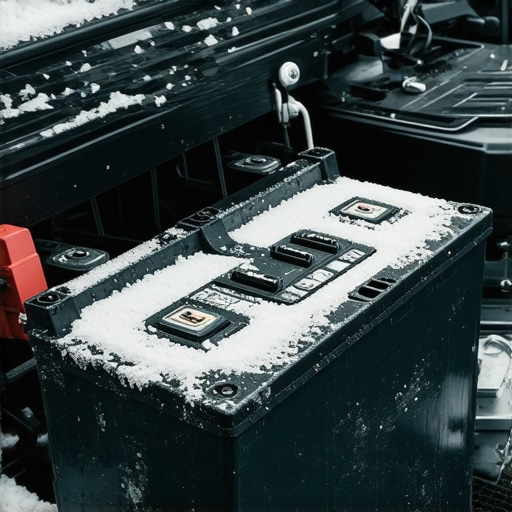
Last Tuesday, I stood in my driveway at 6:00 AM, shivering in my boots and staring at a dead dashboard. There’s a specific, hollow click a car makes when it’s too cold to turn over, and it sounds exactly like a ruined morning. I’d just finished a big auto repair project the week before, thinking I was ahead of the game. I was wrong. It’s a frustrating ritual millions of us go through every winter, and honestly, it’s enough to make you want to move to the equator. We’ve all been there, holding our breath as the engine groans, praying for that spark of life that just won’t come.
Cold Weather is the Ultimate Battery Stress Test
We need to talk about why this happens because, trust me, it isn’t just bad luck. Inside that plastic box under your hood, a chemical cocktail is trying to move electrons. When the temperature drops, those chemicals get sluggish. It’s like trying to run through a pool of molasses. I learned this the hard way years ago when I assumed my car was toast and almost called a tow truck, only to find out it was a simple starting issue caused by the freeze. Today, I’m going to show you exactly how to diagnose your battery’s health and prevent that dreaded morning silence once and for all. We aren’t just looking at the battery itself, but the whole system that keeps you moving.
Is My Battery Actually Dying or Just Hibernating?
It’s easy to get skeptical and think the local shop is just trying to upsell you a new unit. You might wonder if batteries are designed to fail as soon as the frost hits. The reality is more scientific. According to the experts at AAA, your battery loses about 35 percent of its power when the thermometer hits freezing (32°F), and a staggering 60 percent at 0°F. Meanwhile, your engine oil has thickened up, meaning the starter has to work twice as hard to turn the engine over. It’s a perfect storm of physics working against you. If your battery was already at 70% health, the winter cold effectively cuts it down to a level where it simply cannot do its job anymore.
One of the biggest mistakes I made early on—and I still kick myself for it—was ignoring the signs of a parasitic battery drain. I thought the cold was the only culprit, but a tiny glovebox light stayed on all night, sucking the life out of an already weakened battery. If you’ve ever wondered if your starter is going bad or if it’s just the battery, you aren’t alone. Have you ever been stranded in the driveway with a car that refused to wake up? Drop a comment below; I’d love to hear how you handled it. Before we dive into the DIY fixes, we need to understand that your battery is a marathon runner, not a sprinter. If you’re constantly taking short trips to the grocery store in the winter, you’re never giving the alternator enough time to recharge what the cold took away. Have you noticed your heater takes forever to warm up too? It’s all connected to how your vehicle manages energy when the mercury dips. Let’s look at the signs your battery is waving the white flag.
Grab Your Multimeter and Stop Guessing
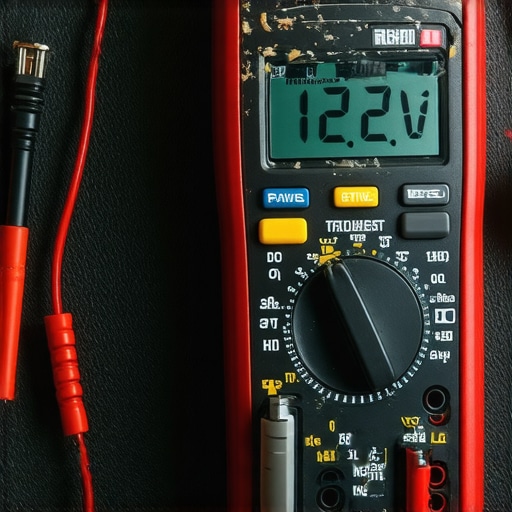
The first thing you need to do is stop playing the ‘maybe it will start’ game. I used to just keep turning the key, hoping for a miracle, until I realized I was just melting my starter’s solenoid. To actually know what’s going on, you need a multimeter. Think of this as a thermometer for your car’s soul. You can pick up the 20 dollar tool every driver needs for basic electrical troubleshooting and it will save you hundreds in misdiagnosed parts. With the engine off, touch the red lead to the positive terminal and black to negative. You’re looking for 12.6 volts. If you’re seeing 12.2V or less, your battery is only at 50% capacity. In the summer, that’s a minor inconvenience; in the winter, that’s a death sentence for your commute.
Scrub Away the Crust That Kills Your Voltage
I once spent two hours in a freezing Walmart parking lot thinking my alternator had died. I was ready to shell out $300 until I pulled the terminals and saw a thick layer of white, fuzzy oxidation. That ‘crust’ acts like an insulator, preventing the electricity from actually reaching your cables. It’s one of those auto repair hacks that save money without sacrificing quality: use a mixture of baking soda and water with an old toothbrush to neutralize the acid and scrub the metal until it shines. If the connection isn’t metal-on-metal, it doesn’t matter how new your battery is; the power simply won’t flow through the ‘gunk’.
Check the Ground Before You Blame the Battery
Sometimes the battery is fine, and the alternator is pumping out juice, but the electricity has nowhere to go. There’s a thick wire that connects your engine or battery to the car’s frame—this is the ground. If this wire is loose or rusted, you’ll get flickering lights and a slow crank. It’s a sneaky ground wire problem that mimics a bad starter motor perfectly. I remember a neighbor who replaced his starter twice before realizing the bolt holding his ground strap had simply vibrated loose. Always wiggle your cables; if they move, they aren’t tight enough.
Stop the Secret Power Thieves
If your battery is fresh and your terminals are clean but you still wake up to a dead car, you have a ‘ghost in the machine.’ Modern cars are packed with computers that are supposed to go to sleep, but sometimes they stay awake and feast on your battery overnight. We call this a parasitic drain. To find it, you have to get methodical. We’ve used techniques like diagnosing a parasitic drain using only a test light to narrow down which fuse is the culprit. Last winter, I found a stuck relay for a seat heater that was staying on just enough to kill the car by 7:00 AM every morning. By decoding vehicle diagnostics and checking the draw on each circuit, you can find the thief without paying a shop $150 an hour to hunt for it. If you’ve just swapped parts and still have issues, check why your new alternator still is not charging the battery, as the wiring in the charging loop is often the real weak link in cold weather.
It’s a common misconception that a new battery and a quick oil swap are the magic bullets for winter reliability. In my years under the hood, I’ve seen countless drivers get stranded because they ignored the ‘invisible’ culprits. For instance, most people think that if the oil on the dipstick looks amber, the engine is healthy. This is the ‘clean dipstick lie.’ In reality, the hidden sludge building up behind your clean dipstick can restrict flow to the top end of the engine during a cold start, even if the oil itself is new. While oil change innovations have improved lubricant longevity, they haven’t eliminated the physical debris that settles in the oil pan and pickup tube.
Why are my brand-new ceramic pads louder than the cheap metallic ones?
One of the most frequent complaints I hear after a winter brake refresh involves noise. You’d think the more expensive option would be silent, right? Actually, the specific reason your ceramic pads are louder than your old metallic ones often comes down to resonance. According to a study by SAE International, ceramic materials have a higher frequency vibration which can manifest as a squeal if the hardware isn’t perfectly lubricated. This is where many DIYers fall into a trap: they focus on the pads but forget the ‘Oops’ factor of ignoring the calipers. You must know how to tell if your caliper slide pins are bone dry, because if those pins don’t slide, your expensive pads will drag, glaze over, and scream like a banshee in the cold.

Beyond the mechanical, we have to look at the brain of the car. When you’re decoding vehicle diagnostics, don’t just clear the codes and hope for the best. A common mistake is replacing a sensor just because the scanner mentioned it. For example, a lean condition code often leads people to buy an expensive O2 sensor, when the real issue is a three-dollar vacuum leak or a loose air intake. These are the top auto repair tips to extend your vehicles lifespan that actually matter: look for the root cause, not the symptom. Have you ever replaced a part only to find out it didn’t fix the problem? Have you ever fallen into this trap? Let me know in the comments below. We’re all here to learn from those ‘oops’ moments before they turn into a tow truck bill.
Finally, remember that brake service myths busted articles often miss the nuance of temperature. In extreme cold, the rubber boots on your suspension and brakes become brittle. If you don’t inspect them now, you’ll be dealing with seized components by spring. Taking the extra twenty minutes to perform these advanced checks is what separates a car that ‘starts’ from a car that ‘survives’ the season.
Surviving the season is just the baseline; I want my vehicles to hit 300,000 miles without breaking a sweat. To get there, you have to move beyond the $20 code reader. While those basic tools are great for starting out, they often leave you guessing when a real mystery arises. For example, if you’ve ever wondered why your scanner says P0420 but the converter is actually fine, it is because basic scanners only show the ‘what,’ not the ‘why.’ I personally switched to a bi-directional diagnostic tablet last year, and it changed everything. It allows me to command the car to test its own fuel pump or cycle the ABS pump during a bleed, which is a game-changer for solo repairs. These essential auto repair strategies for frequent drivers are what separate the people who constantly pay for shop labor from the people who truly own their machines.
How do I maintain my engine and brakes over the long haul?
Consistency is your only real defense against the scrap yard. I keep a digital log of every single fluid swap and bolt torque. If you want to avoid the big bills, you have to realize that how advanced vehicle diagnostics prevent costly breakdowns isn’t just a marketing slogan; it is about catching a failing oxygen sensor before it clogs your expensive catalytic converter. I’ve seen engines last decades simply because the owner knew how to save your transmission with a simple fluid exchange every 50,000 miles instead of waiting for a slip. When it comes to stopping power, follow the ultimate guide to brake service for safety and performance to ensure your hardware isn’t just ‘working’ but is optimized for emergency maneuvers. Even the best pads can’t save you if your fluid has absorbed too much moisture over the years.

As we look toward the future of auto repair, the landscape is shifting toward data. The Automotive Service Association (ASA) has recently highlighted the rise of ‘Secure Gateway Modules,’ which require specialized software to even clear a basic maintenance light. We are moving toward an era of predictive maintenance where your car’s internal AI will likely notify your phone about a failing wheel bearing weeks before you can actually hear the hum. This telematics trend means we’ll need to be as comfortable with a laptop as we are with a wrench. My prediction? The ‘Check Engine’ light will eventually be replaced by a live health score displayed on your dashboard in real-time. My best advice right now is to stop ignoring the small stuff. Go out this weekend, plug in your scanner, and look at your ‘Long Term Fuel Trim’ data; if it’s more than 10% positive or negative, you have a hidden vacuum leak or a fuel delivery issue waiting to happen. Catch it now before it strands you.
The Expensive Shortcuts I’ll Never Take Again
I used to think that as long as the car started, everything was fine. That mindset cost me a transmission and several freezing mornings. One thing I’ve learned is that ‘good enough’ is usually the enemy of ‘long-term.’ For example, never ignore tiny anomalies like a slightly low coolant level; it is usually a warning sign for a thermostat issue before it becomes a total overheat. Also, if you find yourself struggling with a stuck fastener in the cold, stop before you strip it and learn how to remove a broken bolt without losing your mind. It saves hours of regret. Lastly, always trust your ears—that slight stumble under load could be the key to identifying which ignition coil is actually failing before the computer even triggers a check engine light.
My Go To Gear for Troubleshooting the Unsolved
If you are serious about DIY maintenance, stop guessing and start measuring. I swear by my digital multimeter for every electrical gremlin. It is the 20 dollar tool every driver needs for basic electrical troubleshooting and it will pay for itself the very first time you avoid buying a battery you didn’t need. I also recommend keeping a canister of specialized mass air flow sensor cleaner on hand; half the ‘failed’ sensors I’ve diagnosed were just dirty. For those planning a winter haul, perform these easy checks before your road trip to catch small leaks or worn belts that only manifest under constant load. Having the right data is always better than having the biggest wrench.
Keep Your Machine Running Like New
Taking care of your vehicle should not feel like an endless chore; it is about the freedom that comes with a truly reliable machine. When you consistently apply these top auto repair tips to extend your vehicles lifespan, you are not just saving money—you are building confidence in your commute. The next time the temperature drops, you won’t have to hold your breath when you turn the key. You will know your battery is strong, your oil is flowing, and your brakes are ready for whatever the road throws your way. Get out there and get your hands a little dirty; your car will thank you for it. What is the most frustrating electrical ghost you’ve ever had to hunt down in your car? Let me know in the comments below!